A singing bowl helps sleep by giving your body a slow, steady sound to wind down to, which makes it easier to switch out of a busy, alert state and into 'rest and digest' before bed. You don't play it to knock yourself out. You use a deep, low tone and long, slow exhales for a few minutes as the last thing you do before lights-out, so your nervous system gets a clear signal that the day is over. Think of it as a cue, a full-stop at the end of the day, not a sleeping pill. The research on sound and sleep is still thin, so it's fair to treat this as a calming ritual rather than a proven treatment.
Key Takeaways
- A singing bowl supports sleep mainly by triggering the relaxation response: the slow, low, fading tone plus long exhales nudges your body out of alert mode and into rest, so falling asleep gets a little easier.
- For sleep you want a deep, low, long-sustaining bowl. Larger, heavier bowls give the soft bass note that settles the body, unlike bright high bowls that energise.
- The routine is short and always the same: dim the lights, sound the bowl, breathe out long as it fades, rest in the silence, and repeat for five to ten minutes right before bed.
- Timing matters. Use it as the final wind-down step, ideally at the same time each night, and skip screens and caffeine beforehand so the ritual has something to work with.
- Evidence for sound and sleep is limited and early, so this is a complementary wellbeing habit, not a cure for insomnia. Sleep bowls sit in the entry-level to premium range.
How a singing bowl actually helps you sleep
A singing bowl helps sleep by making it easier to relax on purpose. Its slow, low, fading tone gives your attention one calm thing to rest on, and as you breathe out along with the sound, your body starts to downshift out of the alert state that keeps you lying awake. The bowl isn't doing anything to you. It's helping you do the winding-down yourself.
There are three things going on, and it helps to keep them separate. The first is the relaxation response: a slow, predictable sound paired with long exhales gently moves the body from 'fight or flight' toward 'rest and digest,' which is the state you need to fall asleep in. The second is attention, following a single tone from strike to silence pulls your mind off the day's replaying worries and onto something neutral and present. The third is habit, doing the same short ritual at the same time every night becomes a cue your body learns to read as 'sleep is next.'
That last point is the quiet secret. A lot of what makes any wind-down routine work is repetition. When the bowl always means bed, your body starts responding to the bowl the way it responds to a familiar lullaby. If you're brand new to all this, our singing bowl hub is the place to start; it links out to every use and technique in one spot.
Is there real evidence? An honest look
The honest answer is that the evidence for using sound to improve sleep is limited. A few small studies suggest sound meditation with singing bowls is associated with less tension and better mood, and slow-breathing relaxation is well supported for reducing stress in general. But direct, high-quality research on bowls and sleep is scarce, sample sizes are tiny, and no serious researcher claims a bowl cures insomnia. Treat it as a calming habit, not medicine.
To be specific, a small 2017 study by Goldsby and colleagues, published in the Journal of Evidence-Based Complementary & Alternative Medicine, found that people reported less tension, anger and fatigue after a singing-bowl sound meditation. That's a genuinely encouraging result, but it's one small study, it looked at mood rather than measured sleep, and it had the usual limits of early research. It doesn't prove a bowl will put you to sleep.
What's on sturdier ground is the mechanism underneath: slow, extended-exhale breathing and focused attention. The US National Center for Complementary and Integrative Health notes that relaxation techniques can help reduce stress and support wellbeing when practised regularly, and calming the body before bed is exactly the kind of thing that helps sleep set in. So the fair way to hold this: the bowl is a pleasant tool that makes relaxation easier to reach at bedtime. That's a reasonable reason to use one, without overselling it. For the wider picture of how sound is used in wellbeing, see our overview of sound healing.
A step-by-step bedtime sound routine
Here's the core routine. It takes five to ten minutes and needs only a low-pitched bowl, a dim room, and the willingness to do it right before you actually get into bed. The pattern never changes: sound the bowl, breathe out long as it fades, rest in the silence, repeat. Doing it consistently at the same time is what turns it into a real sleep cue.
- Set the scene first. Dim the lights or switch to a warm lamp, put your phone on charge in another room if you can, and get everything ready for bed so the bowl is genuinely the last thing you do.
- Sit on the edge of the bed or a cushion. You don't want to be so comfortable you slump, but relaxed. Rest the low bowl on a cushion in front of you or in your open palm, not gripped.
- Take three slow breaths before any sound. Let your shoulders drop. This tells your body the winding-down has started.
- Strike once, softly. Tap the outer rim with a padded mallet to release a single deep note. You want a full, round tone, not a clang. A soft sound is the point.
- Ride the fade with a long exhale. As the tone rings out and slowly disappears, breathe out slowly and completely, letting the exhale last as long as the sound. This long out-breath is the part that actually signals your body to relax.
- Rest in the silence. When the note is gone, stay with the quiet for two or three natural breaths. Let your eyes close. This gap is where the drowsiness starts to gather.
- Repeat, getting softer each round. Sound the bowl again and repeat for five to ten cycles, striking a little more gently each time so the last few tones are barely there.
- Stop and get straight into bed. Set the mallet down, don't check your phone, and lie down while you're still in that settled state. Let the last tone fade in your memory as you drift.
If your mind wanders to tomorrow's to-do list, that's normal, just come back to the next tone. Many people build this into a longer meditation habit; our guide to Tibetan singing bowl meditation covers the rimming technique and longer sits if you want to extend the wind-down. If you tend to lie awake feeling wired and up-in-your-head, the closely related singing bowl for grounding practice helps settle you back into your body first.
The best deep, low bowls for sleep
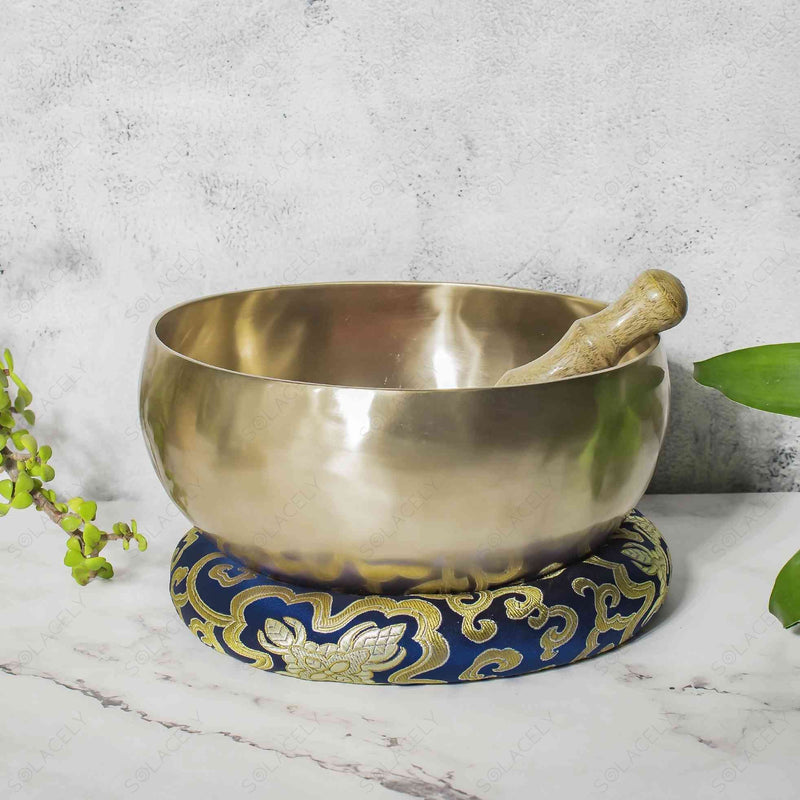
For sleep, choose a bowl that gives a deep, low, long-sustaining note. As a rule, bigger and heavier means lower and longer, and a low note is the one people describe as felt in the chest and belly, which is what settles you. A large bowl with a thick wall produces that soft bass fundamental, while small, thin bowls ring high and bright, lovely for a morning lift but the opposite of what you want at night.
You don't need to chase an exact hertz number. Low, warm and long is the whole brief. If you enjoy the detail, our singing bowl frequencies chart maps which pitches are traditionally paired with which chakra, and for winding down you're aiming at the low end. What matters more is that the tone feels calming to your own ears, so play it before you buy if you can.
| What to look for | Why it helps sleep | Typical price tier |
|---|---|---|
| Large diameter (18-25 cm+) | Bigger bowl = lower, softer fundamental note | Premium |
| Thick, heavy wall | Longer sustain, so fewer strikes needed | Mid range |
| Hand-hammered Himalayan bronze | Warm, complex low overtones that soothe | Mid range to premium |
| A low note with a long fade | Gives your exhale something to follow | Varies by size |
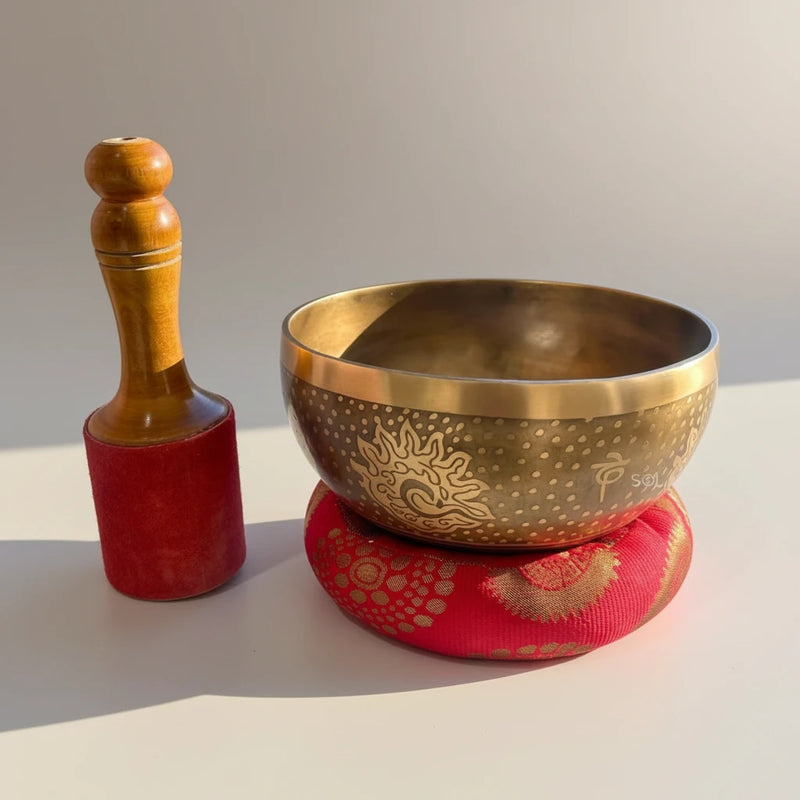
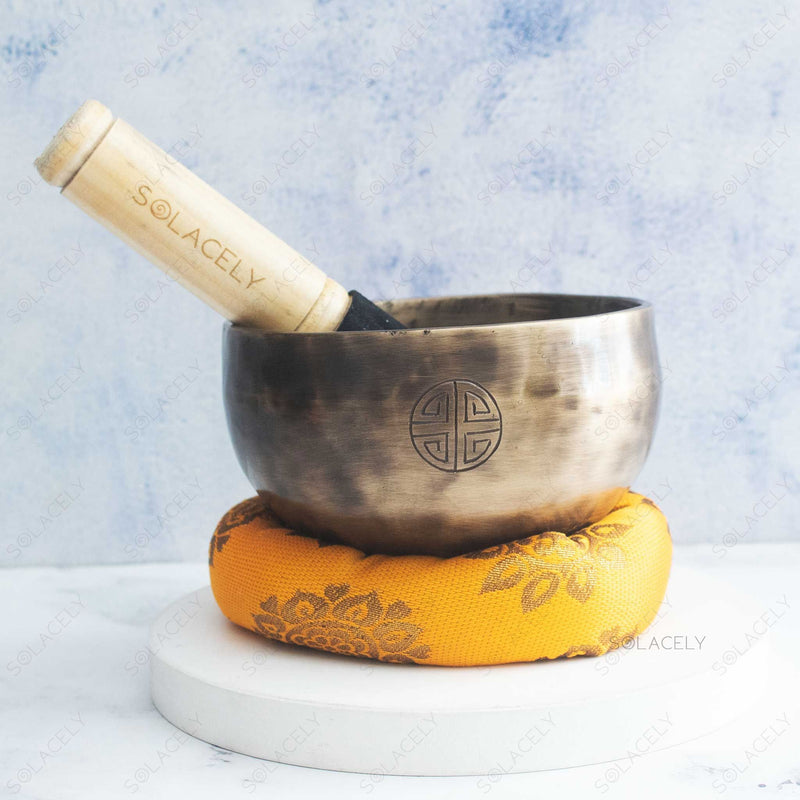
A couple of practical notes. A padded or suede-wrapped mallet brings out the low fundamental far better than a hard stick, which is what you want for a soft bedtime sound. And you really only need one good low bowl to begin, a matched set is a later nicety, not a starting requirement. For the fuller range of what these bowls are used for, see our roundup of singing bowl benefits, and for the specifically mental side of things, singing bowl benefits for the mind covers stress and focus.
Timing: when to use it, and what to pair it with
The single most important timing rule is to make the bowl the last thing you do before lying down, so nothing re-activates you afterward. A short sound routine loses its effect if you follow it with ten minutes of scrolling. Sound the bowl, then get straight into bed. Aim for the same time each night so your body starts to anticipate sleep the moment the ritual begins.
A few things make the routine work better:
- Keep it to five to ten minutes. This isn't a performance. A short, calm sit beats a long, effortful one, and dragging it out can wake you back up.
- Cut screens and caffeine first. Bright screens and an evening coffee or tea push against the relaxation you're trying to build. Give the ritual something to work with.
- Make your exhale longer than your inhale. A slow, extended out-breath is the clearest signal your body has for 'you're safe, stand down.' The bowl just gives that exhale a rhythm to follow.
- Do it at the same time nightly. Consistency is what turns a nice sound into a genuine sleep cue your body learns to read.
- Keep the volume low. You're inviting drowsiness, not staging a concert. Soft strikes only.
If you share a room or have a sleeping partner, a small low bowl played softly won't disturb them, and some people find the shared wind-down pleasant. The point is always the same: a gentle, repeatable full-stop on the day.
Common mistakes and safety notes
The most common mistake is expecting the bowl to knock you out like a switch. It won't. It sets up the conditions for sleep by calming you down; your body still does the actual falling asleep. If you sit there waiting to feel drowsy on command, the pressure itself keeps you awake. Let it be gentle and undemanding, and let sleep come on its own.
A few other things worth avoiding:
- Striking too hard. A loud clang jolts you alert, the opposite of the goal. Aim for a soft, full note and get softer as you go.
- Choosing a bright, high bowl. High tones energise. For sleep, go low, heavy and warm.
- Turning it into a task. If you're counting reps and checking the clock, you've made it stressful. Keep it loose.
- Skipping the silence. The pause after each tone is where the drowsiness gathers. Don't rush to the next strike.
- Following it with your phone. One glance at a screen can undo the whole wind-down. Bowl, then bed.
A short safety note. If you live with ongoing insomnia, a diagnosed sleep disorder, sleep apnoea, or any health condition that disrupts your sleep, a singing bowl is not a treatment and shouldn't replace medical care. It can sit alongside proper treatment as a calming habit, but see a doctor for anything persistent. Over weeks, though, the ritual itself becomes a cue that tells your body it's safe to let go, and that quiet, cumulative effect is the real win. To browse every way people use these bowls, from focus to grounding to sleep, the singing bowl hub is the place to go.
Sources
Frequently asked questions
About the author


Written by Chetna Sharma, crystal healing practitioner and co-founder of Solacely. Chetna has worked with healing crystals for over a decade and curates Solacely's protective stone collection.