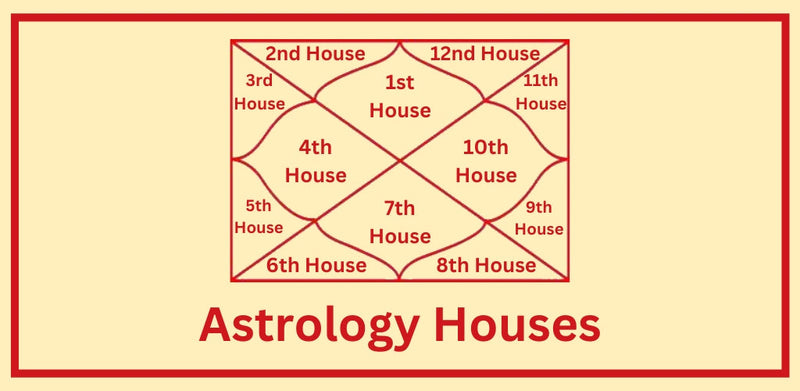
The third house in astrology governs communication, siblings, early learning, and short journeys. It is the house of the everyday mind, how you speak, write, text, and think, and of the people close by, your brothers, sisters, cousins, and neighbours. Linked to Gemini and ruled by Mercury, it shapes curiosity, wit, and how you connect with the world within easy reach.
Key Takeaways
- The third house rules communication, siblings and close relatives, early education, and short local travel. In Vedic astrology it is called the parakrama bhava, the house of courage and initiative.
- Its natural ruler is Mercury and its natural sign is Gemini, which is why the third house is tied to speech, curiosity, and quick, versatile thinking.
- Planets sitting in the third house colour how you express yourself. Mercury sharpens the mind, Mars makes speech direct, Venus makes it graceful, Saturn makes it measured.
- The sign on the third-house cusp sets your communication style, from Aries directness to Pisces imagination.
- Astrology here is a cultural and interpretive tradition for reflection, not a science. Read the third house as a lens on how you connect, not a fixed forecast.
What is the third house in astrology?
The third house is the segment of a birth chart that governs communication, siblings, short journeys, and the learning mind. It sits in the lower, personal half of the chart wheel and describes your immediate environment, the daily flow of talking, writing, moving about, and gathering information. According to Encyclopaedia Britannica, the twelve-house framework used to read a chart traces back to Hellenistic astrology more than two thousand years ago.
In the Western tradition the third house is naturally linked to Gemini and its ruling planet Mercury, the messenger. That pairing is why the house is read as fast, curious, and endlessly connective. Where the first house is about who you are and the second house is about what you value, the third house is about how you reach out and exchange.
In Indian astrology (Jyotish) the same house is called the parakrama bhava, the house of one's own effort, courage, and initiative, along with younger siblings and short travel. Whether you read a Western or a Vedic chart, the theme is the same: the near world you engage with daily. Our complete guide to the 12 astrological houses sets each house in context.
What does the third house govern?
The third house governs four connected areas: communication, siblings and close relatives, early education and the curious mind, and short local journeys. Together these describe your daily, familiar world, the conversations, commutes, and small acts of learning that fill an ordinary week. It is one of the most active, grounded houses in the chart.
Each theme has its own flavour, and a chart reader looks at all four together.
- Communication. How you speak, write, listen, and process. Whether you are blunt or diplomatic, chatty or reserved, this house sets your everyday voice, including texts, emails, and the way you tell a story.
- Siblings and neighbours. Brothers, sisters, cousins, and the people who live and work close to you. The house is read for whether these bonds feel supportive, competitive, or distant.
- Early learning and curiosity. Your foundational schooling, your appetite for facts, and how you take in new information. It shapes the subjects you gravitated to as a child.
- Short journeys. The daily commute, the ride to the market, the weekend trip to a nearby town. Local, repeated movement rather than long pilgrimage or overseas travel, which belong to the ninth house.
Because the third house is linked to Gemini and Mercury, all of this happens quickly and adapts easily. If you want to explore the sign that colours this house, our Gemini colours guide covers its traditional associations.
The third house in Vedic astrology (parakrama bhava)
In Vedic astrology the third house is the parakrama bhava, the house of self-effort, courage, and initiative. It is read for your drive to act, your hobbies and skills, your younger siblings, and short travel, giving the house a slightly bolder, more action-oriented tone than the purely communicative Western reading. Both traditions agree it is a house of the near, active world.
Vedic charts also treat the third house as an upachaya house, one of the 'growing' houses (3, 6, 10, 11) that are said to strengthen over time. In this view, effort placed here compounds, so the courage and skill the third house represents build with age and practice. That is a hopeful frame: the domains of this house reward steady work.
The differences between the two systems are mostly in calculation, the sidereal versus tropical zodiac and the house method, rather than in the life themes. For a fuller comparison of how the traditions line up, the pillar astrology houses guide walks through both. Read either way, the parakrama bhava rewards initiative.
Planets in the third house and what they mean
A planet in the third house colours how you think, speak, and relate to those closest to you. Mercury, the natural ruler, is considered especially at home here, sharpening the mind and speech. Other planets shift the tone: Mars makes communication direct and assertive, Venus makes it warm and graceful, Saturn makes it careful and measured, and so on across the chart.
Here is how each of the classical planets is traditionally read in the third house.
| Planet in the 3rd | Traditional reading of communication style |
|---|---|
| Sun | Confident, expressive; identity tied to voice and ideas |
| Moon | Emotional, intuitive communication; close sibling bonds |
| Mercury | Sharp, curious, articulate; strong for writing and study |
| Mars | Direct, quick, assertive; debate and drive, sometimes sharp words |
| Venus | Graceful, charming, diplomatic; harmony with siblings and neighbours |
| Jupiter | Expansive, teacherly; enjoys explaining and mentoring |
| Saturn | Measured, disciplined, serious; careful speech, slow-built skill |
Remember that no single placement decides a whole personality. A chart reader weighs the planet, the sign it sits in, any aspects it makes, and the rest of the wheel together. A planet in the third house is one voice in a larger conversation. If Mercury's curiosity resonates with you, our crystals for Gemini guide speaks to that same mental, airy quality.
Signs on the third-house cusp
The sign sitting on the third-house cusp sets the underlying style of your communication and learning, even before you look at any planets inside. A cusp is the dividing line where the house begins, and the sign on that line acts like the house's default setting, colouring how you speak, absorb information, and relate to those nearby.
Each sign brings its own tone to the third house.
- Aries or Scorpio (Mars-ruled). Direct, quick, and intense. Speech is bold and to the point, sometimes competitive.
- Taurus or Libra (Venus-ruled). Measured and pleasant. A calm, harmonious voice that avoids conflict.
- Gemini or Virgo (Mercury-ruled). Versatile, precise, and endlessly curious. The house at its most natural, quick to learn and quick to explain.
- Cancer (Moon-ruled). Warm and emotionally attuned. Communication carries feeling and memory.
- Leo (Sun-ruled). Expressive and dramatic. A voice that likes an audience.
- Sagittarius or Pisces (Jupiter/Neptune-ruled). Big-picture and imaginative. Storytelling over fine detail.
- Capricorn or Aquarius (Saturn/Uranus-ruled). Structured or inventive. Either disciplined and serious, or original and unconventional.
Because the cusp sign shapes so much, it is worth finding yours accurately. That means knowing your exact birth time, since the houses shift with the Ascendant. Our first house guide explains why the birth minute matters for every cusp in the chart.
How to work with your third house
Working with the third house means tending the everyday skills it governs: clear communication, curiosity, and warm ties with the people close to you. You do not need a perfect chart to strengthen these. Small, repeated habits, the parakrama bhava rewards effort, tend to do more than any grand gesture. Think of it as caring for your daily mind.
A few practical ways to engage the third-house themes:
1. Feed your curiosity daily. Read a little, learn a small new thing, keep a notebook. The third house thrives on fresh input, and the habit compounds over time. 2. Practise clearer expression. Before a difficult message, pause and choose your words. Writing a thought down before saying it is a classic Mercury exercise. 3. Tend your sibling and neighbour bonds. A regular check-in call, a shared celebration, a small gesture on a birthday. These are the relationships the third house is read for. 4. Vary your short journeys. Take a different route, notice your neighbourhood, treat the daily commute as observation rather than dead time. 5. Listen as much as you speak. Communication is two-way; the third house covers receiving information as much as sending it.
None of this is a guarantee of any outcome. It is simply a way of living in tune with what the third house represents, the near, connective, learning-rich part of daily life.
Crystals traditionally linked to the third house
Crystals associated with the third house are the ones traditionally chosen for communication, clarity, and calm expression, usually blue and light stones tied to the throat and the mind. In crystal tradition, stones are not medicine and make no measurable change, but many people keep them as a gentle, intentional prompt, a reminder to speak and think with more ease.
The stones below are the ones most often paired with third-house themes.
| Crystal | Traditional intention | Why it suits the 3rd house |
|---|---|---|
| Blue Lace Agate | Calm, clear speech | A soft blue stone linked to gentle, honest communication |
| Sodalite | Logic and clarity | Associated with rational thought and study |
| Lapis Lazuli | Wisdom and truth | Long tied to learning, teaching, and articulate expression |
| Aquamarine | Ease and tranquillity | A calming stone for steady, unhurried words |
| Citrine | Confidence and focus | Linked to a bright, positive, expressive mind |
Simple tumbled stones and beaded bracelets are the easiest entry point, with larger pieces and fine-quality specimens costing considerably more. Choose by the stone you feel drawn to rather than price alone. If communication and quick thinking are your focus, our Gemini birthstone guide covers stones tied to this Mercury-ruled sign, and our zodiac colours guide helps you match stones to your sign's palette.
Third house vs ninth house: short vs long journeys
The third and ninth houses form a natural pair, and telling them apart clarifies a lot. The third house rules short, local journeys and the everyday, concrete mind, the commute, the quick fact, the neighbourhood. The ninth house, its opposite across the wheel, rules long-distance travel, higher education, philosophy, and belief, the big picture rather than the daily detail.
Think of the third house as the mind gathering information and the ninth house as the mind making meaning from it. One is Mercury-quick and grounded; the other is Jupiter-broad and expansive. A pilgrimage or a move abroad belongs to the ninth; the daily commute and the group chat belong to the third.
Understanding the axis helps you read a chart as a whole rather than house by house. The lower-half houses, including the third, are the personal, inward hemisphere; the upper-half houses, including the ninth, reach outward. For the full map of how the houses relate, see our astrology houses pillar guide, and our fourth house guide for the house of home that follows the third.
Sources
- Encyclopaedia Britannica, astrology: history, the horoscope, and the house system. britannica.com
- Encyclopaedia Britannica, horoscope, the chart of the heavens and its twelve houses. britannica.com
- Encyclopaedia Britannica, Mercury, the planet and its mythological associations. britannica.com
Frequently asked questions
About the author


Written by Chetna Sharma, crystal healing practitioner and co-founder of Solacely. Chetna has worked with healing crystals for over a decade and curates Solacely's protective stone collection.