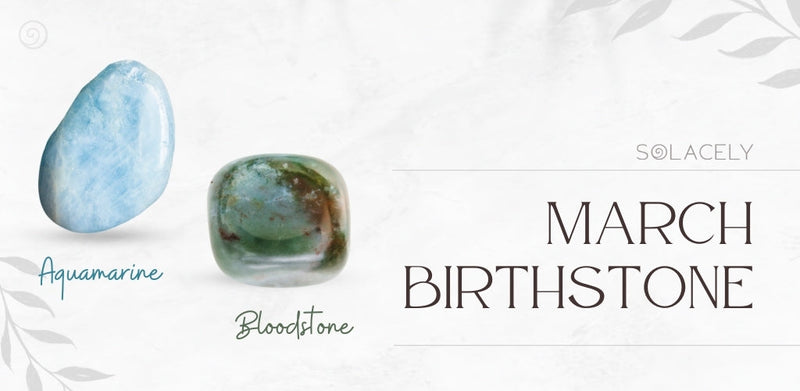
Aquamarine is the pale blue to blue-green variety of beryl, coloured by traces of iron, and it is the March birthstone. Its name comes from the Latin for sea water, and it has been the sailor's stone for centuries. At 7.5 to 8 on the Mohs scale it is genuinely hard-wearing.
Key takeaways
- Aquamarine is beryl, the same mineral family as emerald, coloured pale blue by traces of iron.
- It sits at 7.5 to 8 on the Mohs hardness scale, which makes it excellent for everyday jewellery.
- The name comes from the Latin aqua marina, meaning sea water, and it was carried as a sailor's talisman.
- It is the March birthstone and is linked to the throat chakra, the centre of speech and truth.
- Traditionally kept for calm, clear communication and steady courage.
What is aquamarine?
Aquamarine is gem-quality blue beryl. Beryl is a beryllium aluminium silicate, and the family includes emerald, which is the green variety, morganite, which is pink, and heliodor, which is yellow. What makes aquamarine blue is traces of iron within that same crystal structure.
It grows in hexagonal columns, often long and clean, and large flawless crystals are more common in aquamarine than in most gemstones. Brazil is the best known source, along with Nigeria, Madagascar, Pakistan and Mozambique. Colours run from the palest sky blue through to a deeper sea-blue, sometimes with a green cast.
At 7.5 to 8 on the Mohs scale it is harder than quartz and among the more durable coloured stones, which is why it has been set into rings and worn daily for a very long time. Warming beryl to bring out a purer blue is a long established and entirely stable practice in the trade.
What does aquamarine mean?
Aquamarine means the sea, and everything that has meant to people who depend on it. The name comes from the Latin aqua marina, and Roman and later European sailors carried it as a talisman for safe passage and calm water. That association with safe travel over water is the oldest thread it carries.
From the sea comes the second meaning: calm. Aquamarine is traditionally the stone of the steady head, kept for keeping composure when things are turbulent, and its pale, cool colour does much of that work simply by being what it is. Practitioners describe its quality as cooling rather than settling.
The third meaning is speech. Aquamarine is linked to the throat chakra, the centre associated with expression and truth, and it is one of the stones most often chosen for saying something difficult clearly. Public speakers and teachers have kept it for exactly that reason.
Aquamarine properties at a glance
Aquamarine's gemological properties are part of why it has stayed so popular for jewellery. The table gathers the details worth knowing alongside its traditional associations.
| Property | Detail |
|---|---|
| Mineral | Beryl, a beryllium aluminium silicate |
| Colour | Pale sky blue to deeper sea-blue, sometimes green-tinged |
| Cause of colour | Traces of iron |
| Hardness | 7.5 to 8 on the Mohs scale |
| Birthstone | March |
| Chakra | Throat |
| Traditionally kept for | Calm, clear speech, courage, safe travel |
What aquamarine is traditionally kept for
Calm under pressure is the first and best known use. Aquamarine is the stone people keep for the interview, the difficult phone call, the exam, the moment where the useful thing is a cool head. That is where its sea association and its throat chakra link meet.
Clear speech follows directly from that. In crystal practice aquamarine is worn as a pendant at the throat when the intention is to say something plainly and kindly, and it is a common choice for teachers, presenters and anyone whose work is mostly talking to people.
Courage of a quiet sort is the third strand. Not the bright, warm courage of carnelian but something steadier: the willingness to stay in a difficult conversation rather than leave it. That is a distinctively aquamarine quality in the tradition, and it is why the stone is so often given to someone starting a job or a course rather than someone celebrating the end of one. The sea does not hurry, and neither does the quality this stone is kept for.
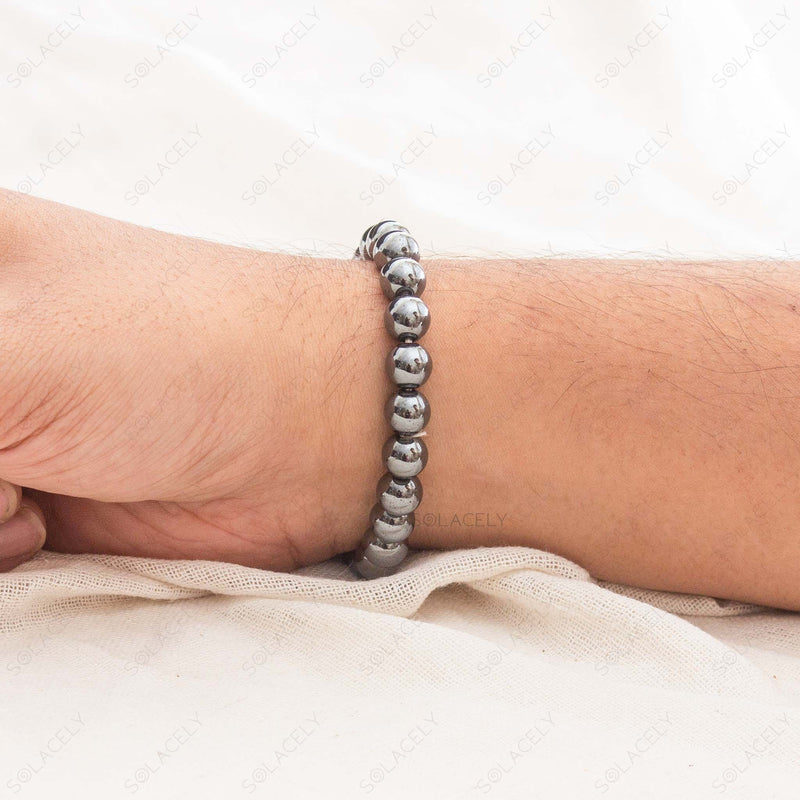
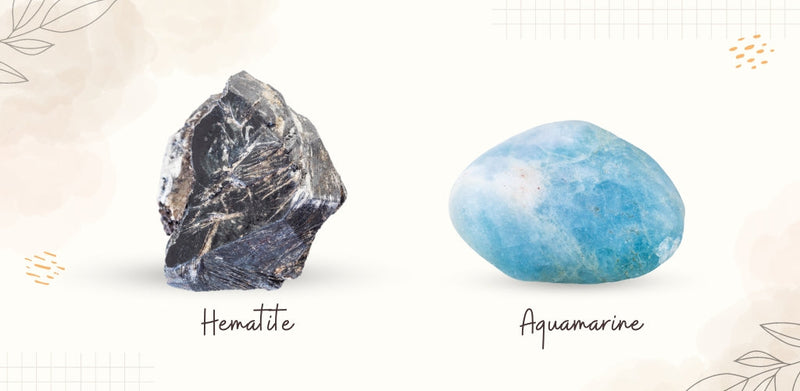
Safe travel remains its oldest use, and aquamarine is still given as a gift before a long journey, particularly one over water, in the same spirit as the sailors who first carried it. It pairs well with grounding stones, and our note on hematite and aquamarine covers that combination.
How to wear and use aquamarine
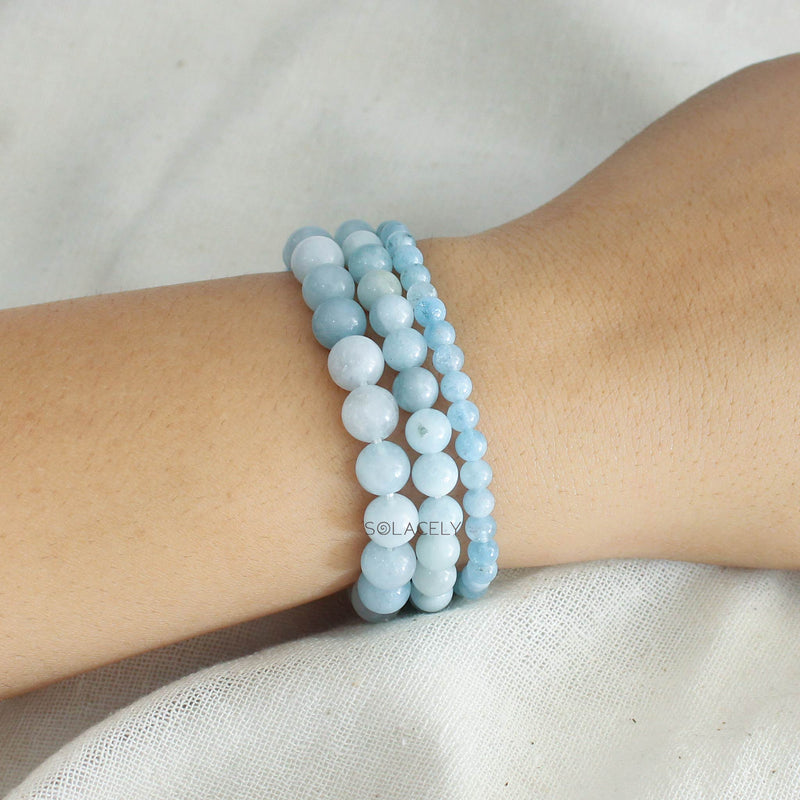
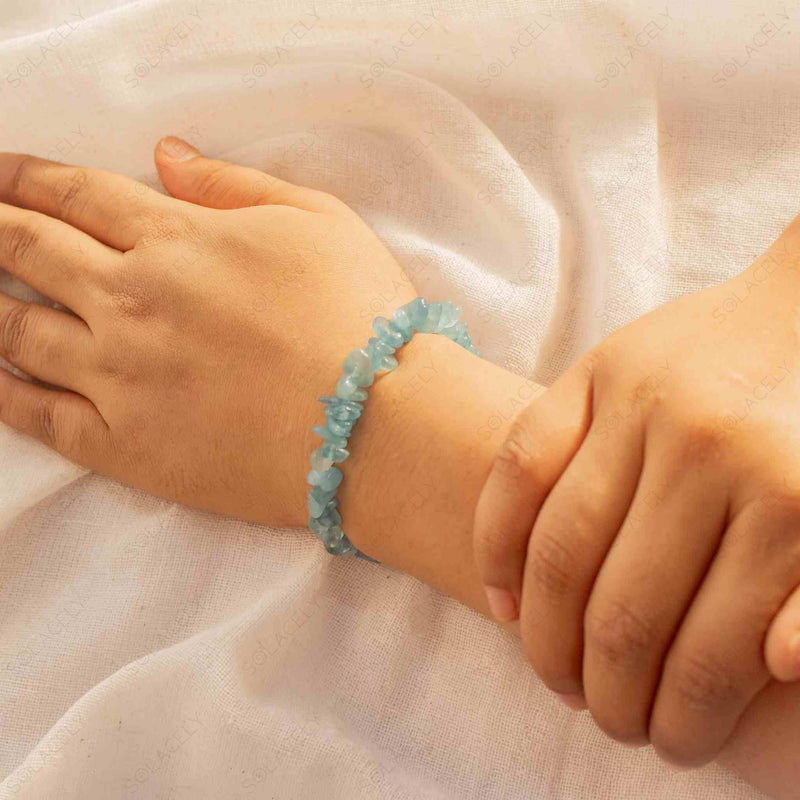
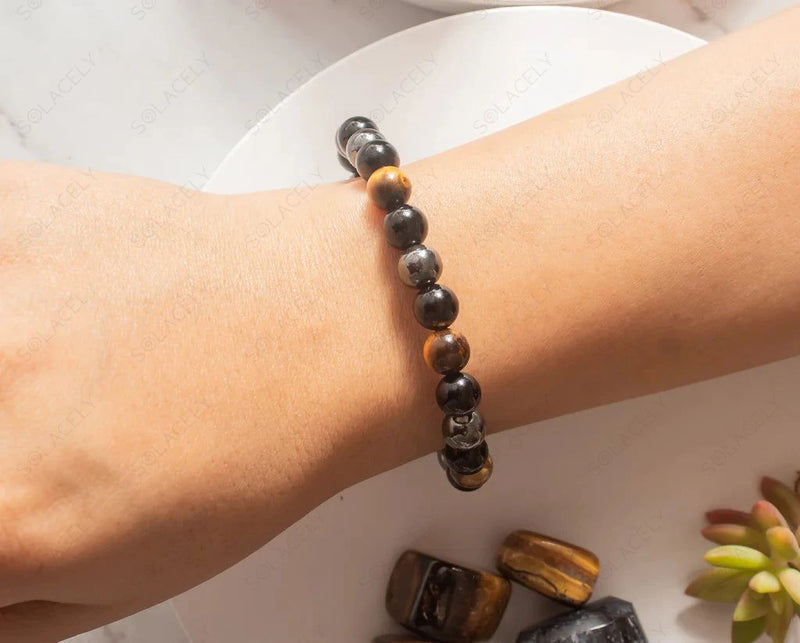
A pendant is the traditional form if speech is the intention, worn at the throat where the chakra association sits. A bracelet suits general calm, and in crystal tradition the left wrist is the receiving side, which is where a stone kept for composure usually goes.
Its hardness makes it one of the few softer-looking stones genuinely suited to a ring. At 7.5 to 8 aquamarine handles daily wear on a hand, which is why it has been an engagement stone for generations and why it survives being worn without much thought.
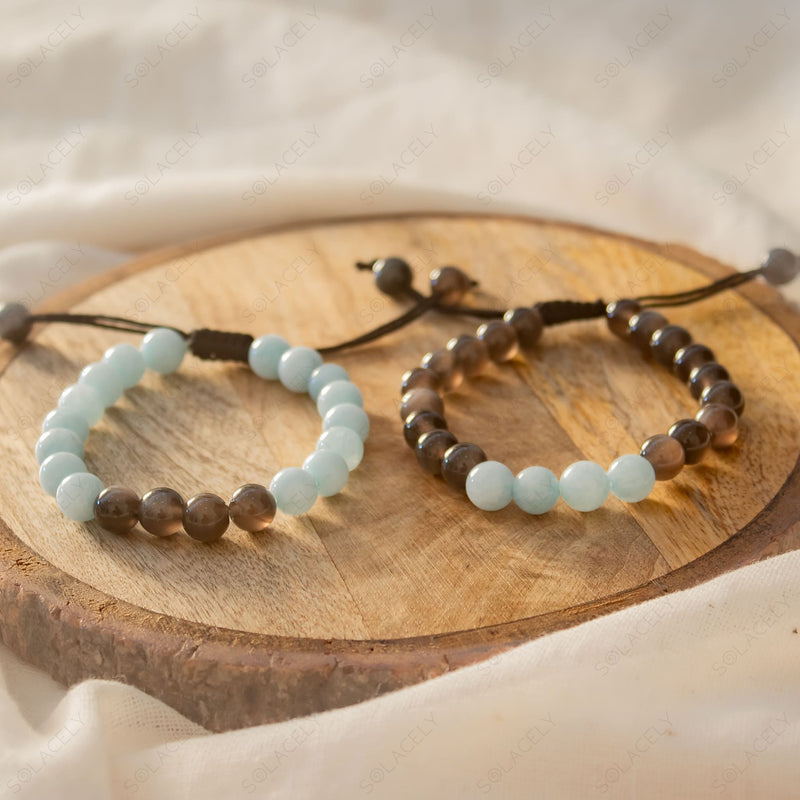
For meditation, hold a tumble in the left hand or place it at the base of the throat while lying down. On a desk, aquamarine is traditionally placed where you take calls. Its pairing with smoky quartz is the calm-plus-grounding combination, covered in our note on smoky quartz and aquamarine.
Caring for aquamarine
Aquamarine is easy to live with. Warm soapy water and a soft brush clean it well, and its hardness means it resists the everyday scratches that dull softer stones. Rinse and dry it properly, and store it away from diamonds and sapphires, which are harder still.
Two cautions are worth keeping. Prolonged strong sunlight can lighten the blue over time, so do not leave a piece on a sunny windowsill for days. And while ultrasonic cleaners are usually safe for clean stones, avoid them for anything with visible inclusions or fractures, and avoid steam cleaning altogether.
For cleansing in the spiritual sense, moonlight is the traditional choice for aquamarine, which suits a stone of the sea and the moon's tides. Sound, incense smoke and a brief rinse all work too. Our step-by-step on how to cleanse and charge crystals covers each method, and our guide to the March birthstone covers aquamarine's place in the birthstone list.
Aquamarine is worn and kept as part of a long-standing spiritual and cultural tradition. It is not a medical device or treatment, and it does not diagnose, treat, cure or prevent any condition. Nothing here replaces advice from a doctor or other qualified professional, and you should never delay or stop medical care because of a crystal. Stones should never be placed in drinking water, and small tumbles and beads are a choking risk for babies and young children.
Sources
- Gemological Institute of America, Aquamarine description and quality factors
- Gemological Institute of America, Birthstones by month
Written by Chetena Sharma. Reviewed by the Solacely editorial team.
Frequently asked questions
About the author


Written by Chetna Sharma, crystal healing practitioner and co-founder of Solacely. Chetna has worked with healing crystals for over a decade and curates Solacely's protective stone collection.