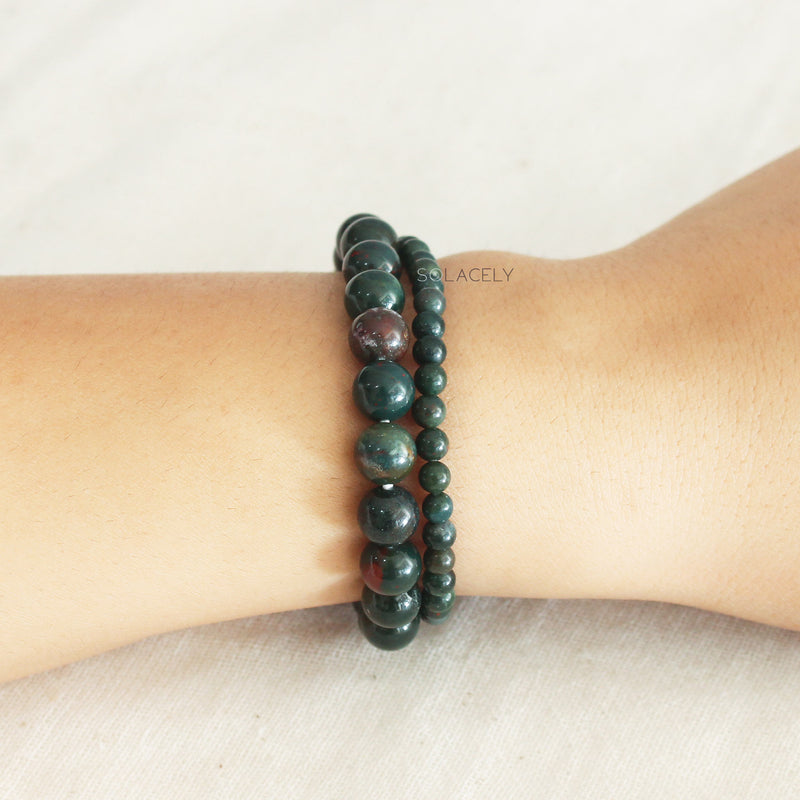
Bloodstone, also known as heliotrope, is a deep green chalcedony scattered with red inclusions of iron oxide. It has been carved and worn since antiquity, it is one of the two stones long listed for March, and it is traditionally kept for courage, steadiness and a grounded head when something demanding sits in front of you.
Key takeaways
- Bloodstone is a dark green variety of chalcedony, the same fine grained quartz family as agate and carnelian, marked with red iron oxide.
- The older name heliotrope comes from the Greek words for sun and turning, after an ancient account of the stone reddening the sun's reflection in water.
- The name bloodstone belongs to a medieval Christian story in which the red flecks were read as drops falling on green jasper at the foot of the cross. It describes the look of the stone and the tale attached to it.
- At roughly 6.5 to 7 on the Mohs scale it is hard enough for daily wear and takes a smooth, glassy polish.
- It is one of the stones long listed for March, alongside aquamarine, and it is the older of the two in traditional lists.
- People reach for it for courage, staying power and root chakra grounding, often as a plain daily reminder to hold their nerve.
What bloodstone actually is
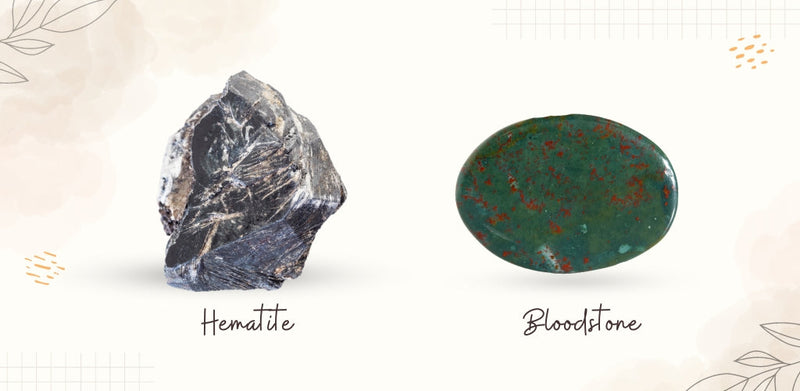
Bloodstone is a dark green chalcedony, which is quartz grown in crystals far too small to see with the eye. Inclusions of iron oxide, largely red jasper and hematite, sit through that green as spots, streaks or drifting clouds. The result is opaque, takes a high polish, and no two pieces carry the same pattern.
Because it belongs to the quartz family, bloodstone shares the qualities that make quartz so wearable. It sits at about 6.5 to 7 on the Mohs hardness scale, it has no easy cleavage plane to split along, and it holds an even surface once polished. That is why it has survived so well as carved seals, signet rings, intaglios and cabochons across two thousand years of jewellery.
The classic material has long come from India, particularly the basalt country of the Deccan Traps and the Kathiawar area of Gujarat, where the stone forms in cavities in old lava flows. Australia, Brazil, Madagascar, China and parts of the United States produce it too. You will also meet the trade name blood jasper for the same look, and plasma for the darker green chalcedony that carries little or no red.
| Property | Bloodstone |
|---|---|
| Also known as | Heliotrope, blood jasper |
| Mineral family | Chalcedony, a fine grained quartz |
| Colour | Dark to olive green with red or orange red flecks |
| Transparency | Opaque |
| Mohs hardness | About 6.5 to 7 |
| Main sources | India, Australia, Brazil, Madagascar, China, United States |
| Month traditionally listed for | March, alongside aquamarine |
| Chakras traditionally linked | Root, with the green also tied to the heart |
| Traditionally kept for | Courage, staying power, grounding |
Where the names heliotrope and bloodstone come from
The stone carries two names and both are about how it looks. Heliotrope is the older one, built from the Greek words for sun and for turning. Ancient writers described a stone that, placed in a bowl of water, appeared to turn the reflection of the sun red. That optical description is the whole origin of the word.
The name bloodstone arrived later, in medieval Europe, and belongs to a Christian story. In it, drops of blood fell from the cross onto the green jasper at its base and set there permanently as red flecks. From that point the stone was treated as sacred, worked into carvings of the crucifixion and devotional pieces, and sometimes called the martyr's stone. Museum collections across Europe still hold examples of that work.
It is worth saying plainly what these names are and are not. They record a striking appearance and the stories people told to explain it. Warriors and travellers carried bloodstone as a talisman for nerve on a hard road, engravers cut seals from it because it took fine detail, and the red on green did the rest. That symbolic weight is exactly why people still like having it near them, and it is the reason a small green stone with red spots reads as a courage stone rather than a decorative one.
Bloodstone and the March birthstone tradition
Bloodstone is one of the two stones long listed for the month of March, alongside aquamarine, and it is the older of the pair. Traditional birthstone lists that predate the modern jewellery trade name bloodstone for March, and many contemporary lists keep both, letting people born in the month choose between a pale blue beryl and a deep green chalcedony.
In practice that choice usually comes down to what you want to look at. Aquamarine is transparent, cool and light. Bloodstone is opaque, earthy and dense, and it suits people who prefer something that reads as solid rather than sparkling. It is also the more forgiving of the two on a wrist that gets knocked about, since there is no clarity to protect and no facets to chip.
If you are buying for a March birthday, a bloodstone bracelet or a tumbled palm stone works well as a keepsake with a real history behind it. Our guide to the March birthstone sets out both stones side by side and covers the formats people usually give.
What bloodstone is traditionally kept for
Bloodstone is a courage stone in tradition, kept for nerve, endurance and staying grounded when the pressure is on. People reach for it before a difficult conversation, a first day, an exam or a long stretch of work, and use it as a reminder that they can hold a steady line. It is worn far more often for that than for anything else.
Its green and red pairing is part of the appeal. The deep green sits with the heart in traditional chakra work, while the red flecks and the stone's density tie it to the root, the chakra associated with feeling secure and standing your ground. Bloodstone is one of the stones people place at the base of the spine in a layout, and our guide to the root chakra covers how that is usually arranged.
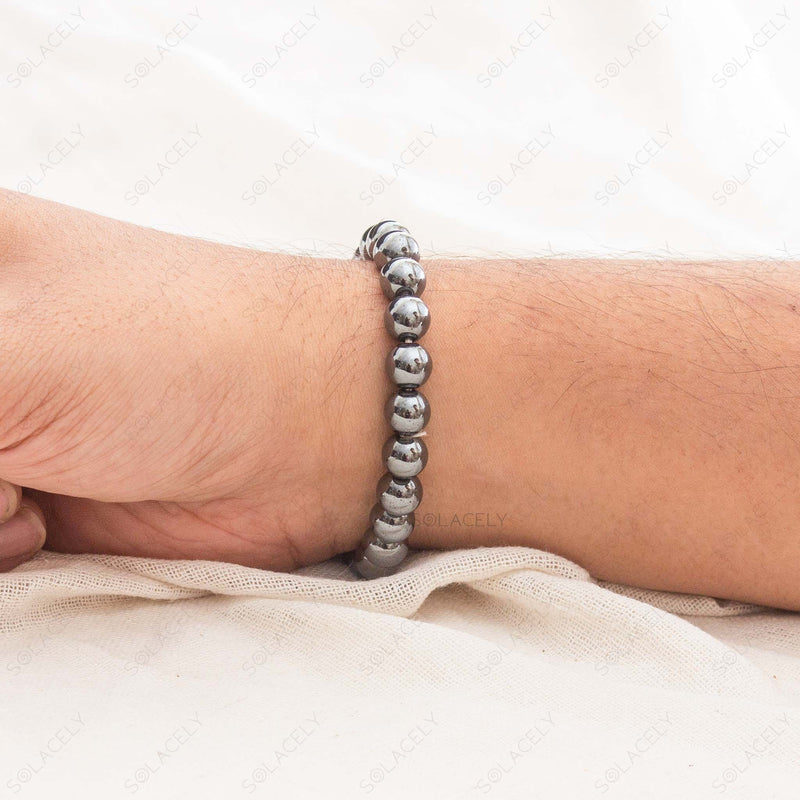
It also sits comfortably in a small group of grounding stones that people mix and match. Red jasper is the warmer, steadier one, kept for patience and slow persistence. Hematite is the heavier, more metallic one, long associated with holding a boundary. Bloodstone falls between them, with the green softening the edge, and pairing it with hematite is popular enough that we wrote a full guide to hematite and bloodstone together.
How to wear and use bloodstone day to day
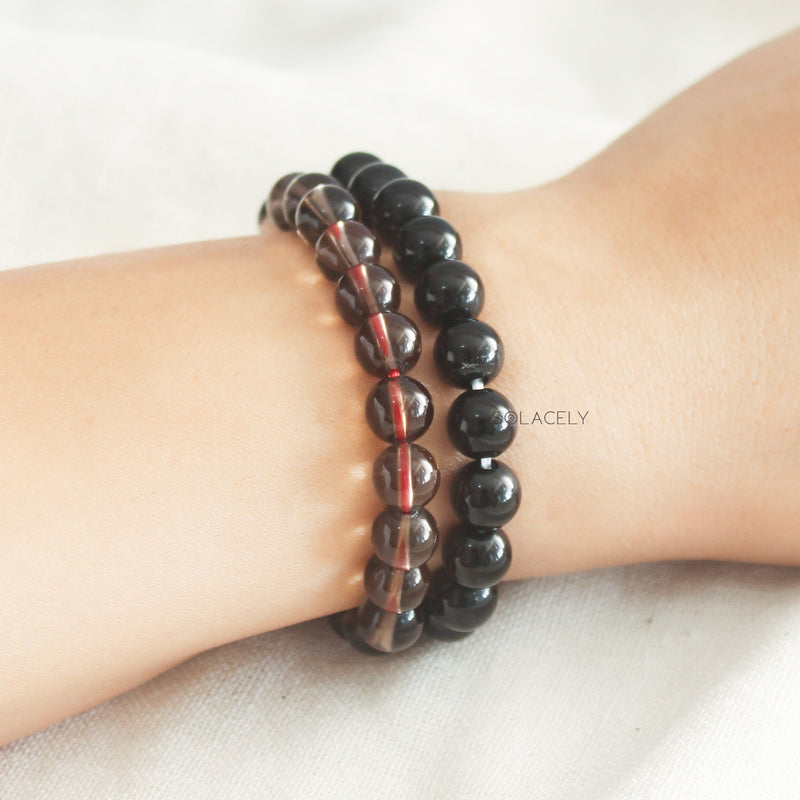
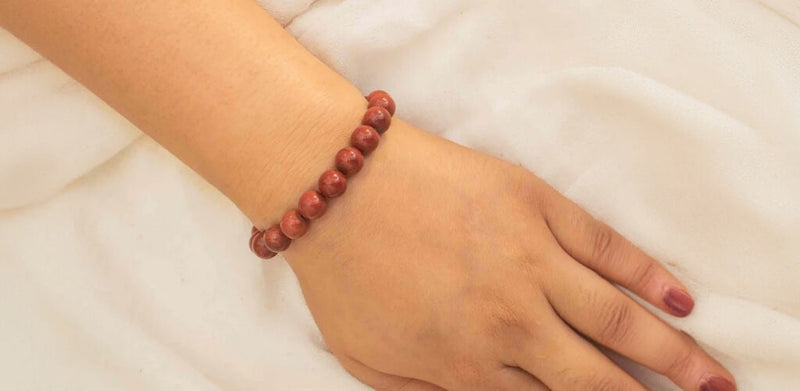
Most people use bloodstone in one of three ways: worn on the wrist, carried in a pocket, or set somewhere they will see it. Its hardness makes the first of those easy, and a beaded bracelet is the format that keeps the stone in your eyeline all day, which is the whole point of using it as a cue.
A tumbled bloodstone in a pocket or bag serves a slightly different purpose. It gives you something to close your hand around in a tense moment, and the weight and cool surface do a surprising amount of work on their own. Palm stones and small carvings suit this better than chips, which are too light to notice. If you are choosing a first set of stones, our guide for crystals for beginners covers how to build up slowly rather than all at once.
For a simple routine, pick one moment in the day and attach the stone to it. Hold it for a minute before you open your laptop, or set it on the desk where a difficult task is waiting, and name what you want to bring to it in plain words. Keep to one stone for a few weeks before adding another. People who work with a single piece consistently tend to get far more out of it than people rotating through a full shelf.
Caring for bloodstone
Bloodstone is one of the easier stones to look after. At around 6.5 to 7 on the Mohs scale it resists everyday scratching, it does not fade in daylight the way some coloured quartzes can, and it tolerates handling well. A soft cloth and lukewarm water are enough for almost all cleaning.
Wipe a bracelet down with a barely damp cloth and dry it thoroughly, paying attention to the holes where the cord runs, since trapped moisture is what ages elastic. Keep bloodstone away from ultrasonic cleaners, steam cleaners and household chemicals, all of which can work into any small fractures the stone carries. Take it off before swimming, and before anything involving bleach or strong detergent.
Store pieces flat and separately, so harder beads do not rub against the polish over time. If you like to cleanse and recharge your stones, bloodstone is happy with moonlight, sound, incense smoke or a rest on a selenite plate, and a brief rinse in cool water does it no harm. Keep small beads, chips and tumbles well away from babies, young children and pets, as they are a choking and strangulation risk.
Crystals are kept for comfort, focus and ritual. The name bloodstone comes from the way the stone looks and from the stories told about it, and nothing here is medical advice or a description of any effect on the body. Crystals are not a treatment for any condition. If you have a health concern, please speak to a qualified professional and carry on with any care that has already been arranged for you. Keep small stones, beads and chips away from babies, young children and pets, as they present a choking and strangulation risk.
Sources
- Geology.com, Bloodstone: The Green Gemstone with Red Inclusions
- Geology.com, Quartz: Mineral Information and Varieties
Written by Chetena Sharma. Reviewed by the Solacely editorial team.
Frequently asked questions
About the author


Written by Chetna Sharma, crystal healing practitioner and co-founder of Solacely. Chetna has worked with healing crystals for over a decade and curates Solacely's protective stone collection.