In Vedic astrology Rahu's stone is hessonite garnet, known as gomed, with agate named as the usual substitute. It is traditionally set in silver or a mixed metal and worn on the middle finger, begun on a Saturday. Rahu is treated as the most disruptive of the nine grahas.
Key takeaways
- Rahu's stone is hessonite garnet (gomed), a honey to cinnamon brown grossular garnet.
- Garnet is a group of silicate minerals, not one species, with hardness generally between 6.5 and 7.5 on the Mohs scale.
- Tradition sets it in silver or ashtadhatu, worn on the middle finger, first put on during a Saturday evening.
- Rahu is a shadow graha, a lunar node rather than a physical body, associated with obsession, confusion and sudden change.
- Practitioners are unusually cautious about gomed. Nothing here is a substitute for a chart reading or professional advice.
Which crystal is associated with Rahu?
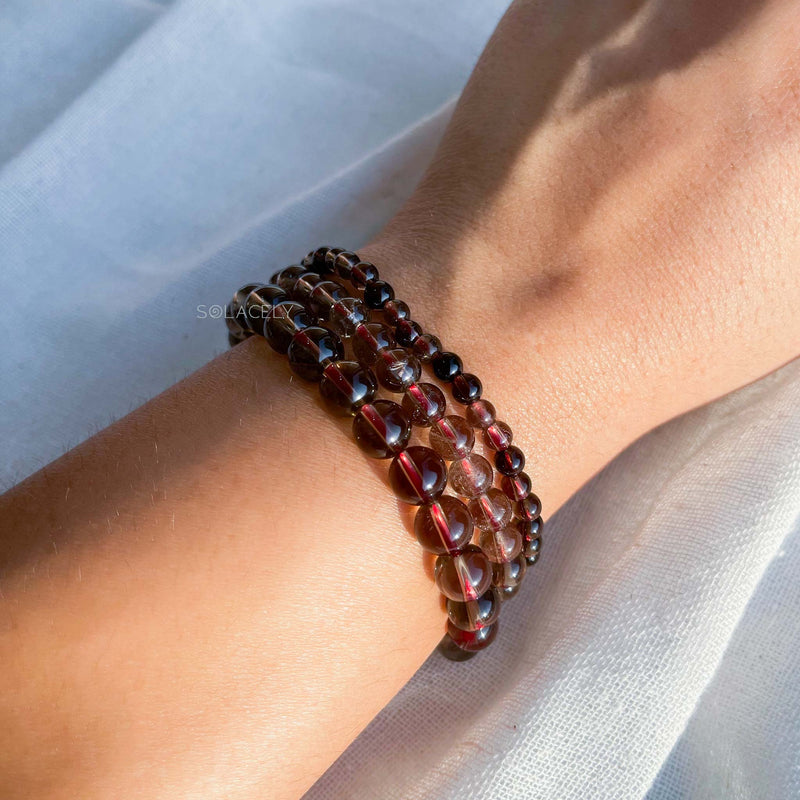
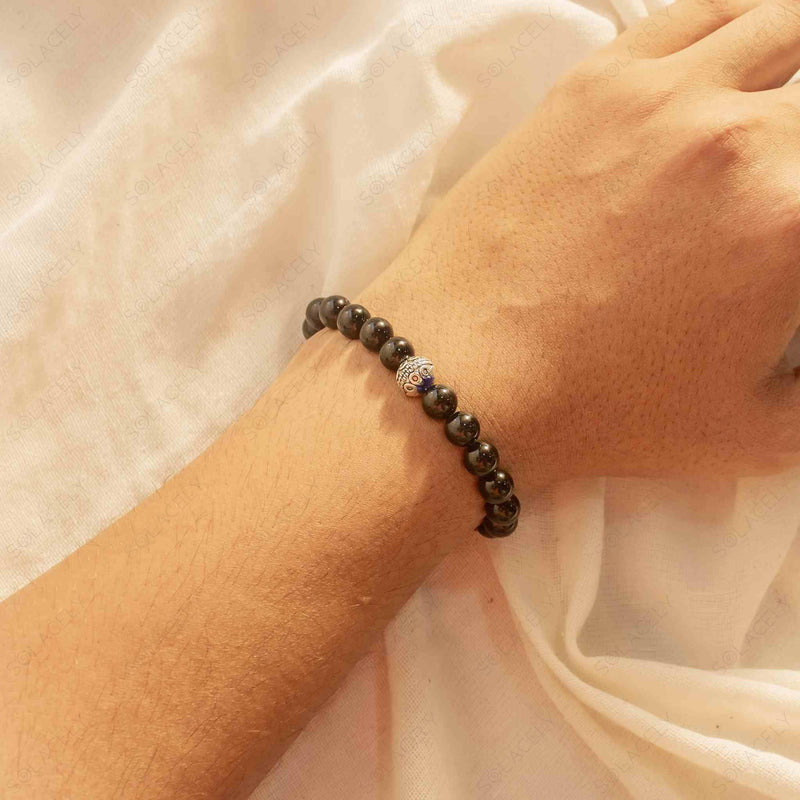
Hessonite garnet, called gomed, is Rahu's stone across essentially every source. Agate is the named substitute, and modern crystal practice adds smoky quartz and black tourmaline for the same protective and grounding associations, though those are additions rather than classical prescriptions.
Rahu is unusual within the system. It is not a planet at all but one of the two lunar nodes, the points where the Moon's orbit crosses the ecliptic, which is why it is called a shadow graha or chhaya graha. Its counterpart, Ketu, is the opposite node, covered in crystals for Ketu.
In traditional interpretation Rahu is associated with obsession, ambition without limit, foreign things, confusion, and sudden reversals. It is not treated as straightforwardly malefic so much as unpredictable, and that reputation shapes how cautiously its stone is prescribed.
What hessonite garnet actually is
Hessonite is a variety of grossular garnet, a calcium aluminium silicate, and its honey to cinnamon brown colour comes from traces of iron and manganese. According to the Gemological Institute of America, garnet is a group of silicate minerals rather than a single species, spanning many colours, with hardness generally between 6.5 and 7.5 on the Mohs scale.
Hessonite has a distinctive internal appearance that gemmologists describe as a heat wave or treacle effect, caused by swirling internal structures. Under magnification it looks like syrup being stirred, and that texture is one of the more reliable indicators that a stone is genuine hessonite rather than a treated substitute.
That hardness range makes it durable enough for a ring worn daily, which matters because the tradition prescribes continuous wear. Our broader garnet meaning and properties guide covers how the species differ.
How Rahu's stone is traditionally worn
| Element | Traditional prescription | Practical note |
|---|---|---|
| Primary stone | Hessonite garnet (gomed) | Look for the swirling heat wave texture |
| Substitute | Agate | Far cheaper, same colour family in banded browns |
| Metal | Silver, or ashtadhatu (eight metal alloy) | Gold is generally avoided for Rahu |
| Finger | Middle finger | The finger associated with Saturn and Rahu |
| Day to begin | Saturday evening | Rahu shares Saturn's day in most traditions |
| Hardness | 6.5 to 7.5 Mohs | Durable enough for continuous wear |
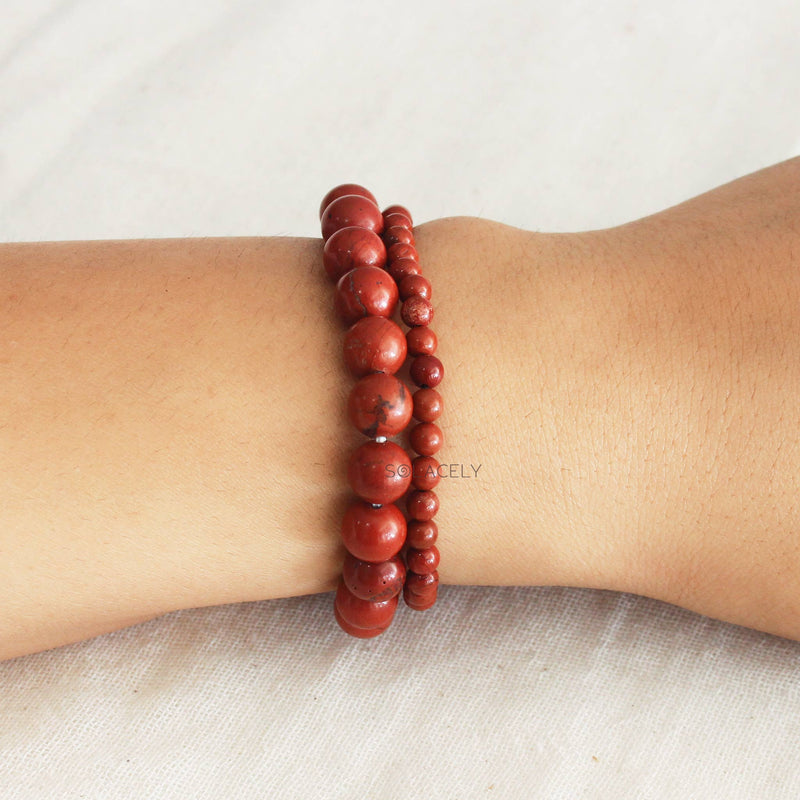
The ring is the classical form. Many people today wear the same stone as a beaded strand instead, and our hessonite bracelet in 4mm, 6mm and 8mm beads is the everyday form of that tradition, worn without the prescribed metal or finger.
Practitioners are notably more cautious with gomed than with the benefic stones. A common instruction is a trial period of a few days before committing to continuous wear, and many advise against it entirely without a chart reading. Whatever you make of the system, that caution is part of the tradition and worth reporting.
What the tradition claims, stated carefully
Rahu's stone is recommended for periods described as confused, obsessive, or marked by sudden reversals that seem to come from nowhere. Classical sources associate it with steadying judgement when a person is chasing something with more intensity than the situation warrants.
It is worth being clear about what the tradition itself claims. Gomed is associated with steadying a difficult period rather than resolving its particulars. Legal trouble, addiction, business difficulty and family conflict all have real routes to help, and the stone is kept alongside them as a marker of intention.
What the stone does is mark a period a person has decided to handle differently. That is a meaningful thing, and it is what the tradition describes. Treat any seller promising specific outcomes in court, in business or in recovery as going well past what the practice itself claims. For the grounding stones used in modern practice for similar reasons, see crystals for protection.
Who should be cautious with gomed
The tradition answers this itself, and it answers carefully. Gomed is the one stone of the nine that practitioners most often advise people not to wear without a chart reading first, because Rahu's placement differs from one chart to the next and the stone is prescribed for some placements and withheld for others. That is the first and largest caution: if no astrologer has looked at your chart, the classical advice is to wait.
The second is the trial period. Even where gomed is recommended, many practitioners ask for a few days of wear before committing to it continuously, and they ask the wearer to notice how those days feel. The third is simpler still. Anyone being hurried into buying a remedial stone, by a deadline or a dire prediction, is being sold urgency rather than guidance, and the tradition has never worked that way.
None of this is a warning against the stone. It is the care the practice has always taken with it. If you are unsure, follow your astrologer's guidance.
Agate, the affordable substitute
Agate is the named substitute and it is a sensible one, being both inexpensive and durable. Geology.com describes agate as a banded variety of chalcedony, itself a microcrystalline quartz, distinguished by curved concentric banding rather than the straight parallel banding that defines onyx.
At 7 on the Mohs scale it handles daily wear well and it does not require the same level of buying caution as hessonite. The banded browns and honey tones sit in the same colour family the tradition asks for, which is the basis of the substitution.
Be aware that a great deal of commercial agate is dyed, often in colours no natural agate produces. For this purpose that hardly matters, since natural brown and honey banding is common and inexpensive. Ask anyway, on principle.
Buying gomed without getting caught out
The astrological gemstone market around Rahu is one of the more aggressive corners of the trade, partly because people often arrive at it during a difficult period. That is worth naming plainly before any of the practical advice.
- Ask for an independent report. Not the seller's own certificate. Hessonite is easily confused with other brown stones.
- Look for the heat wave texture. Genuine hessonite shows swirling internal structure under magnification.
- Be sceptical of urgency. Any seller creating time pressure around a remedial stone is selling anxiety.
- Check the metal. Ashtadhatu quality varies enormously and is rarely specified in writing.
If a stone is being recommended alongside claims about a court case, a business outcome, or a family member's behaviour, step back. That is the point at which a tradition has been turned into a product.
Care
Hessonite is straightforward. Warm soapy water, a soft brush, dried fully. It tolerates brief sunlight and ordinary handling without complaint, which is one of the reasons it works as a continuously worn stone.
Avoid ultrasonic cleaners on any garnet with visible fractures, since vibration can propagate them. Agate takes the same simple treatment and is, if anything, even less demanding.
Store both away from harder stones. At 6.5 to 7.5 they will be scratched by sapphire or topaz sharing the same box, so check the Mohs hardness scale before deciding what goes where. If you are assembling the full set of nine, crystals for Saturn and crystals for the Moon follow the same conventions.
The properties described here reflect traditional Vedic and cultural belief around gemstones. They are not medical claims, legal or financial advice, or a substitute for professional help. No gemstone resolves legal proceedings, business difficulty, addiction, or family conflict. If you are dealing with any of those, seek qualified professional support.
Sources
Written by Chetena Sharma. Reviewed by the Solacely editorial team.
Frequently asked questions
About the author


Written by Chetna Sharma, crystal healing practitioner and co-founder of Solacely. Chetna has worked with healing crystals for over a decade and curates Solacely's protective stone collection.