Hematite and carnelian is the combination people choose when starting things is easy and finishing them is not. Carnelian is traditionally the stone of appetite and first moves. Hematite is traditionally the stone of grounding and follow through. One opens the file, the other closes it.
Key takeaways
- Carnelian is a translucent orange chalcedony, a quartz variety, coloured by iron oxide and sitting near 6.5 to 7 on the Mohs scale.
- Hematite is iron oxide at about 5 to 6 Mohs, softer, far denser and much easier to damage.
- The pairing is used traditionally for motivation plus discipline: carnelian for drive, hematite for staying with the task.
- Warming chalcedony to deepen its orange is an ancient practice and the colour it gives is stable, so choose the depth of tone you want to wear.
- Care differs. Carnelian takes warm soapy water happily, while hematite wants a dry wipe and can mark around the drill holes if it sits wet.
- Everything metaphysical described here is traditional belief, not medical fact.
Why pair hematite with carnelian?
Because they cover the two halves of one problem. Carnelian's traditional role is ignition: enthusiasm, appetite, the willingness to begin. Hematite's traditional role is ballast: focus, weight, staying put. Most people who struggle with work do not lack ideas. They lose the thread halfway through, and that is the gap this pair is chosen to fill.
Colour makes the same argument. Warm burnt orange against cool metallic grey is a genuinely good contrast, and jewellery designers use it deliberately. Carnelian carries the piece and hematite gives it a frame, which is why alternating strands look better than a random mix. If you are new to the grey half of the pair, start with our hematite meaning and properties guide.
In chakra language the split is often described as sacral and root, with carnelian assigned to the sacral centre for creativity and drive, and hematite to the root for stability. That framework has been refined over generations of practice, which is why guides vary a little, and it makes a useful shorthand. Our sacral chakra crystals guide explains where the associations came from.
What is carnelian, and where does its colour come from?
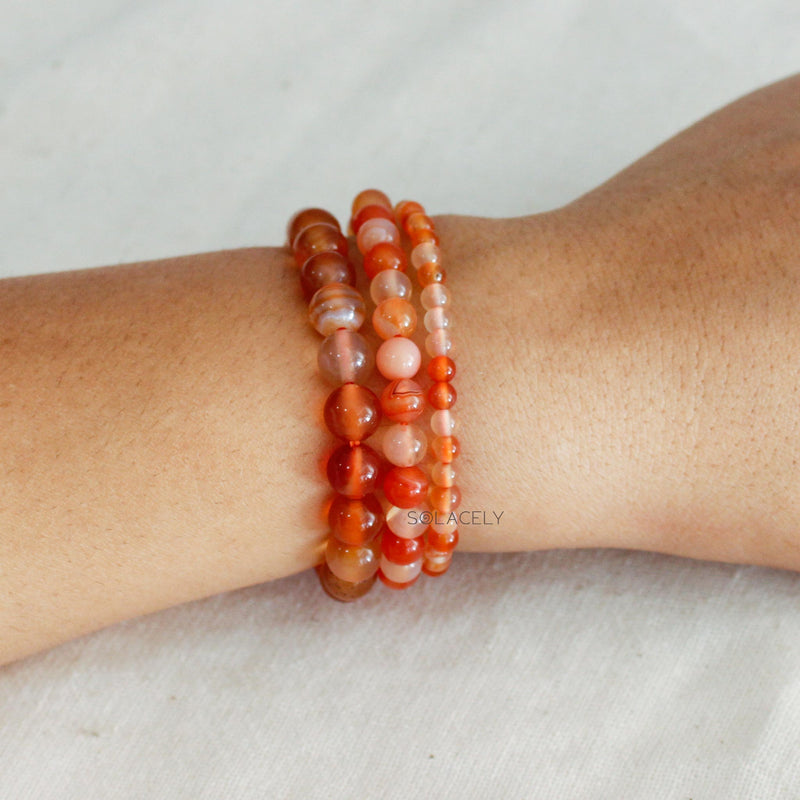
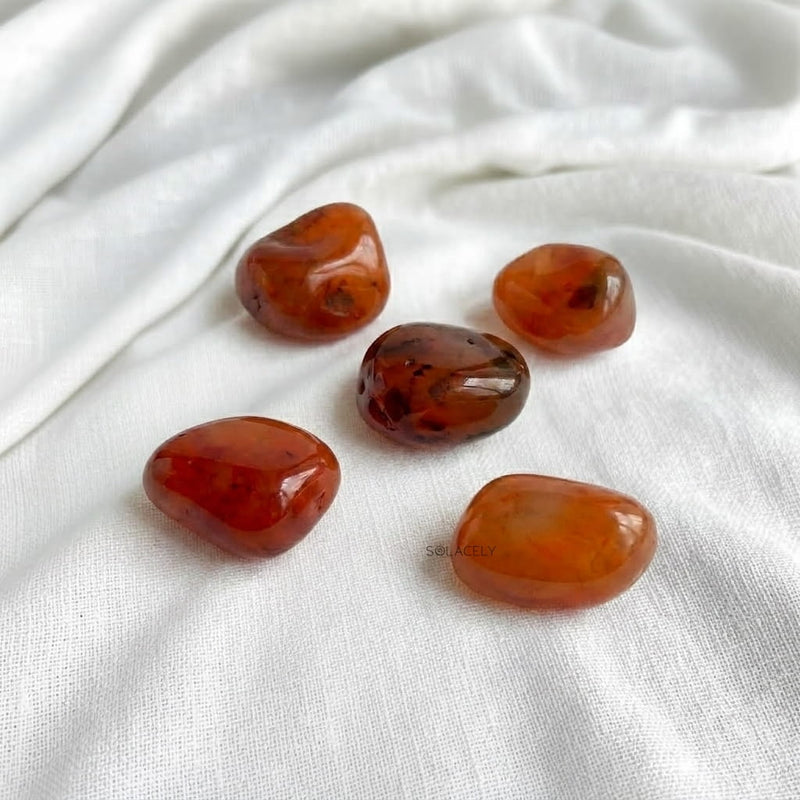
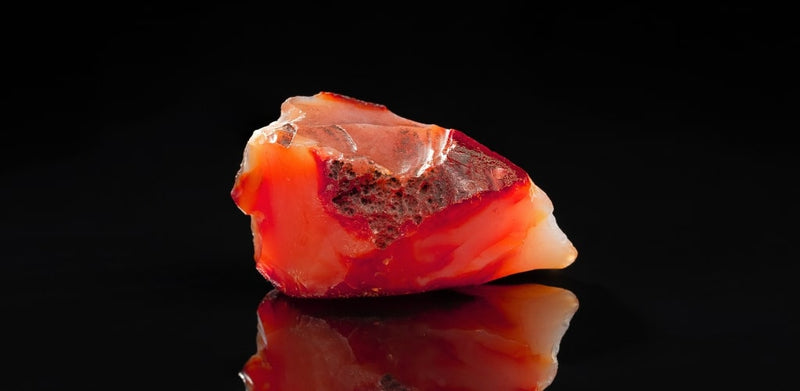
Carnelian is a translucent orange to reddish brown variety of chalcedony, the microcrystalline form of quartz. Its colour comes from iron oxide held within the stone. That places it in the same mineral family as agate, onyx and bloodstone, and at roughly 6.5 to 7 on the Mohs scale.
Warmth is part of the story in a literal sense. Gently heating iron bearing chalcedony deepens and reddens the orange, and the practice is ancient rather than a modern shortcut. Roman and South Asian workshops were doing it thousands of years ago, and the colour it produces is stable, which is why carnelian beads from antiquity still read orange today.
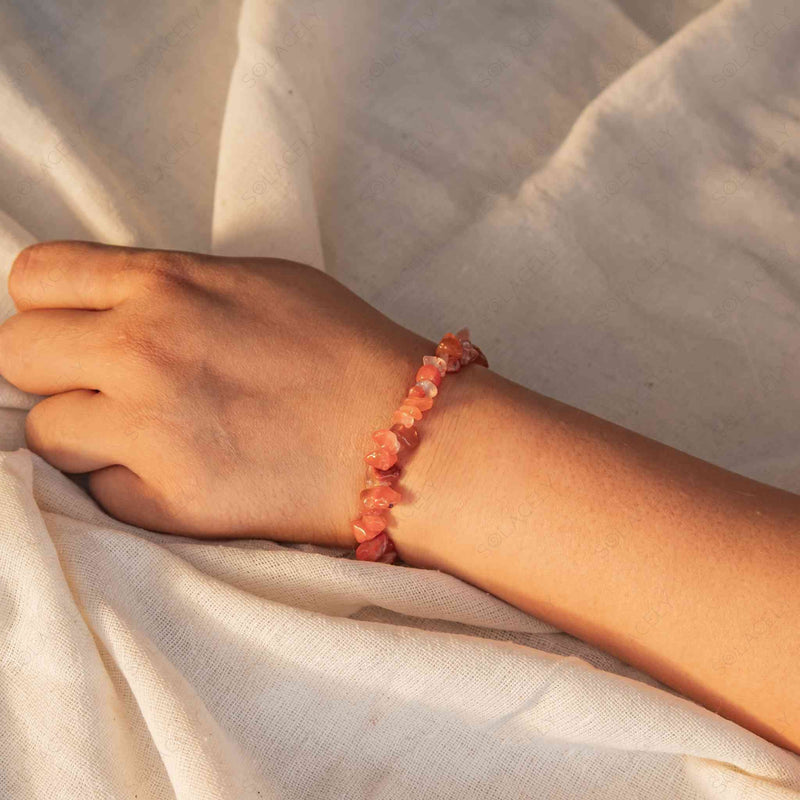
Tone runs from a soft apricot through to a deep brick red, and both ends of the range are worn happily. Hold a bead up to the light and you will usually see an uneven internal glow, which is one of the quiet pleasures of a translucent stone. Choose the depth of orange you are drawn to, and our carnelian crystal guide covers sourcing in more depth.
What is the hematite and carnelian pairing used for?
Work, mostly. In traditional practice this combination is chosen for creative projects that stall, for study sessions that drift, and for the specific misery of having twelve ideas and no finished piece. Carnelian is set for drive, hematite for the discipline to keep going once the novelty wears off.
- Creative projects. Carnelian's long association with artists and makers is the traditional basis for this use.
- Study and revision. Hematite is the old choice for concentration, and the weight of it in the hand makes a decent focus anchor.
- Procrastination. A carnelian tumble on the desk as a start cue, hematite kept nearby for the long middle stretch.
- New roles or new businesses. Nerve at the beginning, steadiness once the first excitement fades.
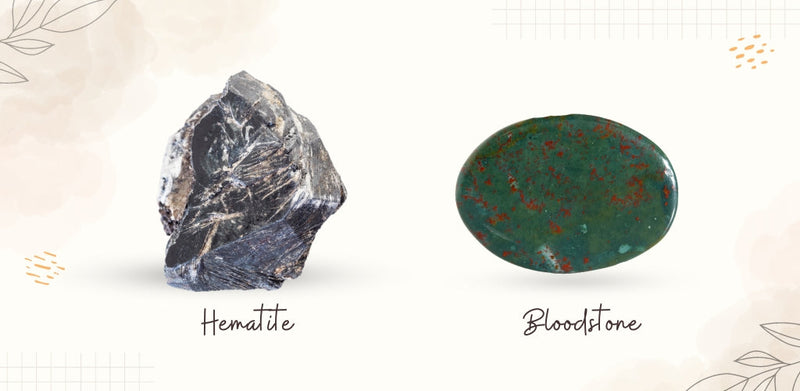
This is not a calming pair. It leans towards activity, so it is a poor bedside choice and a poor fit for an already overstimulated week. For a version built around physical endurance instead of creative drive, see hematite and bloodstone. For the broader options, our crystals for productivity guide compares the usual candidates.
Hematite and carnelian compared
Durability is where these two differ most, and it decides which formats make sense. Carnelian is a quartz and takes daily wear happily. Hematite is softer, denser and fussier, and it shows every scratch on that mirror surface.
| Hematite | Carnelian | |
|---|---|---|
| Mineral | Iron oxide | Chalcedony, a quartz variety |
| Hardness | About 5 to 6 Mohs | About 6.5 to 7 Mohs |
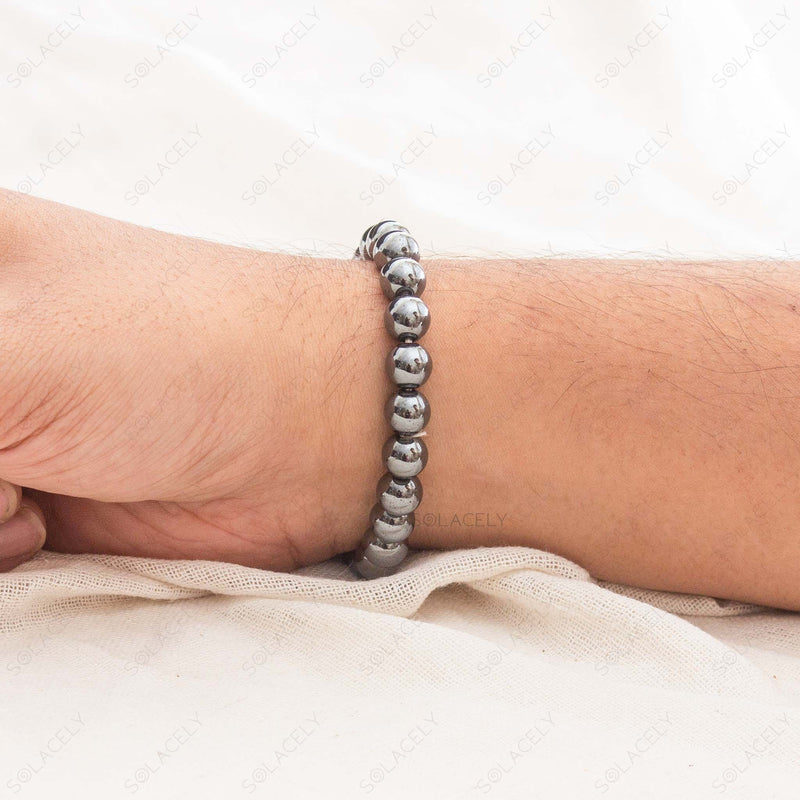
| Appearance | Opaque metallic grey | Translucent orange to red brown |
| Feel in the hand | Unusually heavy and cool | Light, and warms quickly to the skin |
| Traditional role | Grounding, focus, follow through | Drive, creativity, confidence |
| Sunlight | Fine, but keep it dry | Prolonged sun can lift the colour |
| Best formats | Beads, tumbles, pocket stones | Beads, rings, pendants, tumbles |
How do you build a working routine around the pair?
Attach the stones to moments rather than wearing them vaguely all day. The habit is what does the work, and a stone that sits unnoticed on a shelf does nothing at all. A three point routine covers most working days without turning into a chore.
A simple daily structure
- Start. Pick up the carnelian before you open the laptop. Name the one task out loud. Put it down and begin.
- Middle. Keep hematite in your left hand for a slow minute whenever attention drifts. Cool, heavy, oddly effective as a reset.
- End. Put both stones back in the same spot when you stop. The tidy up marks the boundary between work and the rest of the evening.
Wearing them
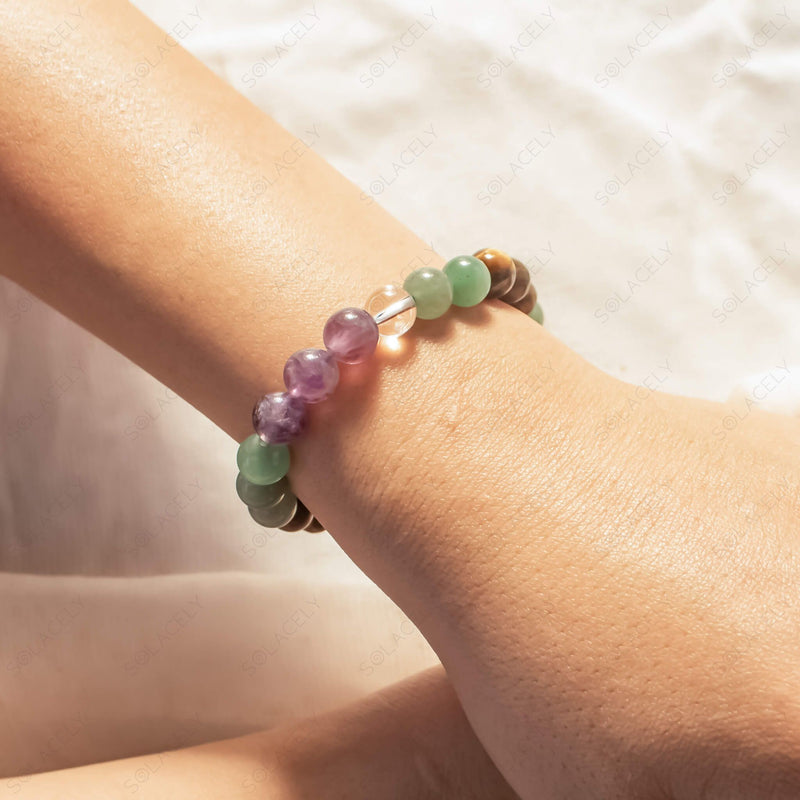
Two strands on the same wrist, with a spacer between them so the harder carnelian does not scuff the hematite polish. Rings are fine in carnelian and a bad idea in hematite, which chips at the edges. A carnelian pendant with hematite beads on the cord is the most balanced format if you want one piece rather than a stack.
On care, keep them apart in storage. Carnelian tolerates warm soapy water and a soft brush. Hematite gets a dry wipe only, because standing water can leave rust marks around the drill holes. The Mohs hardness scale published by Geology.com is the quickest reference for judging what any new stone can take.
Where does carnelian's energising reputation come from?
From a very long history of being worn by people who needed to get something done. Carnelian turns up in Egyptian burial jewellery, in Roman signet rings cut for sealing wax, and in the engraved stone traditions of the Islamic world and South Asia. It has been the working person's gemstone for thousands of years, and that is a great deal of accumulated association.
Colour carries the rest of it. Orange reads as heat, appetite and daylight, and traditions across the world put that end of the spectrum with drive and creativity. Hematite arrives from the opposite direction. Geology.com describes it as the most important ore of iron on earth, and weight and shine have meant solidity to everyone who has ever picked a piece up.
Practitioners describe the pair as keeping the intention in view: carnelian for the moment you begin, hematite for the long middle stretch. That is where the momentum comes from, and it is why people set both stones out on the desk rather than leaving them in a bowl by the door.
Who should skip this pairing?
Anyone looking for calm. Both stones lean towards action, so if your problem is racing thoughts, poor sleep or a nervous system already running hot, this is not the shelf to be looking at. Amethyst, howlite, lepidolite and blue lace agate are the traditional choices in that situation.
Skip it too if hematite makes you feel wired rather than settled, which a minority of wearers report. Keep the carnelian, swap the hematite for a gentler grounding stone, and see how that sits. There is no obligation to persevere with a combination that does not suit you.
The properties described here reflect traditional and cultural belief around crystals. They are not medical claims. Neither carnelian nor hematite treats, prevents or affects metabolism, circulation, fertility, iron levels or any other medical condition, and neither is a substitute for professional care. If you are managing a health concern, speak to a qualified healthcare professional.
Sources
Written by Chetena Sharma. Reviewed by the Solacely editorial team.
Frequently asked questions
About the author


Written by Chetna Sharma, crystal healing practitioner and co-founder of Solacely. Chetna has worked with healing crystals for over a decade and curates Solacely's protective stone collection.