June has three birthstones: pearl, moonstone and alexandrite. Pearl is an organic gem grown inside a mollusc, moonstone is a feldspar with a floating blue glow, and alexandrite is a rare chrysoberyl that changes colour under different light. Each one asks for very different care.
Key takeaways
- June is one of the few months with three official birthstones: pearl, moonstone and alexandrite.
- Pearl is the softest of the three at roughly 2.5 to 4.5 on the Mohs scale, so no chemicals and no ultrasonic cleaners, ever.
- Moonstone sits at 6 to 6.5 Mohs and cleaves easily, which means knocks matter more than scratches.
- Alexandrite is the hardest at 8.5 Mohs and the rare colour-change stone of the three, green in daylight and red under lamplight.
- Moonlight is the traditional cleanse for all three June stones, and it is the gentlest option physically as well.
Why does June have three birthstones?
June carries three stones because the modern birthstone list has been revised more than once. Pearl and moonstone both sat on the standardised list adopted by American jewellers in 1912, and alexandrite was added to the month later. The Gemological Institute of America now recognises all three for June.
The practical reason is choice. Pearl is affordable and traditional, moonstone is affordable and unusual, and alexandrite is a collector stone with a price to match. A month with only pearl would leave June babies with one look and one budget. Three stones give a real spread.
If you want to see how June compares with the rest of the calendar, our month-by-month birthstone guide lays out every option side by side.
What is the pearl birthstone?
Pearl is the only June birthstone that is not a mineral. It forms inside living molluscs when nacre builds up in layers around an irritant, which is why gemmologists class it as an organic gem. That organic structure also makes it the softest of the three, roughly 2.5 to 4.5 on the Mohs scale.
Pearl culturing is a long established craft and the backbone of the modern pearl trade. A technician introduces the nucleus, then the mollusc lays down nacre exactly as it would in open water, layer by layer, over months or years. The lustre you see is real nacre, so judge a strand on the depth of that glow.
Nacre is also the reason pearls need more thought than any other June stone. Perfume, hairspray, vinegar and even sustained sweat will dull the surface, because nacre is largely calcium carbonate and reacts to acid. Those fine aragonite layers are what create the lustre in the first place.
Never put pearls in an ultrasonic cleaner. The vibration works its way between the nacre layers and there is no repairing that. A soft damp cloth after wearing is the whole routine. If you like the look but want something sturdier, mother of pearl gives you the same shimmer in a more forgiving form.
What makes moonstone the glowing June birthstone?
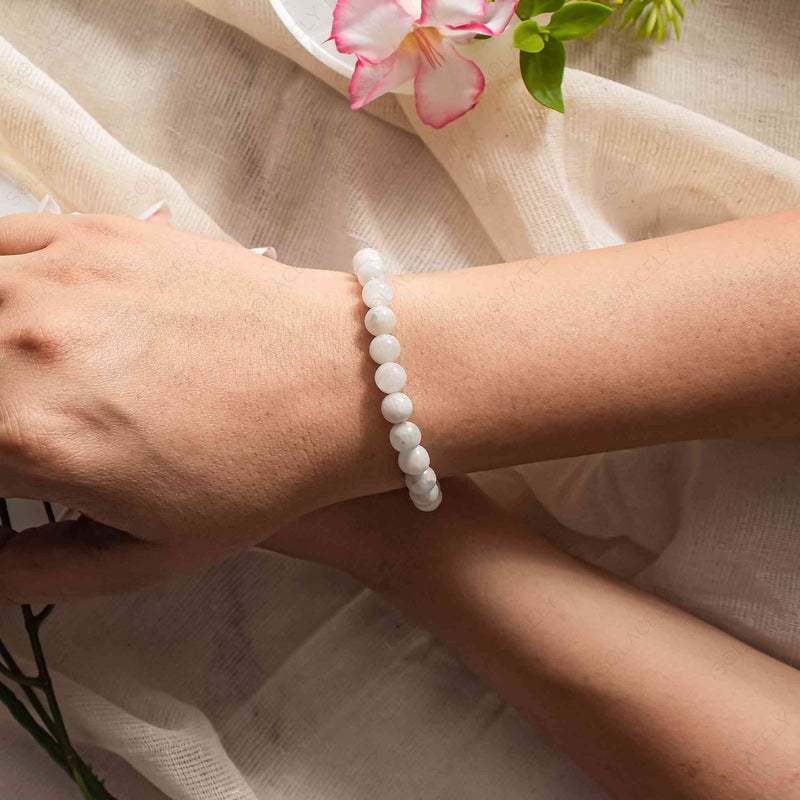
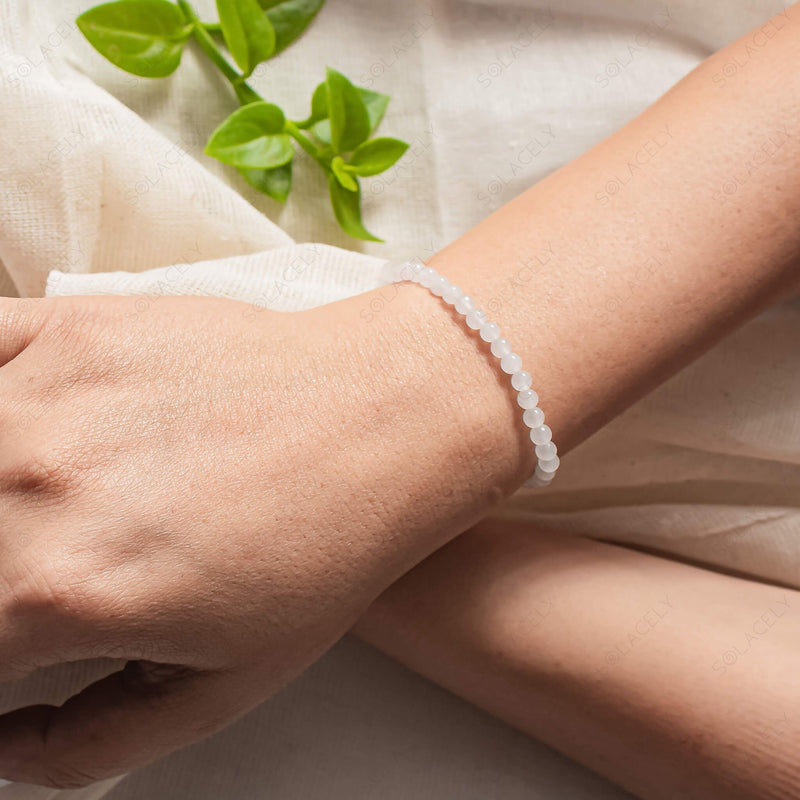
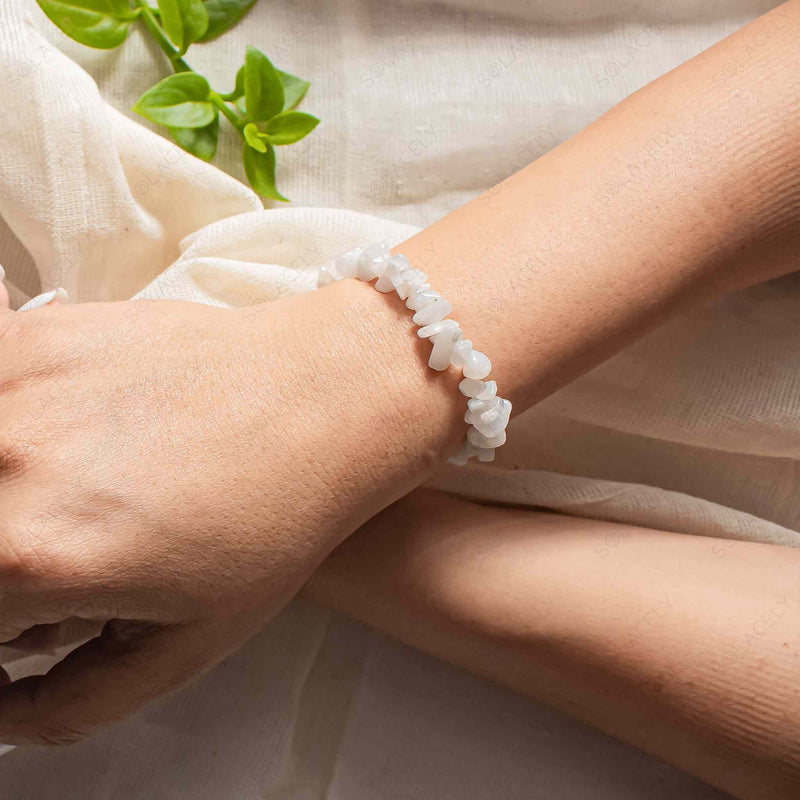
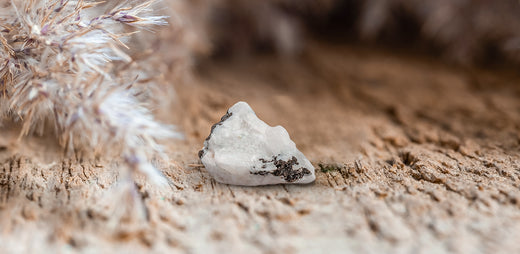
Moonstone is a feldspar, and its signature is adularescence: a soft blue or white light that seems to float just under the surface and shifts as you tilt the stone. The glow comes from light scattering between microscopic layers of two feldspars inside the crystal. Moonstone rates 6 to 6.5 on the Mohs scale.
That layered structure is a gift and a weakness. It creates the glow, and it also gives moonstone distinct cleavage planes. Gemmological reference works put moonstone at relatively poor toughness, so a sharp knock against a door frame can split a stone that would shrug off an ordinary scratch.
Colour runs from near colourless with a blue sheen through to peach, grey and the multicoloured material sold as rainbow moonstone, which is technically a labradorite feldspar rather than orthoclase. Blue sheen on a transparent, near colourless body is the most sought after, and it is also the hardest to find in larger sizes.
In crystal practice, moonstone is traditionally tied to intuition, cycles and fresh starts, which is why it turns up so often in pieces made for new chapters. The fuller picture sits in our moonstone meaning and properties guide.
Is alexandrite really that rare?
Yes. Alexandrite is a colour-change variety of chrysoberyl that reads green or bluish green in daylight and raspberry red or purplish red under incandescent light. Gemmological reference works rate it 8.5 on the Mohs scale, which makes it the toughest June stone by a wide margin and one of the rarest coloured gems in the trade.
The colour change comes from trace chromium, the same element that colours emerald and ruby. It is a genuine shift in how the stone responds to different light sources, not a trick of the setting. A strong, complete swing from clean green to clean red is the quality collectors prize most highly.
The stone was first found in the Ural Mountains of Russia in the 1830s and named after Tsar Alexander II. Green and red happened to be the imperial military colours, which gave the gem an immediate place in Russian court jewellery. That story still travels with alexandrite, and it is part of why June birthdays claim the stone so proudly.
Seeing the change yourself is half the pleasure. Hold the stone near a window, then carry it over to a warm lamp and watch the green fold into red. In crystal tradition, that adaptability is exactly what alexandrite is worn for: a reminder that you can meet a change in conditions without losing who you are.
How do you choose between pearl, moonstone and alexandrite?
Start with how the piece will be worn rather than which stone you like best. Daily rings and bracelets take the most abuse, so hardness decides. Pearl at 2.5 to 4.5 Mohs belongs on a strand or in earrings, moonstone at 6 to 6.5 suits pendants, and alexandrite at 8.5 handles anything.
Budget is the second filter. Cultured pearl and moonstone are both accessible at modest prices, while alexandrite with a strong colour change sits firmly in the collector bracket. Plenty of June babies wear a moonstone piece every day and save alexandrite for a milestone birthday.
| Pearl | Moonstone | Alexandrite | |
|---|---|---|---|
| What it is | Organic gem from a mollusc | Feldspar mineral | Chrysoberyl variety |
| Mohs hardness | About 2.5 to 4.5 | 6 to 6.5 | 8.5 |
| Signature look | Soft nacreous lustre | Floating blue adularescence | Green by day, red under lamplight |
| Main weakness | Acids, chemicals, ultrasonic cleaners | Cleavage, so impact damage | Price, not durability |
| Best format | Necklaces and earrings | Pendants and occasional rings | Any setting, including daily rings |
| Typical cost | Low to moderate | Low to moderate | High |
Gifting for a June birthday? Moonstone is usually the easiest call. It is affordable, it photographs beautifully, and the glow reads as special without needing a jeweller to explain it. A sunstone and moonstone pairing is a common alternative when you want warmth alongside the cool sheen.
How should you care for each June birthstone?
Care differs sharply across the three, and treating them the same is how June jewellery gets ruined. Pearl needs the gentlest handling of any common gem at 2.5 to 4.5 Mohs, moonstone needs protection from impact rather than scratches, and alexandrite at 8.5 Mohs tolerates ordinary cleaning without complaint.
Pearl
Put pearls on last, after perfume, hairspray and moisturiser have dried. Wipe them with a soft damp cloth after wearing and let them dry flat before storing. Keep them in a soft pouch rather than a sealed plastic bag, because nacre needs a little humidity. Restring worn strands every couple of years.
Moonstone
Warm water, mild soap and a soft brush are enough. Skip steam and ultrasonic cleaners, since both stress cleavage planes. Store moonstone away from harder stones such as quartz and topaz, and take rings off before gardening, gym sessions or anything involving a hard surface at speed.
Alexandrite
The most forgiving of the three. Warm soapy water and a soft brush suit it well, and it is stable under normal wear. Because it is valuable, have the setting checked periodically rather than the stone itself. Lost stones are almost always a claw problem, not a hardness problem.
For the energetic side of things, moonlight is the traditional cleanse for all three, and it happens to be the safest physically as well. Prolonged direct sunlight is best avoided, particularly for pearl. Anyone building a birthstone set will find more context in our July birthstone guide, which covers the neighbouring month.
The properties described here reflect traditional and cultural belief around crystals. They are not medical claims and are not a substitute for professional healthcare. If you are managing a health concern, speak to a qualified practitioner.
Sources
- Gemological Institute of America, Pearl Description
- Gemological Institute of America, Moonstone Description
Written by Chetena Sharma. Reviewed by the Solacely editorial team.
Frequently asked questions
About the author


Written by Chetna Sharma, crystal healing practitioner and co-founder of Solacely. Chetna has worked with healing crystals for over a decade and curates Solacely's protective stone collection.