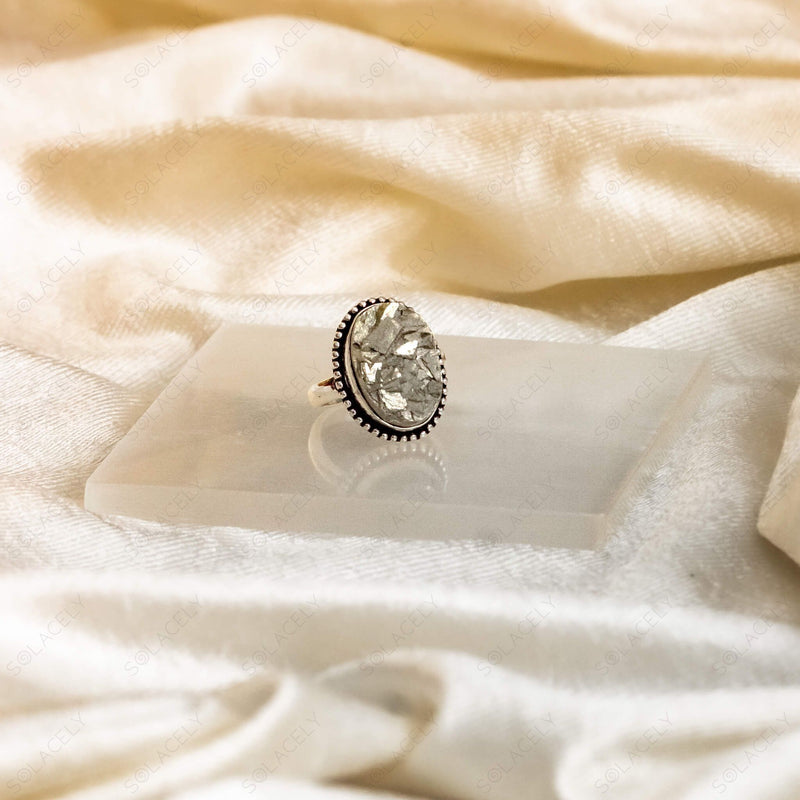
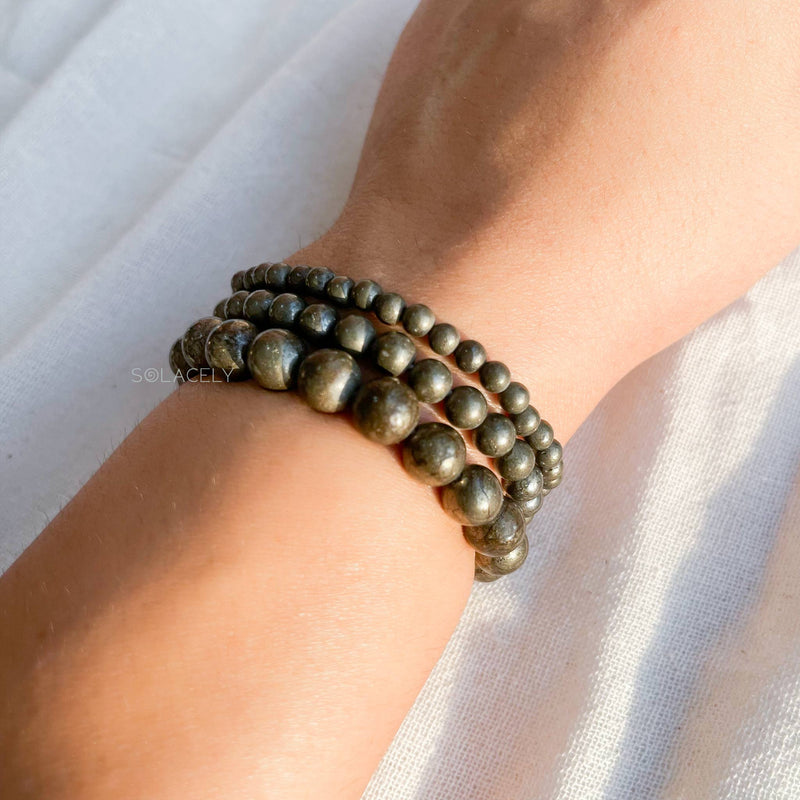
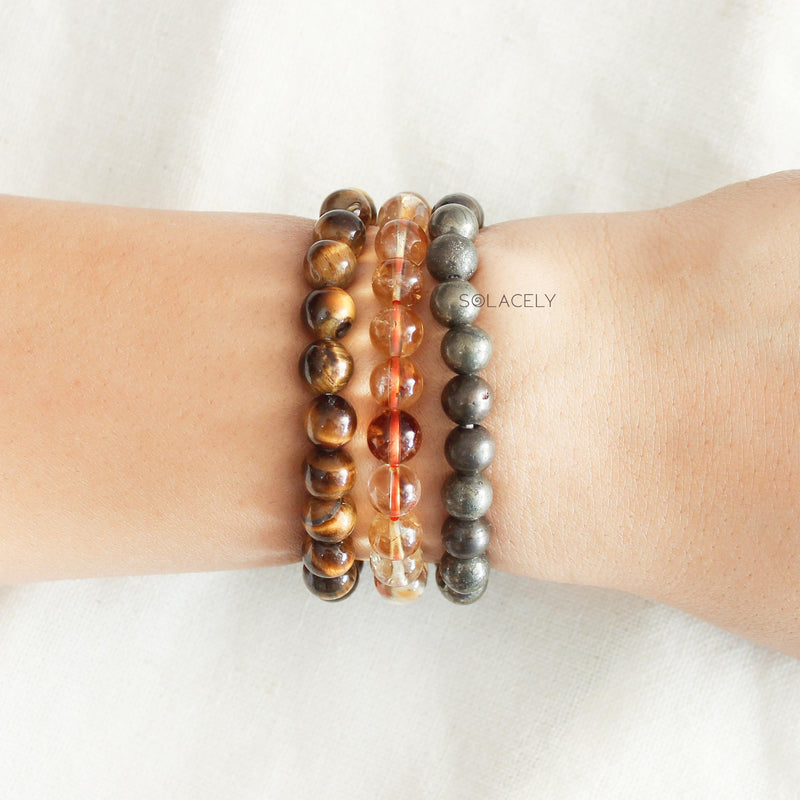
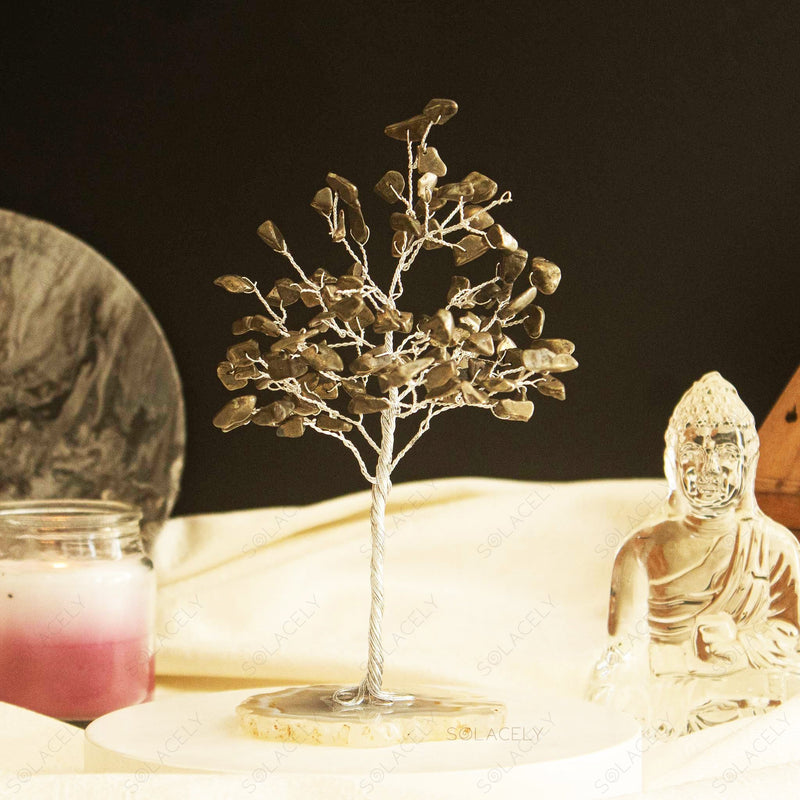
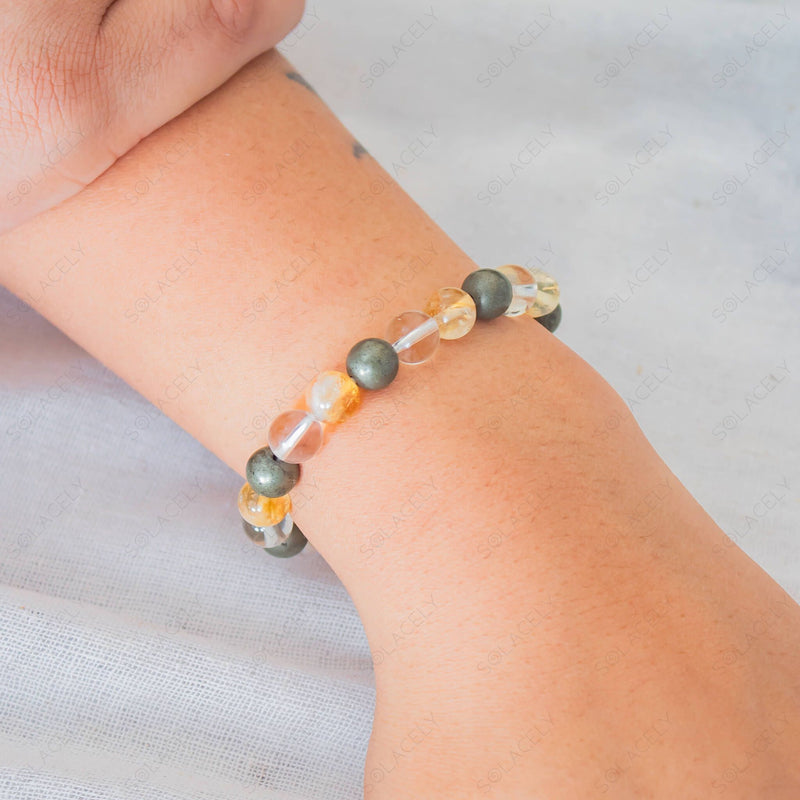
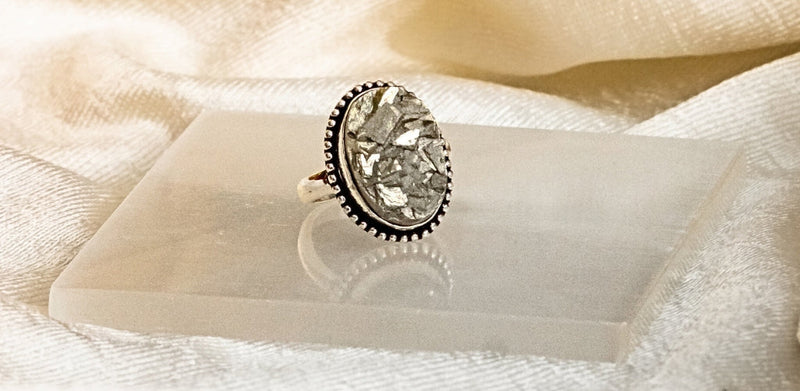
A pyrite ring is traditionally read as a worn commitment to self worth. The stone looks like gold without being gold, and crystal practice takes that literally: pyrite is associated with valuing your own work properly rather than with luck arriving from elsewhere. It sits with the solar plexus, the chakra of will.
Key takeaways
- Pyrite's chakra is the solar plexus: will, confidence, personal power.
- The symbolism grew out of the fool's gold story. What resembles wealth became what is worn to earn it.
- A ring makes the meaning visible and daily, which is why the format matters here.
- Intentions work better when specific and measurable, not vague wishes for abundance.
- Never cleanse pyrite with water or salt. Use sound, smoke or selenite instead.
- Pyrite is a stone of doing, not of calm. It has no soothing tradition at all.
Where the symbolism came from
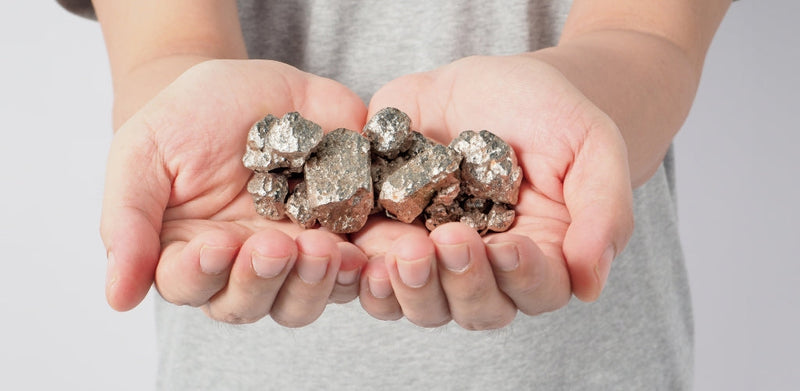
Pyrite's spiritual meaning is downstream of a practical mistake. Prospectors and miners repeatedly took its brassy metallic shine for gold, which earned it the fool's gold nickname and a long association with false promise. Crystal tradition then inverted the story, and the inversion is the interesting part: the stone that only looks like wealth became the stone worn to build the real thing.
That reading gives pyrite an unusual character among crystals. Most stones in the money and abundance category are framed around attraction, drawing something toward you. Pyrite is framed around production: earning, valuing, charging properly, doing the work. It is the least passive stone in that whole group.
The solar plexus connection
Chakra tradition places pyrite at the solar plexus, sitting just above the navel, associated with will, self definition and personal authority. That placement explains who pyrite gets recommended to, and the pattern is consistent across sources: people who undercharge, who over apologise, who accept the first number offered, who defer a decision they have already made.
It also explains what pyrite is not recommended for. There is no tradition of pyrite as a calming stone, a sleep stone, or a grief stone. If what you need is soothing, this is the wrong mineral, and the practice around it will not bend that way. Our guide to crystals for the solar plexus covers the wider set.
Why a ring and not a pendant
Format is not incidental in crystal practice, and pyrite is the clearest case. A pendant sits out of sight under a collar. A pocket tumble gets forgotten by ten in the morning. A ring is in your field of view every time you type, drive, eat or hand something over, which for most people is several hundred times a day.
Whatever you believe about the mechanism, that difference is real and it is measurable. An object you see constantly functions as a prompt. An object you never see does not. If the spiritual meaning of a pyrite ring comes down to a daily reminder of self worth, the ring is doing something a pendant cannot.
Traditional practice puts it on the index finger of the dominant hand, the finger long associated with authority and direction. There is no mechanism behind that convention, and there is a practical argument for the other hand: pyrite is brittle, and the hand you use less meets fewer hard edges. We cover the durability side in natural pyrite ring benefits, durability and care.
Setting an intention that actually holds
Most intention setting fails for a boring reason: the intention is too vague to act on. I intend to attract abundance gives you nothing to do on a Tuesday morning. Here is a version with more structure:
- Name one thing, specifically. Not abundance. A rate you will quote. A conversation you will have. A number you will not go below.
- Say it once as you put the ring on. Same words each morning. Repetition is the point, not eloquence.
- Use the sight of the ring as a cue. Each time you notice it, ask whether the next thing you do moves toward that named goal.
- Review it weekly. If the intention has not changed anything in a week, the intention is wrong or too large. Shrink it.
None of this requires believing anything about minerals. It is a reminder system with a symbol attached, and symbols are unusually good at surviving in memory.
Cleansing pyrite without ruining it
This is the one place where a spiritual practice can do physical damage. Pyrite is iron sulfide, and in the presence of moisture it oxidises, dulling the surface and, in persistent damp, degrading further. Salt makes it considerably worse.
So the two most common cleansing methods, a rinse under running water and a night buried in salt, are both actively harmful to this particular stone. Use dry methods instead: sound from a bowl or bell, incense or sage smoke, a night resting beside selenite, or brief indirect moonlight in a dry place. Then wipe the ring with a dry cloth and put it away somewhere that is not a bathroom.
Who a pyrite ring suits
It suits someone with a concrete ambition and a habit of shrinking in front of it. Freelancers who cannot say their rate out loud. People negotiating a salary. Anyone building something slow where the daily evidence of progress is thin and a visible reminder helps.
It suits less well anyone hoping the stone will do the work. Pyrite's entire tradition points the other way, toward effort, and a stone that symbolises earned value sits oddly with waiting for luck. For the mineralogy and the wider tradition, see pyrite metaphysical properties and pyrite meaning, benefits and properties.
The uses described here reflect traditional and cultural crystal practice. They are not medical claims and are not a substitute for professional healthcare, financial or legal advice.
Sources
Written by Chetena Sharma. Reviewed by the Solacely editorial team.
Frequently asked questions
About the author


Written by Chetna Sharma, crystal healing practitioner and co-founder of Solacely. Chetna has worked with healing crystals for over a decade and curates Solacely's protective stone collection.