A crystal singing bowl is a bowl made from quartz, the same silica mineral as clear crystal, that produces one pure, sustained tone when you rub or strike its rim. Unlike a metal Himalayan bowl, it rings with a single clean note rather than layered overtones, plays louder, holds the sound longer, and is usually tuned to a specific musical note and chakra.
Key Takeaways
- A crystal singing bowl is made from quartz (silicon dioxide), the same mineral family as clear crystal, and is spun and heated at very high temperatures, not hammered like a metal bowl.
- It produces one pure, single tone that is louder and sustains longer than a metal bowl's warm, layered overtones.
- Bowls are tuned to musical notes (C to B), and each note is traditionally matched to one of the seven chakras, from root to crown.
- Two main styles exist: frosted (grainy white, heavier, more affordable) and clear or 'alchemy' bowls (transparent, lighter, much pricier).
- Frosted quartz bowls are the premium tier, while clear and alchemy bowls are collector-tier pieces costing several times more again, far above most metal bowls.
What is a crystal singing bowl?
A crystal singing bowl is a musical and meditation instrument made from quartz, chemically silicon dioxide (SiO2), the same mineral as rock crystal. According to Encyclopaedia Britannica, quartz is one of the most common minerals on Earth and the main component of most sand. When you circle its rim with a mallet, friction sets the whole bowl vibrating and it sings one clear note.
The sound is the giveaway. Where a metal bowl gives you a warm, shimmering blend of tones, a crystal bowl gives you one focused pitch that fills a room and keeps ringing after you lift the mallet away. That single, penetrating tone is why sound practitioners reach for them in group sound baths.
These bowls are a modern instrument, not an ancient Himalayan one. They grew out of the quartz industry in the twentieth century and were adopted for meditation and sound work later. If you want the wider family of instruments, our guide to sound bowls and how they differ sets the whole picture. This page is part of the larger singing bowl hub.
Crystal vs metal (Himalayan) singing bowls
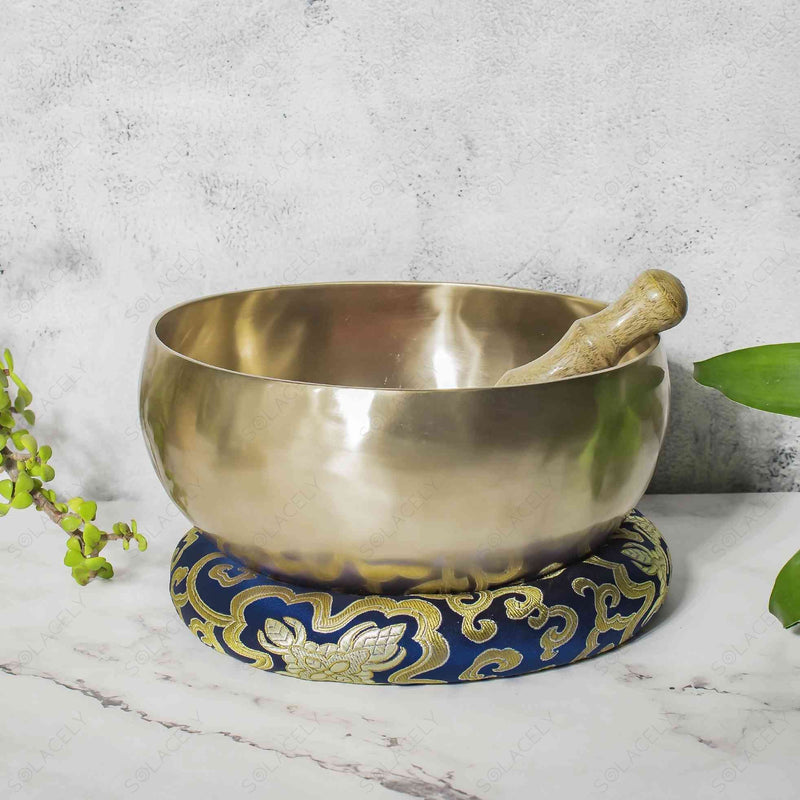
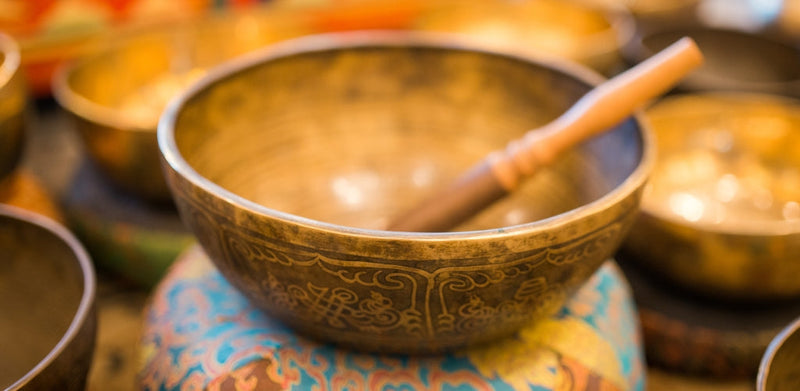
The core difference is material and sound. A crystal bowl is quartz and sings one pure, loud, long note; a metal Himalayan bowl is a bronze alloy and sings a warm, complex chord of overtones. Neither is 'better.' They suit different rooms, budgets, and moods. The table below lays out the honest trade-offs.
| Feature | Crystal (quartz) bowl | Metal (Himalayan) bowl |
|---|---|---|
| Material | Quartz, ~99% pure silica | Bronze alloy (often called 'seven metals') |
| Tone | One pure, single note | Warm, layered overtones |
| Volume | Loud, carries far | Softer, more intimate |
| Sustain | Very long, keeps ringing | Shorter, fades sooner |
| Tuning | Tuned to a set note and chakra | Varies, rarely a single exact note |
| Durability | Fragile, can crack or shatter | Very durable, near unbreakable |
| Portability | Bulky, awkward to carry | Compact, easy to travel with |
| Price tier | Premium and up | Budget to mid range |
Metal bowls win on price, durability, and portability, and their overtones feel enveloping up close. Crystal bowls win on purity, volume, and precise tuning, which is why they anchor larger sound sessions. For the traditional metal side of the family, see Tibetan singing bowl meditation. Many practitioners simply keep both.
Frosted vs clear (alchemy) crystal bowls
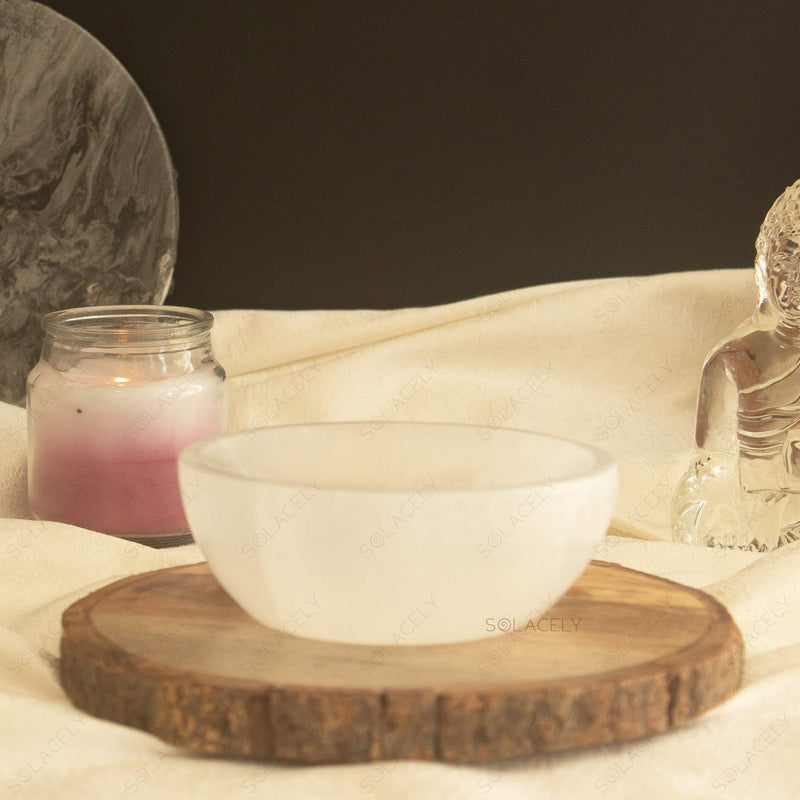
Crystal bowls come in two broad finishes. Frosted bowls have a matte, grainy white surface, are thicker and heavier, and cost less. Clear (also called optically clear or 'crystal tone') and alchemy bowls are transparent, thin, and light, with a brighter tone and a much higher price. The finish changes the feel more than the fundamental note.
Frosted bowls are the usual starting point. They are sturdier for their type, easier to play, and their sound is soft-edged and grounding. Most first-time buyers begin here because the price is more reachable and the bowls handle everyday practice well.
Clear and alchemy bowls are the premium tier. Alchemy bowls have trace minerals or metals, gold, platinum, or gemstone powders, fused into the quartz, which tints the bowl and shifts its character. They are lighter, more portable, and prized for a crisp, singing brightness. They are also delicate and expensive, so they tend to be a second, considered purchase.
How crystal singing bowls are made
Crystal singing bowls are made by centrifugal casting: crushed quartz is poured into a spinning mould and heated to roughly 4,000°F (about 2,200°C), where the silica grains fuse into a solid bowl. Frosted bowls keep that grainy white surface; clear bowls are fused at even higher heat until the quartz turns transparent like glass.
The spinning is what gives the bowl its even, round wall, which is essential for a clean tone. An uneven wall would wobble the pitch. After casting, each bowl is ground and tuned so its rim rings at a target musical note, then tested before it is graded and sold.
Because the raw material is nearly pure quartz sand, the finished tone is remarkably clean. That purity, plus the tight tuning, is what lets sound practitioners build a matched set where every bowl lands on a known note. Learn how those tones are organised in our singing bowl frequencies chart, which lists the Hz values behind each note.
Notes, frequencies and chakra tuning
Crystal bowls are tuned to the seven musical notes, C, D, E, F, G, A, B, and each note is traditionally paired with one of the seven chakras. The lowest note, C, maps to the root at the base of the spine; the highest, B, maps to the crown. This lets you pick a bowl for the theme you want to work with.
Here is the common mapping. Treat it as a traditional framework, not a measured fact.
| Note | Chakra | Location | Theme |
|---|---|---|---|
| C | Root (Muladhara) | Base of spine | Grounding, safety |
| D | Sacral (Svadhisthana) | Below navel | Creativity, emotion |
| E | Solar plexus (Manipura) | Upper abdomen | Confidence, will |
| F | Heart (Anahata) | Centre of chest | Love, compassion |
| G | Throat (Vishuddha) | Throat | Expression, truth |
| A | Third eye (Ajna) | Between the brows | Intuition, insight |
| B | Crown (Sahasrara) | Top of the head | Awareness, connection |
Larger bowls tend to produce lower notes, and smaller bowls higher ones, so a set of seven grows in size as it descends in pitch. If chakra work is your reason for buying, our guide to singing bowls and the chakras explains how to choose and pair them. A full seven-note collection is covered in our singing bowl set guide.
How to choose a crystal singing bowl
Start with your purpose, then match the note, size, and finish to it, and only then think about budget. A single bowl tuned to a note that speaks to you is a better first buy than a cheap set you never bond with. Play a bowl before you commit if you possibly can, since tone is personal.
Use this quick checklist:
- Purpose first. Meditation and relaxation, a specific chakra, or group sound baths each point to different notes and sizes.
- Pick the note. For grounding, lean to lower notes (C, D); for clarity and calm above the shoulders, lean higher (A, B).
- Choose the finish. Frosted for a first bowl and a softer, grounding tone; clear or alchemy for brightness and portability, if the budget allows.
- Mind the size. Bigger bowls are louder with deeper notes but harder to store and carry; 8 to 10 inches is a friendly starting size.
- Listen for a clean ring. The tone should be pure and steady, with no rattle or warble as it sustains.
- Check the rim and wall. A smooth, even, chip-free rim is essential for both sound and safety.
If you are new to the whole practice, the gentle background in sound healing is worth a read before you spend.
How to care for a fragile crystal bowl
Crystal bowls are quartz, so they are hard but brittle: they resist scratches yet crack or shatter from a knock, a drop, or sudden temperature change. Treat yours like fine glassware. Store it padded, lift it by the base with both hands, and keep it away from edges where it could be nudged off.
A few habits protect the sound and the bowl:
- Cushion it. Keep the bowl on its rubber O-ring or a folded cloth, never bare on a hard surface.
- Handle from the base. Lift with both hands under the bowl, not by the rim, which is the weakest point.
- Avoid thermal shock. Do not pour hot or ice-cold water in, and keep it out of direct harsh sun near glass.
- Clean gently. Wipe with a soft, damp cloth and mild soap, then dry. Skip abrasive scrubbers.
- Store safely. A padded box or a dedicated shelf away from foot traffic and pets saves heartbreak.
One dropped bowl can end its life, so slow, two-handed movements are the whole secret. A good carry case is a sensible add-on if you ever transport it.
What a crystal singing bowl costs
Crystal bowls cost considerably more than metal ones, mostly because quartz bowls are heavier, more fragile to ship, and often imported. As a rough guide, frosted quartz bowls sit in the premium tier, while clear and alchemy bowls are collector-tier and can cost several times that again. Metal Himalayan bowls, by contrast, start at the budget end.
Prices swing with size, finish, and tuning quality. A small 6-inch frosted bowl is the most affordable entry; a large 12-inch clear or alchemy bowl, or a full seven-bowl set, is a serious investment several times that. Shipping and safe packing add to the cost too, since a cracked bowl in transit is a total loss.
A sensible path for most people: buy one well-tuned frosted bowl in a note you love, learn to play it, and add to a set later. It is easy to overspend on a matched collection before you know which tones you actually reach for. Buy from a seller who tests and grades tone, and who packs for fragility. A crystal bowl is a piece you keep for years, so a little patience pays off.
Sources
- Encyclopaedia Britannica, 'Quartz'
- Goldsby TL, et al., 'Effects of Singing Bowl Sound Meditation on Mood, Tension, and Well-being,' Journal of Evidence-Based Complementary & Alternative Medicine (2017), via NIH PubMed
- National Center for Complementary and Integrative Health (NIH), 'Meditation and Mindfulness: What You Need To Know'
Frequently asked questions
About the author


Written by Chetna Sharma, crystal healing practitioner and co-founder of Solacely. Chetna has worked with healing crystals for over a decade and curates Solacely's protective stone collection.