Black tourmaline, mineral name schorl, is the grounding and protective stone of modern crystal practice. It is the piece people keep by a front door, on a desk or beside a bed, and at 7 to 7.5 on the Mohs scale it is tough enough to wear every day without much thought.
Key takeaways
- Black tourmaline is schorl, a sodium iron aluminium borosilicate, rated 7 to 7.5 on the Mohs scale and durable enough for daily wear.
- Traditionally it is used for grounding, boundaries and clearing a heavy atmosphere from a room.
- It is the stone people most often keep beside a desk, a router or a bedside when screens are the drain.
- Tourmaline is genuinely pyroelectric and piezoelectric, developing a small surface charge when heated or squeezed, and that unusual property is part of why it picked up its protective reputation.
- It pairs conventionally with selenite for cleansing and clear quartz for amplification.
- Everything here about energy and protection is traditional belief, not medical fact.
What is black tourmaline?
Black tourmaline is the iron rich member of the tourmaline group, correctly called schorl. Tourmaline is a complex boron silicate that occurs in more colours than any other mineral group, and schorl accounts for the large majority of the tourmaline found in nature.
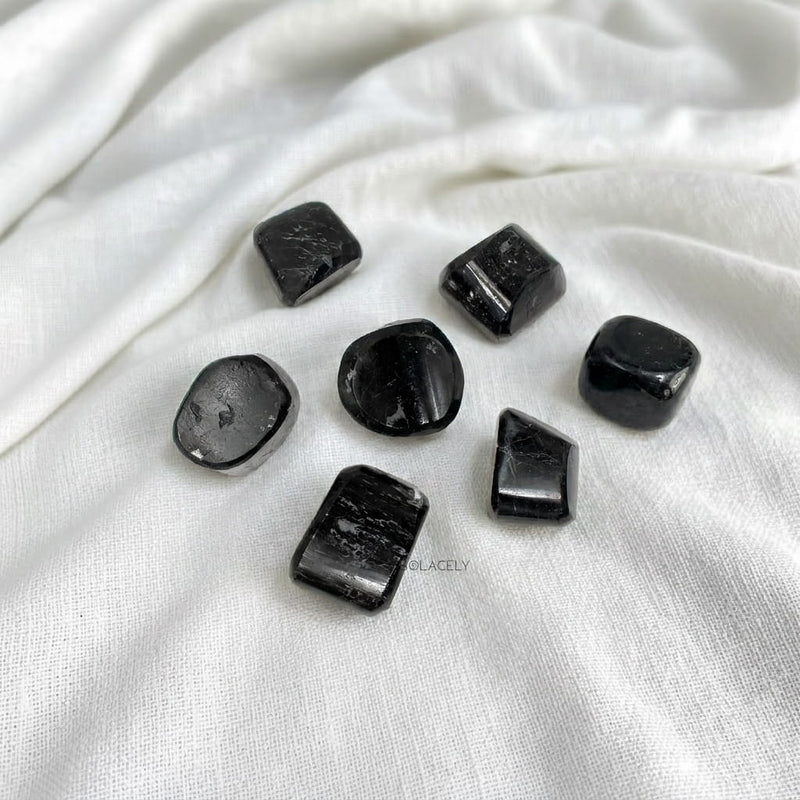
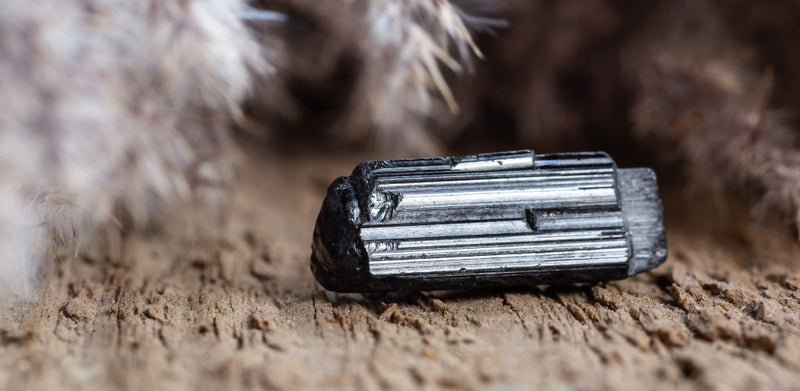
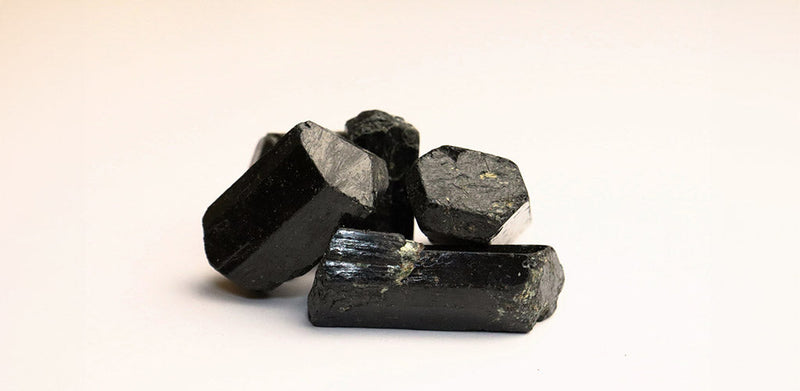
Its crystals grow as long prisms with fine parallel grooves running down the sides, called striations. That texture is the easiest field identification: run a thumbnail along a raw piece and you can feel it. Colour is opaque black, occasionally shading to very dark brown or blue black in thin sections.
At 7 to 7.5 on the Mohs scale it is harder than quartz, which makes it one of the more practical stones to actually wear. Rings, bracelets and pendants all hold up. It does have one weakness worth knowing: tourmaline is brittle and sensitive to sudden temperature change, so it can fracture if dropped on a hard floor or taken from hot water to cold. Our black tourmaline meaning and properties guide covers formation and sourcing in more depth.
What is black tourmaline traditionally used for?
Grounding and boundaries, in that order. In modern crystal practice it is the default stone placed by a front door, on a desk in an open plan office, or on a bedside table by people who describe themselves as absorbing other people's moods. Its traditional job is to help you stay in your own space.
The folklore runs deep. Tourmaline has been traded and worn for centuries, and dark stones have carried protective associations across many cultures. The stories about Egyptian and Native American ritual use belong to that body of folklore rather than to the documented record, and they are part of why the stone arrived in modern practice already carrying a reputation.
The last fifty years are the best documented stretch. Black tourmaline became a staple of Western crystal healing through the 1970s and 1980s, and it now sits alongside amethyst, rose quartz and clear quartz as one of the four stones almost every practitioner owns. If you want the full list of associations, our black tourmaline benefits article sets them out.
A note on the language you will meet. Practitioners describe black tourmaline as absorbing negativity or transmuting heavy energy, phrasing that has been used inside the tradition for decades and turns up in nearly every guide you read.
Why is black tourmaline the stone people keep beside a screen?
Because it is the boundary stone, and screens are the modern drain. Black tourmaline is the piece people most often keep beside a desk, a router or a bedside when the day has been all notifications and open tabs. In crystal practice it goes wherever you want a line drawn between you and something else.
There is a genuinely unusual mineral property sitting behind that reputation. Tourmaline is pyroelectric and piezoelectric, meaning its crystals develop opposite electrical charges at their two ends when they are heated or put under pressure. Dutch traders in the eighteenth century used warmed tourmaline to pull ash out of their pipes, which is where the old name aschentrekker came from.
Few minerals do anything so visible on a tabletop, and tourmaline has been thought of as an active stone for three hundred years as a result, long before anyone owned a router. The modern desk placement is that same instinct in a new setting: put the stone where the pressure is.
In practice, people keep a raw piece beside the monitor, a tumble next to the router, or a bracelet on the working wrist. Pick the placement you will actually see. A stone in your eyeline is doing the job the tradition gives it, and one shut in a drawer is not.
How to use black tourmaline at home and at work
Placement and wear are the two methods that people actually stick with. Neither requires equipment or ritual. The stone works as a physical marker for an intention, and the most effective placements are the ones you pass or touch several times a day.
- By the entrance. A raw piece or a small bowl of tumbles near the front door is the classic placement, marking the boundary between outside and home.
- On the desk. Within your eyeline while you work, particularly in shared or open plan spaces.
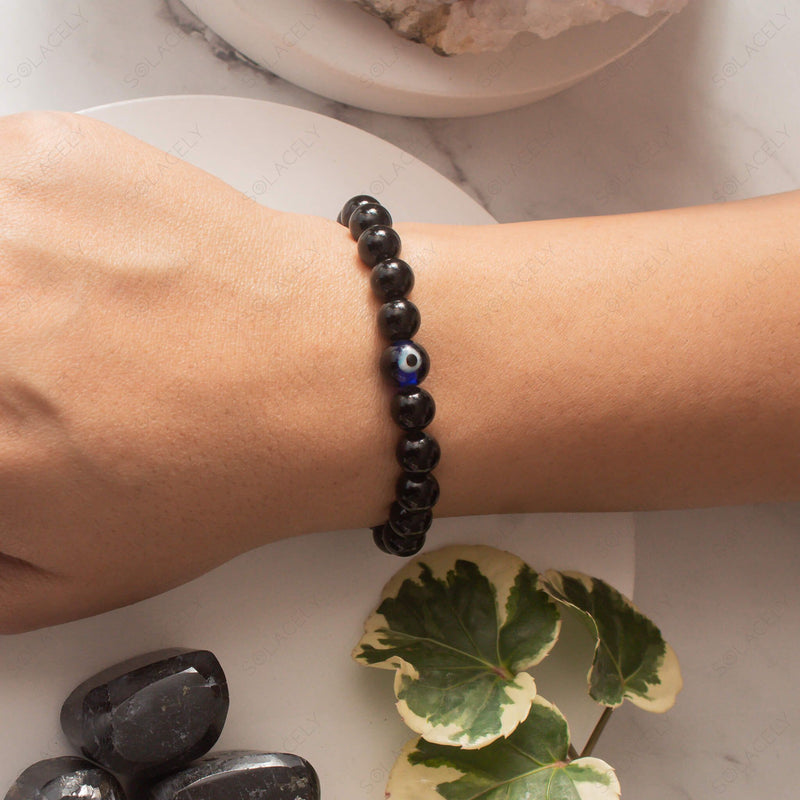
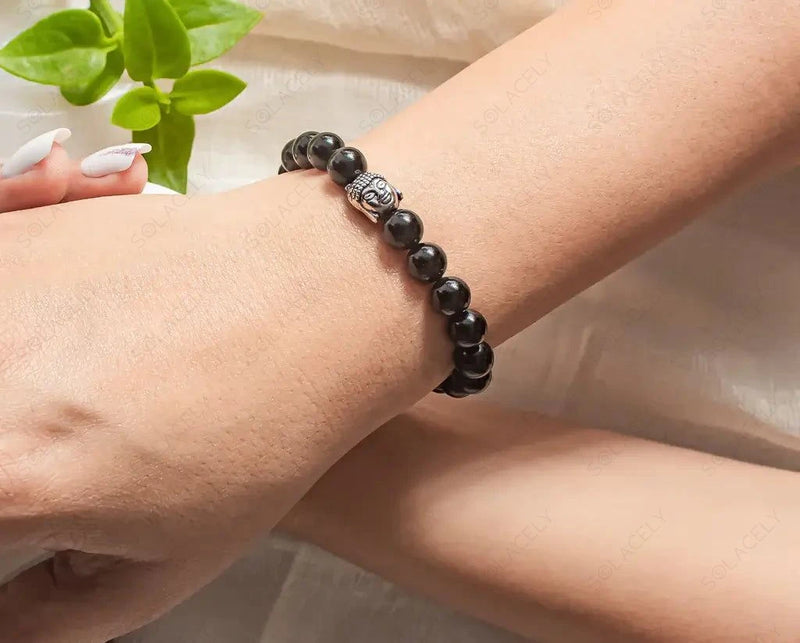
- As a bracelet. The most practical daily format, since at 7 to 7.5 hardness it tolerates knocks. Beaded strands sit flat under a shirt cuff.
- In a bag or pocket. A single tumble for commutes, hospital visits or difficult meetings.
- In meditation. Held in the non dominant hand or placed at the feet, which is the conventional grounding position. Our black tourmaline meditation guide covers the practice properly.
One placement worth rethinking: taped out of sight behind a router. Somewhere warm, dusty and invisible works against the stone, since half of what a placement does is remind you it is there. Sit it on top of the unit instead, where you will catch it in passing.
Which crystals pair well with black tourmaline?
Selenite and clear quartz are the two standard partners. Selenite is used to cleanse other stones and offers a soft counterweight to tourmaline's density. Clear quartz is treated as an amplifier in traditional practice, which makes it a general purpose companion to almost anything.
With selenite
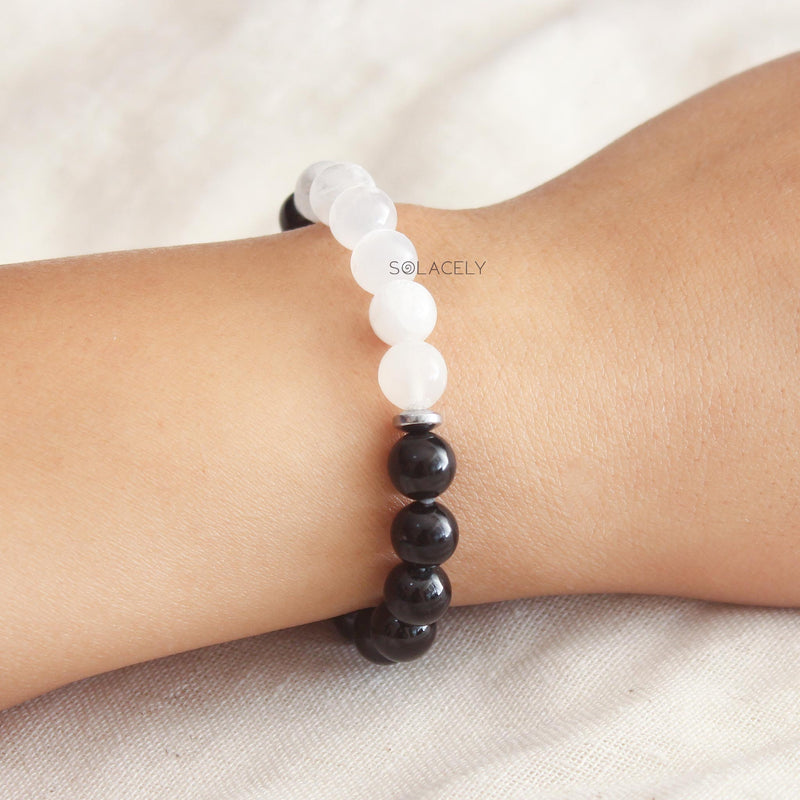
The pairing is popular because the visual contrast is striking and the traditional roles complement each other: tourmaline as boundary, selenite as clearing. Practically, remember selenite is gypsum at only 2 on the Mohs scale, so never store the two loose together. Tourmaline will scratch it immediately. Our guide to black tourmaline and selenite covers the combination in detail.
With clear quartz and smoky quartz
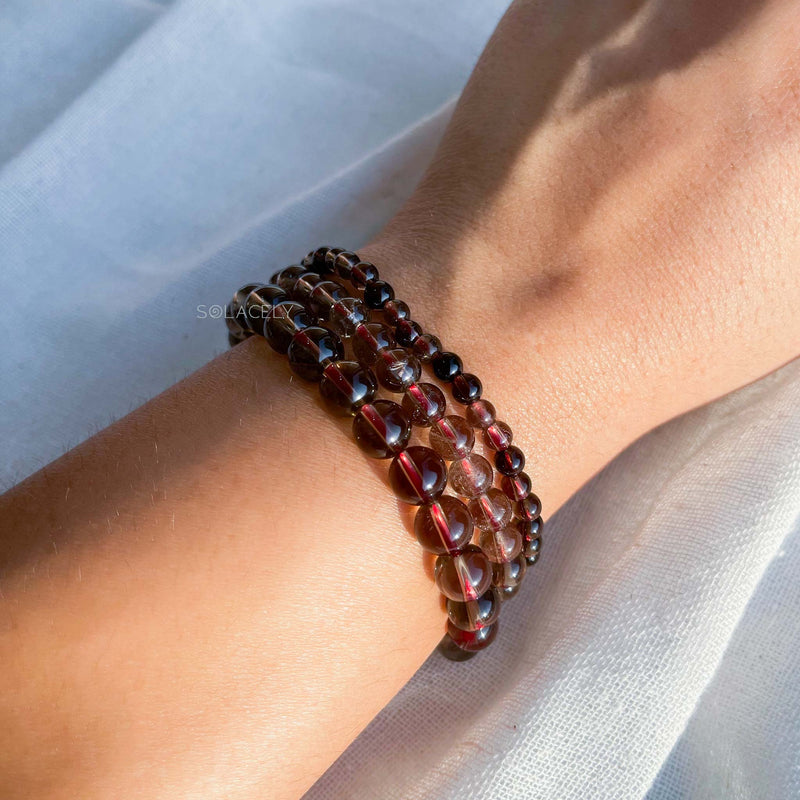
Clear quartz is the conventional amplifier. Smoky quartz is the softer grounding option, often chosen by people who find plain black tourmaline too heavy to wear all day. Both sit at 7 on Mohs, so all three can be stored and worn together without damage. For the wider protective set, see our crystals for protection guide.
How do you clean and care for black tourmaline?
Warm water, mild soap and a soft brush for the striations, then dry it thoroughly. Avoid ultrasonic and steam cleaners, because tourmaline is brittle and dislikes sudden heat. Store it away from softer stones such as selenite, calcite and lapis lazuli, which it will scratch.
Raw specimens shed small fragments when new. That is normal for schorl, not a defect, and it settles after a few weeks of handling. If you keep a raw piece on a desk, sit it on a coaster or a small dish so the grit does not scratch the surface underneath.
For energetic cleansing, moonlight, incense smoke, sound or a rest on a selenite plate are all safe and none of them harm the mineral. Prolonged direct sunlight is unnecessary and pointless for a black stone. Salt water is best avoided across the board, since it works into settings and corrodes metal findings over time.
What can you expect from wearing black tourmaline?
A steady, quiet marker for a boundary you have decided to hold. In our experience the people who get the most from black tourmaline are the ones who attach it to something specific: leaving work at the door, keeping a difficult conversation from following them home, sitting down to a task without reaching for a phone first.
It is also the easiest of the four classic stones to live with. Amethyst fades in strong light, selenite dissolves in water, rose quartz shows every scratch. Black tourmaline is opaque, hard and unfussy, which is why it tends to be the one that actually gets worn daily rather than admired on a shelf.
If you are managing anxiety, chronic pain or any diagnosed condition, keep black tourmaline as the gentler part of the routine alongside your doctor's care, and let your medical team lead.
The properties described here reflect traditional and cultural belief around crystals. They are not medical claims and are not a substitute for professional healthcare. If you are managing a health concern, speak to a qualified practitioner and keep your medical team leading on diagnosis and treatment.
Sources
Frequently asked questions
About the author


Written by Chetna Sharma, crystal healing practitioner and co-founder of Solacely. Chetna has worked with healing crystals for over a decade and curates Solacely's protective stone collection.