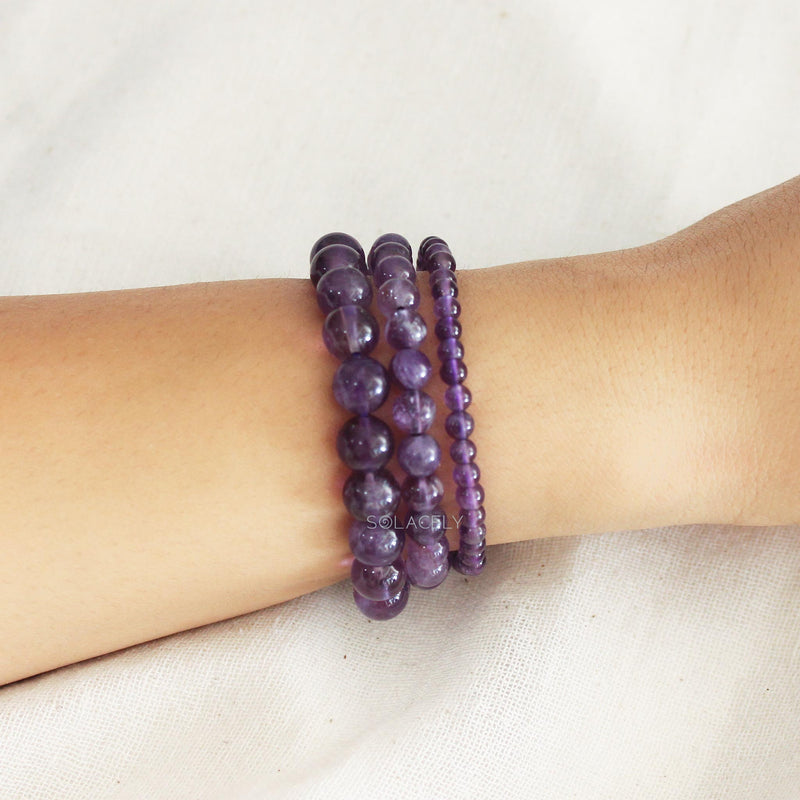
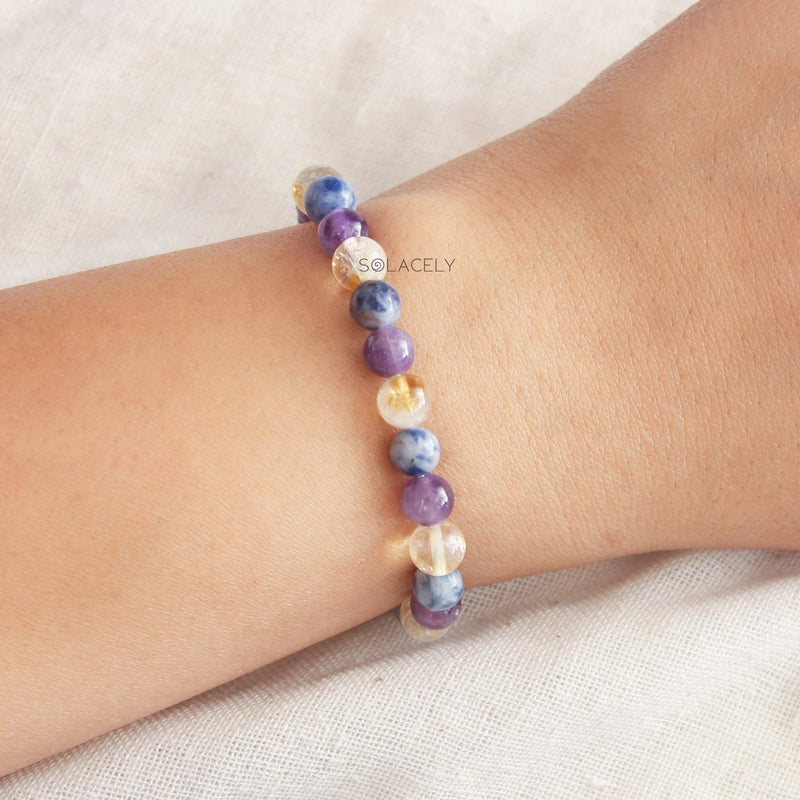
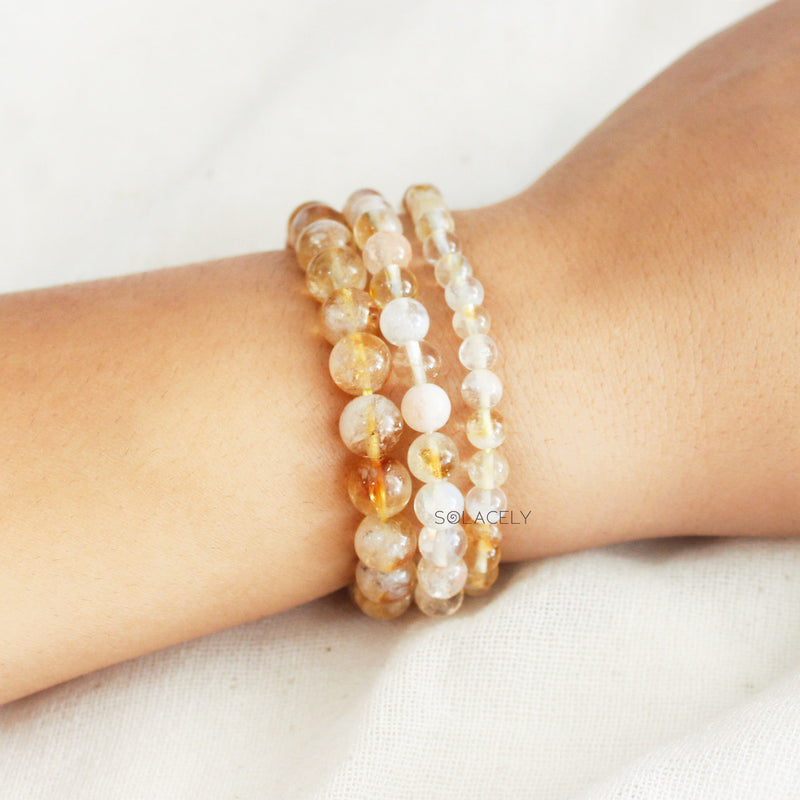
Amethyst and lepidolite for calm, rose quartz and rhodonite for self-acceptance, citrine and tiger's eye for the days you have to be seen. These are the stones people keep close through hair loss, chosen for how the experience feels rather than for the hair itself, and held alongside a dermatologist's care.
Please see a dermatologist. Alopecia is a medical condition with real, effective treatments, and several of them work best when started early. The clinical route is the one that treats it. Everything on this page is a traditional practice kept as company alongside that care, and nothing here is medical advice.
Key takeaways
- The traditional set: amethyst, lepidolite, rose quartz, rhodonite, citrine, tiger's eye.
- Each is directed at how you feel rather than at the follicles.
- Amethyst and lepidolite are the night-time choices, when it tends to be hardest.
- See a dermatologist early. Some treatments work best when started promptly.
- Keep the piece where you will actually reach for it.
What people are actually going through
Hair loss is not only a medical event. It changes how people are looked at, how they feel walking into a room, and how much of the day is spent managing something they did not choose. Medical treatment addresses the follicles. It does not address the mirror, and that gap is where a crystal practice sits.
What people describe getting from it is fairly consistent: a small daily ritual that belongs to them, something to do with their hands while treatment takes weeks or months, and an object carrying an intention they chose rather than one imposed on them. That is worth having during a stretch when a lot feels out of your hands.
What alopecia is
The National Institute of Arthritis and Musculoskeletal and Skin Diseases describes alopecia areata as an autoimmune condition in which the immune system affects hair follicles, causing hair to fall out in patches on the scalp or elsewhere. It can progress to alopecia totalis or universalis. It is not contagious.
Other forms exist, including pattern hair loss, shedding after illness or childbirth, and loss from tight hairstyles. They have different causes and different treatments, which is why a dermatologist rather than a search engine is the right starting point.
The stones traditionally chosen
| Stone | Traditionally kept for | When people reach for it |
|---|---|---|
| Amethyst | Calm and rest | Nights, which are often the hardest part |
| Lepidolite | Emotional steadiness | The swing between coping and not |
| Rose quartz | Self-regard | How you speak to yourself in the mirror |
| Rhodonite | Self-acceptance after change | Adjusting to a different reflection |
| Citrine | Confidence and self-assertion | Appointments and difficult conversations |
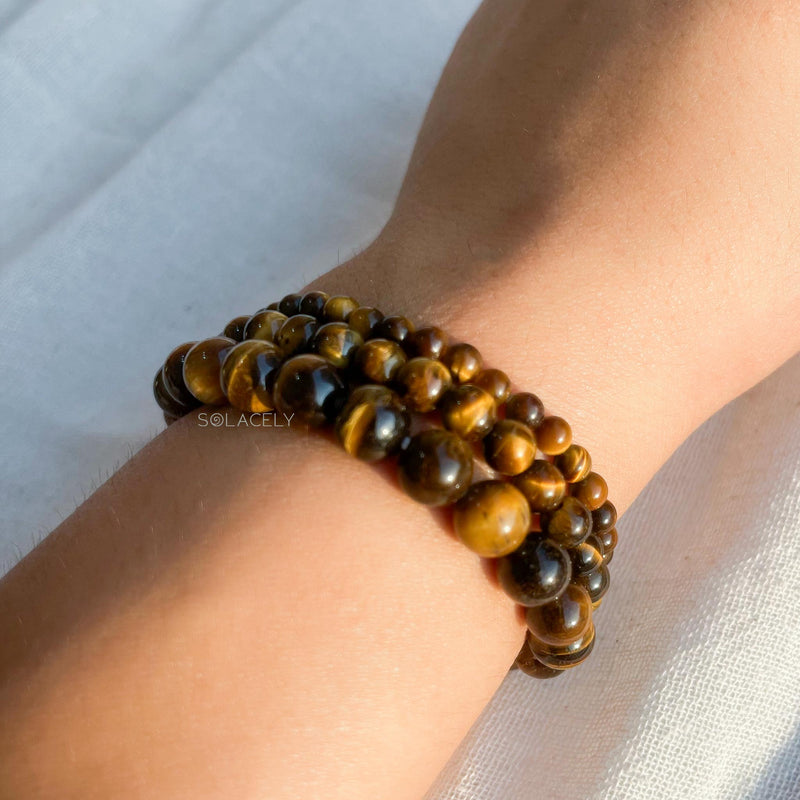
| Tiger's eye | Nerve in public | First days back at work |
Every entry there points at the person. That is the shape of the tradition, and it is why these particular stones turn up rather than any others. Our crystals for emotional healing guide covers them in wider context.
A practice that fits around treatment
- Keep your medical appointments. That is the treatment. Everything below sits around it.
- Pick one stone, not six. Choose what you most need now: calm, self-regard, or nerve.
- Attach it to a moment that already exists. Morning coffee, the walk to the car. New habits stick to old ones.
- Say something specific. Not "heal me" but the actual thing, like getting through a meeting without thinking about it once.
- Keep it reachable. Pocket, not display shelf.
- Tell your dermatologist what you are using. Good practice with anything you keep alongside treatment.
If anxiety about appearance is the dominant feeling, the techniques in our crystals for anxiety and panic attacks guide translate directly, and the crystals for confidence selection covers going out in public.
The nights, and what helps
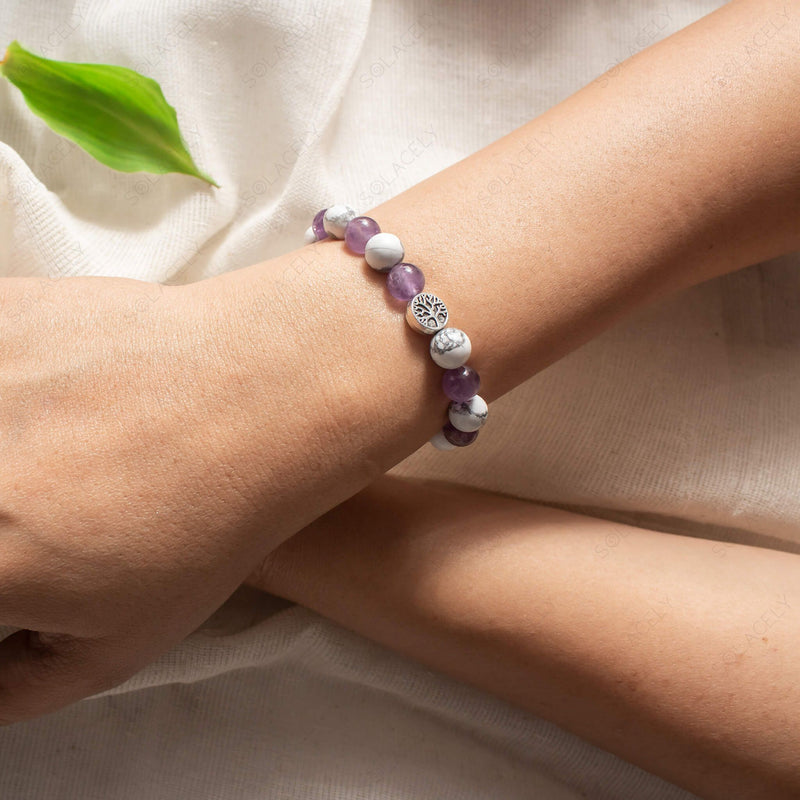
Most people find the evening is when it lands hardest. Amethyst and howlite are the traditional bedside pair for that, kept on the table where you can reach without sitting up, or under a pillow.
Pair the stone with the same breathing you would use in the day, four counts in and six out, so your body already knows the shape of it. Our crystals for sleep guide covers the bedroom set in more detail.
Caring for these stones
Amethyst is quartz at 7 on the Mohs scale and takes warm water and a soft cloth, though it will pale in sustained direct sun, so charge it in moonlight instead. Lepidolite is soft and flakes along its layers, so handle it gently and keep it dry. Rose quartz, citrine and tiger's eye are all durable quartz family stones.
For energetic cleansing, sound, smoke, moonlight or a rest on selenite all suit the group, and weekly suits anything carried daily.
Getting support beyond the practice
Hair loss affects mental health for a lot of people, and that is not vanity. If you are avoiding social situations, if your mood has dropped and stayed down, or if you are struggling to function, that deserves attention in its own right. Speak to your GP. Alopecia support organisations exist in most countries and connect people with others who have been through it, which many find more valuable than anything else available.
This article is general information about a traditional practice, not medical advice. Crystals are not a treatment for alopecia or any other condition and do not affect hair growth. Always consult a qualified dermatologist about hair loss, and do not delay medical care. Lepidolite contains lithium as part of its mineral structure and is in no way related to, or a replacement for, lithium medication.
Sources
Written by Chetena Sharma. Reviewed by the Solacely editorial team.
Frequently asked questions
About the author


Written by Chetna Sharma, crystal healing practitioner and co-founder of Solacely. Chetna has worked with healing crystals for over a decade and curates Solacely's protective stone collection.