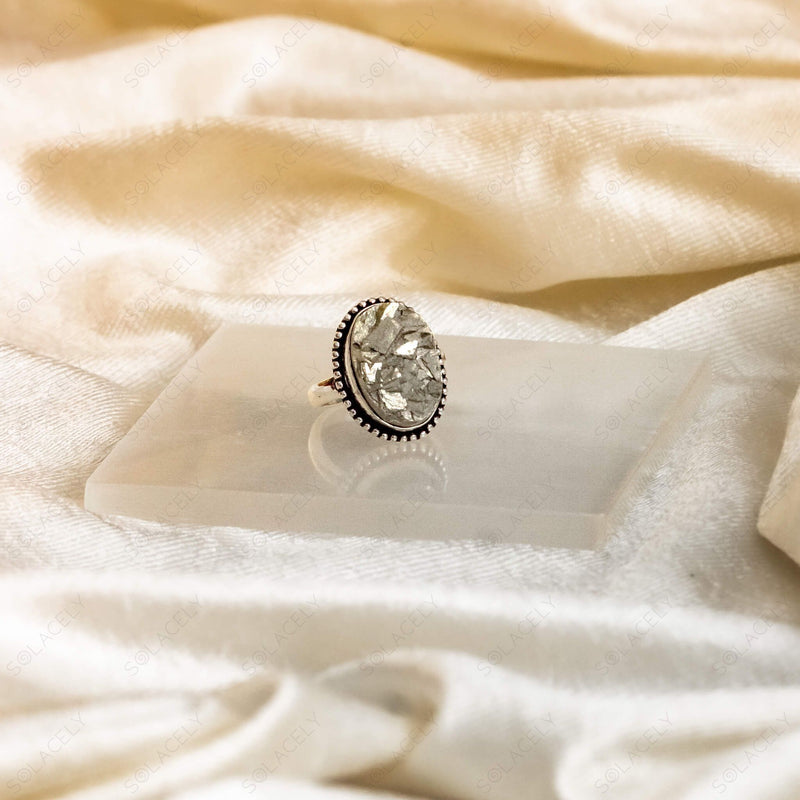
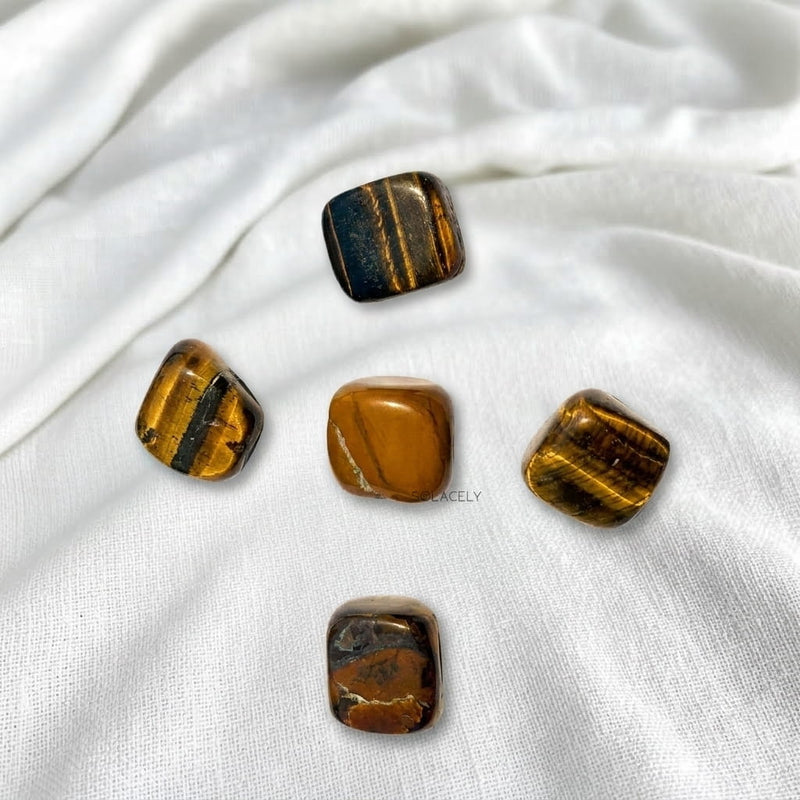
Citrine, pyrite, tiger's eye, and green aventurine are the stones kept for business. Citrine is the merchant's stone, tucked into tills and cash boxes for centuries. Pyrite belongs to drive and follow-through, tiger's eye to steady nerve in a difficult conversation, and green aventurine to taking a well-judged chance. Kept on the desk where you actually work, they are a daily reminder of what you are building.
Key Takeaways
- Citrine is the merchant's stone, traditionally kept where money is handled.
- Pyrite is kept for drive, tiger's eye for nerve, green aventurine for taking a chance.
- Keep the stone on the desk you work at, in your eyeline, rather than tucked in a corner.
- Pair it with one morning habit: name the day's priority before you open your inbox.
- Pyrite is iron sulphide, so keep it dry, do not soak it, and wash your hands after handling.
The four stones, and what each is kept for
<Four stones carry this tradition, and they are not interchangeable. Citrine, the golden variety of quartz, has the longest commercial history of any of them, nicknamed the merchant's stone because shopkeepers kept a piece in the cash box. Pyrite, the brassy iron sulphide known as fool's gold, is the stone of drive and finishing what you start. For the morning of a pitch, a pyrite bracelet for confidence and focus sits quietly at the wrist - a small reminder of what you came to say.
Tiger's eye, banded golden-brown quartz with that distinctive shifting sheen, is kept for holding your nerve: the negotiation, the price rise, the conversation you have been putting off. Green aventurine is the gentlest of the four, associated with trying something before you have a guarantee.
Three of the four are quartz, which means they sit at 7 on the Mohs hardness scale, as Encyclopaedia Britannica notes, and survive a desk, a drawer, or a pocket without complaint. Pyrite is the exception and wants slightly different handling.
Which of our guides you want
We cover nearby ground in a few places, so here is the map. This post is for people running something: the founder, the owner, the freelancer, anyone whose income follows from decisions they make themselves.
If you work for someone else and the question is about performance or progression, best crystals for work success is the closer fit. For the broader theme without the commercial framing, crystals for success is the hub.
And if it is the abundance association specifically that draws you, the fuller background on the central stone sits in citrine properties.
Matching the stone to the week
The most useful way into this tradition is not to collect all four, but to name the thing that is genuinely hard right now and keep the one stone that speaks to it.
| What is hard | Traditional stone | The habit to pair with it |
|---|---|---|
| Undercharging, avoiding money talk | Citrine | Review your pricing weekly |
| Starting but not finishing | Pyrite | Name one priority before opening email |
| Folding in negotiations | Tiger's eye | Write your walk-away number first |
| Waiting for certainty before shipping | Green aventurine | Set a date and publish anyway |
Set the stone and the habit together and they reinforce each other. The stone keeps the intention where you can see it; the habit is how the intention turns into a week that looks different from the last one.
Where to keep it on a desk
Placement advice in this area can get elaborate, with particular corners and directions. The version that serves you best is simpler: put it where you look while you work. A monitor stand, beside the keyboard, next to the notebook you plan in.
The whole point of the object is to catch your eye at the moment the reminder is useful. A stone on a shelf behind you is a lovely stone on a shelf. One at arm's reach becomes part of how the day runs.
One care note: keep citrine out of a sunny window, since prolonged strong light softens its golden colour over time. Bright indirect light is ideal, and it still catches beautifully.
The morning ritual that makes it stick
One routine is worth more than any amount of placement theory. Before you open your inbox, pick up the stone, name the single thing that has to happen today, and write it down.
Twenty seconds. What makes it work is that it forces a priority decision before the day's incoming demands make that decision for you, which for anyone running a business is most of the battle. Pick the stone up again at the end of the day and see whether that one thing happened.
The pause itself is worth having. The U.S. National Center for Complementary and Integrative Health notes that mindfulness practices can help many people manage stress, and a short deliberate pause before a reactive stretch of work is exactly that.
Caring for pyrite
Pyrite is the one stone here that wants slightly different handling, and it is worth knowing so your piece lasts. It is iron sulphide, and that chemistry means damp is its enemy: kept in a humid room, a specimen can oxidise over time and develop rust or crumbling.
So keep it dry, do not soak it, never put it in water intended for drinking, and do not store it sealed with moisture. A polished piece on a dry desk stays handsome for years. Wash your hands after handling raw or broken material, and leave any cutting or sanding to a professional.
The other three are far simpler: warm soapy water, a soft brush, rinse and dry. For more on the mineral itself, see pyrite meaning.
Sources
- Encyclopaedia Britannica - Quartz, mineral properties and Mohs hardness
- Encyclopaedia Britannica - Pyrite, iron sulphide and its properties
- National Center for Complementary and Integrative Health - Meditation and Mindfulness
Frequently asked questions
About the author


Written by Chetna Sharma, crystal healing practitioner and co-founder of Solacely. Chetna has worked with healing crystals for over a decade and curates Solacely's protective stone collection.