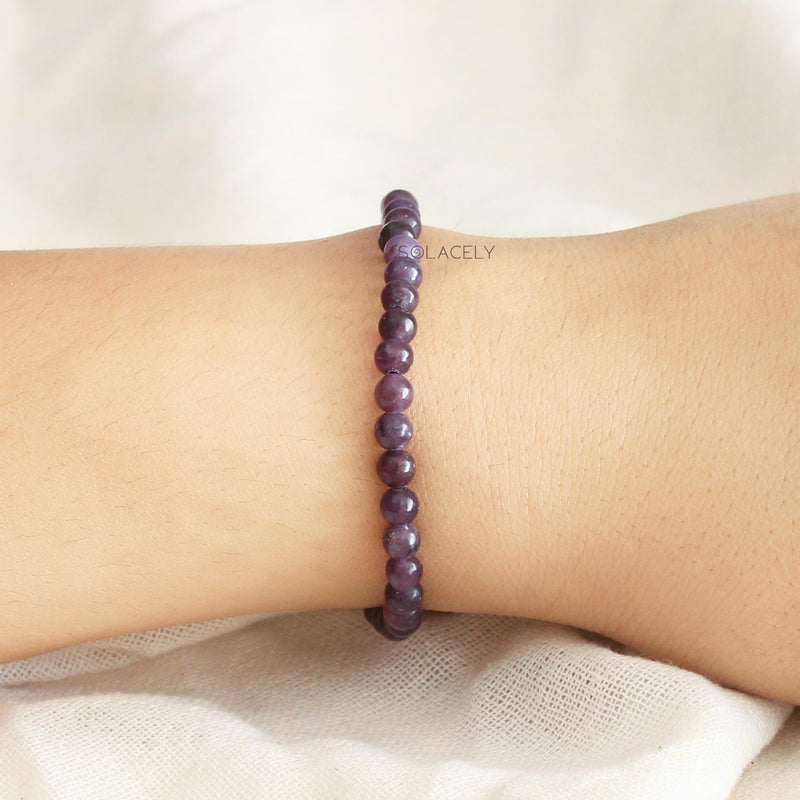
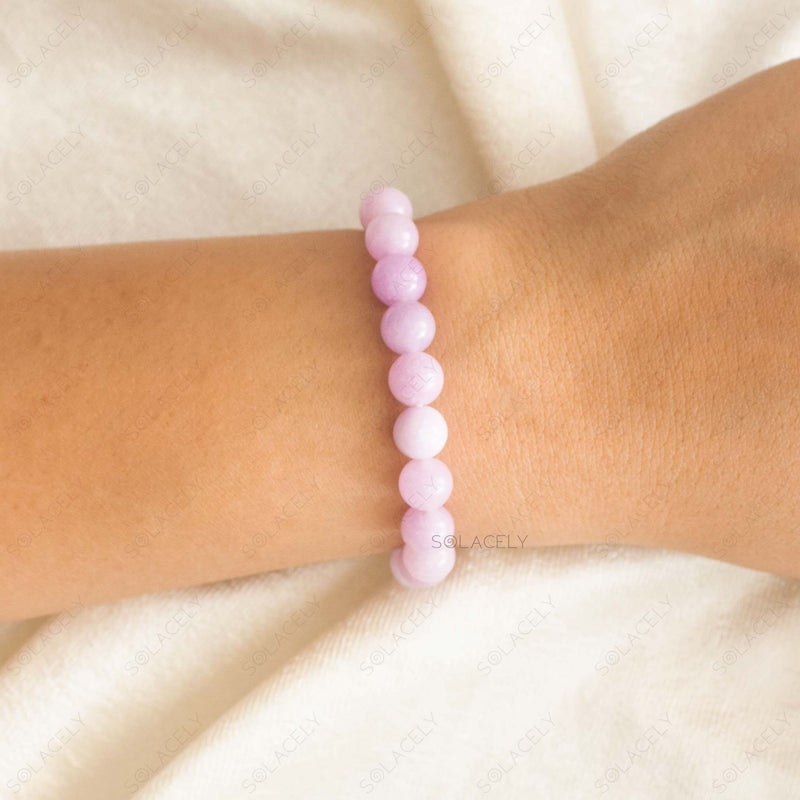
Rose quartz, rhodonite, amethyst, amazonite, kunzite and lepidolite are the stones kept for kindness. Rose quartz is the one the category is built around. The other five each handle a specific way kindness runs out: after a row, at the end of a long day, mid sentence, toward yourself.
Key takeaways
- Six stones: rose quartz, rhodonite, amethyst, amazonite, kunzite, lepidolite.
- Rose quartz is the general one. The rest are for particular failures of patience.
- Kunzite is the self kindness stone, which is what most people are really after.
- Tie the stone to one difficult hour rather than wearing it generally.
- Kunzite fades in sunlight and has cleavage. An evening stone, not a windowsill one.
- Lepidolite is very soft at Mohs 2.5 to 3. Never in water.
The six at a glance
| Stone | For the moment when | Mohs |
|---|---|---|
| Rose quartz | You want to be warmer generally | 7 |
| Rhodonite | Something has already been said badly | 5.5 to 6.5 |
| Amethyst | The house is loud and you are fraying | 7 |
| Amazonite | You have to say a hard thing without an edge | 6 to 6.5 |
| Kunzite | The person you are unkind to is yourself | 6.5 to 7 |
| Lepidolite | The shortness is really months of tiredness | 2.5 to 3 |
Rose quartz, the one to start with
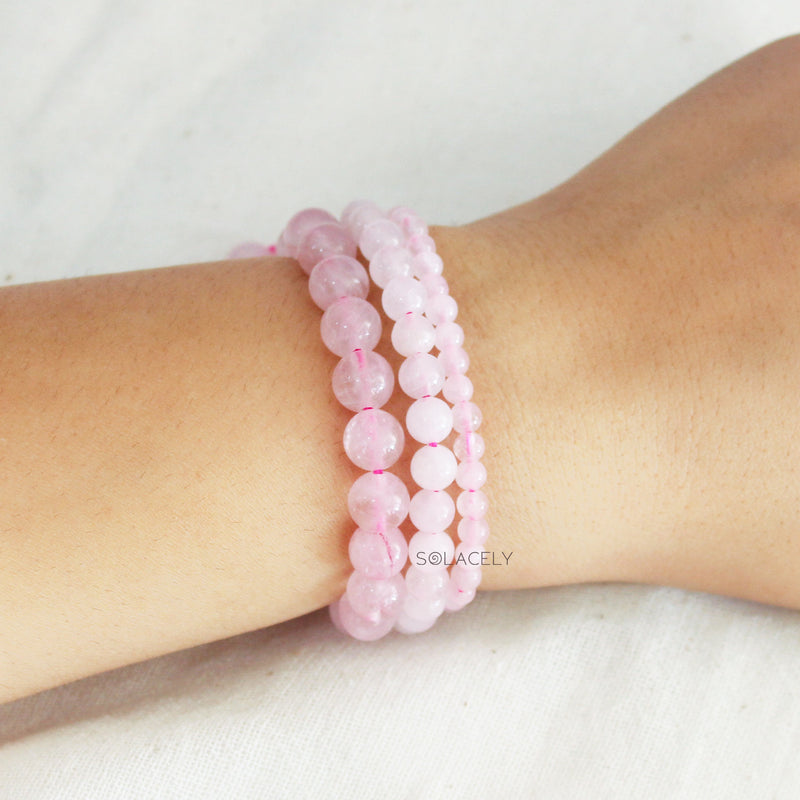
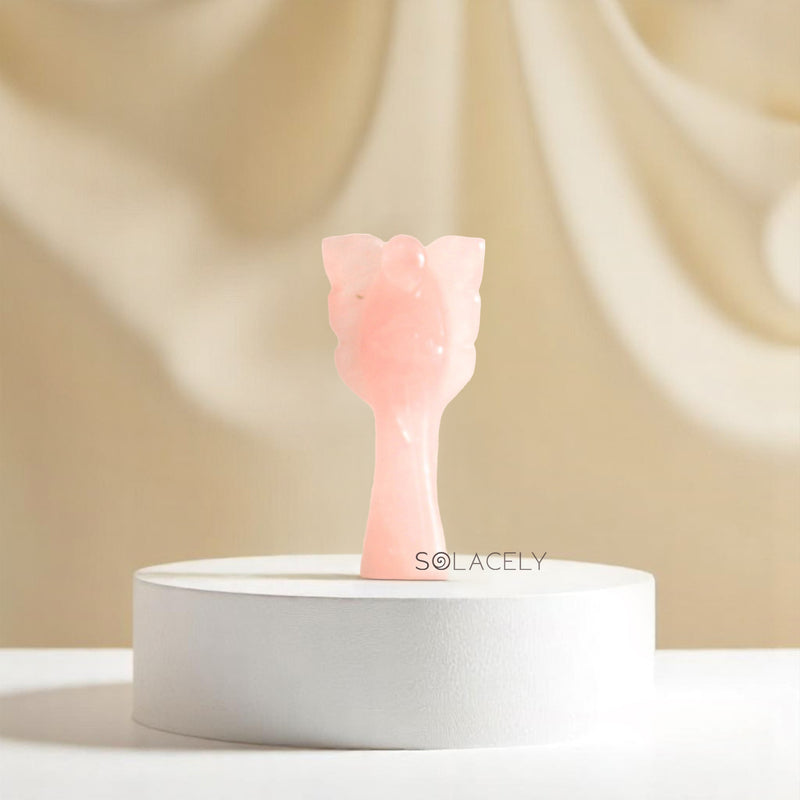
Rose quartz is the stone the whole idea of kindness in crystal practice is built around, and if you only ever own one from this list, it is this one.
What it is traditionally kept for is warmth turned outward. Not romance, which is a narrower thing, but the general disposition to give someone the benefit of the doubt. It is the stone people put in shared rooms, in family homes, and on the desk of a job that involves dealing with the public all day.
At 7 on the Mohs scale it takes daily wear indefinitely. The one thing it does not like is a sunny windowsill, where the pink slowly pales over years.
Rhodonite, for after it has gone wrong
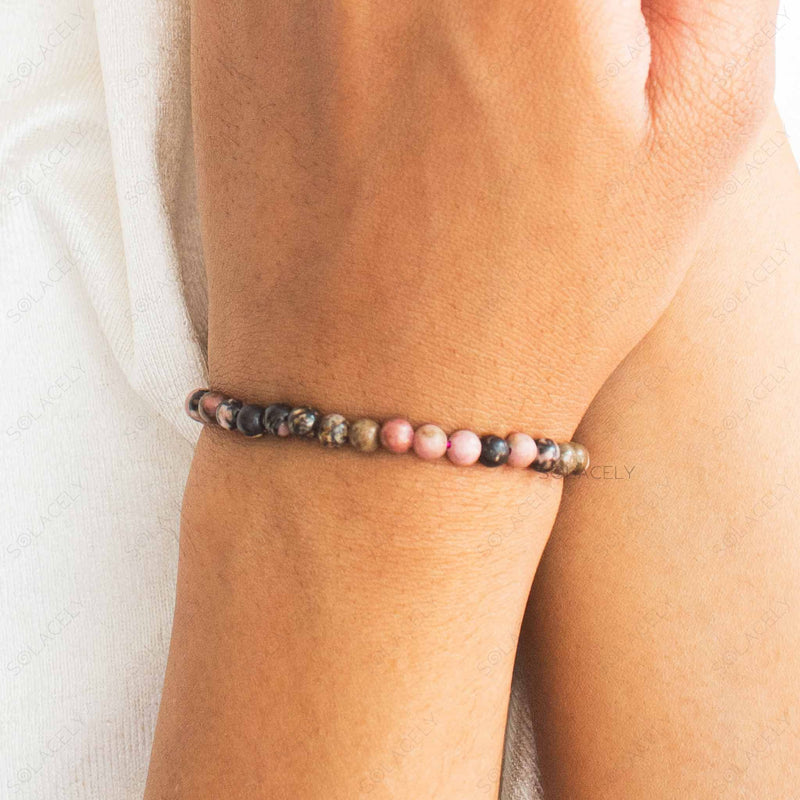
Rhodonite is the repair stone, and it is the one most worth owning alongside rose quartz because it covers the case rose quartz does not.
Kindness is easy before anything has happened. It is difficult in the hour after you have snapped at someone, when part of you is still justifying it. That is the hour rhodonite is kept for. Its tradition is coming back to something without reopening the argument.
Practically: hold it, decide the one sentence, go and say that sentence. Our guide to crystals for forgiveness goes further into this, including the harder case where the person who needs forgiving is you.
Amethyst, for a fraying evening
Amethyst is not a kindness stone in the direct sense. It is on this list because most unkindness is not malice, it is depletion, and amethyst is the stone kept for settling.
The traditional placement is the room where the evening happens rather than on the wrist. A cluster on a shelf in the living room, or a piece on the kitchen windowsill where you stand at the end of the day. It is the least effortful item on this list, since it asks nothing of you but to be in the room.
Like rose quartz it is quartz at 7, and like rose quartz it pales in long direct sun.
Amazonite, for saying the hard thing kindly
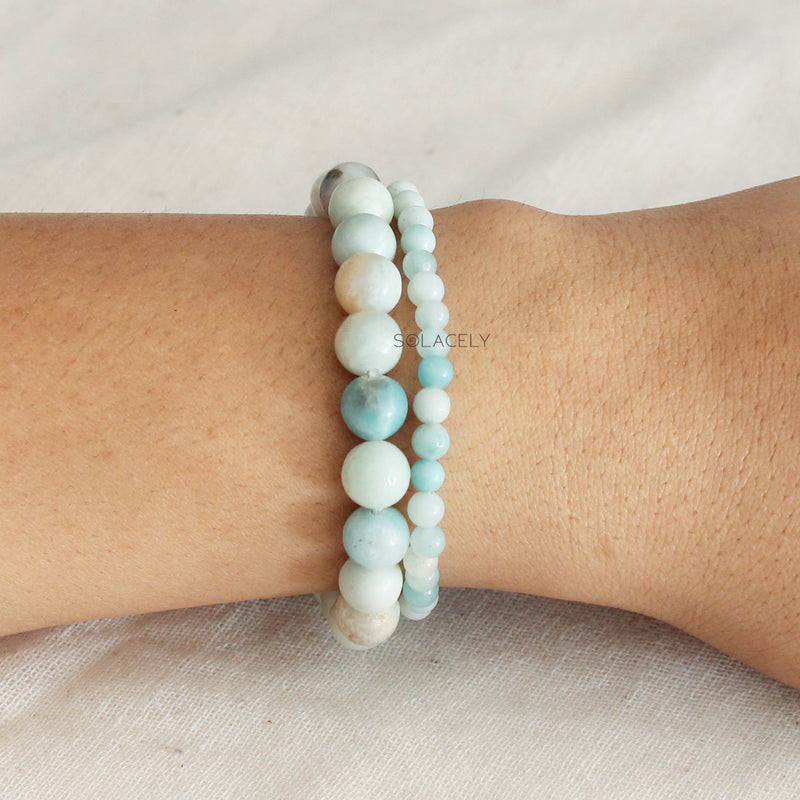
Amazonite is the one for the specific difficulty of having to say something true that the other person will not enjoy hearing.
Most people handle this one of two ways, both bad. They soften it until the point disappears, or they hold it in for a fortnight and then say it with far more force than they meant. Amazonite is traditionally kept for the middle road, saying it plainly and without an edge, and it is a throat stone in the chakra reading for that reason.
It is a good stone to wear on a day you already know contains a difficult conversation, which is the kind of use that actually works. At 6 to 6.5 it is reasonably durable but wants to stay out of a bag with keys.
Kunzite, for being kinder to yourself
Kunzite is the stone for self directed kindness, and it is the one a great many people searching for kindness stones are actually looking for without quite saying so.
The pattern it addresses is familiar. Generous with everyone else, relentless with yourself. Kind about a friend's mistake and unforgiving about the same mistake made by you. Kunzite is traditionally kept for closing that gap.
Two things to know before buying. It fades. Sustained direct sunlight takes the pink out of kunzite and it does not come back, so it is an evening stone kept in a box rather than displayed on a sill. It also has perfect cleavage, which means it splits cleanly if knocked hard, so it is not a stone for a wrist that meets doorframes.
Lepidolite, for when the shortness is tiredness
Lepidolite belongs here for the case where none of the others help, because the problem is not patience at all. It is that you have been running on empty for months and there is nothing left to be kind with.
It is the stone traditionally kept for that state, and the honest use of it is as a marker: a reminder that the answer is rest and support rather than trying harder to be nice. Keep it by the bed rather than on the wrist.
It needs real care. At 2.5 to 3 on the Mohs scale it is softer than most things it will meet, and it flakes and dulls in water. Cleanse it with smoke or moonlight, never at the sink, and keep it out of a pocket with anything harder than itself.
Making one of these actually work
The mistake is wearing a kindness stone generally, as a standing wish to be a better person. Nothing attaches to that and after a fortnight it becomes jewellery.
Pick one hour that regularly goes badly and tie the stone to it. The commute. The school run. The first hour at a desk when you are not ready to speak to anyone. Twenty past five, when the day has run out and the evening has not started. Wear it for that hour with one specific intention, and take it seriously as a small standing appointment.
That is enough. It works because it repeats, not because it is elaborate, and one hour honoured beats a whole day intended. For placing stones around a shared home rather than on a wrist, see crystals for peace and positivity, and for the emotional groundwork underneath all of this, crystals for emotional healing.
The uses described here reflect traditional and cultural crystal practice. They are not medical or psychological claims. Lepidolite is a mineral kept for its calming associations and is not an alternative to prescribed medication, including lithium. Sustained irritability, exhaustion or low mood are worth raising with a doctor.
Sources
Written by Chetena Sharma. Reviewed by the Solacely editorial team.
Frequently asked questions
About the author


Written by Chetna Sharma, crystal healing practitioner and co-founder of Solacely. Chetna has worked with healing crystals for over a decade and curates Solacely's protective stone collection.