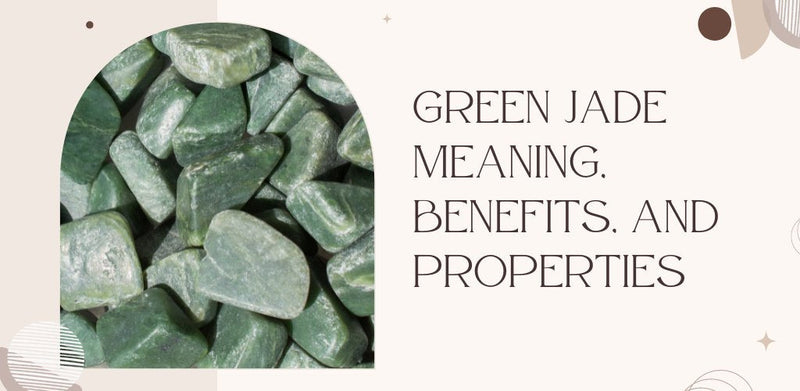
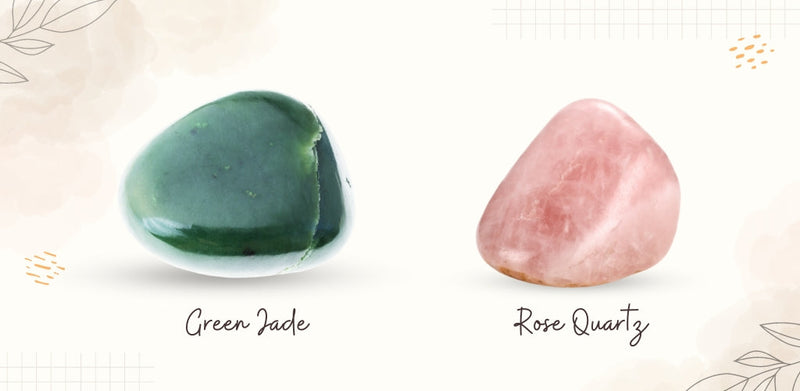
Green jade and amethyst pair a grounding stone with a quieting one. Jade is traditionally worn for steadiness, prosperity and emotional balance. Amethyst is used for rest, clarity and reflection. Together they suit people who want to settle down and think straight at the same time, rather than chase energy.
Key takeaways
- Jade is two different minerals. The GIA recognises both jadeite and nephrite as true jade, with jadeite the rarer and more valuable of the pair.
- Jadeite rates roughly 6.5 to 7 on the Mohs scale and nephrite about 6 to 6.5, but nephrite is the tougher of the two because of its interlocking fibrous structure.
- Amethyst is purple quartz at hardness 7. Its colour comes from iron and natural irradiation, and prolonged strong light will fade it.
- The pairing is traditionally used for grounded calm: jade for steadiness and balance, amethyst for a quieter head and clearer decisions.
- Jade grading is a long-established craft, with a settled trade vocabulary for colour, translucency and finish. Ask a seller about origin and finish, then pick the green you like in the hand.
- All metaphysical uses described here are traditional belief, not medical fact.
What is green jade?
Jade is a name covering two separate minerals rather than one. The Gemological Institute of America recognises both jadeite, a pyroxene, and nephrite, an amphibole, as genuine jade. They look similar once polished, which is exactly why the two were not distinguished until the nineteenth century.
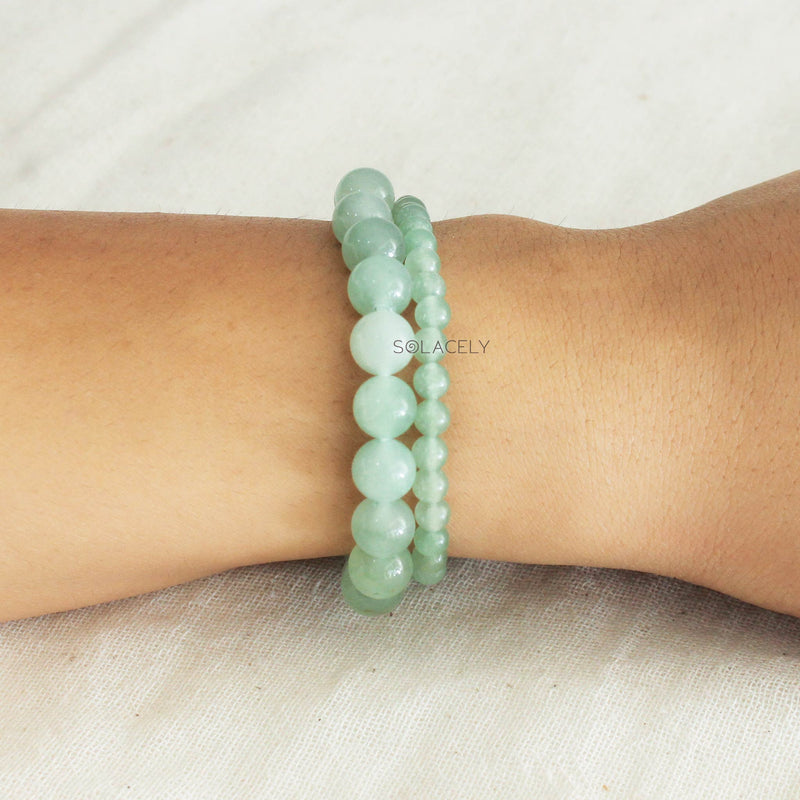
Jadeite is the rarer material and carries the higher prices, particularly the translucent emerald-green grade known in the trade as imperial jade. Nephrite is more common, usually a softer sage or spinach green, and it is the jade behind most historical Chinese carving. Jade has been worked in China for thousands of years, valued above gold and silver for much of that period.
Hardness is the smaller half of the story. Jadeite sits around 6.5 to 7 on the Mohs scale and nephrite slightly lower, yet nephrite is the tougher stone because its fibres interlock, so it resists breaking rather than scratching. That toughness is why ancient tool makers used it and why thin jade bangles survive centuries of handling.
Buying well is mostly a conversation with the seller. Jade has been graded, cut and finished by specialist workshops for centuries, and the trade keeps a settled vocabulary for colour, translucency and polish. Ask about origin and finish, then choose the green and the weight that feel right in your hand. Our fuller breakdown of grades and traditional uses sits in the green jade meaning and properties guide.
What is amethyst?
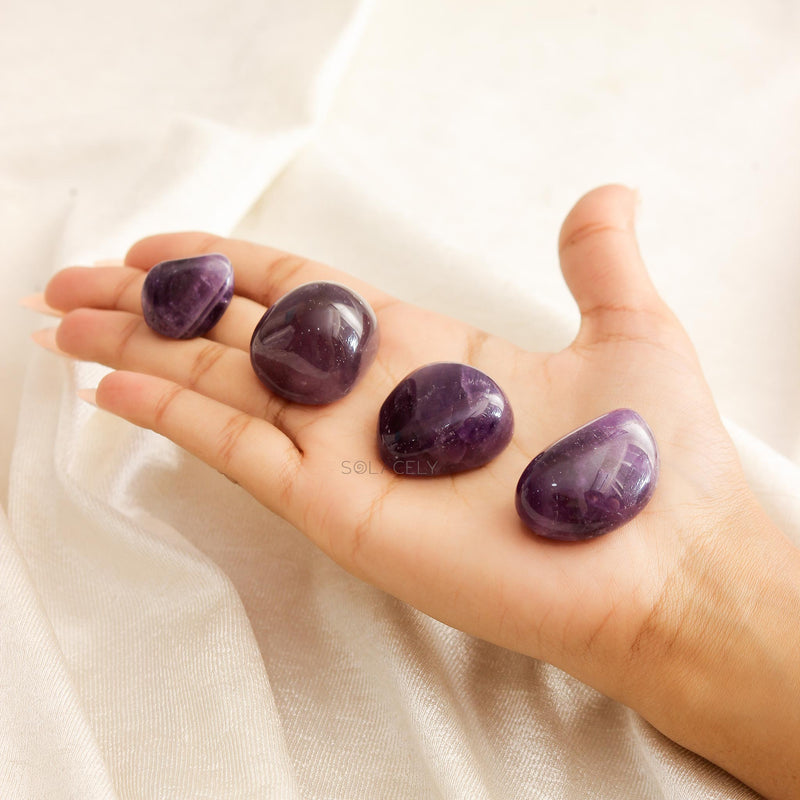
Amethyst is the purple variety of quartz, silicon dioxide with a trace of iron. According to the Gemological Institute of America, that purple comes from iron combined with natural irradiation inside the crystal, and prolonged exposure to strong light can fade the colour permanently. It is the February birthstone.
At hardness 7 it is durable enough for any format, from a bracelet worn daily to a ring. Amethyst also has a curious relationship with heat: warmed to the right temperature, much amethyst turns yellow or orange. Warming quartz to draw out its golden tones is a long established and entirely stable practice across the coloured stone trade.
Traditionally it is the stone of sobriety and a clear head. The Greek name translates roughly as "not intoxicated", and cups were once carved from it in the belief that they guarded against drunkenness. Modern crystal practice keeps the theme but moves it inward, using amethyst for rest, reflection and mental quiet. The wider picture is in our amethyst meaning and benefits guide.
Why are green jade and amethyst used together?
The pairing works because the two stones are traditionally assigned different levels. Jade sits low and steady, linked to the heart, the body and material stability. Amethyst sits high and quiet, linked to the mind and to reflection. Combining them is an attempt to keep both ends anchored at once.
Most crystal pairings fail because both stones do the same job. Two energising stones just produce a jittery bracelet. Jade and amethyst avoid that trap: neither is an accelerator, so the combination reads as slow rather than busy. That is unusual, and it is the reason the pair suits people already running hot.
There is a colour argument as well, and it is not trivial. Green and purple sit near-opposite each other on the wheel, so the combination looks deliberate rather than accidental. Jewellery designers have used it for a long time, usually with jade as the field and amethyst as the accent.
If you are building a wider amethyst collection and want to see how it behaves alongside other stones, our roundup of crystal pairings for amethyst compares several combinations.
What is the pairing traditionally used for?
Four uses come up repeatedly in traditional practice: emotional steadiness, clearer decision-making, better sleep and a calmer approach to money or work. None of these are medical claims. They are the reasons people give when asked why they wear the combination.
| Intention | Jade's traditional role | Amethyst's traditional role |
|---|---|---|
| Emotional steadiness | Balance, heart-centred calm | Reduces mental churn |
| Decisions | Practical, grounded judgement | Clarity, perspective |
| Rest | Physical settling | Quieter head at night |
| Work and money | Prosperity, long-term luck | Less anxious striving |
The distinction worth holding on to is that jade is traditionally the stone of accumulation and amethyst the stone of release. One says keep, the other says let go. Wearing both is a fairly honest description of how most people actually feel about their lives.
How do you wear or place green jade and amethyst?
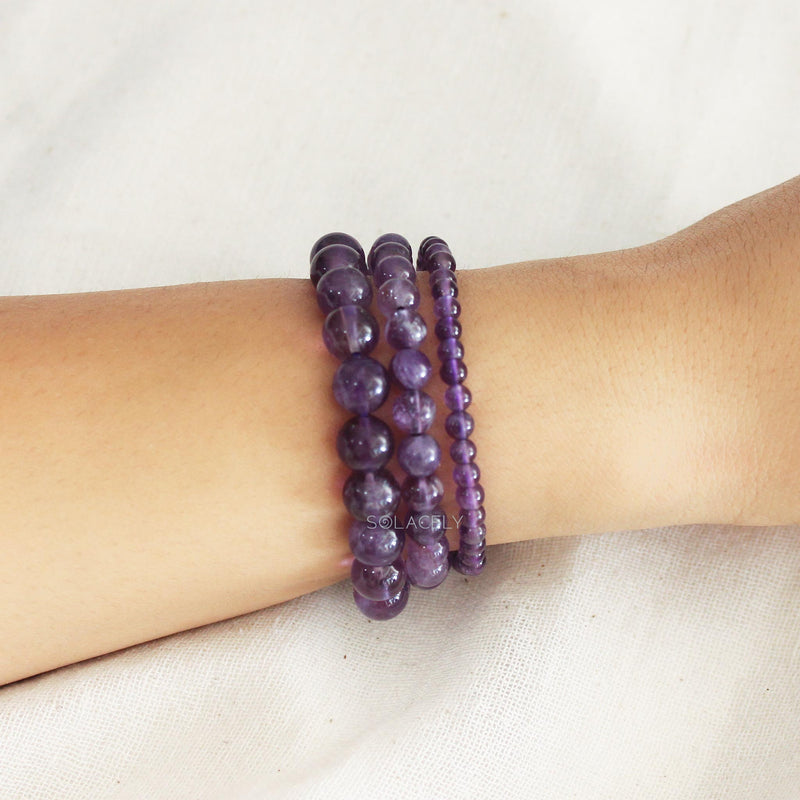
The easiest approach is one strand of each on the same wrist, jade nearer the hand and amethyst above it, though there is no rule and preference beats doctrine. Both stones are hard enough for daily wear, so the format question comes down to where you want the reminder.
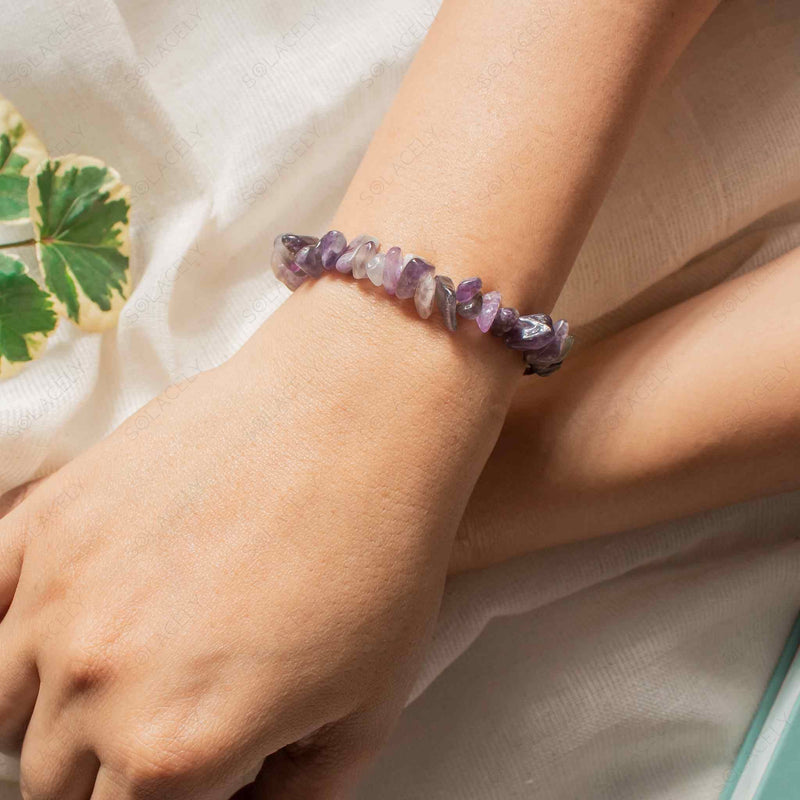
- Bracelets. The most forgiving option. Stack two strands, or buy one piece that alternates green and purple beads.
- Pendants. A jade disc with amethyst beads sits near the heart, which is where jade is traditionally directed anyway.
- Rings. Better for amethyst than for jade. Thin jade takes knocks badly along its edges, whatever its toughness.
- Meditation. Jade in the left hand, amethyst in the right, is a common arrangement. Our guide to crystals for meditation covers longer practices.
- At home. Amethyst on the bedside table away from the window, jade on a desk or near the entrance.
A small practical note that saves disappointment. If you buy a jade bangle rather than a beaded bracelet, measure your hand at its widest point before ordering. Jade bangles are rigid, they do not stretch, and getting one on is a genuinely awkward business involving a plastic bag and a lot of hand cream.
How do you care for green jade and amethyst?
These two need slightly different handling, and the differences are easy to remember. Jade tolerates water well and dislikes heat and harsh chemicals. Amethyst tolerates water equally well but fades in prolonged strong light. Neither should go near an ultrasonic cleaner if it has been treated.
| Green jade | Amethyst | |
|---|---|---|
| Mineral | Jadeite or nephrite | Quartz |
| Hardness | 6 to 7 Mohs, very tough | 7 Mohs, less tough |
| Water | Warm soapy water, soft cloth | Brief rinse, dry fully |
| Sunlight | Brief exposure is fine | Avoid; colour fades |
| Heat | Avoid; can damage treated stone | Avoid; heat alters colour |
| Store | Away from harder stones | In a pouch, out of light |
Keep perfume, hairspray and lotion off both. Treated jade in particular can be stripped of its polymer filling by solvents, which leaves a chalky surface that cannot be restored. Put jewellery on last, after cosmetics have dried.
For energetic cleansing, moonlight, smoke or sound all suit the pair. Skip salt water and skip long sun sessions, since one attacks the polish and the other bleaches the amethyst. If you are unsure what a new stone can take, the Mohs hardness scale is the quickest reference.
Who suits this pairing, and what else is worth a look?
This combination suits people whose main problem is pace. It is chosen most often by those who work long hours, decide quickly and then lie awake reviewing the decision. It also suits anyone who finds pure protection sets too heavy and wants something with a gentler character.
It suits you less if you are looking for motivation. Neither stone is an accelerator, and this pair is chosen for the opposite quality. When drive is what you are after, carnelian, citrine or garnet are the conventional picks, and they sit happily in a second bracelet alongside this one.
Green aventurine and green onyx are worth considering in their own right if you want a green stone at a gentler price. Aventurine is the traditional stone of luck and opportunity, green onyx the stone of steadiness, and both read well visually alongside amethyst. For a warmer, more heart-focused version of the same idea, the green jade and rose quartz pairing covers the love-centred alternative.
The properties described here reflect traditional and cultural belief around crystals. They are not medical claims and are not a substitute for professional healthcare. If you are managing a physical or mental health concern, please speak to a qualified practitioner.
Sources
- Gemological Institute of America, Jade Description
- Gemological Institute of America, Amethyst Description
Written by Chetena Sharma. Reviewed by the Solacely editorial team.
Frequently asked questions
About the author


Written by Chetna Sharma, crystal healing practitioner and co-founder of Solacely. Chetna has worked with healing crystals for over a decade and curates Solacely's protective stone collection.