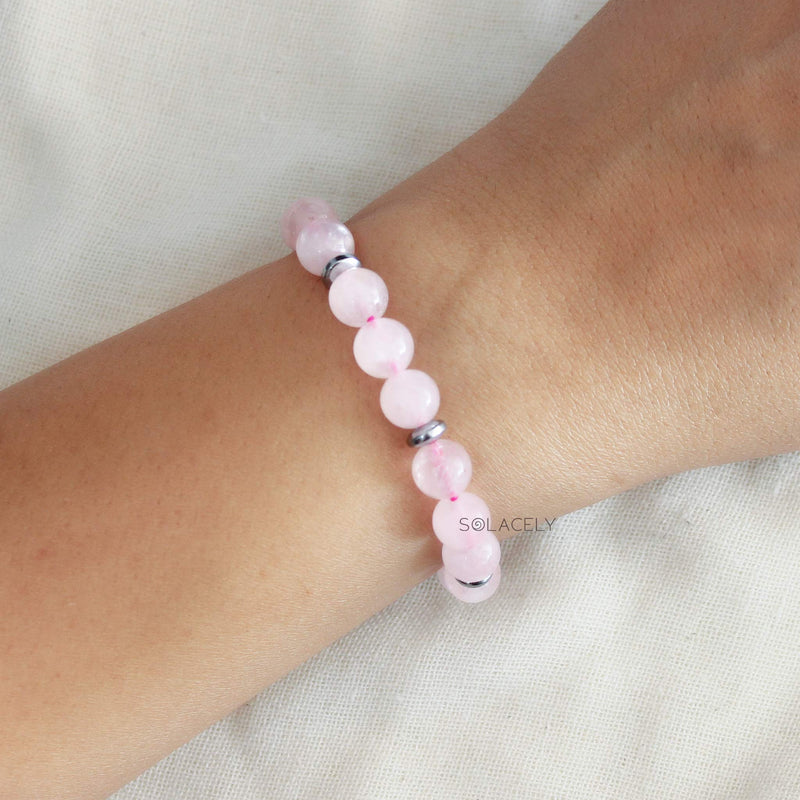
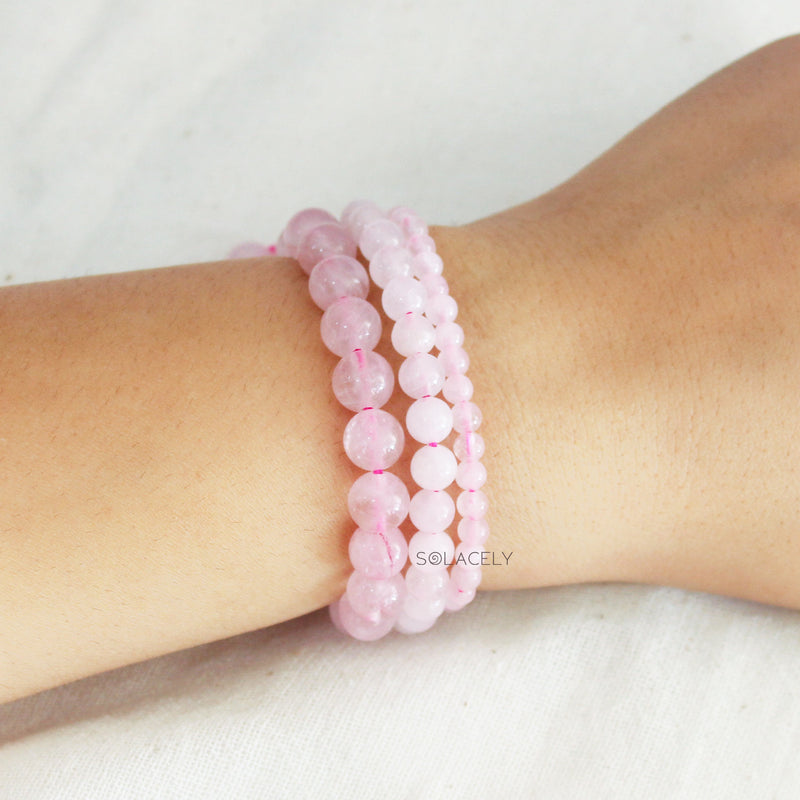
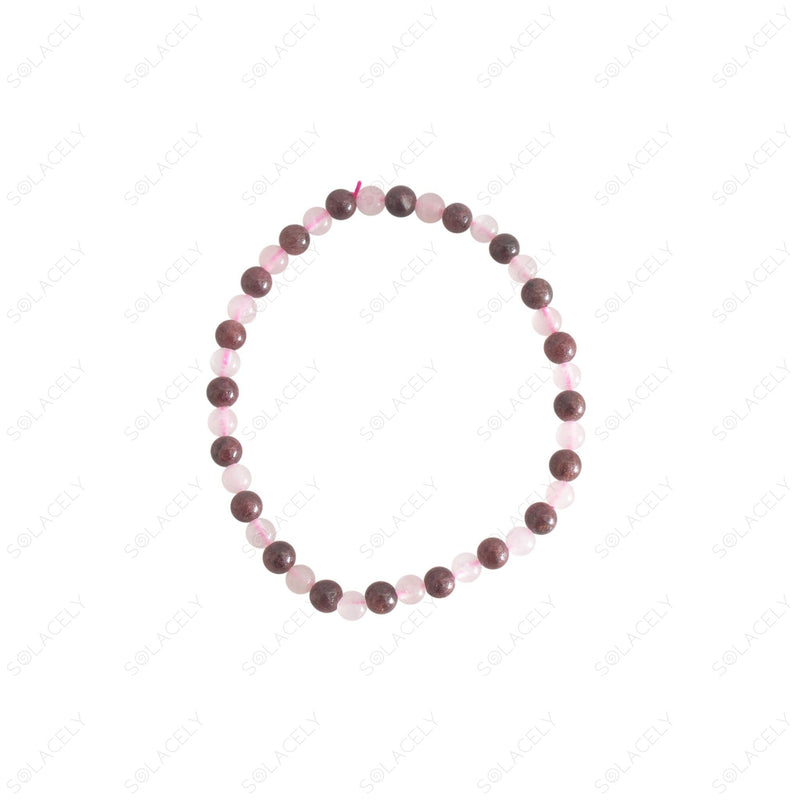
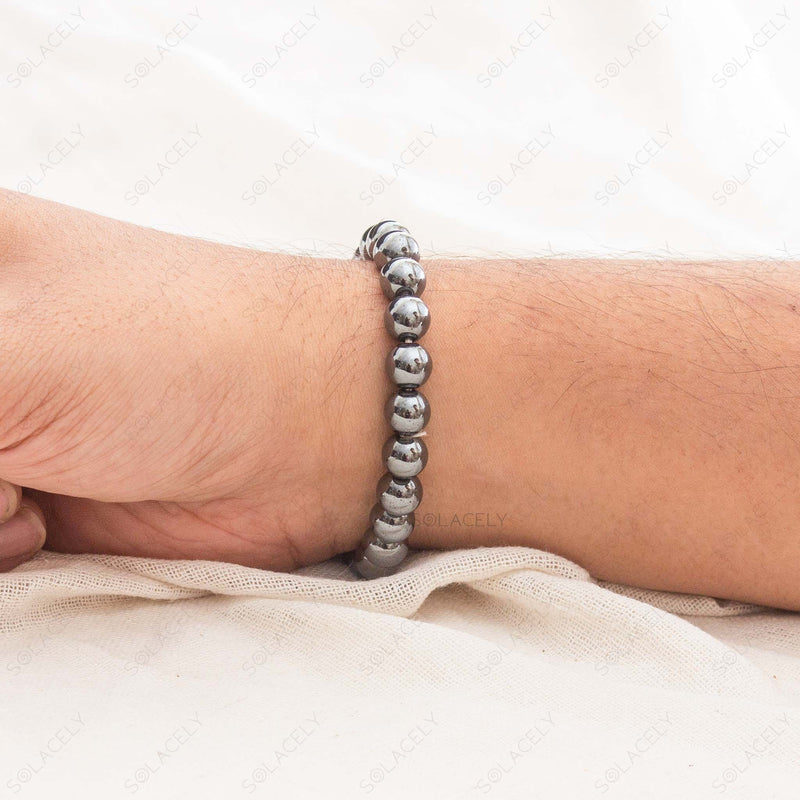
Hematite and rose quartz is an anchor paired with an opening. Hematite carries the grounding, boundary holding half of crystal tradition, rose quartz the soft, heart centred half. People wear the two together when they want to stay emotionally available without taking on everyone else's mood.
Key takeaways
- Hematite is iron oxide, Mohs 5 to 6.5. Rose quartz is quartz, Mohs 7.
- Hematite's red streak is where its name comes from: Greek haima, blood.
- Rose quartz colour comes from microscopic mineral inclusions, which is why it is softly cloudy rather than clear.
- Traditional reading: hematite holds the line, rose quartz keeps the door open.
- Long associated with carers, teachers and anyone whose work involves other people's difficulties.
- Both fade or dull with prolonged sun. Keep the pair off a bright windowsill.
What the pairing is used for
Crystal practice tends to pair a receiving stone with a protective one, and this is the classic version of that. Rose quartz is the standard stone for compassion, self kindness and repair after emotional strain. Hematite is the standard stone for grounding, focus and holding a boundary. Alone, each leans one way. Rose quartz on its own is associated with becoming porous. Hematite on its own is associated with becoming closed.
Put together, the tradition reads them as completing each other. That is why the combination is reached for so often by carers, teachers, nurses and anyone whose work involves absorbing other people's difficulties all day. Our separate guides on hematite meaning and properties and rose quartz benefits and meaning cover each stone on its own terms.
What hematite actually is
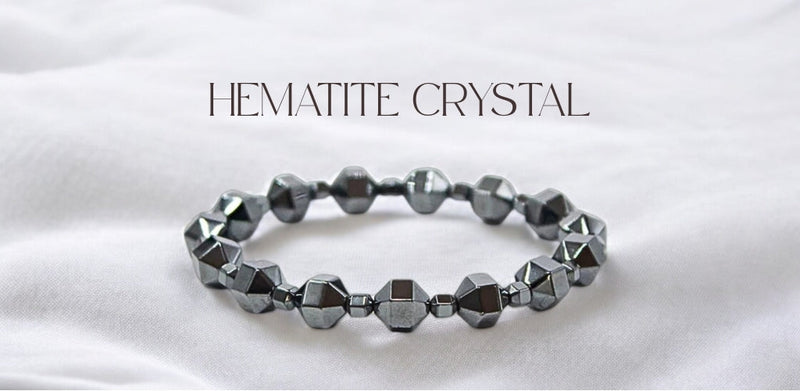
Hematite is iron oxide, and it is the world's most important iron ore as well as a long standing ornamental stone. Whatever colour a specimen appears on the outside, from silver grey to black to earthy red, it always leaves a rust red streak when scraped across unglazed porcelain. That streak is the classic identification test, and it is the origin of the name.
One thing worth knowing when you shop. Natural hematite is only very weakly magnetic, so it will not cling to a fridge door. The strongly magnetic beads, rings and bracelets widely sold are made from magnetised material, often listed as magnetic hematite or hematine, and they have their own following among people who specifically want that pull. Both are worn widely. If magnetism is part of what you are after, simply check which one you are buying.
What rose quartz actually is
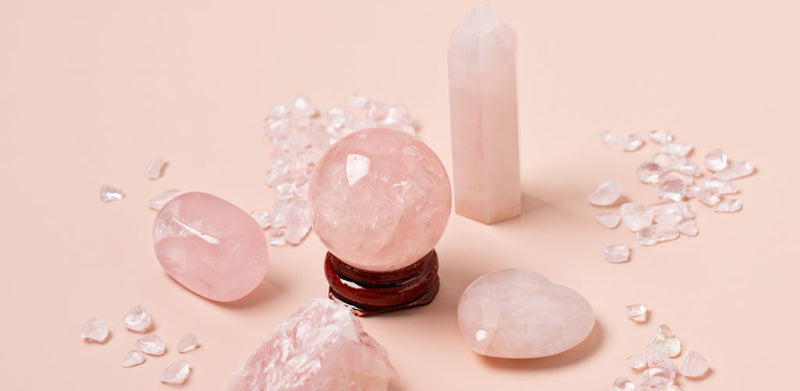
Rose quartz is quartz coloured pink by microscopic fibrous inclusions distributed through the crystal. That is why it is almost always softly translucent rather than glass clear, and that gentle cloudiness is part of its character. Gemmology distinguishes this common massive rose quartz from the rarer crystalline pink quartz, which forms proper crystal faces and is notably light sensitive.
| Hematite | Rose quartz | |
|---|---|---|
| Composition | Iron oxide | Quartz, silicon dioxide |
| Mohs hardness | 5 to 6.5 | 7 |
| Appearance | Metallic grey to black, red streak | Translucent pale to mid pink |
| Traditional role | Grounding, boundaries, focus | Compassion, self kindness, repair |
| Care note | Softer, shows wear first | Colour fades in long direct sun |
How to wear them together
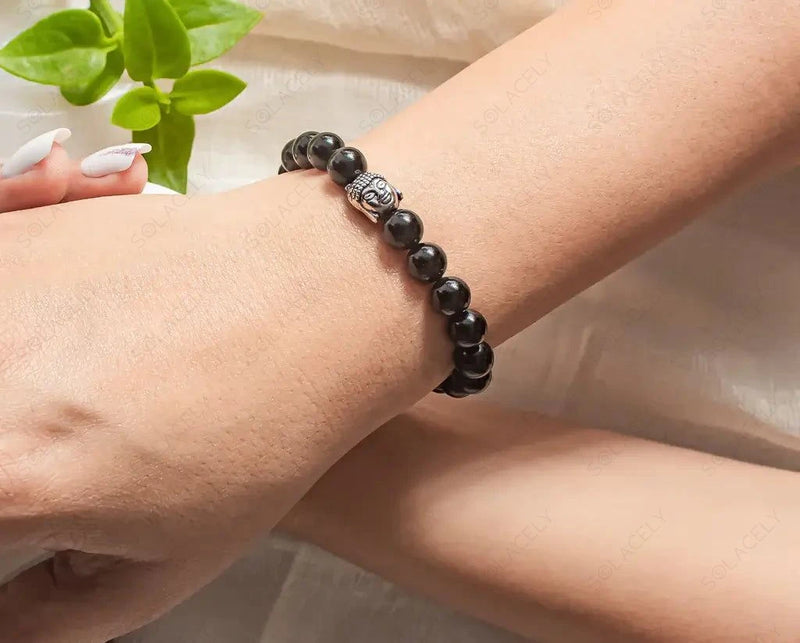
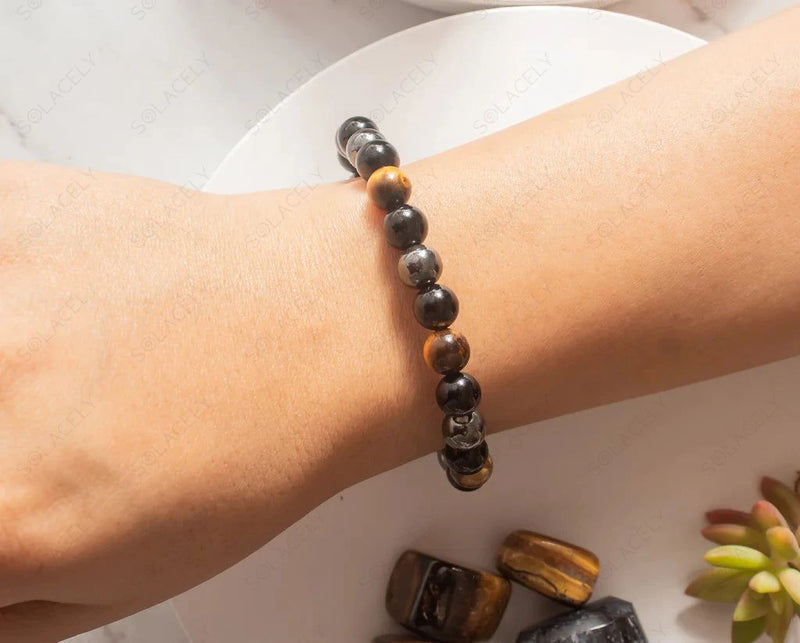
A mixed bead bracelet is the usual format, and it works, with one thing to know. Rose quartz is a point and a half harder than hematite on the Mohs scale, so after a few years of daily wear the hematite beads will lose their mirror polish before the quartz shows anything. Rotating the bracelet on the wrist now and then spreads that wear out.
If you prefer them separate, traditional practice puts the receiving stone on the left wrist and the grounding stone on the right, which means rose quartz left and hematite right. It is a memory aid as much as anything, and it is useful for exactly that reason.
A third option suits people who do not want to wear a pink stone visibly: hematite on the wrist, rose quartz as a pocket tumble or on the bedside table. The heart side of the pairing does not have to be public.
Caring for the pair
Warm water, mild soap, soft cloth. Dry hematite properly, because it is iron and prolonged damp will eventually dull the surface. Avoid ultrasonic cleaners with both.
Keep the pair out of long direct sunlight. Rose quartz colour is light sensitive and will pale over months on a sunny sill, and that change does not reverse. Storing the bracelet in a drawer or pouch rather than on the windowsill is the whole of the maintenance.
Who this pairing suits
It suits anyone doing emotional labour for a living or by circumstance, and anyone recovering from a period of it. The tradition here is specific and it has stayed consistent across sources for a long time: this is the combination for staying soft without being worn down.
It suits less well someone chasing energy, drive or ambition. Neither of these stones points in that direction. If protection is the priority rather than emotional balance, our guide to crystals for protection covers stronger options, and if the difficulty is a specific hurt, rose quartz for emotional healing goes deeper. For a grounding pair with a calmer top note, see amethyst and hematite.
The uses described here reflect traditional and cultural crystal practice. They are not medical claims and are not a substitute for professional healthcare or advice.
Sources
Written by Chetena Sharma. Reviewed by the Solacely editorial team.
Frequently asked questions
About the author


Written by Chetna Sharma, crystal healing practitioner and co-founder of Solacely. Chetna has worked with healing crystals for over a decade and curates Solacely's protective stone collection.