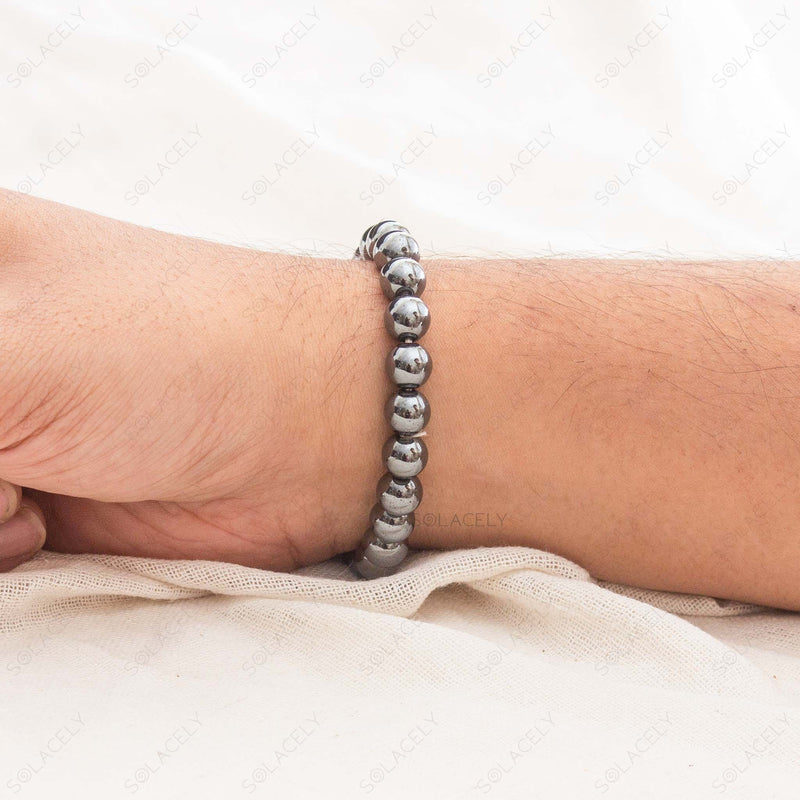
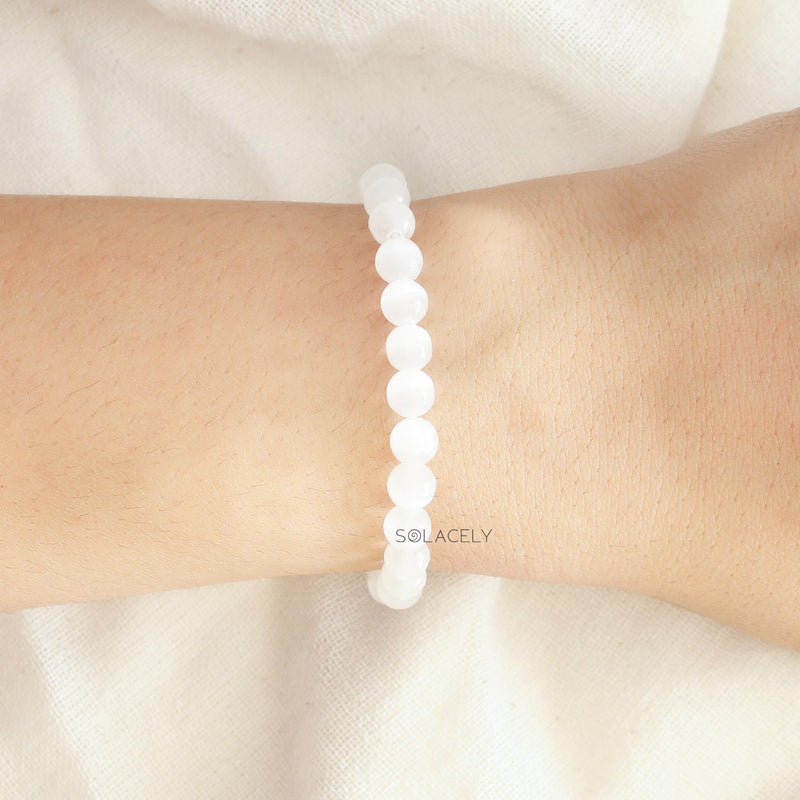
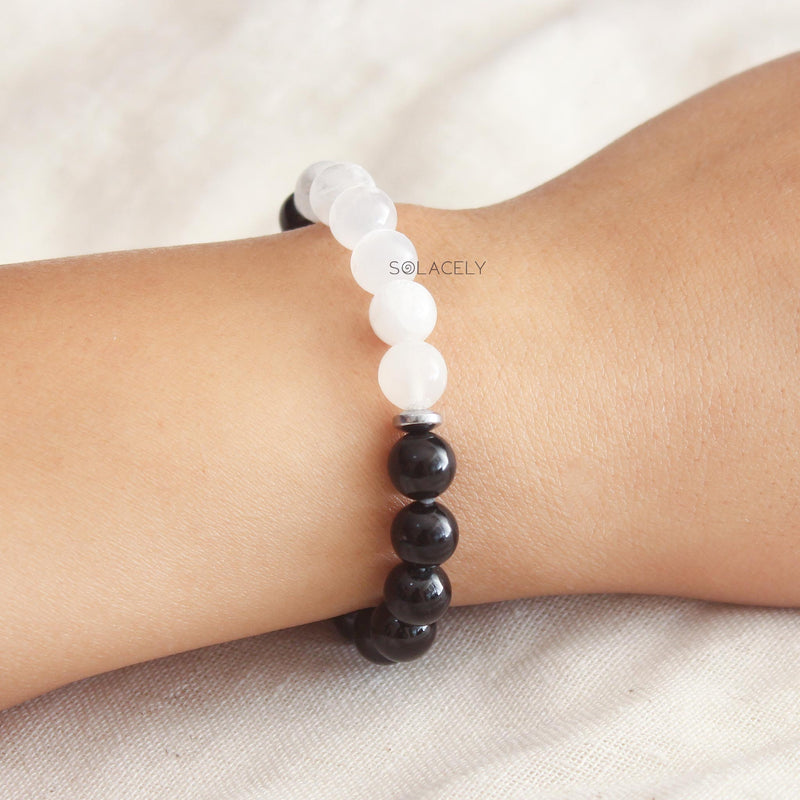
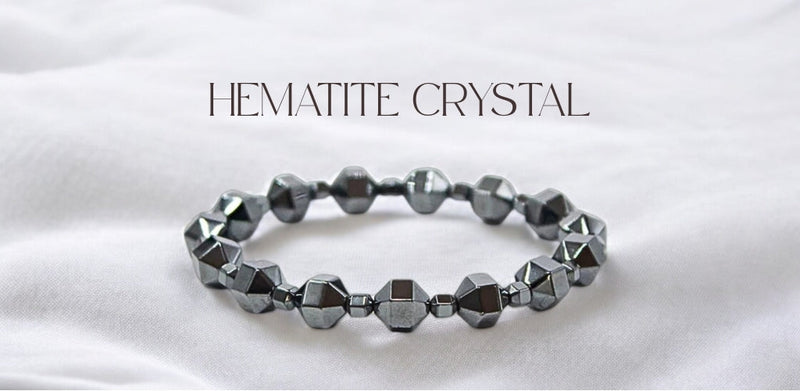
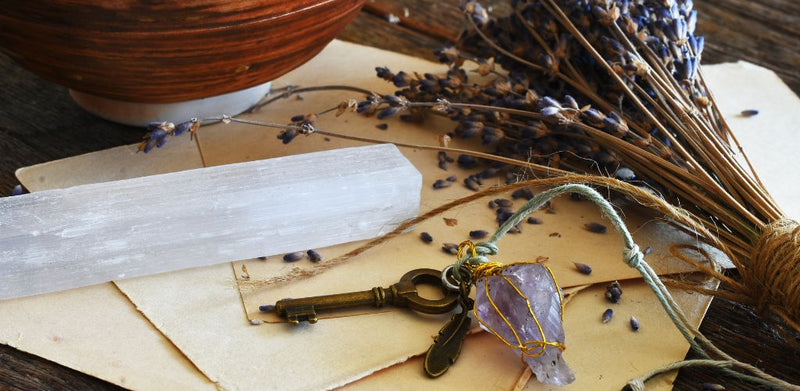
Hematite and selenite pair a heavy grounding stone with a light clearing one. Hematite is iron oxide, dense and metallic, worn to feel anchored. Selenite is a soft gypsum crystal used to reset a space or a piece of jewellery. The pairing gives you weight and clearing in one set.
Key takeaways
- Hematite is an iron oxide, noticeably heavy for its size, and used traditionally for grounding.
- Selenite is a crystalline form of gypsum and is very soft at 2 on the Mohs scale, soft enough to scratch with a fingernail.
- Selenite dissolves in water. Never rinse it, never soak it, and keep it out of a humid bathroom.
- The usual arrangement is hematite worn on the body and selenite kept at home as a charging plate.
- Metaphysical uses described here are traditional belief, not medical fact.
What hematite actually is
Hematite is iron oxide, and it is the world's most important iron ore rather than a rare collector's mineral. Geology.com describes it as an iron oxide that occurs in a wide range of forms, from metallic grey crystals to the earthy red material that gives so much rock and soil its colour.
That red is the giveaway. Polished hematite looks like gunmetal, but drag it across an unglazed tile and it leaves a rust red streak. Geologists use exactly this test, and it is the simplest way to tell real hematite from the many lookalike coatings on cheap beads.
It is the weight that people actually respond to. A hematite bracelet feels substantially heavier than a quartz one of the same size, and that physical heaviness is most of why the stone reads as grounding. The hematite meaning and properties guide covers the tradition in more depth.
What selenite actually is
Selenite is a variety of gypsum, calcium sulfate dihydrate, and it forms in clear to milky-white blades and towers with a distinctive satin sheen. Geology.com notes that gypsum is an evaporite mineral, formed as mineral-rich water dries out, which is why it turns up in vast beds in old sea basins.
Two consequences follow, and they matter more than any metaphysical claim. Selenite is extremely soft, sitting at 2 on the Mohs scale, which is the reference point for a fingernail. And because gypsum is water soluble, selenite genuinely degrades in water. A rinse will dull the satin finish and repeated wetting will pit and eventually dissolve it.
In practice it lives at home rather than on the body. Most people use a selenite plate or slab as a surface to rest other crystals on overnight. See the selenite meaning and properties guide for the fuller picture.
Why the pairing works
The two stones are used for opposite jobs, which is precisely why they are recommended together. Hematite is about staying put: weight, focus, and the feeling of being in your body rather than three steps ahead of it. Selenite is about clearing: resetting a room, a shelf, or a piece of jewellery that has been worn hard all week.
So the division of labour is physical as well as symbolic. Hematite travels with you, on the wrist or in a pocket. Selenite stays home, on a bedside table or a shelf, and the hematite goes onto it at night. That routine gives the pair a practical shape most crystal pairings lack.
It is also a sensible combination for people who find purely soothing stones ineffective. Hematite has a definite presence, and pairing it with something bright and white keeps the set from feeling heavy in the wrong way.
Comparing hematite and selenite
| Hematite | Selenite | |
|---|---|---|
| Chemistry | Iron oxide | Gypsum, calcium sulfate dihydrate |
| Hardness | 5 to 6.5 Mohs | 2 Mohs, scratches with a fingernail |
| Water | Quick wipe, dry fully to avoid rust spotting | Never. It dissolves |
| Traditional use | Grounding, focus, feeling settled | Clearing, resetting, charging other stones |
| Best format | Beaded bracelet, tumbled pocket stone | Plate, slab, tower, kept at home |
| Watch out for | Magnetic hematine sold as hematite | Humidity, and being confused with satin spar |
One buying note worth knowing. Most strongly magnetic "hematite" jewellery is not hematite at all but hematine, a manufactured barium ferrite composite. Genuine hematite is at most weakly magnetic. Neither is a bad product, but only one of them is the mineral you were sold.
How to use the pair
Keep it simple. Wear the hematite, rest it on the selenite.
- Daily. Hematite bracelet or pocket stone during the day, placed on the selenite plate overnight.
- At a desk. Hematite within reach for the grounding cue, selenite at the back of the desk as the reset point.
- In a bedroom. Selenite on the nightstand. Avoid the bathroom entirely, since ambient humidity will damage it over months.
- For a set. Hematite pairs naturally with black tourmaline if you want more weight, which is covered in hematite and black tourmaline.
If clearing is the main thing you want from selenite, the related pairing in black tourmaline and selenite follows the same protective logic with a different partner stone.
Care and common mistakes
Hematite needs drying. It is iron based, so leaving a wet bracelet on a basin edge will eventually produce rust spotting on the drill holes and the string. Wipe it, dry it, and it will hold its mirror polish for years. Skip salt water entirely.
Selenite needs keeping dry, full stop. No rinsing, no salt, no soaking, no leaving it near a kettle or a shower. Dust it with a dry soft brush. If a plate develops a chalky patch, it has met moisture and the finish will not come back.
Store them apart. At 2 on the Mohs scale, selenite will be scratched by essentially everything else you own, including hematite. Use the Mohs hardness scale to decide what can safely share a box, and give selenite its own space. Beyond that, crystals for protection covers the grounding side of the set in more detail.
Selenite, satin spar, and what you are probably holding
Almost every white selenite tower, plate and wand on the market is technically satin spar, a fibrous variety of gypsum with a silky lengthwise sheen. True selenite in the strict mineralogical sense is the transparent, glassy, sheet-like form. Both are gypsum, both behave identically in water, and the trade uses the names interchangeably.
This is worth knowing for one reason only: nobody is cheating you. A satin spar charging plate sold as selenite is the normal product and the correct price. The distinction matters to mineral collectors and almost not at all to anyone using a plate on a bedside table.
What is worth checking is condition. Look along the length of a wand for hairline splits, since fibrous gypsum separates along those fibres and a cracked plate will eventually come apart in your hands. Chalky white patches mean the piece has already met moisture, and that dullness does not polish out.
Who this pairing suits
It suits people who describe the problem as being ungrounded rather than anxious. There is a real difference. Anxiety wants softening, and neither of these stones does that. Feeling scattered, unfocused, or slightly outside your own day is what hematite's weight is traditionally directed at, and it is the most common reason people pick it up.
It also suits anyone who wants a routine rather than a collection. The wear-it, rest-it cycle gives this pair a daily shape, which is more than most crystal pairings offer and is probably why it survives as a recommendation.
If hematite's weight is the part you want and selenite is mostly there to reset it, our selenite bracelet gives you that clearing on your own wrist too — worn occasionally rather than daily, since it stays safest away from water and knocks.
The properties described here reflect traditional and cultural belief around crystals. They are not medical claims and are not a substitute for professional healthcare. If you are managing a health concern, speak to a qualified practitioner rather than relying on a crystal practice.
Sources
Written by Chetena Sharma. Reviewed by the Solacely editorial team.
Frequently asked questions
About the author


Written by Chetna Sharma, crystal healing practitioner and co-founder of Solacely. Chetna has worked with healing crystals for over a decade and curates Solacely's protective stone collection.