Hessonite, called gomed across India, is a honey to cinnamon brown garnet. In Vedic tradition it is Rahu's stone, worn to steady an unsettled stretch of life; in everyday crystal practice it is kept for confidence, clarity and grounded success. Hard enough for daily wear, it is a stone the tradition asks you to live with rather than visit.
Key takeaways
- Hessonite is a variety of grossular garnet, a calcium aluminium silicate, coloured honey to cinnamon brown by traces of iron and manganese.
- In Vedic astrology it is gomed, the stone of Rahu, traditionally prescribed from a chart reading and first worn on a Saturday.
- Its everyday meaning is confidence, clarity and grounded success, with a root chakra association.
- At about 7 to 7.5 on the Mohs scale it suits continuous wear as a ring or a beaded bracelet.
- Genuine hessonite shows a heat wave or treacle-like texture under a loupe, and natural beads vary a little from one to the next.
- Keep the elastic cord dry, wipe the beads with a soft dry cloth, and follow your astrologer's guidance on when to begin.
What hessonite actually is
Hessonite is a variety of grossular garnet, a calcium aluminium silicate. Its colour, anywhere from pale honey through orange to a deep cinnamon brown, comes from traces of iron and manganese in the crystal. Gemmological references put the garnet group at 6.5 to 7.5 on the Mohs scale, with hessonite sitting around 7 to 7.5, hard enough for everyday jewellery.
Garnet is a family rather than a single mineral, and grossular is one of its calcium-rich branches. Most grossular is green or colourless; hessonite is the warm-toned member, and the one the trade has prized longest. The Gemological Institute of America calls it the cinnamon stone for its colour. Sri Lanka has been its classical source for centuries, with material also coming from India and East Africa.
What makes hessonite recognisable is its interior. Under a loupe, genuine stones show a swirling, roiled texture that gemmologists describe as a heat wave or treacle effect, as if syrup were being stirred inside the stone. It comes from the way the garnet grew, and it is the single feature a gemmologist looks for first.
| Property | Detail |
|---|---|
| Mineral | Grossular garnet, a calcium aluminium silicate |
| Colour | Honey, orange and cinnamon brown, from iron and manganese |
| Hardness | About 7 to 7.5 on the Mohs scale (garnet group 6.5 to 7.5) |
| Signature feature | Heat wave or treacle-like internal texture |
| Vedic association | Rahu, the north lunar node; Saturday |
| Chakra | Root |
| Traditionally kept for | Steadiness through change, confidence, clarity, grounded success |
Hessonite and agate, the traditional substitute
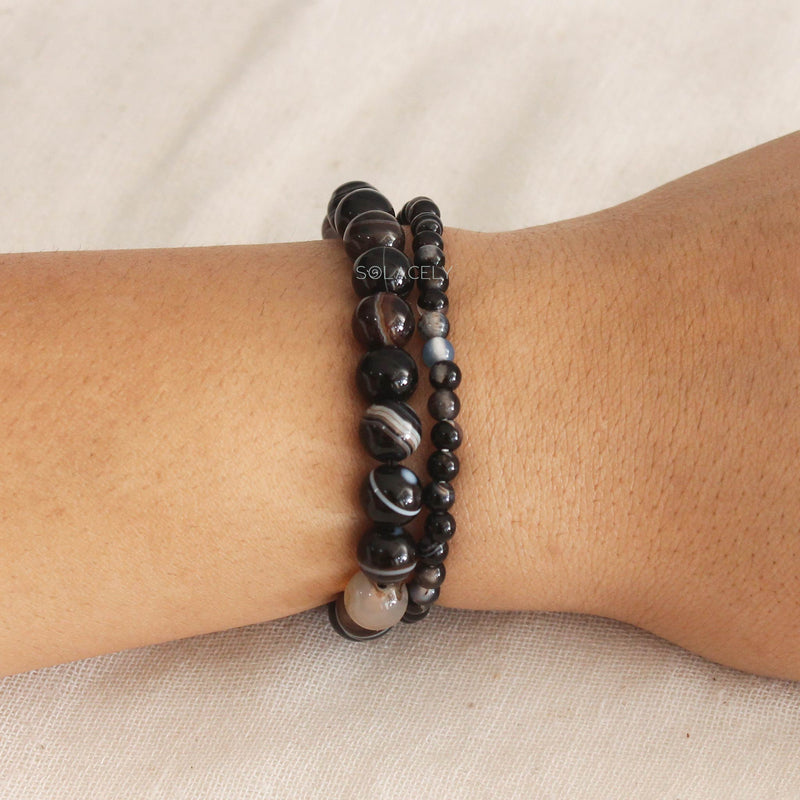
Vedic practice names agate as the stone to wear when hessonite is not available, because its banded browns and honey tones sit in the same colour family and it is just as durable. The two are not the same mineral: agate is a banded chalcedony quartz, hessonite a garnet. Our guide to Rahu and its traditional stone sets out both, along with the classical ring prescription.
Hessonite's meaning in Vedic tradition
In Vedic astrology hessonite is gomed, the gemstone of Rahu. Rahu is the north lunar node, a shadow graha rather than a planet, associated with ambition, foreign things, confusion and sudden change. Gomed is traditionally worn to steady a period shaped by those themes: a time when life has become intense, unsettled or hard to read.
The tradition does not describe gomed as a stone that resolves a difficulty. It describes it as a stone that marks a period a person has decided to handle with more steadiness, and which keeps that decision in view each time the wearer notices it. Classical sources associate it with steadier judgement when someone is chasing something harder than the situation deserves.
That is why it is prescribed with care. Gomed is the one stone of the nine that practitioners most often ask people not to wear without a chart reading, and even then many suggest a trial of a few days before continuous wear. The Rahu guide explains who should be cautious with gomed in the tradition's own terms. If you have an astrologer, their guidance comes first.
Gomed is also one of the navaratna, the nine gemstones worn together for the nine grahas, where it takes Rahu's place beside the ruby for the Sun and the pearl for the Moon. Worn alone it is a remedy stone; worn in the set it is a balance. Both are long-standing uses, and both credit the stone with the same quality of steadying.
Hessonite's everyday meaning: confidence, clarity and grounded success
Outside the astrological frame, hessonite is worn as a stone of confidence, clarity and grounded success. People reach for it when they want to feel focused and self-assured, and during the fresh starts they are working towards. Its warm, earthy colour places it with the root chakra, the centre of safety and stability, which is where its grounding reputation comes from.
The two readings fit together more neatly than they first appear. Rahu is the graha of ambition and the unfamiliar, and gomed is kept to steady that energy rather than to remove it. In everyday language, that is what confidence is: ambition with its feet on the ground. Many people find that the stone's honey-brown warmth reads as encouragement, while its weight in the hand reads as a reminder to slow down.
Crystal practice says hessonite supports focus and mental clarity, encourages a calm and balanced footing, and is kept for stability and protection from draining influences. Those are the terms the tradition uses, and they are the ones we use on the product page. A bracelet worn through a working day keeps the intention in view at the moments it is most easily lost: before a meeting, in a hard conversation, at the start of something new.
Wearing hessonite as a bracelet
The classical form for gomed is a ring, set in silver or ashtadhatu and worn on the middle finger, first put on during a Saturday evening. A beaded bracelet is the everyday alternative. It carries the same stone against the skin all day, it needs no setting, and it can be worn simply as a grounding piece without any astrological prescription at all.
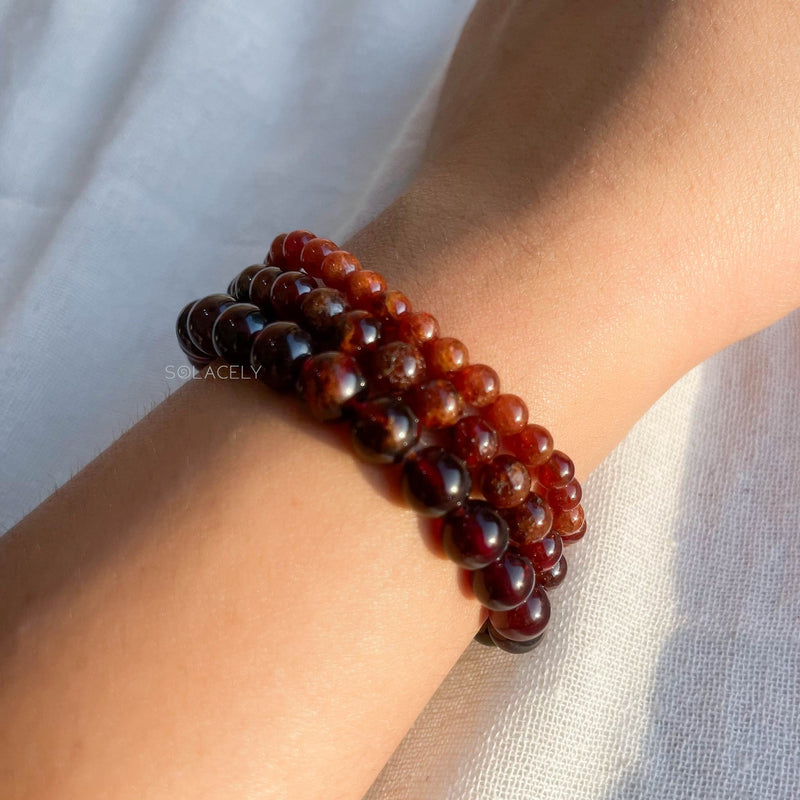
Our hessonite bracelet is hand-strung on elastic in 4mm, 6mm and 8mm beads, in wrist sizes from S at 6 inches to XXL at 8 inches. Every piece is cleansed and charged by singing bowl before it is packed, and an optional certificate can be added at checkout. Each bead varies a little in colour and depth, which is how a natural stone looks.
Which wrist? Many practitioners suggest the right for hessonite, in keeping with the way remedial stones are worn on the working hand, while the left is a comfortable choice for anyone wearing it purely for grounding. Our guide to which hand to wear a hessonite bracelet on goes through the convention and its exceptions. For how the three bead sizes look and feel on the wrist, see our guide to choosing your hessonite bracelet bead size.
If you are following an astrologer's prescription, the timing they give you applies to a bracelet as much as to a ring. If you are not, begin whenever the moment feels right. Nothing in the tradition penalises a bracelet put on with a clear intention on an ordinary Tuesday.
Choosing and caring for hessonite
Choose hessonite by looking at it closely. Genuine stones carry the heat wave texture inside, a warm colour that is rarely perfectly uniform, and a comfortable weight in the hand. On a bracelet, bead-to-bead variation is the mark of natural stone. A certificate, where offered, records what the stone is, and a local gemmologist can confirm it in person.
Our guide to what the heat wave texture, colour and certificate tell you goes through each of those signs in turn. The tradition treats knowing your stone as part of whether a remedy is right for you, so this is less a buying precaution than a way of getting to know the piece.
Care is easy, because garnet is durable and stable. The stone tolerates daily wear, ordinary light and handling without complaint. The part to protect is the cord: take the bracelet off before water, keep it away from perfume, lotion and harsh chemicals, and wipe the beads with a soft dry cloth. Avoid ultrasonic cleaners on any stone with visible fractures or inclusions, and store the bracelet away from harder gems such as sapphire. For cleansing by sound, moonlight and smoke, see how to cleanse and charge a hessonite bracelet.
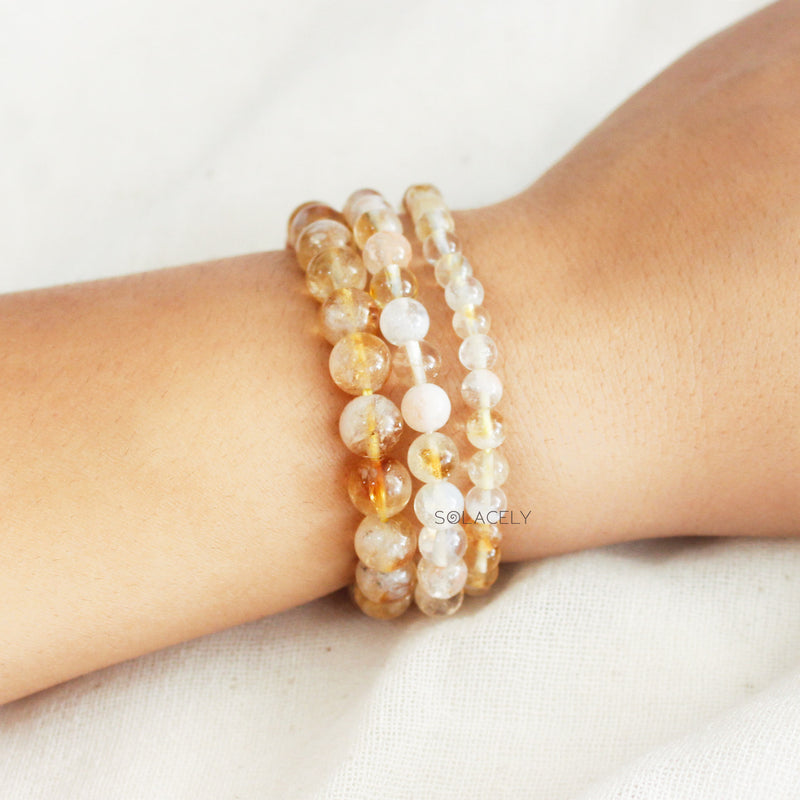
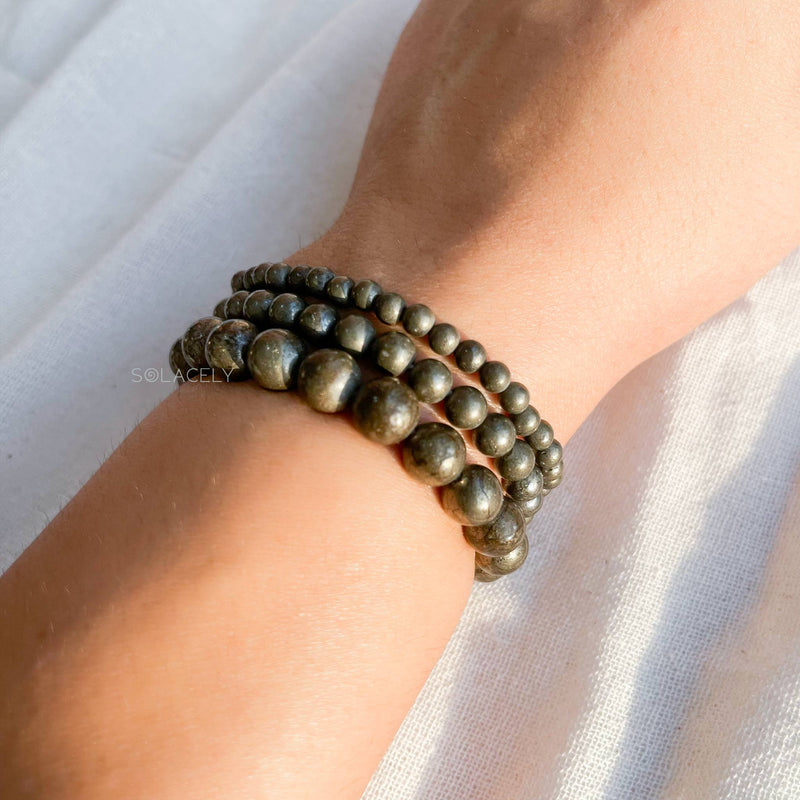
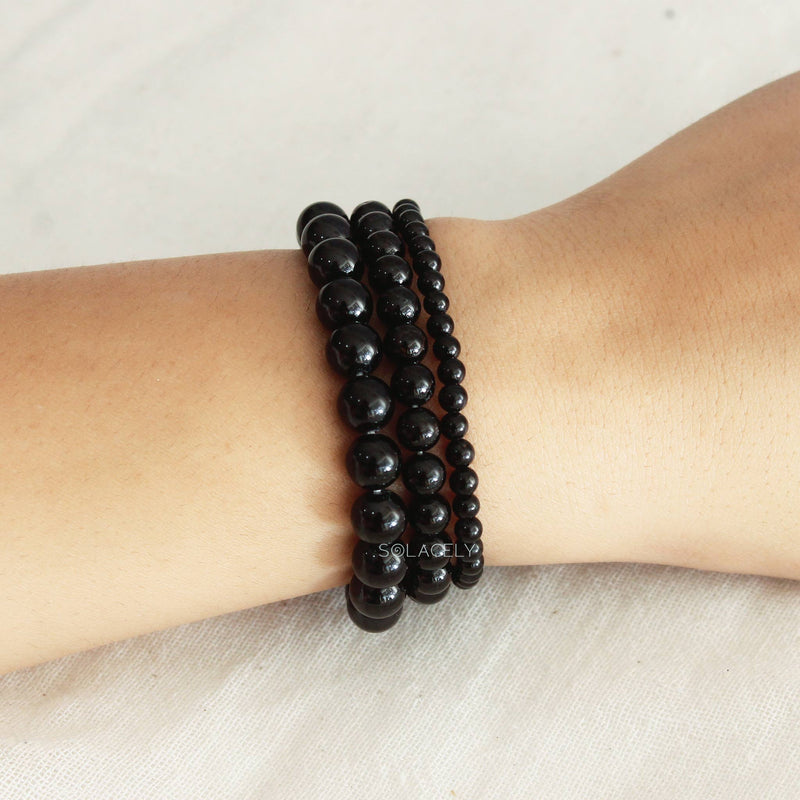
Hessonite also wears well beside other stones. Citrine and pyrite share its confidence intention, black tourmaline and sulemani hakik its protective one, and all of them sit close enough in hardness to share a wrist. The full range of pieces is in our hessonite collection.
A stone that asks for steadiness, not speed
Most stones are bought for what they promise to bring. Hessonite is a little different. The tradition that has kept it longest asks the wearer to slow down first: to read the chart, to try it for a few days, to notice. Then it asks for continuous wear, month after month, as the period it was chosen for works itself out.
That is a stone for people who are in something for the long run. Honey-brown at the wrist, warm in the hand, not in a hurry. From our space to yours.
The properties described here reflect traditional Vedic and cultural belief around gemstones. They are not medical, legal or financial claims, and they are not a substitute for professional help or for a reading from a qualified astrologer. Keep small beads away from young children and pets, as loose beads are a choking risk, and never place crystals in drinking water.
Sources
- Gemological Institute of America, Garnet
- Gemological Institute of America, Garnet Care and Cleaning Guide
Written by Chetena Sharma. Reviewed by the Solacely editorial team.
Frequently asked questions
About the author


Written by Chetna Sharma, crystal healing practitioner and co-founder of Solacely. Chetna has worked with healing crystals for over a decade and curates Solacely's protective stone collection.