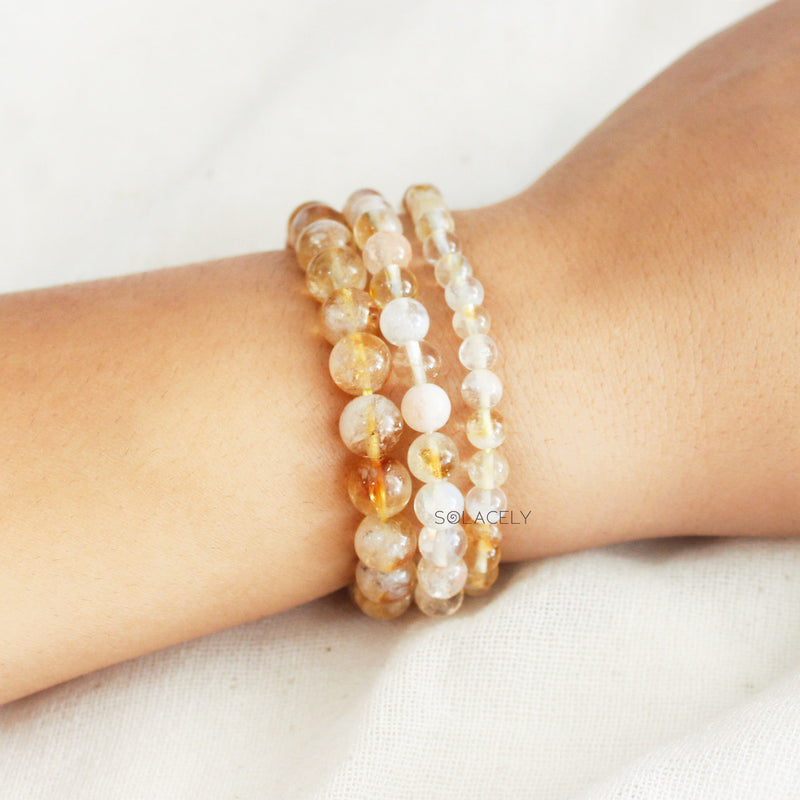
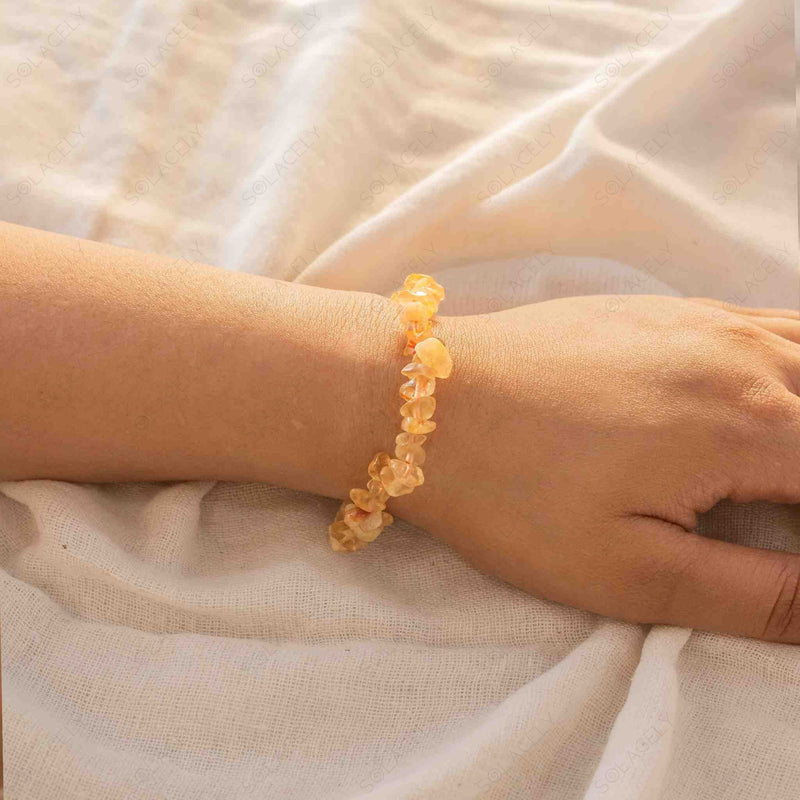
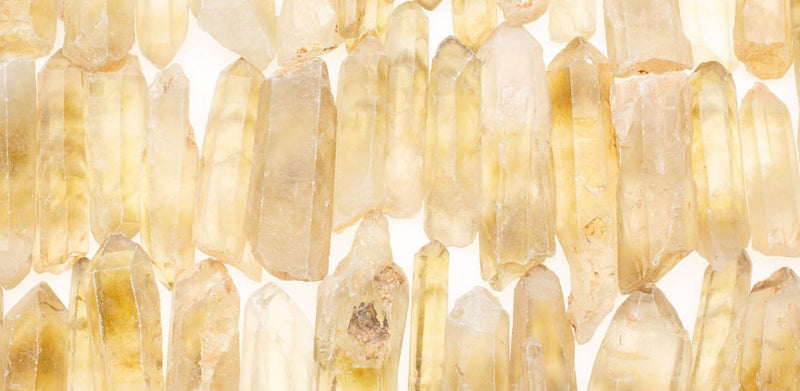
Wear a citrine bracelet on your left wrist. Citrine is kept for drawing prosperity and warmth toward you, and the left is the receiving side in crystal tradition. The right is the deliberate alternative, chosen when the work is about projecting confidence rather than attracting opportunity.
Key takeaways
- Left wrist for drawing prosperity and warmth in.
- Right wrist when you are about to state a price or make a case.
- Citrine is a solar plexus stone, which is what makes the right hand version coherent.
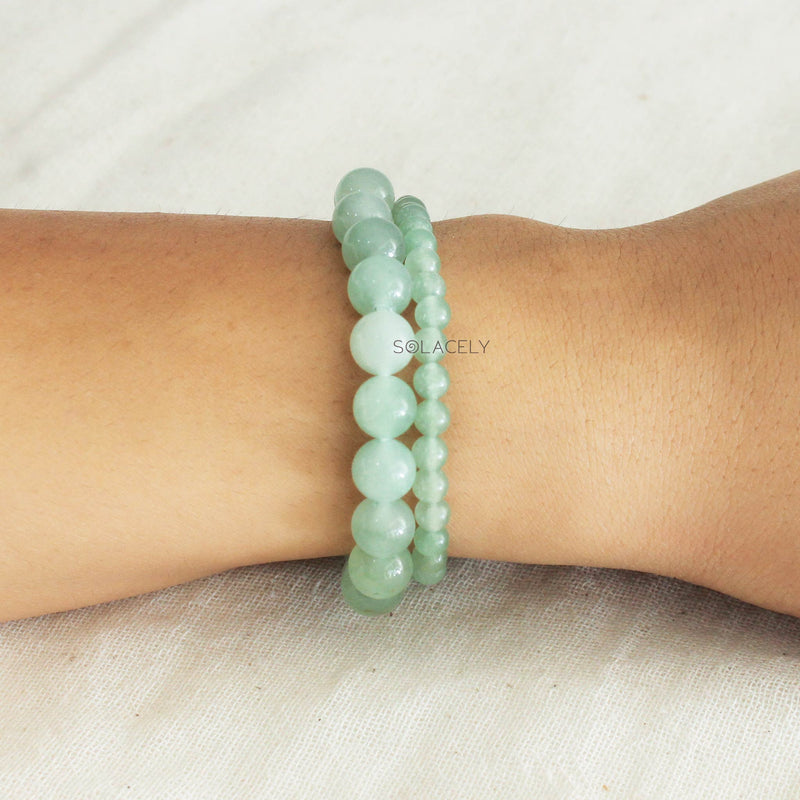
- Pairs well with green aventurine, pyrite and clear quartz.
- Keep it out of sustained sun. The golden colour is light sensitive.
Why the left wrist
The left is the receiving side in crystal practice, and citrine's oldest tradition is about receiving. It is the merchant's stone, kept in a till or a cash box so that trade came in. That framing is unambiguous: something arriving rather than something being sent.
Worn on the left, a citrine bracelet carries the same intention on your body rather than in a drawer. It is the placement most practitioners recommend and the one that matches what people usually buy citrine for.
When to wear it on the right
Citrine is unusual among the receiving stones because it has a genuine second placement, and the reason is anatomical rather than arbitrary.
Citrine belongs to the solar plexus, the chakra tradition links to will, self worth and personal authority. That side of the stone is not about attracting at all. It is about what you are prepared to ask for. If you are preparing to quote a rate, ask for a raise, or make a case for yourself, the right wrist matches that outward, projecting work.
A useful split: wear it left through a slow season when you want work to come in, and move it to the right in the week you have to negotiate.
Once you have chosen the wrist that feels right for wearing Citrine, you can also consider the style and craftsmanship of the bracelet itself. A handmade crystal bracelet can make the piece feel more personal while keeping the focus on the stone you have chosen.
What to wear with it on the same wrist
| Partner stone | Mohs | What it adds |
|---|---|---|
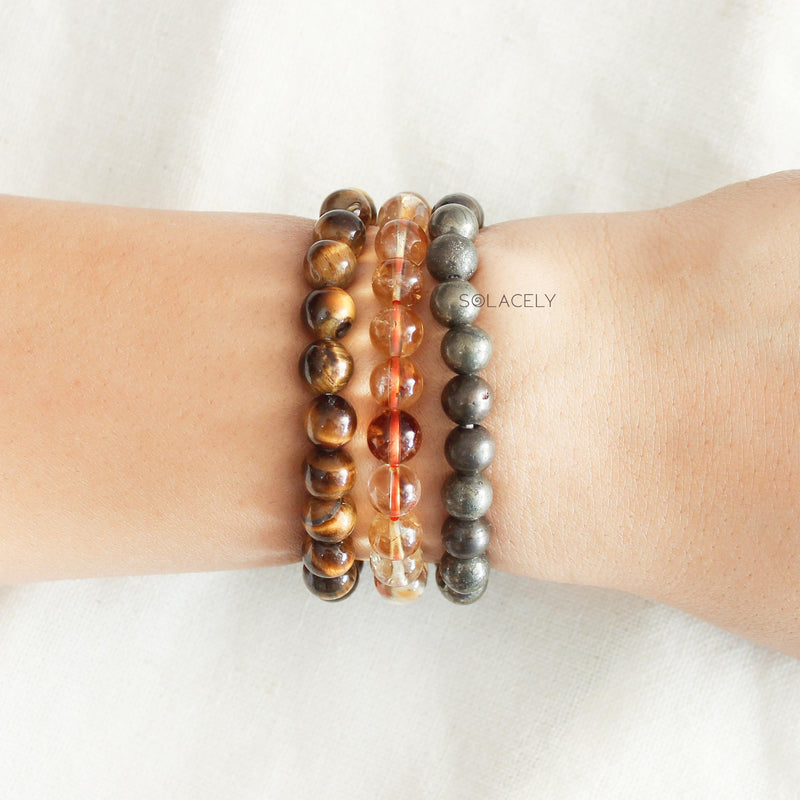
| Green aventurine | 6.5 to 7 | Opportunity and openings |
| Clear quartz | 7 | A neutral partner that does not compete |
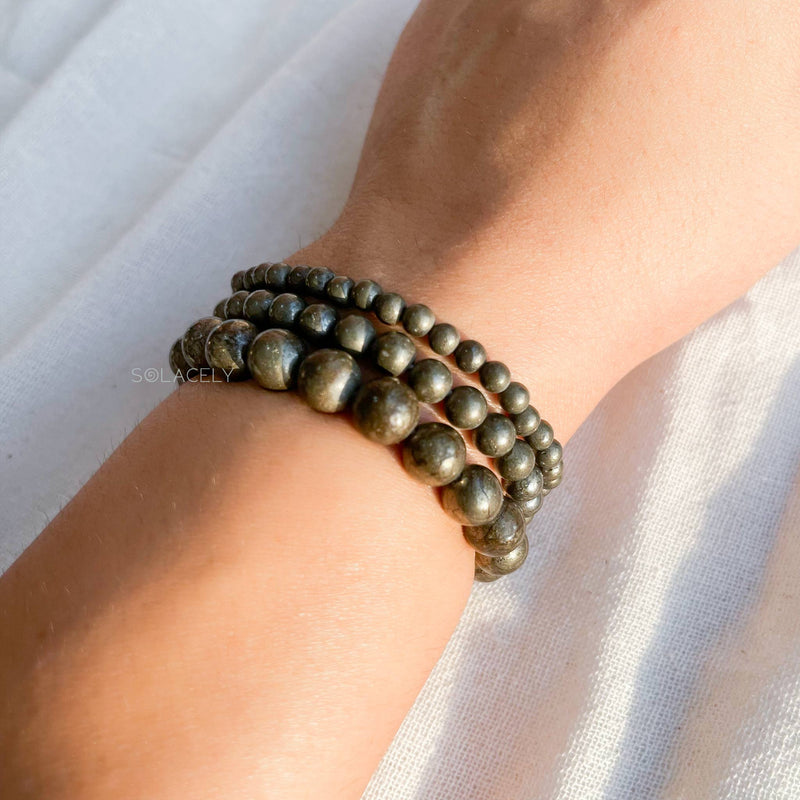
| Pyrite | 6 to 6.5 | Earned confidence, but keep it dry |
| Tiger's eye | 7 | Nerve for the actual conversation |
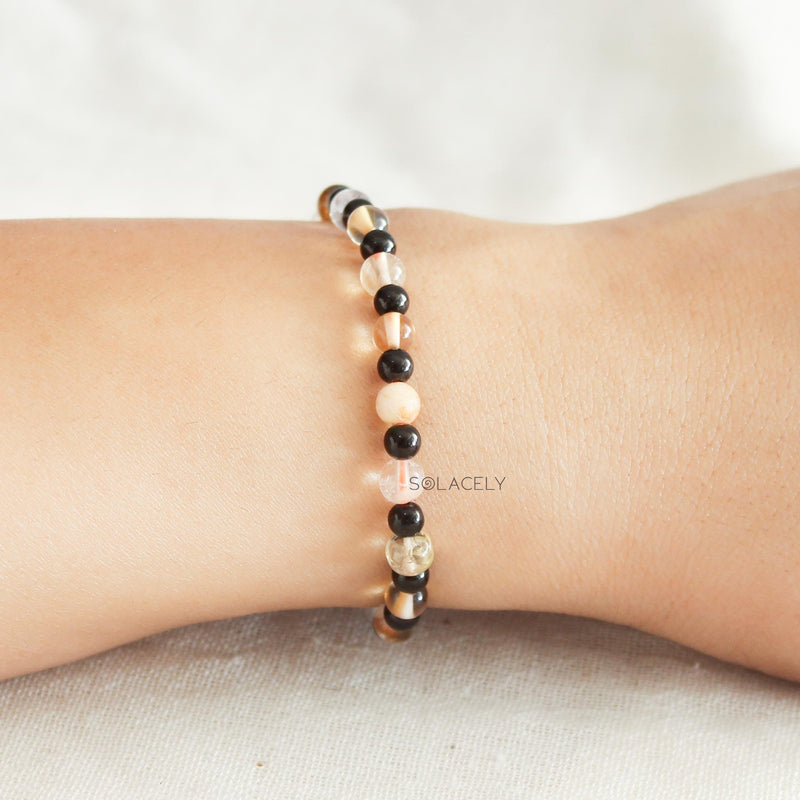
All four sit close enough to citrine's hardness of 7 that a mixed strand ages evenly. Pyrite is the one with a handling rule of its own: it is iron sulfide and oxidises, so it must come off before water and must never be salt cleansed.
Bracelet or wallet?
Both placements are traditional and they suit different habits. The wallet or till is the older merchant placement, tied directly to money changing hands, and it is the better choice if the intention is about spending and pricing.
A bracelet keeps the stone with you through the whole day rather than only when you open a wallet, which makes it the better choice when the intention is about how you carry yourself. Some people do both, with a chip in the wallet and a bracelet on the wrist.
Looking after it
Warm soapy water and a soft cloth, and off before showering so the elastic lasts. Citrine is quartz at 7 with no cleavage, so it handles daily wear well.
The one real rule is sunlight. Citrine's colour is light sensitive, and months on a bright windowsill will soften it permanently. Keep the bracelet in a drawer or pouch rather than on a sill, and out of a parked car.
Where to go next
For the rule across every stone, see our pillar guide to which hand to wear your crystal bracelet. For citrine's meaning, shades and care in full, see our complete citrine guide.
The uses described here reflect traditional and cultural crystal practice. They are not medical claims and are not a substitute for professional healthcare, financial or legal advice.
Sources
Written by Chetena Sharma. Reviewed by the Solacely editorial team.
Frequently asked questions
About the author


Written by Chetna Sharma, crystal healing practitioner and co-founder of Solacely. Chetna has worked with healing crystals for over a decade and curates Solacely's protective stone collection.