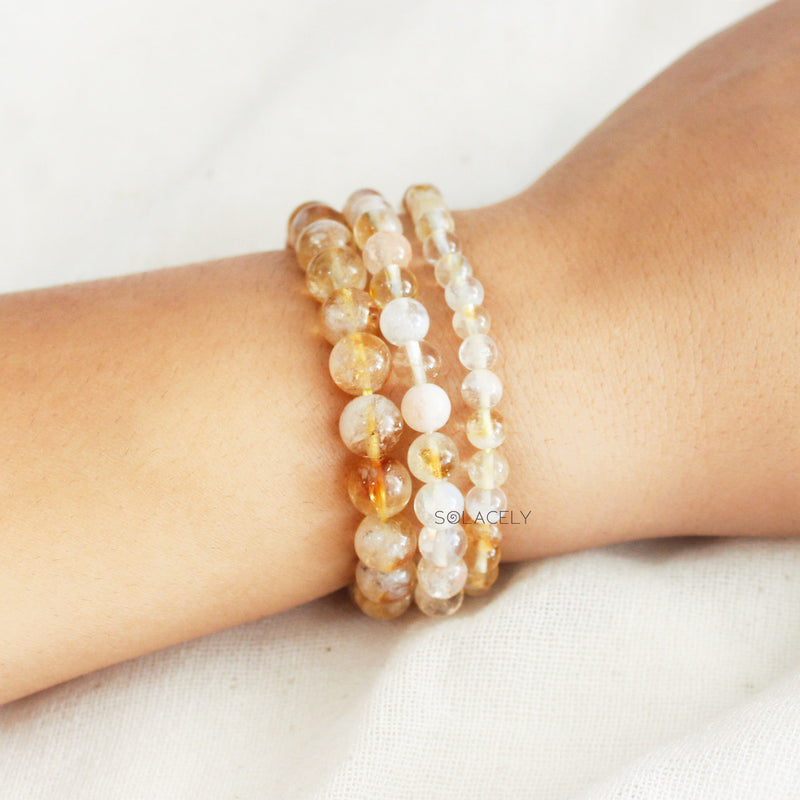
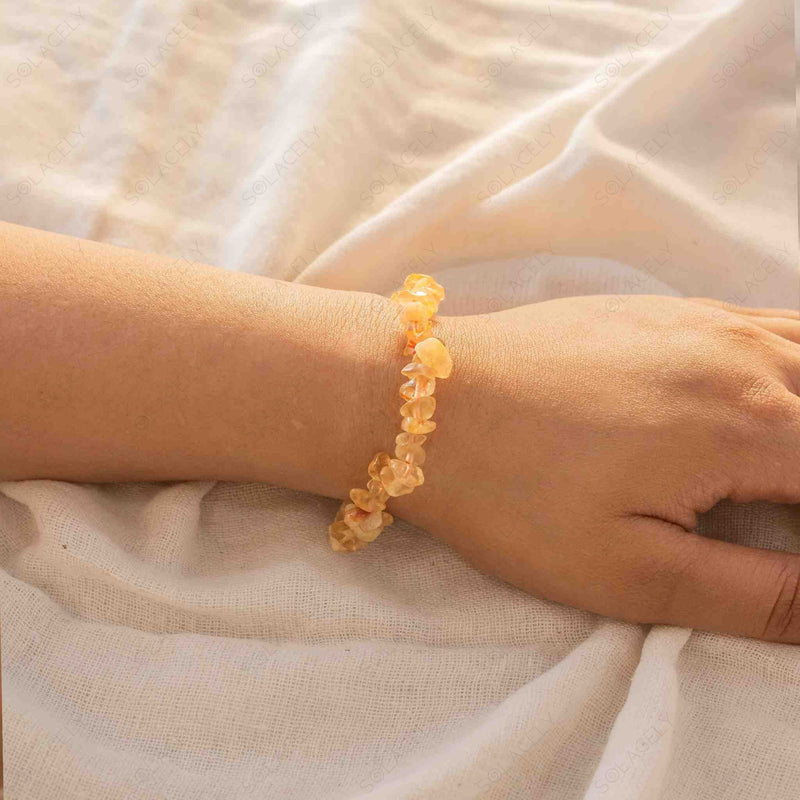
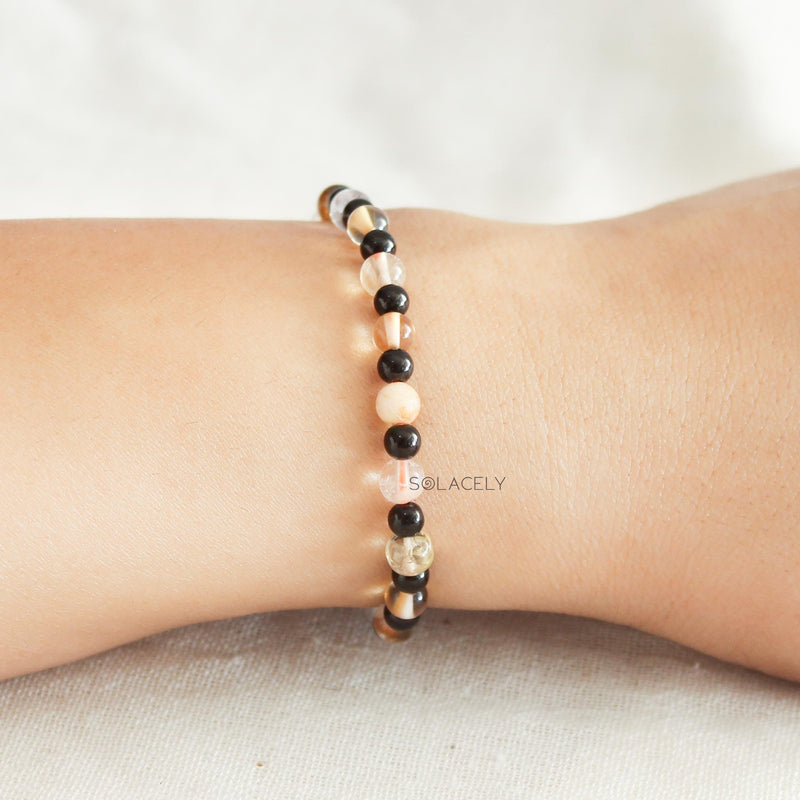
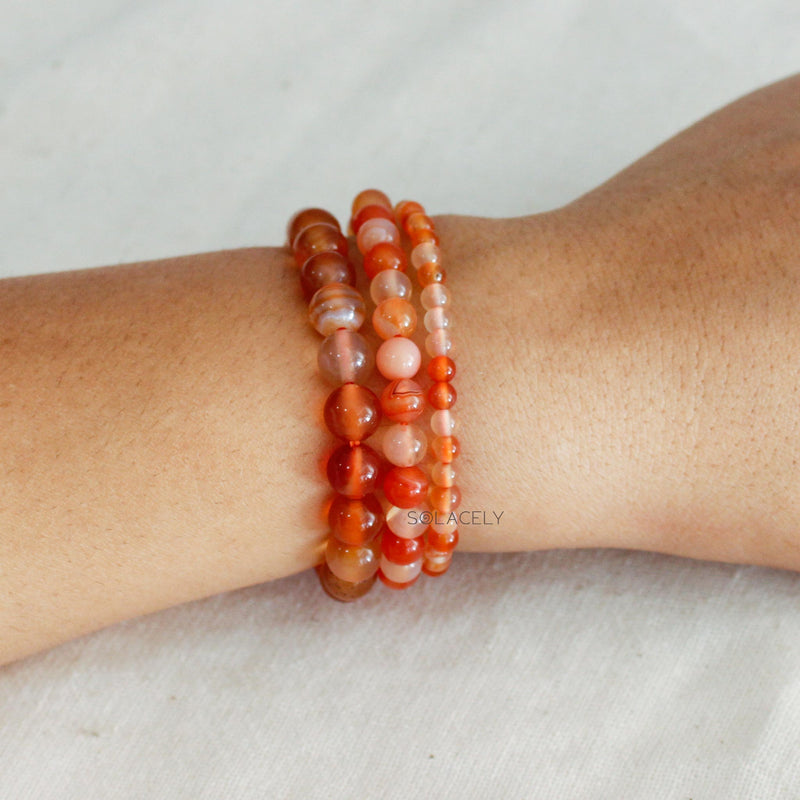
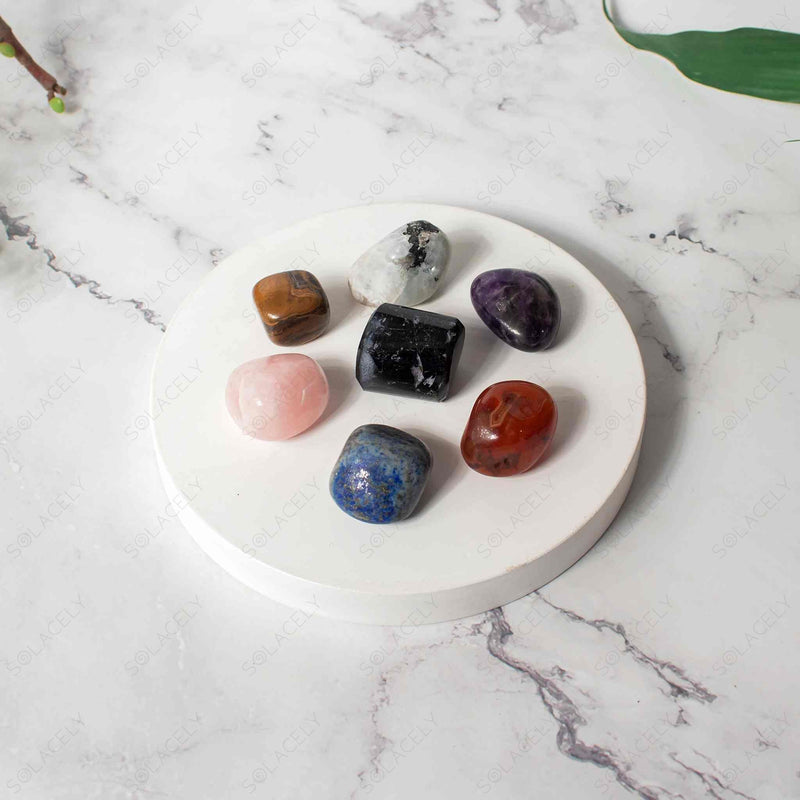
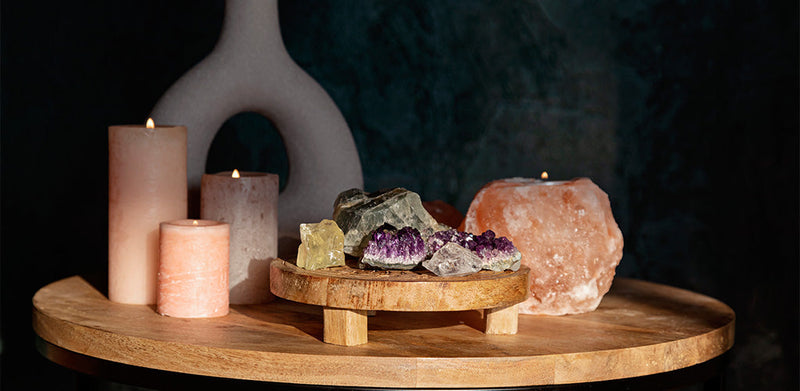
Six stones cover a dining room: citrine at the centre and in the wealth corner, rose quartz on the sideboard, carnelian for appetite, clear quartz beside the centrepiece, black tourmaline at the doorway, and amethyst for long evenings. The rule that matters most here is height, because a centrepiece sits at toddler eye level.
Key takeaways
- Citrine is the lead stone of the room, kept at the table centre or the southeast corner.
- The southeast corner is the traditional wealth corner in both Vastu and Feng Shui, and in a dining room it is often actually inside the room rather than down a hallway.
- Keep pyrite off the table. The International Gem Society rates it high on its gemstone toxicity table, and a centrepiece is within reach of children and pets. A high shelf elsewhere is the right home for it.
- Malachite is the other one to keep out of reach, and any tumbled stone is a choking size for a child under three.
- Quartz family stones, which is most of this list, are inert and comfortable at table height.
- Everything described here is traditional belief and cultural practice.
Why does the dining room need its own logic?
Three things separate it from every other room, and each one changes what belongs in it.
The first is height. Whatever sits in the middle of the table is at eye level for a small child, within reach of a curious dog, and an arm's stretch from every guest. Stones that are perfectly fine on a high shelf in a study do not belong in a centrepiece. That single constraint rules out more than any aesthetic preference would.
The second is visitors. The dining room sees more people from outside the household than any other room. A placement that works here is one that reads as decoration and needs no explanation, which is a useful discipline rather than a limitation.
The third is that food and intention already sit together. Nearly every culture has some form of pause before eating, whether that is grace, a moment of quiet, or simply everyone waiting until the last plate lands. Crystal practice slots into a pause that already exists instead of asking for a new one. If your dining room is open to the kitchen or the lounge, treat it as a zone inside the bigger space and follow our living room guide for the rest.
The six stones that earn a seat at the table
Start with citrine and rose quartz. Add the others when the room asks for them.
Citrine, the centrepiece and the wealth corner
Citrine is the lead stone here, and it has two homes. One is a small cluster at the centre of the table, cleared away for meals if there are toddlers about. The other is a sideboard or corner shelf in the southeast. Its warm gold is tied in tradition to welcome, generosity and abundance, which is more or less the job description of a dining room. Keep it a few feet back from a south or west window, since long sun will pale the colour. Our citrine guide covers the shades.
Rose quartz, on the sideboard
Rose quartz belongs where everybody passes it on the way to sit down. A single tumble or a carved heart on the buffet is the usual arrangement. It is the stone most associated with family warmth in modern practice, and it works as a quiet marker of that rather than a centrepiece competing for attention. Quartz at 7 on the Mohs scale, so it is unbothered by handling.
Carnelian, for appetite and nerve
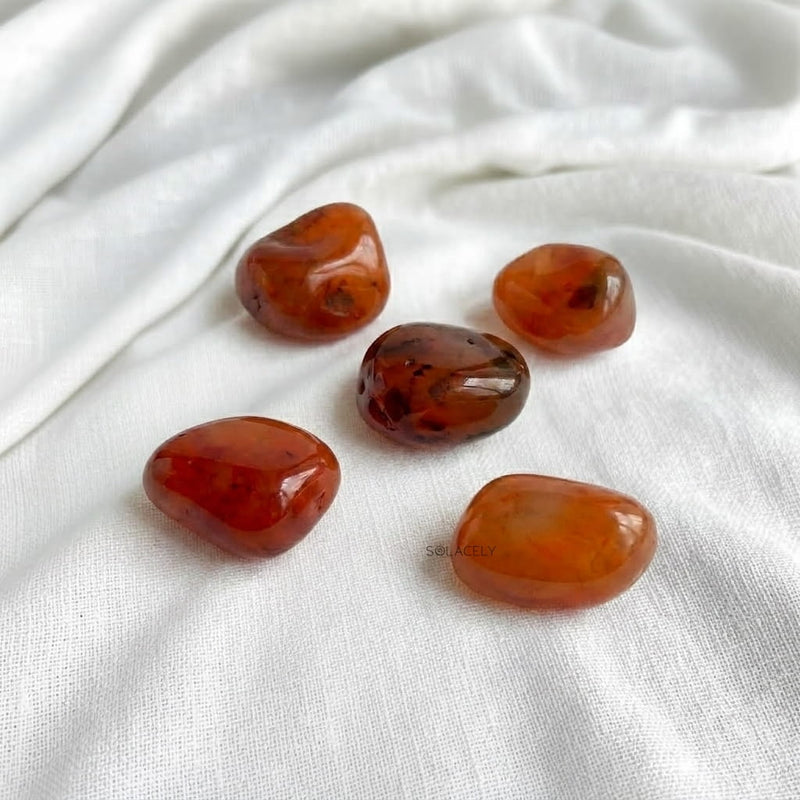
Carnelian is the underused stone of this room. Its warm orange is linked traditionally to appetite, vitality and the confidence to gather people in the first place, which is the part of hosting most people find hardest. A single tumble on the sideboard or a window ledge is enough, and it sits beautifully beside citrine.
Clear quartz, beside the centrepiece
Clear quartz is treated in tradition as the amplifier that strengthens whatever it sits with, which makes it the natural companion to the citrine at the centre of the table. It is also the most stable stone on this list, untroubled by sun, water or sound. Use a tumble or a rounded piece rather than a sharp natural point, which will mark a table and catch a hand.
Black tourmaline, at the threshold
Black tourmaline is the boundary stone, and it earns its place in dining rooms that sit between the front door and the kitchen, which is a very common layout. One tumble either side of the doorway follows the old habit of marking a threshold. Tumbled forms only, since raw schorl has edges that scratch floors and shed small fragments when new.
Amethyst, for the long evenings
Amethyst is the wind-down stone of the set, and it suits rooms that turn into conversation spaces once the plates are cleared. Keep it on the sideboard or a corner shelf away from strong light. It is the most fade-prone stone here, so a north or east position is kinder to it than a sunny sill.
Where is the wealth corner in your room?
The southeast is the wealth corner in both Vastu Shastra and Feng Shui, and there are two ways of finding it that sometimes disagree.
- The Vastu method. Stand in the middle of the room with a compass and find southeast. It is southeast regardless of where the front door is.
- The Feng Shui Bagua method. Stand in the centre facing as though you had just walked in, with the doorway behind you. The far left corner is the Xun position.
Depending on how the room sits inside the building, these can land on different corners. Practitioners generally pick the tradition they follow and stay with it rather than trying to satisfy both. Splitting the difference tends to leave you with two half-hearted corners instead of one you actually keep tidy, and the tidying is part of the practice.
Whichever corner you settle on, give it a surface of its own. A corner shelf, a small tray, or simply a cleared patch of the sideboard is enough. What stops a wealth corner working is almost never the stone, it is the pile of post and car keys that gradually accumulates around it. The wider directional system is covered in our Vastu remedies guide.
A hosting ritual that embarrasses nobody
The hard part of crystal practice in a shared room is making it feel unremarkable. The trick is to attach it to something the table already does rather than inventing a new ceremony.
- Set the citrine out before anyone arrives. It reads as decoration. Nobody will ask.
- Light a candle as the first guest sits. The candle is the visible ritual and the stone is the private one.
- Take two breaths before the first dish goes round. Most traditions already have a moment here and yours does not need a name.
- Clear the centrepiece afterwards. Putting it away closes the evening, and stones do not need to sit out around the clock.
One thing worth avoiding is announcing what the stones are for at a hosted dinner. A guest who does not share the practice will feel cornered, and hospitality is the whole point of the room. The stone does its work quietly.
Safety at table height
This is the section that genuinely matters, because the dining table has no out-of-reach zone. Three rules cover it.
- Keep pyrite off the table. The International Gem Society places it high on its gemstone toxicity table and notes it reacts badly if swallowed. On a high shelf in a study it is a lovely thing. In a centrepiece it is the wrong choice.
- Keep malachite out of reach anywhere. It carries copper that can leach if a stone is mouthed, so it belongs well above small hands.
- Clear the centrepiece for meals with under-threes. Any tumbled stone is small enough to be a choking hazard at that age, and there is nowhere on a dining table that counts as out of reach.
The quartz family covers most of this list, which is convenient, because citrine, rose quartz, clear quartz, carnelian and amethyst are all inert and comfortable at table height once the reach question is handled. For the fuller safety picture with children, see our guide to crystals for children's bedrooms.
How does this differ from other rooms?
The rosters overlap, but the reasoning does not. A living room is about sofas, screens and household traffic, and stones there deal with sun-fade and the general churn of the day. A bedroom is about sleep and the bedside dish, and nothing sharp belongs near a sleeping head. A dining room is about the centrepiece, the guests and the wealth corner, and the constraint is always height.
Put another way, the same citrine does a different job in each room. On a desk it is about enterprise, on a dining table it is about welcome. For the whole house at once, our crystals for home guide maps it room by room.
How do you cleanse dining room stones?
These pieces get handled at every meal and picked up by guests, so most practitioners refresh them every week or two, and sooner after a big gathering.
- Moonlight overnight. Move the centrepiece to a windowsill for a night. Safe for every stone above.
- A bell at the start of the meal. Rung once before the first plate goes round. Contact free, takes no extra time, and doubles as the hosting ritual.
- A dry cloth between meals. Ten seconds, and it takes off the skin oils and the fine film that table stones always pick up.
Skip salt water in a dining room altogether. Between food, plates and the occasional spilled glass, it is the one place where the risk of it ending up somewhere it should not is highest.
The properties described here reflect traditional and cultural belief around crystals. They are offered for reflection and wellbeing and are not medical advice, a diagnosis, or a treatment for any condition. Keep pyrite and malachite out of reach of children and pets, keep small tumbled stones away from children under three, and never place crystals in drinking water or food.
Sources
- Gemological Institute of America, Citrine Description
- International Gem Society, Gemstone Toxicity Table
Written by Chetena Sharma. Reviewed by the Solacely editorial team.
Frequently asked questions
About the author


Written by Chetna Sharma, crystal healing practitioner and co-founder of Solacely. Chetna has worked with healing crystals for over a decade and curates Solacely's protective stone collection.