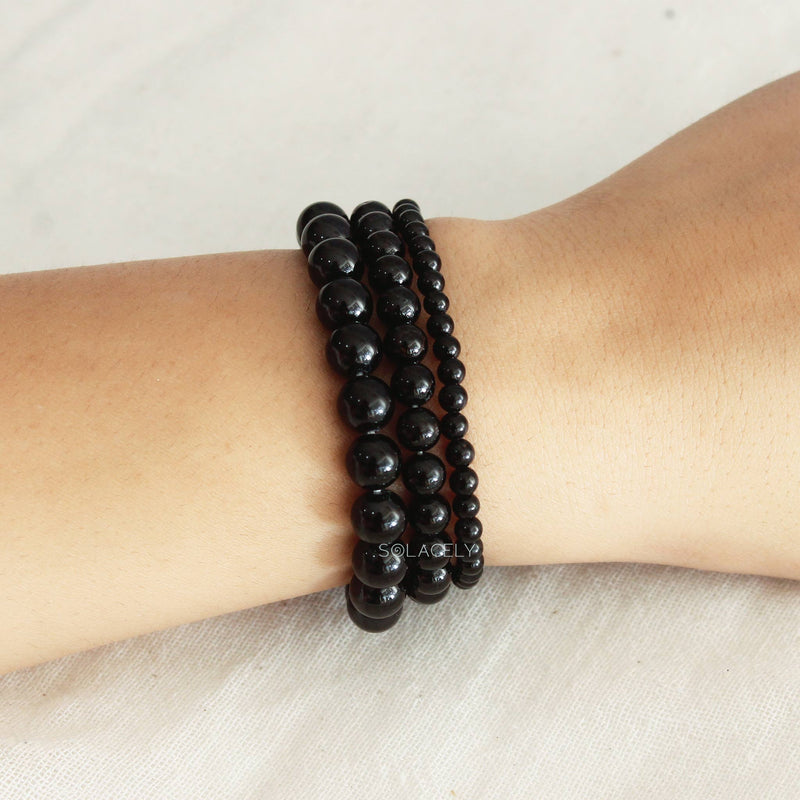
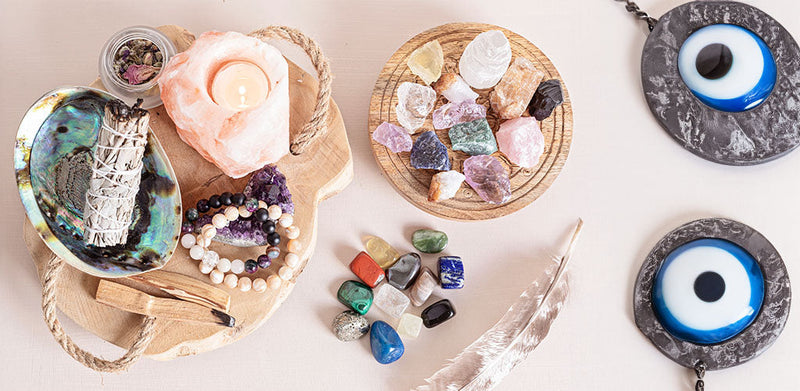
Clear quartz, amethyst, black tourmaline, rose quartz, citrine, green aventurine, pyrite and lapis lazuli are the stones placed for vastu dosh. The stone follows the direction rather than the problem. Clear quartz is the general purpose remedy and suits almost any corner.
Key takeaways
- The stone follows the direction, not the symptom. Find the corner first.
- Clear quartz is the all rounder. If you buy one thing, buy a clear quartz cluster.
- Northeast is the corner most often defective, and the one most often remedied.
- No structural work is needed. Crystal remedies are the non structural option.
- Size it to be seen: 100g to 300g for a corner. A tumble in a drawer does nothing.
- Dust and reset monthly. Keep amethyst, rose quartz and citrine out of strong sun.
What a vastu dosh actually is
Vastu shastra reads a building against the eight directions, each of which carries its own character. A vastu dosh is a place where the building runs against that reading: a kitchen in the northeast, a heavy structure in the northeast rather than the southwest, a main door in a direction that does not suit the household, a missing corner where a flat has been cut into an irregular shape.
Almost every home has at least one. Very few buildings are laid out to vastu from the ground up, and fewer still are laid out for the particular family that ends up living in them. This is normal rather than alarming, and it is exactly the situation the crystal remedies exist for.
The remedies are non structural on purpose. They are what you use when the wall is where the wall is, and most people are renting or living in a finished flat.
Stone by direction
| Direction | Traditionally governs | Stone placed |
|---|---|---|
| North | Wealth, opportunity | Green aventurine, clear quartz |
| Northeast | The most sacred corner, clarity | Clear quartz, amethyst |
| East | Health, new starts | Clear quartz |
| Southeast | Fire, the kitchen, energy | Citrine, carnelian |
| South | Reputation, standing | Red jasper, garnet |
| Southwest | Stability, relationships, weight | Rose quartz, black tourmaline |
| West | Gains, children | Clear quartz, pyrite |
| Northwest | Air, movement, support | Lapis lazuli, moonstone |
Work out which corner is which with a compass at the centre of the room or the flat, then place accordingly. If you take only one thing from the table, it is that the northeast wants light stones and the southwest wants heavy ones. That single pairing accounts for most of what vastu asks of a home.
The four most common doshas
These four cover the majority of homes, and each has a settled traditional remedy.
- Kitchen or toilet in the northeast. The most frequent one in flats. A clear quartz cluster placed in that corner, and the area kept as light and uncluttered as the layout allows. Amethyst is the alternative where the room is a bathroom rather than a kitchen.
- Bedroom in the northeast rather than the southwest. Rose quartz in the southwest of the bedroom itself, to give the room weight where the flat does not.
- A missing or cut corner. Common in irregular apartments. A crystal pyramid placed at the point where the corner would have been, which is the traditional way of completing a shape that the building leaves open.
- Main door facing an unfavourable direction. Black tourmaline just inside the entrance, and a lapis lazuli or clear quartz piece where the hallway opens into the home.
Where the concern is the entrance and the household generally rather than a specific corner, crystals for home protection covers that ground in more detail.
Placing a stone so it does its job
Three practical rules cover most of it, and they matter more than the choice of stone.
Size it to the room. A hundred to three hundred grams suits a corner of an ordinary room. A tumbled stone tucked in a drawer is too small to register, and the point of a vastu remedy is that it occupies the corner rather than merely being present in it.
Put it at the corner, not near it. On a low shelf, a side table, or the floor if the piece is a cluster with a flat base. Height is not prescribed. Position is.
Keep it visible and keep it dusted. A remedy behind a curtain is a remedy nobody has looked at in a year. This is the same principle that makes any crystal practice work, which is that the object has to be seen to function as a reminder.
Pyramids, trees and clusters
The form matters in vastu in a way it does not in most crystal practice.
Pyramids are the traditional choice for a missing corner or a structural irregularity, since the form is about completion. Clusters are used where the aim is to fill and lighten a corner, particularly in the northeast. Trees are placed for growth and are the usual choice for the north and the east, and a crystal tree carries the meaning of a root and a canopy, which is why it suits a household rather than a person.
Orgone pyramids with pyrite are commonly placed in the west and southeast. For placement by direction for luck specifically rather than dosh correction, see crystal luck trees, and for the aesthetic side of arranging stones through a home, crystals for home decor.
Looking after them
Vastu pieces sit in one place for years, so the maintenance is mostly dusting. Once a month, wipe with a dry soft cloth and set the piece back exactly where it was.
Amethyst, rose quartz and citrine all pale in sustained direct sunlight, so keep them off a sunny sill even when the direction calls for that side of the house. Pyrite must stay dry, since it contains iron sulphide and will rust and crumble with repeated damp. Selenite, if you use it, dissolves in water and should never be washed.
Clear quartz and black tourmaline are both robust and need nothing beyond a wipe. If you cleanse monthly, an indoor sill overnight on the full moon covers everything on this page safely.
Vastu shastra is a traditional Indian system of architecture and placement, and the uses described here reflect that tradition. They are not structural, engineering or safety advice. Any genuine problem with a building, including damp, subsidence, ventilation or electrical work, is a matter for a qualified professional.
Sources
Written by Chetena Sharma. Reviewed by the Solacely editorial team.
Frequently asked questions
About the author


Written by Chetna Sharma, crystal healing practitioner and co-founder of Solacely. Chetna has worked with healing crystals for over a decade and curates Solacely's protective stone collection.