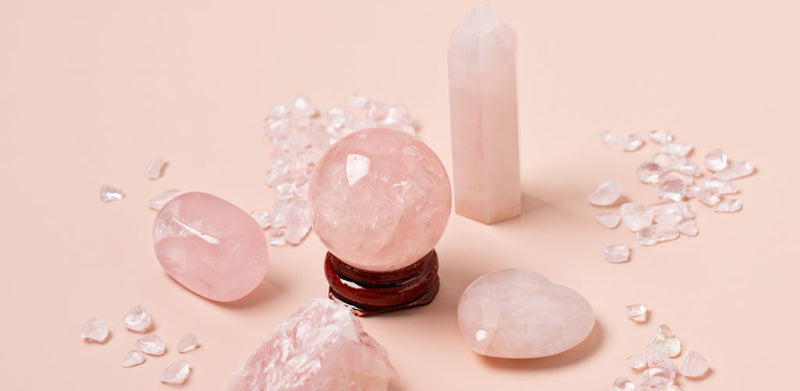
Green jade and rose quartz are both heart-chakra stones, which is why they are paired so often. Jade is traditionally worn for steadiness, prosperity and long luck. Rose quartz is used for affection and self-kindness. Together the combination is aimed at relationships that need warmth and stability at once.
Key takeaways
- Both stones are traditionally assigned to the heart chakra, so the pairing reinforces one theme rather than covering two.
- The GIA recognises two genuine jades, jadeite and nephrite. Jadeite is rarer and pricier; nephrite is the tougher stone and the one behind most historical carving.
- Rose quartz is quartz at hardness 7, usually cloudy rather than transparent because microscopic inclusions scatter the light.
- Jade is traditionally the stone of keeping and rose quartz the stone of softening. That contrast is what makes the pair useful rather than repetitive.
- Rose quartz fades in prolonged strong light, so a sunny windowsill is the worst place to display it.
- Everything described here is traditional belief and cultural practice, not medical fact.
What is green jade?
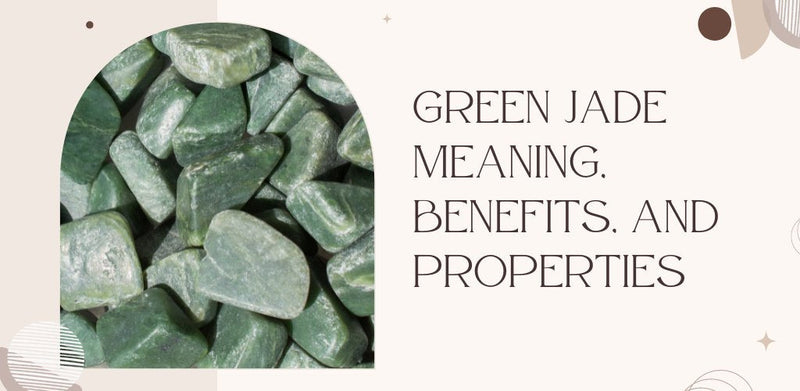
Jade is a single trade name covering two unrelated minerals. The Gemological Institute of America recognises jadeite, a pyroxene, and nephrite, an amphibole, as true jade. Polished, they are hard to tell apart by eye, which is why the distinction was only drawn in the nineteenth century.
Nephrite is the tougher of the two. Its fibres interlock, so it resists fracture far better than its Mohs figure of roughly 6 to 6.5 suggests, and that is precisely why prehistoric toolmakers favoured it. Jadeite is harder at around 6.5 to 7 and considerably rarer, with the translucent green grade fetching the highest prices in the trade.
Jade has been carved in China for millennia and was valued above gold and silver for long stretches of that history. Green jade's association with prosperity comes directly from that cultural weight, carried forward through generations of practice.
Buying well is mostly a conversation with the seller. Jade has been graded, cut and finished by specialist workshops for centuries, and the trade keeps a settled vocabulary for colour, translucency and polish. Ask about origin and finish, then pick the green and the weight that feel right in your hand. Our full guide to grades, colours and traditional uses is in the green jade meaning and properties piece.
What is rose quartz?
Rose quartz is the pink variety of quartz, silicon dioxide at hardness 7. Unlike amethyst or citrine it rarely forms well-shaped crystals, turning up instead as massive chunks inside pegmatites. That is why almost every rose quartz you see is tumbled, carved or beaded rather than cut as a faceted gem.
The cloudiness is part of the identification. As the Gemological Institute of America notes in its rose quartz overview, the stone owes its cloudy translucence to microscopic mineral inclusions. Genuinely transparent pink quartz exists but is a different, much scarcer material.
Its traditional reputation is the stone of unconditional love, and the emphasis in practice falls inward more often than outward. People reach for it during recovery, not courtship. The longer version sits in our rose quartz benefits and meaning guide.
One practical warning. Rose quartz colour fades with prolonged strong light. The soft pink piece on a sunny shelf will be noticeably paler within a couple of years, and the change is permanent.
Why are green jade and rose quartz paired?
Because they share a target and split the job. Crystal tradition assigns both to the heart chakra, so the pairing concentrates on one area rather than spreading across several. Jade brings the stability and rose quartz brings the warmth, which is a fairly precise description of what most people want from a relationship.
Look at the traditional meanings side by side and the contrast becomes clearer. Jade is the stone of holding on: prosperity, longevity, protection of what you have built. Rose quartz is the stone of letting go: forgiveness, softness, releasing a grudge you have carried too long. A pairing that only did one of those would be much less interesting.
There is also a straightforward visual case. Soft pink against deep green is a classic jewellery combination, and the two stones photograph well together because both are opaque to translucent rather than glassy. Nothing competes for attention.
If you want the same structure aimed at mental quiet rather than the heart, the green jade and amethyst pairing swaps rose quartz for a clarity stone and shifts the whole combination upward.
What is the pairing traditionally used for?
Four intentions come up again and again: self-compassion, repairing a strained relationship, steadying a good one, and easing the anxiety that sits underneath both. None of these are treatments. They are the reasons people give when asked why they chose this combination over any other.
| Intention | Green jade's traditional role | Rose quartz's traditional role |
|---|---|---|
| Self-compassion | Steadiness, not drifting | Softening self-criticism |
| Repairing a rift | Patience, staying with it | Forgiveness, warmth |
| A settled relationship | Longevity, security | Ongoing affection |
| Anxious attachment | Grounding the body | Reassurance |
Attraction and passion are a different job in traditional practice, and neither of these stones carries heat. Garnet and carnelian are the conventional picks there, and swapping one of them in changes the character of the whole piece.
Where this combination genuinely earns its place is emotional repair, after a rough stretch or a rift that needs mending. Our guide to rose quartz for emotional healing sets out how people structure that practice over weeks rather than days.
How do you wear or place green jade and rose quartz?
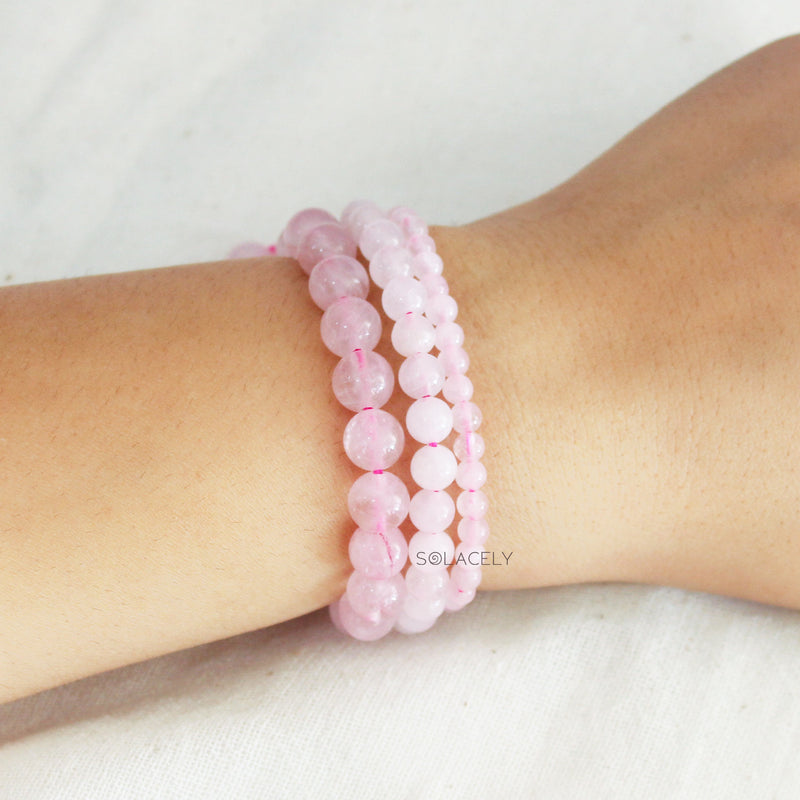
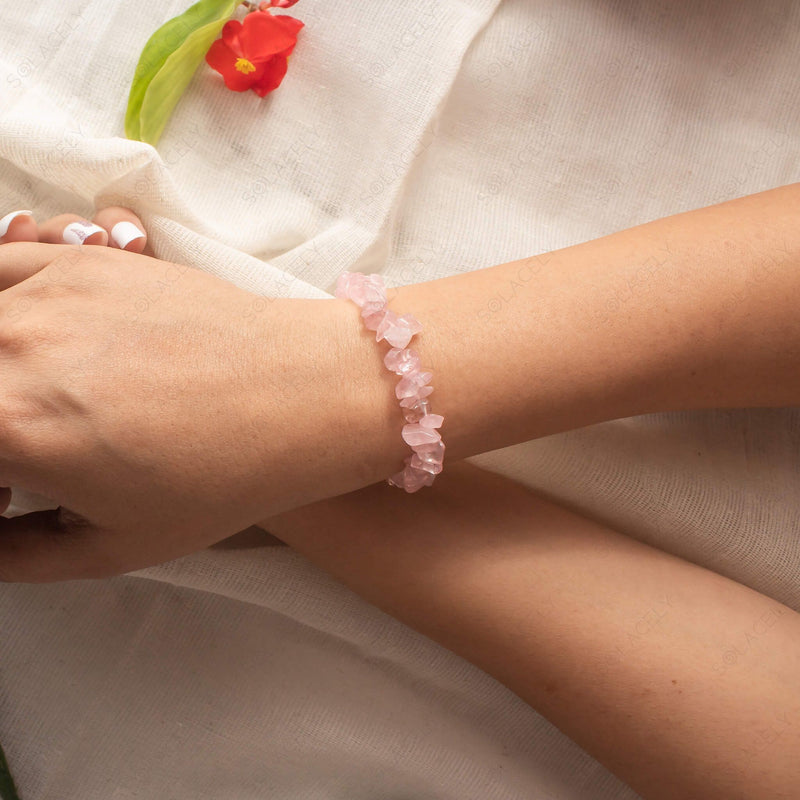
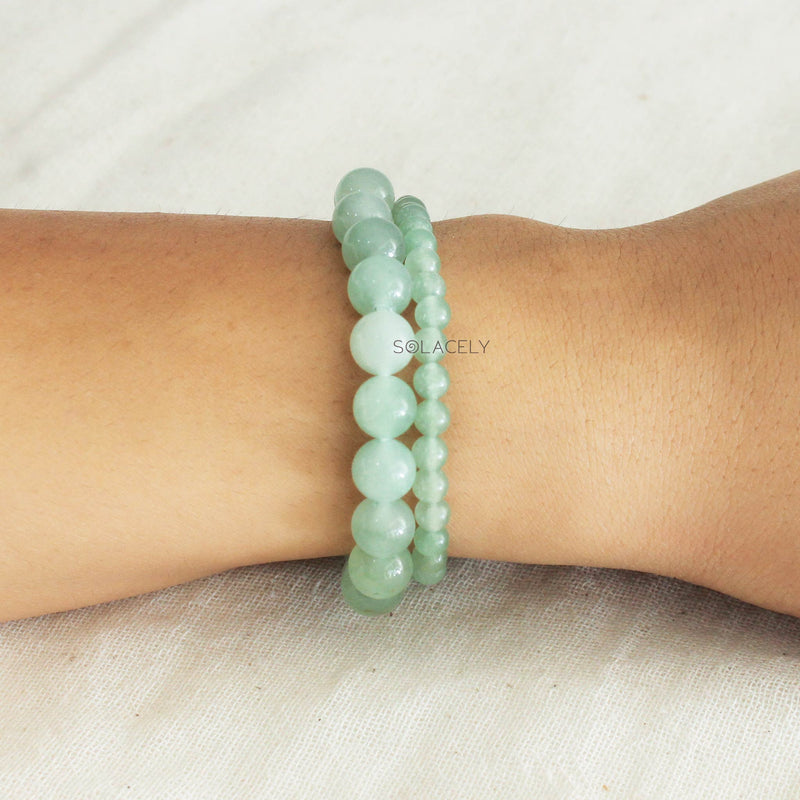
Both stones sit comfortably in any format, and both are traditionally directed at the chest, so anything worn near the heart is the obvious starting point. A pendant does the job with one piece. A two-strand bracelet stack does it with two, and is easier to wear all day.
- Pendants. The most traditional placement, since both stones are heart-directed. A jade disc with a rose quartz drop is the standard design.
- Bracelets. Stack one strand of each, or choose a single alternating piece. Rose quartz nearer the pulse is the common arrangement.
- Bedroom. Rose quartz on a bedside table, jade on a dresser. Keep both out of direct window light.
- Shared pieces. Couples often take one stone each rather than splitting a matching set. Our guide to crystals for couples covers arrangements that hold up.
- In the hand. Five quiet minutes holding both, one per palm, is the entire practice for most people.
A note on jade bangles, since they are the format people most often regret. They are rigid and do not resize, so measure across the widest part of your hand before ordering. Getting a correctly sized bangle on for the first time is an undignified process involving hand cream and a plastic bag, and that is normal.
How do you care for green jade and rose quartz?
The care rules are close but not identical. Both take warm water and a soft cloth. Both dislike heat, solvents and cosmetics. The real difference is light: rose quartz fades in prolonged sun while jade tolerates brief exposure without complaint.
| Green jade | Rose quartz | |
|---|---|---|
| Mineral | Jadeite or nephrite | Quartz |
| Hardness | 6 to 7 Mohs, very tough | 7 Mohs, more brittle |
| Water | Warm soapy water, soft cloth | Brief rinse, dry fully |
| Sunlight | Brief exposure is fine | Avoid; colour fades |
| Chemicals | Avoid; solvents strip treated jade | Avoid; dulls the polish |
| Storage | Away from harder stones | In a pouch, out of light |
Put jewellery on last, after perfume and lotion have dried. Polymer-treated jade is especially vulnerable here, because solvents can strip the filling and leave a chalky surface that no polish will bring back.
For energetic cleansing, moonlight, smoke or sound suit both stones. Avoid salt water and avoid long sun sessions. If you pick up an unfamiliar stone and want to know what it can take, the Mohs hardness scale answers the question in about a minute.
Who suits this pairing?
This is a combination for people rebuilding something. It gets chosen most by those coming out of a long relationship, those repairing one that nearly ended, and those who have realised that the harshest voice in their life is their own. The tone is gentle throughout, and that is deliberate.
It suits you less if what you want is drive, protection or attraction. For grounding and shielding, black tourmaline or smoky quartz are the standard answers. For passion, garnet or carnelian. Jade and rose quartz will simply feel quiet in those roles, because quiet is what they are for.
Green aventurine and green onyx are worth considering on their own terms if you want a green stone at a gentler price. Aventurine is the traditional stone of luck and opportunity, green onyx the stone of steadiness, and both read well beside rose quartz. Pick whichever traditional meaning matches what you are actually after, and buy the format you will keep wearing.
The properties described here reflect traditional and cultural belief around crystals. They are not medical claims, not relationship advice, and not a substitute for professional healthcare. If you are managing a physical or mental health concern, please speak to a qualified practitioner.
Sources
- Gemological Institute of America, Jade Description
- Gemological Institute of America, Rose Quartz Description
Written by Chetena Sharma. Reviewed by the Solacely editorial team.
Frequently asked questions
About the author


Written by Chetna Sharma, crystal healing practitioner and co-founder of Solacely. Chetna has worked with healing crystals for over a decade and curates Solacely's protective stone collection.