Smoky quartz is the brown to grey variety of quartz, sitting at 7 on the Mohs scale with no cleavage. In crystal tradition it is the settling stone, kept for the jittery, scattered feeling that follows a long demanding stretch. It is described as discharging what has built up rather than blocking what comes in.
Key takeaways
- Smoky quartz is quartz, Mohs 7, no cleavage, so it takes daily wear easily.
- The brown develops where quartz with traces of aluminium meets natural radiation underground.
- Traditionally kept for grounding and settling, not for boundaries.
- Cairngorm is the Scottish variety, set into Highland jewellery since the eighteenth century.
- Fades in sustained direct sun. The one real care rule.
- Pairs with black tourmaline for protection, amazonite for speaking.
What smoky quartz is
Smoky quartz is ordinary quartz that has taken on colour underground. Where a crystal contains traces of aluminium and sits near a source of natural radiation, a colour centre forms and the stone darkens through brown and grey toward near black. The very dark material is sometimes called morion.
The colour is stable and permanent under normal conditions, and it leaves the stone entirely inert to handle. What it does not survive is sustained light and heat, which is the reverse of how it formed.
| Mineral | Quartz, silicon dioxide |
|---|---|
| Colour | Pale grey brown to near black |
| Mohs hardness | 7 |
| Cleavage | None |
| Chakra | Root |
| Main sources | Brazil, Madagascar, Scotland, Switzerland, USA |
| Care | Water safe. Keep out of sustained direct sun. |
Cairngorm and the Scottish tradition
The Scottish variety, cairngorm, is named after the mountain range where it was found, and it gave smoky quartz its long association with endurance in Northern European tradition.
It was set into dirk handles, brooches, kilt pins and shoulder clasps from the eighteenth century onward, and the fashion intensified through the Victorian period as Highland dress became a national symbol. That history gives smoky quartz something few brown stones have: a serious ornamental pedigree rather than a purely modern one.
Smoky quartz meaning
Smoky quartz belongs to the root chakra and its tradition is consistently about coming back down. It is the stone people reach for when they feel wired, scattered or unable to land after a stretch of pressure.
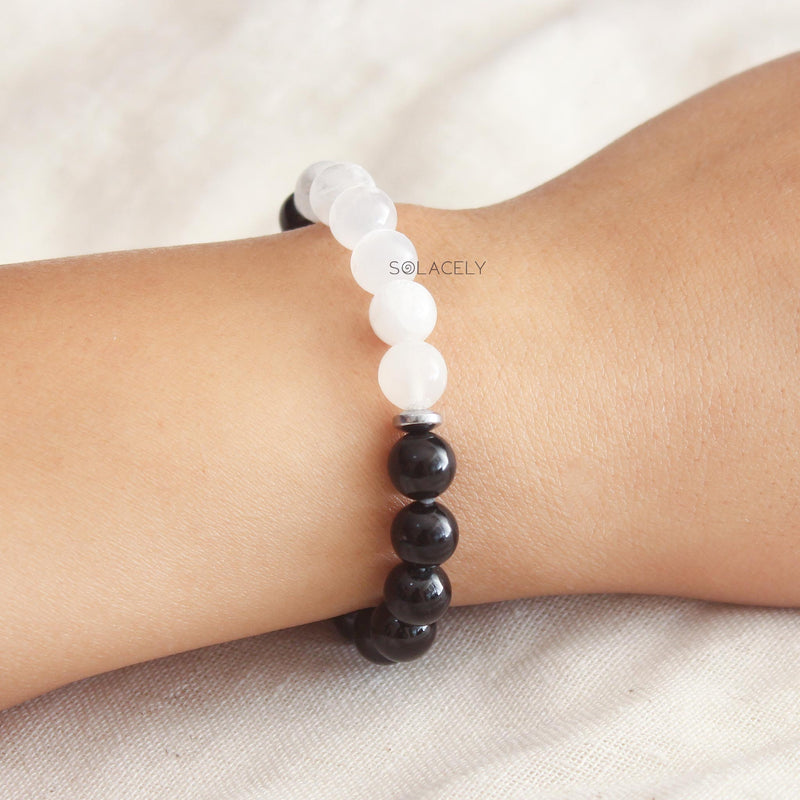
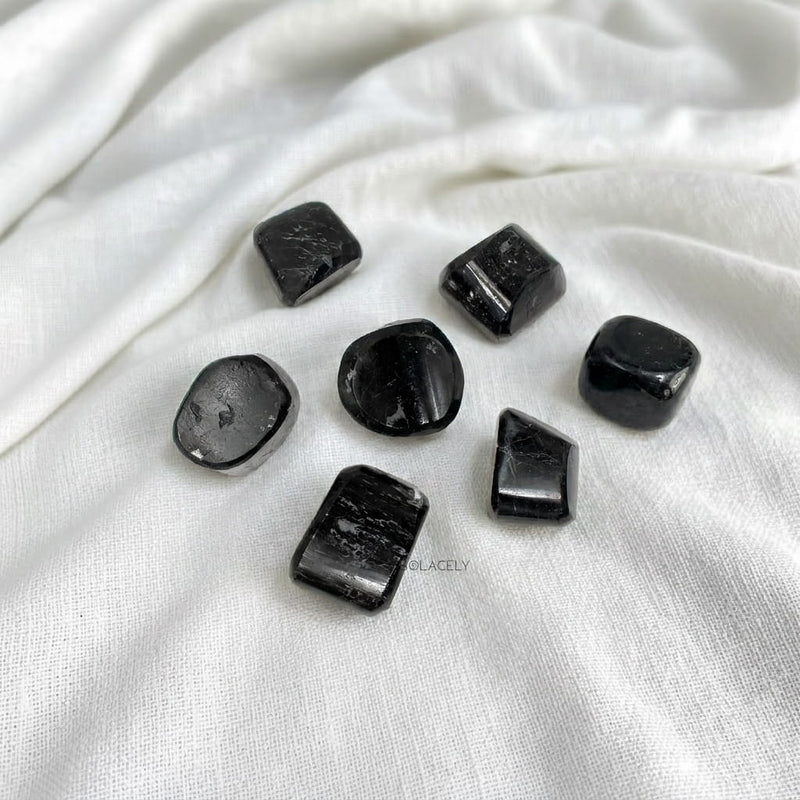
The distinction worth understanding is between settling and protecting. Black tourmaline is the boundary stone: its tradition is about what does not get in. Smoky quartz is the settling stone: its tradition is about discharging what has already accumulated. People often want both, which is why the two are paired so frequently.
A second strand associates smoky quartz with practical focus, and it appears in study and work sets for people who find their attention scattering rather than stalling.
How to use it
- Pocket tumble. The most common format, reached for at the end of a demanding day.
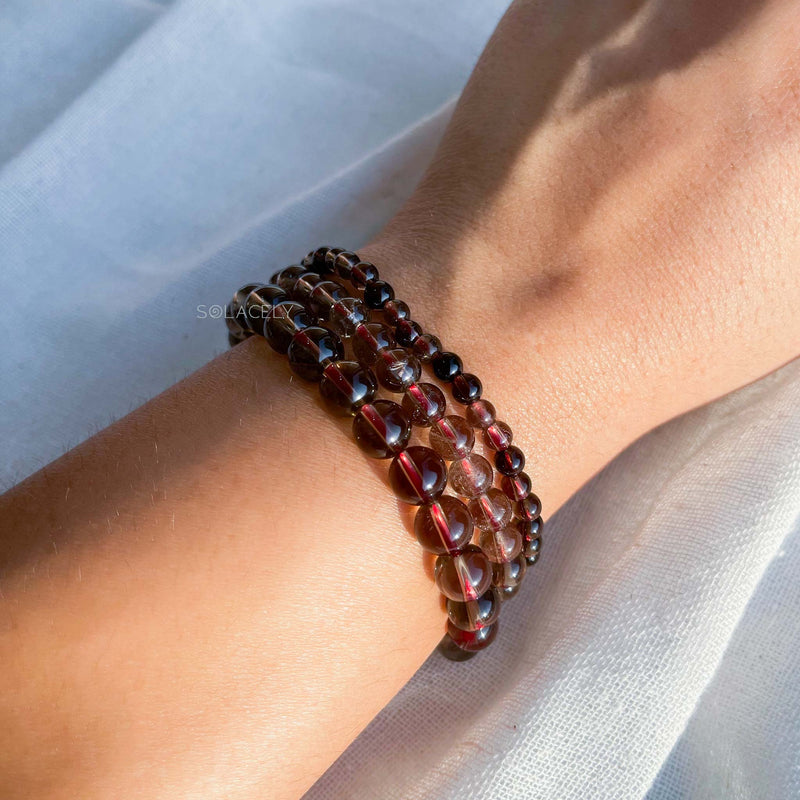
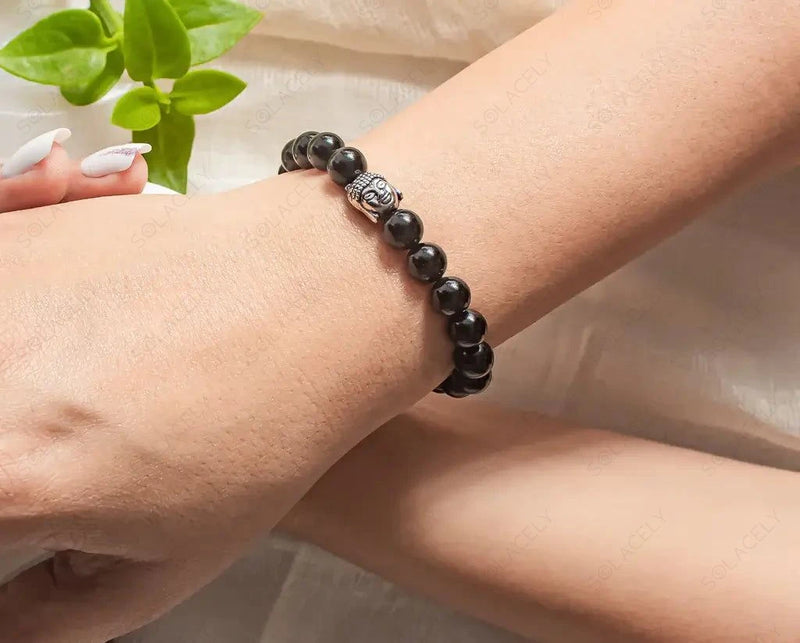
- Bracelet. Dark enough to be discreet, hard enough for constant wear.
- Beside where you decompress. A living room shelf or a bedside table rather than a hallway.
- At the feet during practice. The traditional root chakra placement while lying down.
The classic pairing is with black tourmaline, covered in smoky quartz and black tourmaline. For a lighter counterweight, smoky quartz and amazonite pairs settling with speaking.
Care and the one real rule
Warm water, mild soap and a soft brush. At Mohs 7 with no cleavage, smoky quartz is one of the least demanding stones you can own, and it is safe with water, sound, smoke and moonlight for cleansing.
The single caution is sunlight. The colour centre that gives smoky quartz its brown responds to light and heat, so a piece left on a bright south facing sill for a summer will come back noticeably paler, and the change does not reverse. A shelf set back from the glass solves it entirely.
Who smoky quartz suits
It suits people who describe themselves as wired rather than anxious, and anyone coming out of a sustained demanding stretch who cannot quite land. It also suits people who find most crystal aesthetics too soft, since a smoky quartz reads as understated in a way pink and purple stones do not.
It suits less well someone who wants lift or warmth; the character here is downward and quiet. For the wider quartz family, see types of quartz crystals, and for grounding more broadly, crystals for protection.
The uses described here reflect traditional and cultural crystal practice. They are not medical claims and are not a substitute for professional healthcare or advice.
Sources
Written by Chetena Sharma. Reviewed by the Solacely editorial team.
Frequently asked questions
About the author


Written by Chetna Sharma, crystal healing practitioner and co-founder of Solacely. Chetna has worked with healing crystals for over a decade and curates Solacely's protective stone collection.