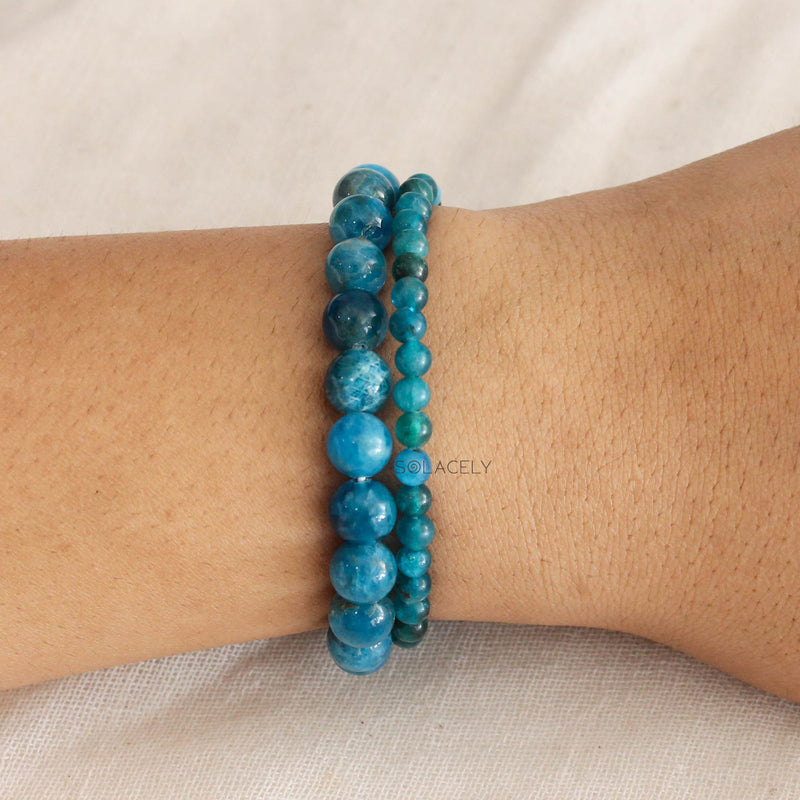
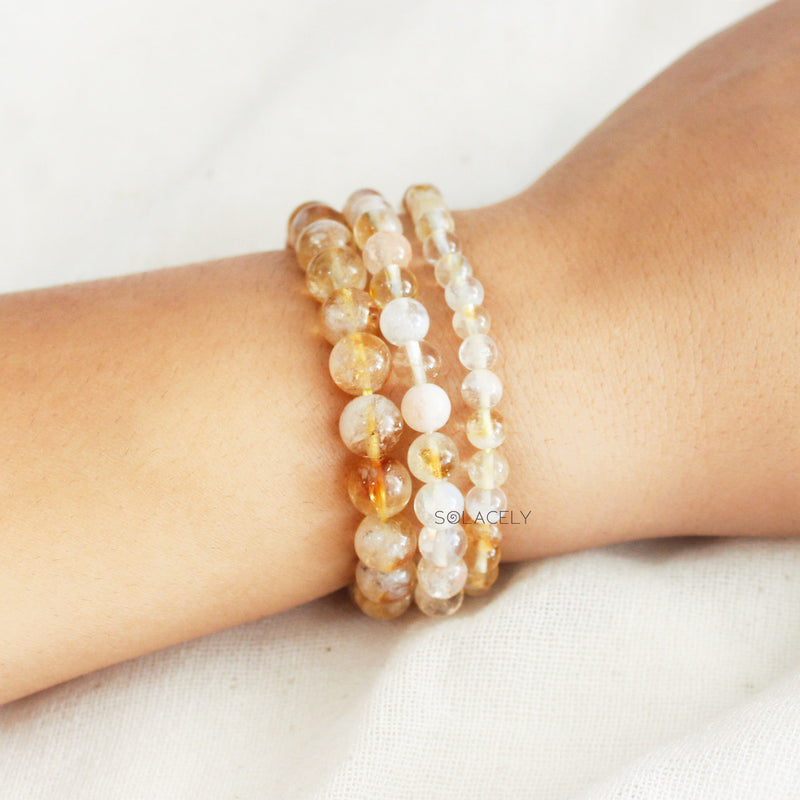
Blue apatite and citrine are paired for the gap between having a plan and starting it. Apatite is kept for clarity about what you actually want; citrine for the nerve to go after it. The set suits anyone whose ideas are fine and whose follow-through is not.
Key takeaways
- Apatite clarifies, citrine acts. The pairing covers thinking and doing rather than two versions of the same thing.
- Blue apatite is soft at 5 on the Mohs scale, and is in fact the reference mineral for that point on the scale.
- Citrine is golden quartz at 7, durable enough for daily wear in any format.
- Give citrine the exposed position and keep apatite protected.
- Keep citrine out of long strong sun, and keep apatite out of ultrasonic cleaners.
Why this pairing works
Most crystal pairings put a warm stone against a cool one and leave it there. This one is organised around a sequence instead, which is why it holds together better than the colour contrast alone would suggest.
Apatite comes first. It is traditionally kept for honesty about what you want, and it is the stone people reach for when the difficulty is that everything sounds equally appealing and nothing has been decided. It suits planning, drafting and the stage where a goal is still shapeless.
Citrine comes second. Its association is with confidence, warmth and the willingness to state your worth, which is the exact quality required once a plan exists and somebody has to act on it. For the wider manifestation set, sunstone for manifestation takes a similar approach.
What blue apatite actually is
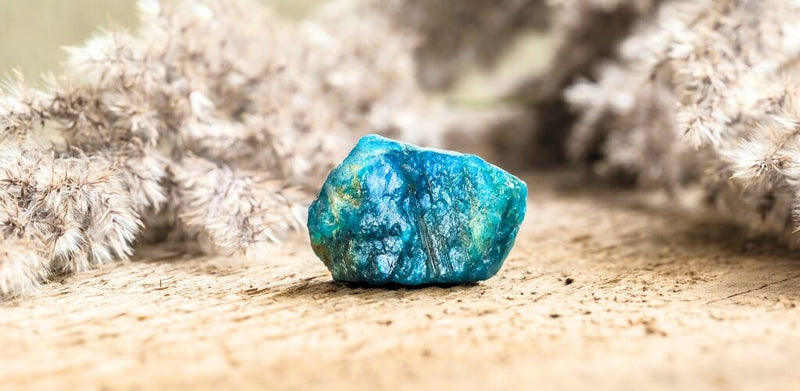
Apatite is a calcium phosphate, and it holds an unusual position in mineralogy: it is the reference mineral for 5 on the Mohs hardness scale. Geology.com describes it as a common phosphate mineral, and the same material is the primary mineral component of tooth enamel and bone.
Its blue ranges from a soft sea colour through to a strong Caribbean tone, and the deeper material is generally heat treated, which is a stable and long established practice. The colour is what people buy it for, and it holds indefinitely with ordinary care.
The hardness figure is the practical headline. At 5 it will be scratched by quartz, by a steel blade and by most of a crystal collection, which rules out rings and means it needs its own space in storage. The blue apatite guide covers the tradition.
What citrine brings
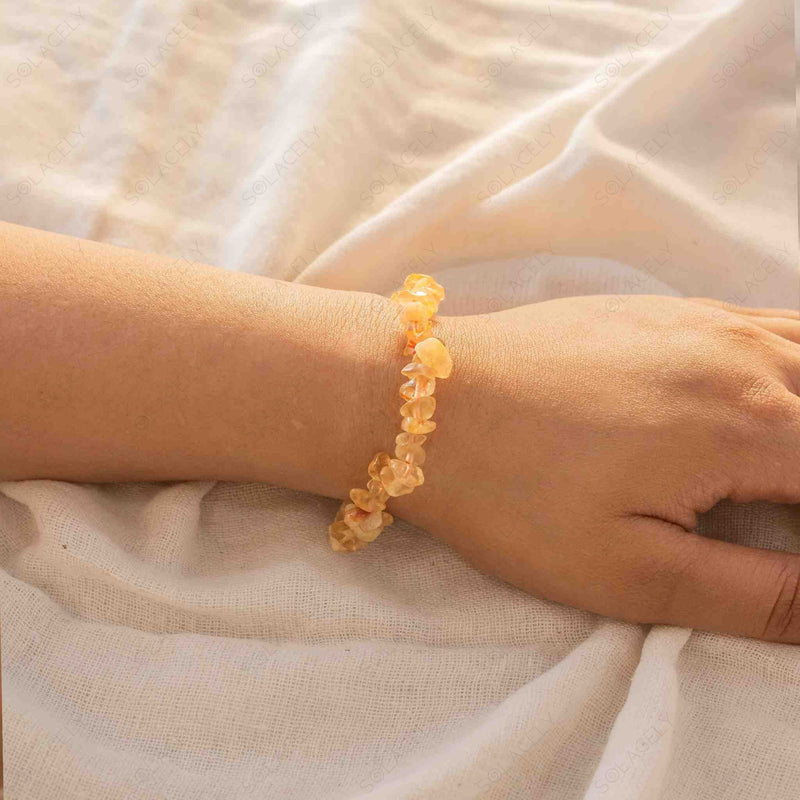
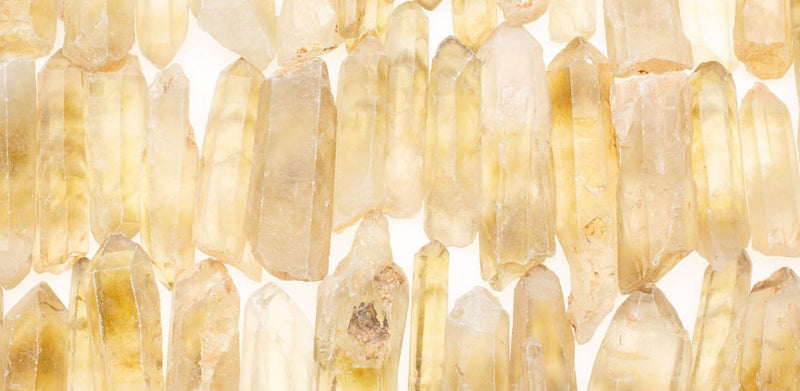
Citrine is the golden variety of quartz, coloured by iron held within the crystal structure. At 7 on the Mohs scale with no cleavage, it takes daily wear in bracelets, pendants and rings without special handling, which makes it the durable half of this pair by a wide margin.
It is traditionally tied to the solar plexus, the centre associated with will and personal authority, and it is long known as the merchant's stone from the practice of keeping a piece where money changed hands. That history points at the specific kind of confidence it is kept for: the willingness to ask for what something is worth.
Warming amethyst to bring out that golden tone is one of the oldest and most stable practices in the gem trade, and both natural and warmed material are properly citrine. Choose the shade you would most like to wear. The citrine guide covers it in full.
Comparing the two
| Blue apatite | Citrine | |
|---|---|---|
| Mineral | Calcium phosphate | Quartz, coloured by iron |
| Hardness | 5 Mohs, the reference point | 7 Mohs, no cleavage |
| Chakra placement | Throat and third eye | Solar plexus |
| Traditionally kept for | Clarity, honesty about wanting | Confidence, warmth, stating your worth |
| Best format | Pendant or protected setting | Anything, including daily rings |
| Avoid | Ultrasonics, harder stones in storage | Prolonged direct sunlight |
The hardness gap of two full points is the thing to plan around. Check anything new against the Mohs hardness scale before letting it share a pouch with apatite, because the damage shows quickly and does not polish out at home.
How the pair is used
The sequence is the practice. Most people who keep this combination use the two stones at different points rather than wearing both indiscriminately.
- Apatite while planning. On the desk beside a notebook, during the stage where the goal is still being decided.
- Citrine on the day. Worn to the meeting, the pitch, or the conversation where something has to be asked for.
- Both together. A citrine bracelet with an apatite pendant, which keeps the softer stone clear of surfaces.
- Moved as the work changes. Apatite away once the plan is settled, which is a small way of marking that a stage is finished.
That last habit is quietly the most valuable one. Swapping the stone when the stage changes is a real acknowledgement that something has moved, and people tend to remember it.
Buying both well
Apatite is inexpensive, so the question is quality rather than authenticity. Look for even colour without cloudy patches, and check beads around the drill holes for chips, since soft material picks those up in transit. It is cheap enough that you can afford to be particular.
With citrine, the range runs from pale lemon through clear gold to deep honey, and all of it is properly citrine. Price tracks size and clarity more than shade, so the sensible approach is simply to choose the tone you would enjoy wearing rather than chasing a particular label.
It is also worth thinking about size rather than only colour. A small apatite pendant shows the blue perfectly well and costs a fraction of a large one, and since the stone is soft, a smaller piece is far less likely to catch on something and chip. Spend the difference on the citrine, which will take the wear.
One practical note for the pair. Buy the apatite in a format that protects it. A pendant, a tumbled palm stone or a piece that lives on a desk will all outlast a bracelet worn daily on the hand you use most, and the price difference is negligible.
Care and cleansing
Warm water, mild soap, a soft cloth and a full dry suits both stones. Neither needs anything more elaborate, and neither should meet a household cleaner.
Apatite carries the specific cautions. Never use an ultrasonic or steam cleaner on it, keep it away from anything acidic, and store it separately from quartz and harder beads. A soft pouch of its own is the simplest answer.
Citrine is straightforward apart from light. Long hours of strong direct sun soften the golden colour over months, so a bright windowsill is not the kindest home for it despite being the obvious one. For energetic cleansing, moonlight or sound suit both, and neither needs salt.
The properties described here reflect traditional and cultural belief around crystals. They are offered for reflection and wellbeing and are not financial or medical advice. For decisions about money or work, please speak with a qualified adviser, and for a health concern, with a qualified healthcare professional. Keep small stones away from young children, and never place crystals in drinking water.
Sources
Written by Chetena Sharma. Reviewed by the Solacely editorial team.
Frequently asked questions
About the author


Written by Chetna Sharma, crystal healing practitioner and co-founder of Solacely. Chetna has worked with healing crystals for over a decade and curates Solacely's protective stone collection.