Clear quartz, amethyst, hematite, smoky quartz, rose quartz and moonstone are the stones people most often keep close while recovering from illness or injury. In crystal tradition they are held for comfort, rest and steadiness through a difficult stretch, alongside the medical care that does the actual treating.
Key takeaways
- Clear quartz, amethyst, hematite, smoky quartz, rose quartz and moonstone are the six most often chosen.
- They are kept for comfort and rest through recovery, not as a treatment for any condition.
- Your doctor, physiotherapist or specialist is the route that investigates and treats. The stone is company.
- A stone you carry every day does far more for you than a bowlful you stop noticing.
- Never put a stone in drinking water, and never delay or stop medical care because of a crystal.
Which crystals do people keep during recovery?
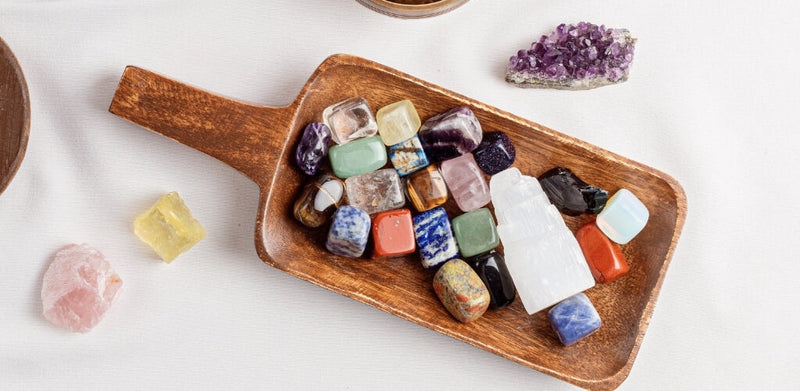
Six stones come up again and again. Clear quartz for holding an intention, amethyst for rest, hematite for grounding, smoky quartz for putting something down, rose quartz for self-kindness, and moonstone for the sense that a difficult season will turn. Each is chosen for what it has long been associated with.
Being unwell is mostly waiting. Waiting for a scan, waiting for a course of treatment to finish, waiting for a body to knit back together on its own timetable. What people describe wanting from a stone in that stretch is not a mechanism but something to hold, and something that marks the days.
That is the honest place these stones occupy in the tradition, and it is a real one. A crystal will not change what is happening in your body. It sits alongside the medicine that does, as a small daily comfort in a season that has very few.
The stones and what each is kept for
The table gathers the six. Pick one rather than all of them, and pick by what the difficult part of your day actually is.
| Stone | Traditionally kept for | Choose it when |
|---|---|---|
| Clear quartz | Clarity and holding an intention | You want one stone that carries everything |
| Amethyst | Calm and rest | Sleep is broken or the mind will not settle |
| Hematite | Grounding and steadiness | Everything feels unmoored |
| Smoky quartz | Releasing what is held | You are carrying fear as well as illness |
| Rose quartz | Self-love and gentleness | You are being hard on yourself |
| Moonstone | Cycles and new beginnings | You need to believe the season will turn |
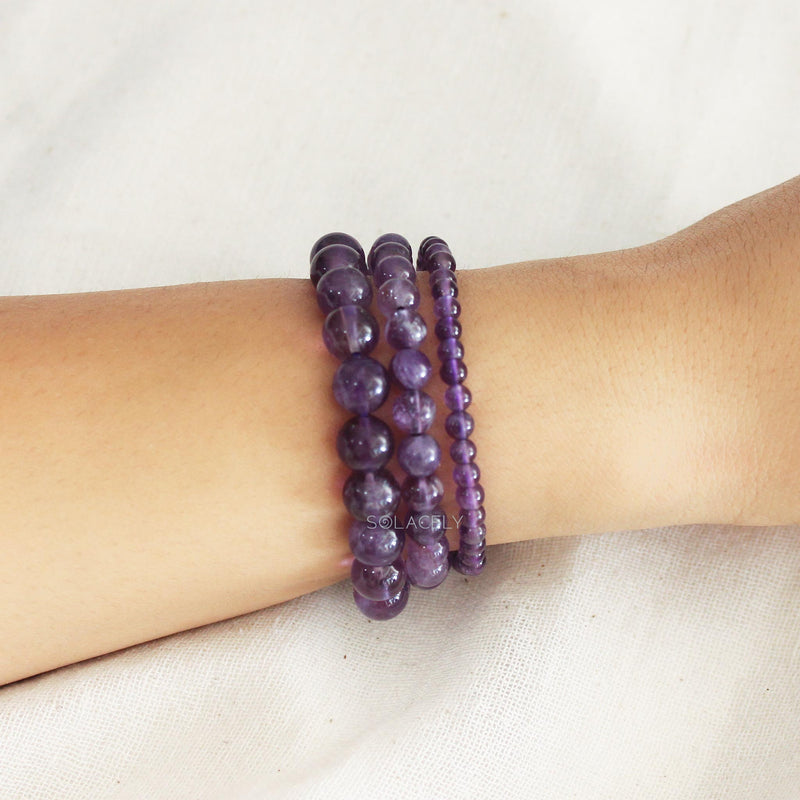
Amethyst is the one most people reach for, because so much of being unwell is not sleeping. Hematite is the heaviest and the most physically grounding, genuinely dense in the hand, which is part of why it is described as settling. Our wider guide to healing crystals covers the fuller set.
How people use them day to day
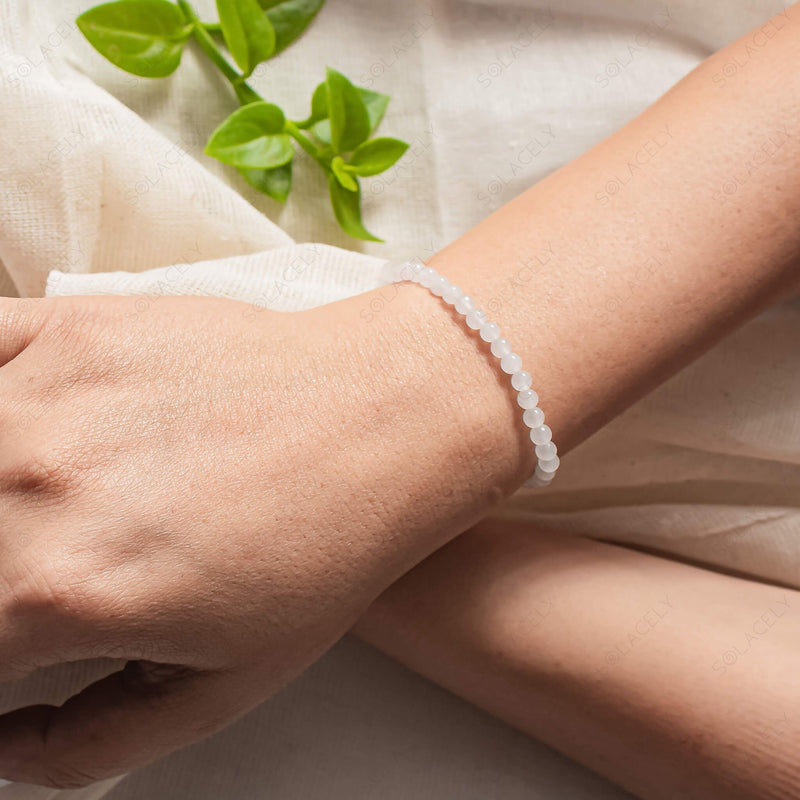
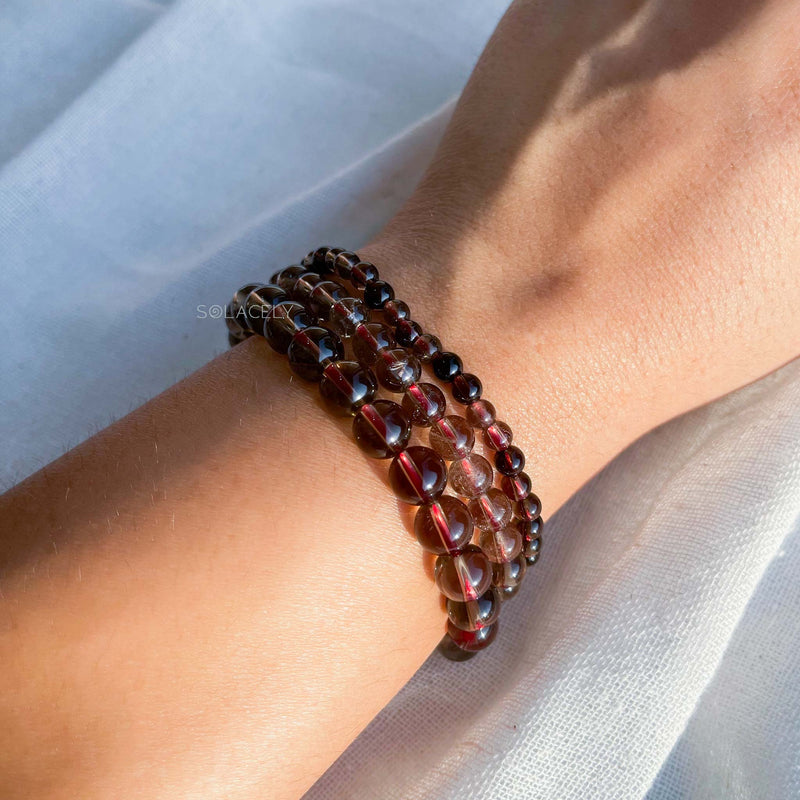
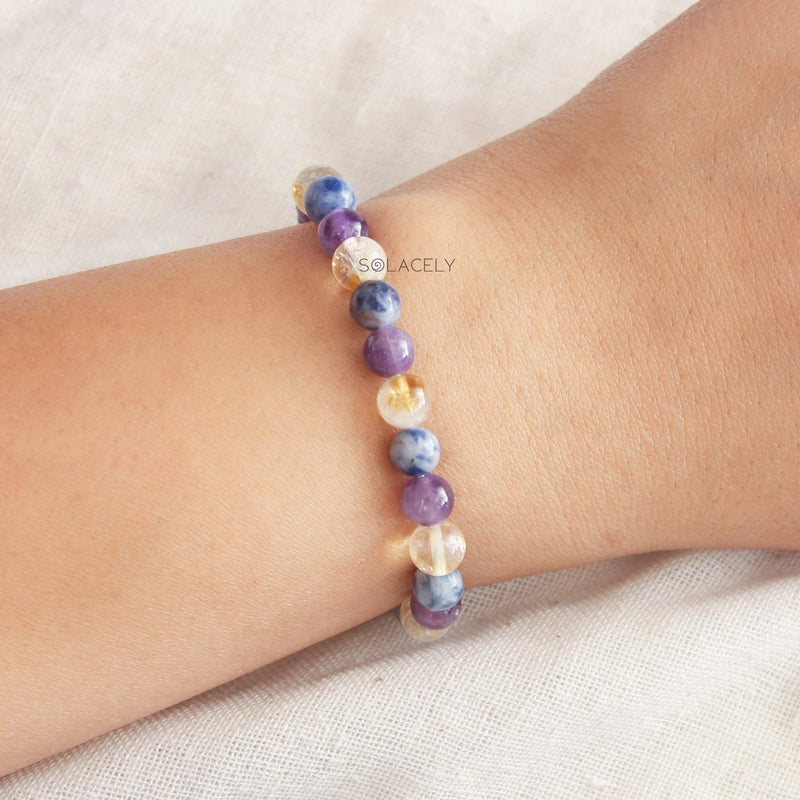
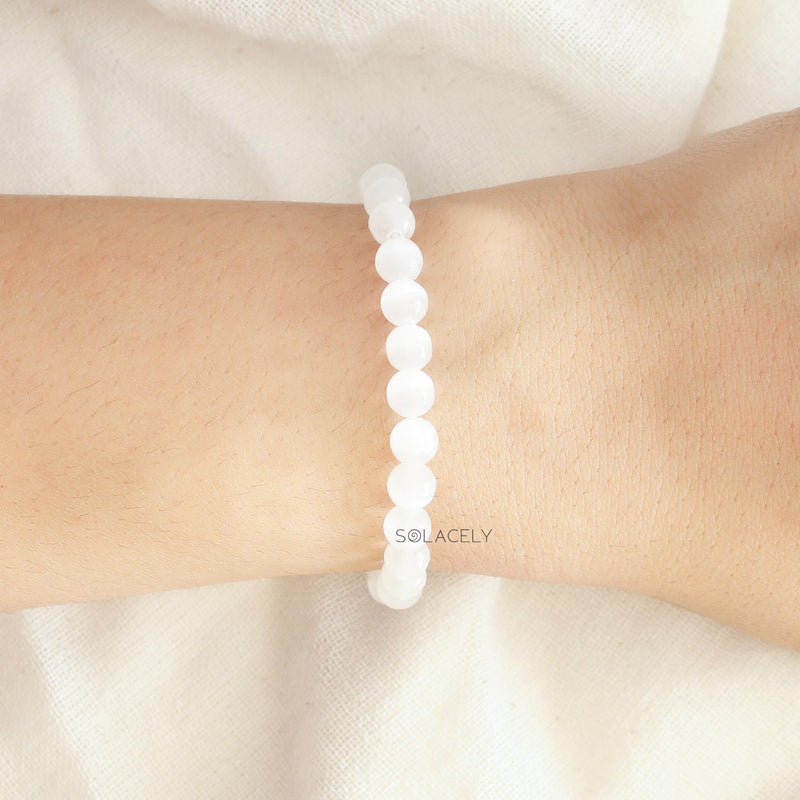
Most people carry or wear one. A bracelet is present through the appointments and the long afternoons without needing anything from you, and in crystal tradition the left wrist is the receiving side, which is where a stone kept for comfort usually goes.
A palm stone or tumble is the other common form, and it is the better one if you are spending time in waiting rooms or in bed. Something smooth to turn over in the hand gives you an occupation at moments when there is nothing else to do, and that is worth a great deal.
At home, the bedside table is the traditional placement. Amethyst by the bed for rest, hematite where you get up in the morning, rose quartz somewhere you will catch sight of it. None of this needs to be elaborate to be worth doing.
A small ritual for a difficult stretch
The simplest version takes a minute. Hold the stone in both hands, say plainly what you are hoping for, and put it on or slip it into a pocket. Some people do this every morning, some only on the days that feel heaviest, and both are perfectly good.
Marking the weeks helps a great many people. Cleanse the stone once a week, set the intention again, and note in a line what the week actually held. Recovery is very hard to see from inside it, and a written record is often the only way to notice that something has shifted.
Where pain is the difficulty rather than illness itself, the tradition is much the same, and our note on crystals for healing pain covers the stones people choose. For the emotional weight that comes with all of it, our guide to crystals for emotional healing is the companion piece.
When to speak to someone
Illness and injury are medical matters, and medicine is what treats them. See your doctor about any new, persistent or worsening symptom, anything that is not settling on the timetable you were told to expect, and anything that frightens you. There is never a disadvantage in asking sooner.
Go straight to emergency care for chest pain, difficulty breathing, sudden severe pain, sudden weakness or numbness, confusion, a high fever that will not come down, or heavy bleeding. Those are not symptoms to sit with, and no crystal practice asks you to.
If you are on treatment, keep taking it exactly as prescribed. Nothing in crystal tradition asks you to stop or change medication, and anyone who tells you otherwise is not describing this tradition. Tell your doctor about any supplement or complementary practice you are using.
The mental weight of a long illness deserves care of its own. If the waiting is affecting your sleep, your mood or your relationships, say so to your doctor. Support exists for exactly this, and asking for it is part of looking after yourself properly.
Caring for the stones
Quartz-family stones are easy: clear quartz, rose quartz and smoky quartz all sit at 7 on the Mohs scale and clean with warm soapy water and a soft cloth. Amethyst is the same. Moonstone is softer at around 6 to 6.5 and can chip, so take a ring off before anything rough.
Hematite needs one specific care note. It contains iron and can develop surface rust if it is left wet, so dry it thoroughly and never leave it soaking. Keep rose quartz and amethyst out of long hours of hard direct sun, which fades both permanently.
Never put any stone in drinking water. For cleansing in the spiritual sense, sound, incense smoke and moonlight suit all six and risk none of them. Our step-by-step on how to cleanse and charge crystals covers each method in order.
Crystals are kept as part of a long-standing spiritual and cultural tradition. They are not a medical device or treatment. They do not diagnose, treat, cure, prevent or relieve any illness, injury, pain or condition, and they do not affect medication, recovery or the outcome of any treatment. Nothing on this page is medical advice. Please see your doctor about any symptom, keep taking any prescribed treatment exactly as directed, and never delay, stop or change medical care because of a crystal. Seek emergency care for chest pain, difficulty breathing, sudden severe pain, sudden weakness or numbness, confusion or heavy bleeding. Stones must never be placed in drinking water or used internally, and small tumbles and beads are a choking risk for babies and young children.
Sources
- National Institute of Mental Health, Caring for your mental health
- Geology.com, Hematite: properties and care
Written by Chetena Sharma. Reviewed by the Solacely editorial team.
Frequently asked questions
About the author


Written by Chetna Sharma, crystal healing practitioner and co-founder of Solacely. Chetna has worked with healing crystals for over a decade and curates Solacely's protective stone collection.