A sunstone meditation is a short morning sitting, ten to fifteen minutes, holding the stone in the palm or resting it just above the navel. Sunstone is traditionally worked with in daylight, so the practice belongs at the start of the day, and the image people hold is warmth spreading outward from the middle of the body.
Key takeaways
- Sit for ten to fifteen minutes, in the morning, with the stone held or placed low on the belly.
- Sunstone sits with the sacral and solar plexus centres, so placement is below the ribs.
- The traditional image is warmth spreading outward, kept simple and physical.
- Daily and short beats occasional and long.
- Most practitioners swap to moonstone or amethyst for evening sittings.
Why sunstone suits a morning practice
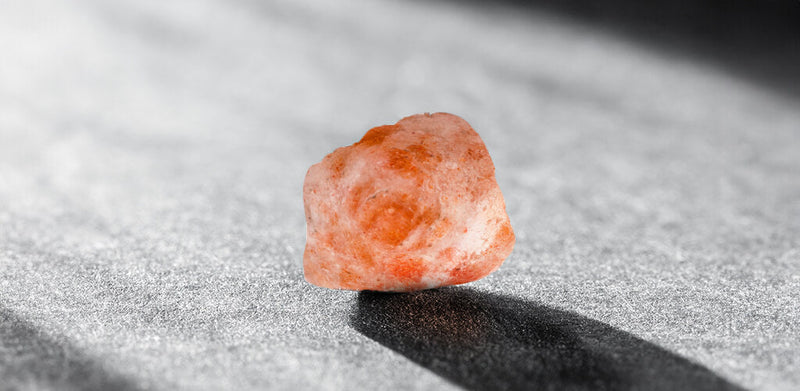
Sunstone carries solar association across every tradition that met it, and its flash comes from tiny copper or hematite inclusions catching the light inside the feldspar. A stone that appears lit from within was always going to be tied to daylight and warmth.
That places it differently from the stones most people first bring to meditation. Amethyst and selenite are settling and inward. Sunstone is warming and outward, which makes it the choice when the difficulty is not a busy mind but a flat one. Practitioners reach for it in the months when the light goes early, or during a stretch where sitting has started to feel like an obligation rather than a refuge.
Our sunstone meaning and properties guide covers the stone itself, and sunstone for energy covers wearing it through the day rather than sitting with it.
The practice, step by step
- Sit or lie down in morning light if you can, near a window rather than in direct sun.
- Place the stone. Just above the navel if you are lying down, or one in each palm if you are sitting upright.
- Let the breath drop low. Aim it at the belly so the stone lifts and settles visibly.
- Four counts in, six out. The longer exhale is what settles the body.
- Hold the warmth image. Heat spreading from the middle of the body outward toward the hands and face. Keep it physical, not elaborate.
- Add one plain sentence. Something about the day ahead, said once on an exhale.
- Ten to fifteen minutes, timer set so you are not checking.
- Sit up slowly and give it a minute before you stand.
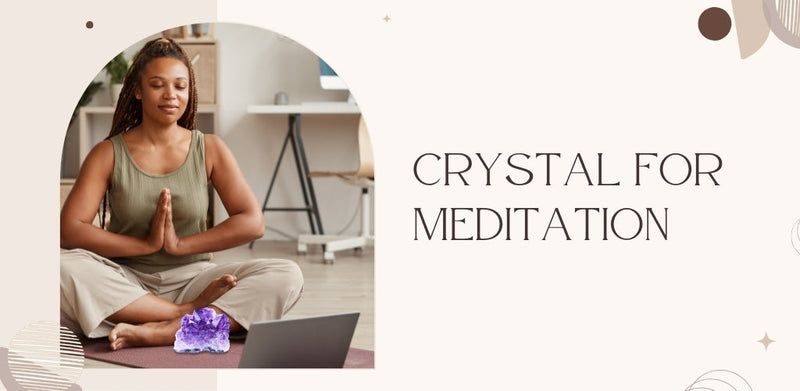
Consistency is what makes this work. A short session every morning builds the association far faster than an occasional long one, which holds across sitting practice generally. Our crystals for meditation guide covers which stones suit which difficulty.
Placement and the lower chakras
Sunstone is assigned to the sacral centre below the navel and the solar plexus above it, both linked in yogic tradition to drive, creativity, pleasure and personal will. The amber and orange body colour is what puts it there.
In practice that means the stone goes low. People new to crystal meditation often default to placing everything at the forehead or the chest, which suits amethyst and rose quartz but works against a stone whose whole tradition is rooted in the belly. Lying flat with the piece resting between the navel and the ribs is the conventional session.
| Position | Suits |
|---|---|
| Just above the navel, lying down | The standard sunstone session |
| One in each palm, seated | When you prefer to sit upright |
| Low on the belly, knees bent | Easier on the lower back for longer sittings |
| On a desk in the eye line | A working alternative when you cannot sit at all |
Our sunstone and the chakras guide goes further into placement, and sacral chakra crystals covers the neighbouring stones.
Building it into a morning
The sessions that survive are the ones attached to something that already happens. Put the practice immediately before or after a fixed anchor: the first coffee, the walk to the desk, the moment the house is still empty.
Keep the stone where the practice happens rather than in a collection somewhere else. A piece that lives on the windowsill you sit beside gets used; a piece in a box in another room does not. Many people keep a plain tumbled sunstone purely as the working piece and a nicer specimen elsewhere.
If mornings genuinely do not work, sit when you can. Tradition places sunstone in daylight hours and most practitioners keep it that way, swapping to moonstone or amethyst in the evening, but a session you actually do beats a rule you keep perfectly by never sitting at all.
What people notice
Usually something quiet: a slightly warmer start to the day, and a gap between waking and reaching for a phone. Some describe a physical warmth low in the body during the session, which is what tends to happen when you breathe deliberately into a place you normally hold tight.
Judge it over a few weeks rather than by any single sitting. The measure practitioners point to is not what happens on the cushion but whether the first hour of the day has changed shape.
Caring for a meditation stone
Sunstone is a feldspar and sits a little softer than quartz, so a piece handled every day wants some care. Clean it with warm water and a soft cloth, dry it fully, and store it apart from harder stones so the polish stays sharp. Avoid ultrasonic cleaners and steam.
Give it indirect light rather than a long spell on a hot windowsill. For energetic cleansing, sound, smoke or a night of moonlight all suit it, and weekly is a comfortable rhythm for a stone in daily practice.
Crystals and meditation are offered here for reflection and wellbeing as part of a long standing tradition. They are not a treatment for any medical condition and are not a substitute for professional care. Meditation is generally safe, though it can be difficult for some people, so speak to a qualified healthcare professional if you have concerns before beginning a practice.
Sources
- Gemological Institute of America, Sunstone Description
- NCCIH, Meditation and Mindfulness: Effectiveness and Safety
Written by Chetena Sharma. Reviewed by the Solacely editorial team.
Frequently asked questions
About the author


Written by Chetna Sharma, crystal healing practitioner and co-founder of Solacely. Chetna has worked with healing crystals for over a decade and curates Solacely's protective stone collection.