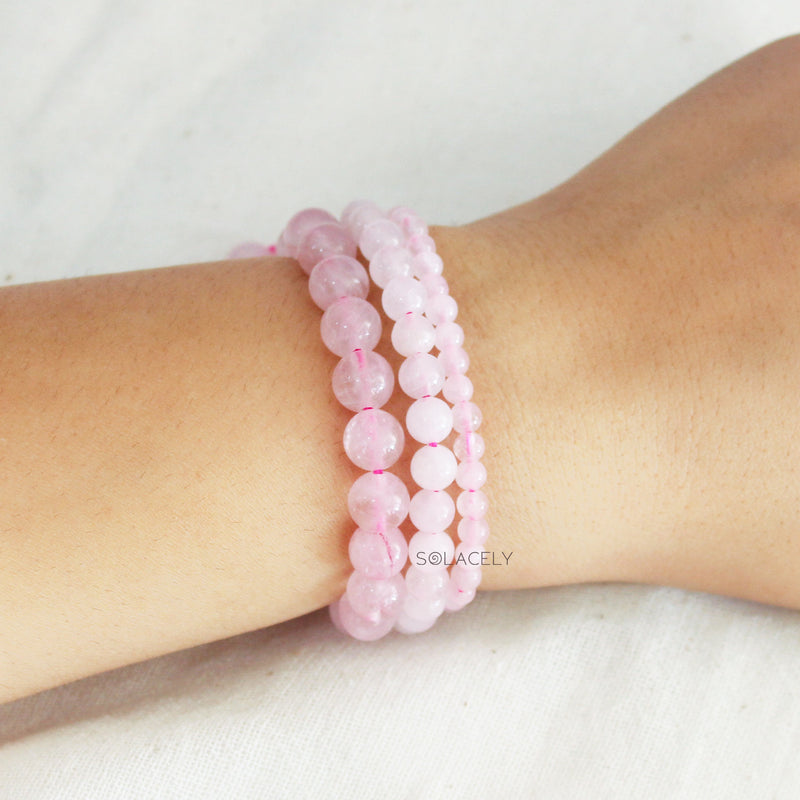
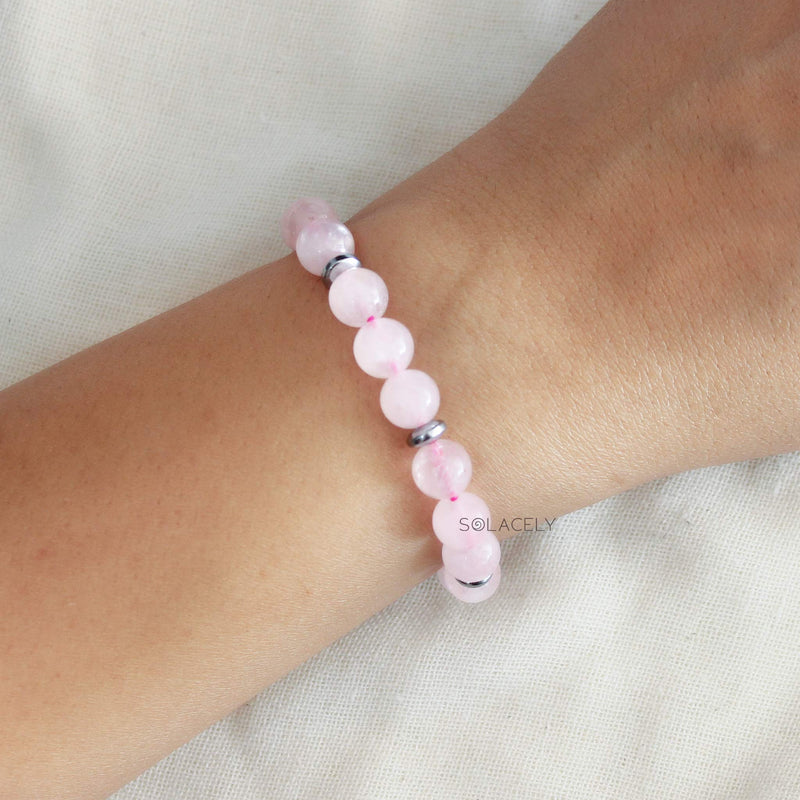
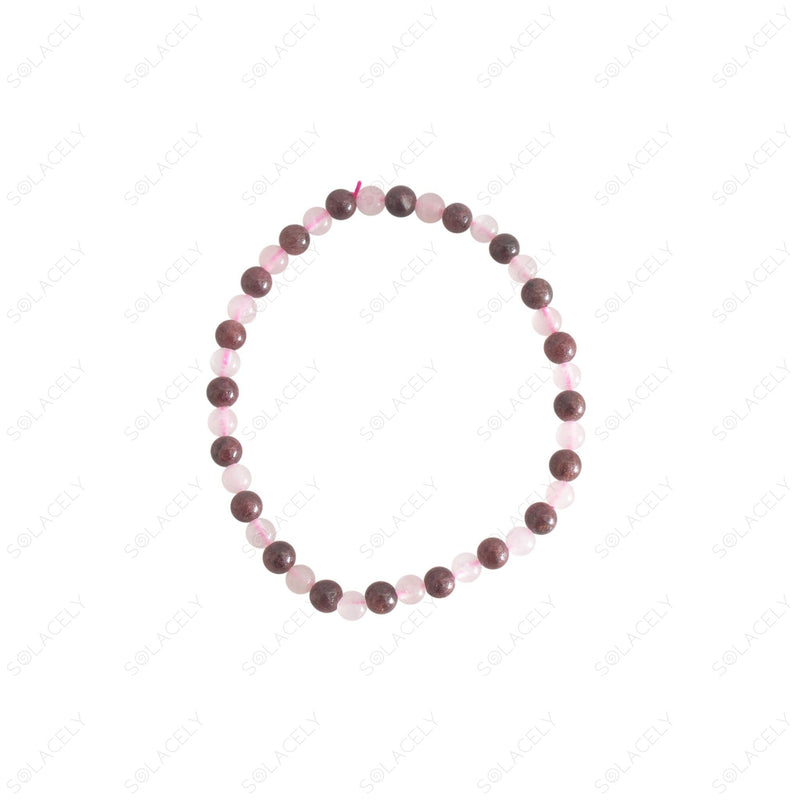
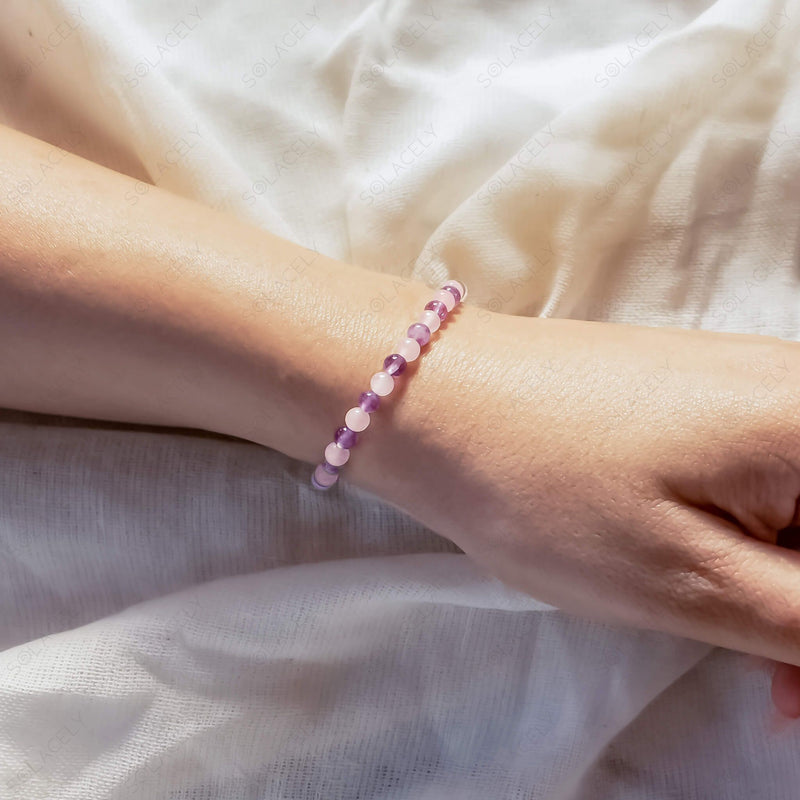
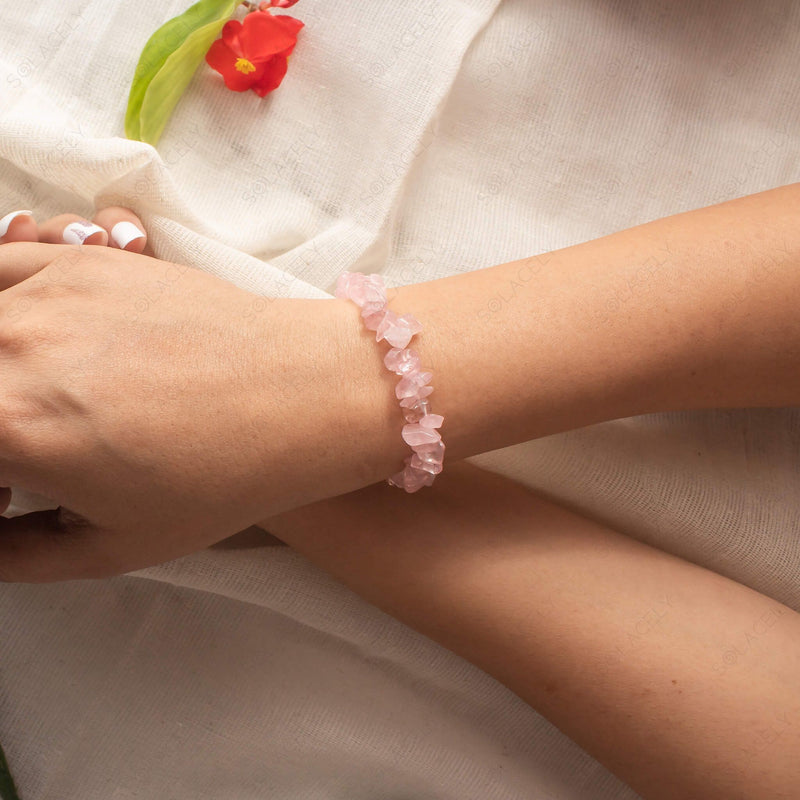
Wear a rose quartz bracelet on your left wrist. Rose quartz is a receiving stone in crystal tradition, kept for drawing love, warmth and self kindness toward you, and the left is the receiving side. The right is the deliberate exception, chosen when the kindness is meant to go outward.
Key takeaways
- Left wrist for the usual intention: taking love and self kindness in.
- Right wrist when the aim is giving kindness to others rather than yourself.
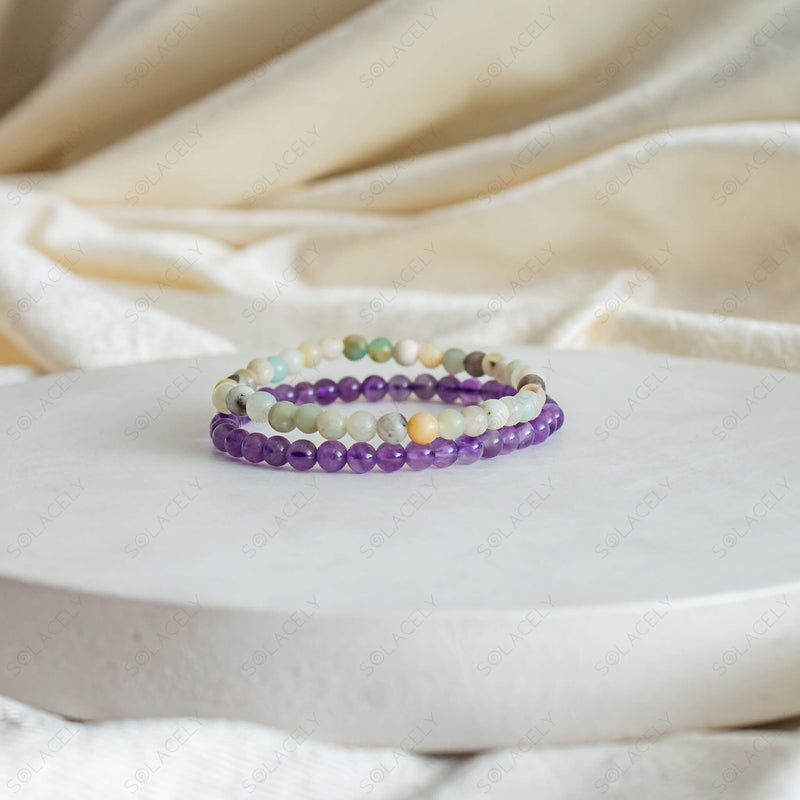
- Pairs well with amethyst and clear quartz, which share its hardness at Mohs 7.
- Switching wrists changes the intention, not the stone. Both are valid.
- Keep it out of sustained sun, which softens the pink permanently.
Why the left wrist
Crystal practice divides the body into a receiving side and a giving side. The left hand, being the one most people use less and the one closer to the heart, is treated as the side that takes things in. The right is the side that sends things out into the world.
Rose quartz sits squarely on the receiving side of that split. Its whole tradition is about softening toward yourself: self kindness, repair after emotional strain, letting warmth in after a period of being closed. None of that is outward facing, so the left wrist is where it belongs for most people most of the time.
That is the reasoning behind the convention. It is a way of keeping track of your own intention rather than a rule with a mechanism behind it, and knowing why makes it easier to decide when to break it.
When to wear it on the right
There is a genuine case for the right wrist, and it is not a compromise.
If what you are working on is how you treat other people rather than how you treat yourself, the right is the traditional placement. Carers, teachers, nurses and anyone repairing a strained relationship often choose it for that reason. The stone stays the same; the direction of the intention changes.
A simple test: finish the sentence I want more warmth. If it ends for myself, wear it left. If it ends for the people around me, wear it right.
What to wear with it on the same wrist
Two rules govern any mixed bracelet: match the hardness so the beads wear evenly, and keep the intentions pointing the same way.
| Partner stone | Mohs | What it adds |
|---|---|---|
| Amethyst | 7 | Settling, for when the heart ache keeps you awake |
| Clear quartz | 7 | A neutral partner that does not compete |
| Rhodonite | 5.5 to 6.5 | Forgiveness, though softer so it wears first |
| Hematite | 5 to 6.5 | Grounding, the classic counterweight |
Rose quartz sits at 7 on the Mohs scale, so amethyst and clear quartz are the safest structural matches. Hematite is the traditional pairing for staying open without absorbing everyone else's mood, and we cover it in hematite and rose quartz.
Does switching wrists undo anything?
No. The convention is a way of marking what you are working on, so moving the bracelet simply changes what you are telling yourself. Many people wear rose quartz on the left through a difficult season and move it to the right once things settle and the focus turns outward.
If you wear several bracelets, the more useful discipline is consistency: keep receiving stones together on one wrist and projecting stones on the other, so the arrangement stays legible to you at a glance.
Looking after it
The elastic fails long before the stone does. Take the bracelet off for showering, swimming and the gym, and wipe it with a soft dry cloth after wear. Expect to restring a daily wear piece after a year or two.
The one stone specific rule is sunlight. Rose quartz colour is light sensitive, and months on a bright windowsill will pale the pink permanently. Keep it in a drawer or pouch rather than on a sill.
Where to go next
For the wrist rule applied across every stone, see our pillar guide to which hand to wear your crystal bracelet. For what rose quartz is and what it is traditionally kept for, see rose quartz meaning, benefits and properties.
The uses described here reflect traditional and cultural crystal practice. They are not medical claims and are not a substitute for professional healthcare or advice.
Sources
Written by Chetena Sharma. Reviewed by the Solacely editorial team.
Frequently asked questions
About the author


Written by Chetna Sharma, crystal healing practitioner and co-founder of Solacely. Chetna has worked with healing crystals for over a decade and curates Solacely's protective stone collection.