The main throat chakra mantra is HAM (pronounced 'hum'), the Sanskrit seed sound, or bija, traditionally chanted to balance Vishuddha, the throat chakra of clear expression. Practitioners also use OM to harmonise all seven chakras and short spoken affirmations. You chant slowly on the exhale, feeling the vibration at the throat.
Key Takeaways
- HAM (हं, said 'hum') is the traditional seed mantra, or bija, for Vishuddha, the throat chakra linked to voice, truth and communication.
- Chant HAM slowly on a long exhale, resting attention at the base of the throat, ideally 5-11 rounds; OM is used to tune all seven chakras together.
- Benefits are framed as tradition and belief, not medicine: chanting is said to support confident, honest self-expression, not to treat thyroid or throat conditions.
- Spoken affirmations like 'I speak my truth with clarity' work alongside the seed mantra for readers who prefer plain language.
- Blue stones such as blue lace agate, sodalite and amazonite are traditionally paired with throat-chakra practice as a focus for attention.
What are throat chakra mantras?
Throat chakra mantras are short Sanskrit sounds and spoken phrases traditionally used to focus attention on Vishuddha, the fifth of the seven main chakras. The core one is the bija, or seed mantra, HAM. In yogic tradition each chakra has a single-syllable seed sound, and HAM is the sound assigned to the throat centre at the base of the neck.
A mantra, in the Indian tradition, is a sound or phrase repeated to steady the mind. According to Encyclopaedia Britannica, a mantra is a 'sacred utterance' used in Hindu and Buddhist practice as an object of concentration. Seed mantras take this further: each is a single vibration mapped to a specific energy centre in tantric and yogic teaching.
There are three layers you can use. The seed mantra HAM is the classical one. OM (or AUM) is the universal sound used to harmonise every chakra, including the throat. And plain-language affirmations, spoken in English or your own tongue, carry the same intention in words you already understand. Beginners often braid all three together.
The HAM seed mantra (Vishuddha bija)
HAM is the seed mantra for the throat chakra. It is written हं in Devanagari and said 'hum,' with a soft, humming 'm' that trails off. In yogic tradition the sixteen-petalled throat centre carries this single vibration, and chanting it is believed to draw awareness and steadiness to the region of the voice.
The word Vishuddha means 'especially pure' in Sanskrit. The throat chakra is traditionally associated with the element of space or ether (akasha), the colour sky-blue, and the sense of hearing. HAM is understood as the sound that resonates with that spacious, open quality. You are not asked to believe anything supernatural for the practice to feel calming.
How you pronounce it matters more than volume. Start the sound low in the chest, let it rise into an open 'haaa,' then close gently into a long 'mmm' so the hum settles at the front of the throat. Many people feel a light buzzing at the collarbone or lips. That physical vibration is the whole point: it gives your attention something concrete to rest on.
How to chant throat chakra mantras step by step
To chant HAM, sit tall, breathe in fully, then release the sound 'haaa-mmm' slowly across the whole exhale while keeping your attention at the base of the throat. Repeat for 5 to 11 rounds. Consistency matters more than length; a few honest minutes daily beats an occasional long session.
Here is a simple sequence you can follow.
- Sit comfortably. Cross-legged on the floor or upright in a chair, spine long, shoulders soft, chin very slightly tucked so the throat feels open.
- Settle the breath. Take three slow breaths without chanting. Let the exhale be longer than the inhale.
- Sound the seed mantra. Inhale fully, then chant 'HAM' across the entire out-breath. Keep the pitch low and even.
- Feel the vibration. Rest your attention at the base of the throat or the collarbones. Notice the buzz rather than forcing it.
- Repeat. Do 5 to 11 rounds. Traditional practice favours counts like 9 or 11; use a mala if you like to keep count.
- Sit in silence. After the last round, stay quiet for a minute and let the after-hum fade.
Do it once a day, ideally at the same time, morning or before bed. If chanting aloud feels awkward, whisper it, or repeat it silently. The intention and the steady breath carry most of the benefit. For a wider routine that pairs this with breath and posture, see our guide to chakra balancing techniques.
OM, bija and affirmation mantras compared
Alongside HAM you have two other options. OM harmonises all seven chakras at once and is the most universal chant. Affirmations use ordinary words, so nothing is lost in translation. The three work well layered, and none requires prior training to begin.
The table below compares the common choices so you can pick what suits you.
| Mantra | Type | Traditionally used for | Best for |
|---|---|---|---|
| HAM (हं) | Throat seed / bija | Focusing directly on Vishuddha | Targeted throat-chakra practice |
| OM (AUM) | Universal seed | Tuning all seven chakras together | Opening or closing any session |
| 'EE' / vowel tone | Vowel sound | Resonating the throat and head | Vocal warm-ups, feeling vibration |
| Spoken affirmations | Plain-language phrases | Reinforcing intention in words | Beginners, non-Sanskrit speakers |
A common approach is to open with three rounds of OM, move to nine rounds of HAM, then close with a spoken affirmation. Affirmations that fit the throat theme include 'I speak my truth with clarity and confidence,' 'My voice is heard and valued,' and 'I express myself with honesty and ease.' Say each one slowly, out loud, and mean it. Readers who like the affirmation approach can also try our heart chakra affirmations, which use the same method for a different centre.
Benefits of throat chakra mantras (as tradition)
In yogic tradition, chanting HAM and related mantras is believed to support honest, confident self-expression, ease around speaking up, and a sense of alignment between what you think and what you say. These are cultural and spiritual associations, not medical outcomes, and the calm comes largely from slow, mindful breathing.
Why might it feel good even setting belief aside? Chanting lengthens the exhale, and a slow, extended out-breath is widely linked to the body's rest-and-digest response. The National Center for Complementary and Integrative Health (NCCIH), part of the US NIH, notes that meditative and breath-based practices are generally safe and may help with stress and general wellbeing. That is a reasonable, non-mystical reason a few minutes of chanting can leave you calmer.
Within the tradition, a balanced throat chakra is described as clear communication, comfortable listening, creative expression, and speaking without fear. A blocked one is described as difficulty voicing needs, fear of public speaking, or holding words back. To explore the imbalance side and how practice is said to address it, read our companion piece on how to unblock the throat chakra.
Understanding Vishuddha, the throat chakra
Vishuddha is the fifth of the seven main chakras, positioned at the throat and traditionally linked to communication, truth and creative voice. It is associated with the colour sky-blue, the element of space, and the seed sound HAM. In the classical model it sits above the heart and below the third eye.
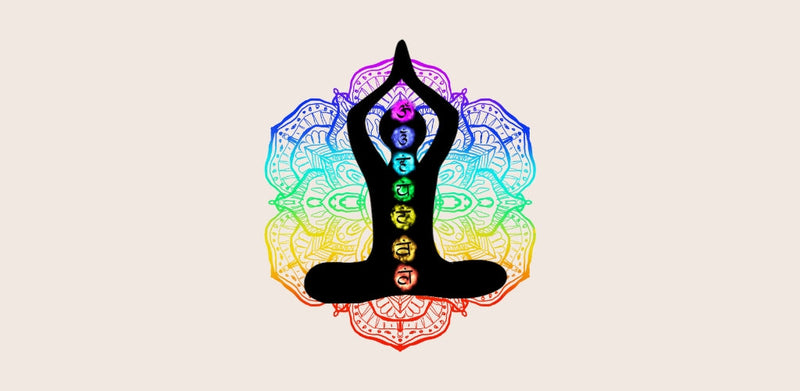
The seven-chakra system comes from tantric and yogic texts and maps energy centres along the spine, from the root at the base to the crown at the top of the head. Vishuddha is the bridge between the feeling heart below it and the perceiving third eye above it, which is why the tradition ties it to turning inner truth into spoken words. For the full map of all seven centres, our pillar guide chakras explained lays out each one in order.
Signs the tradition associates with imbalance include trouble expressing thoughts, talking over others, fear of speaking up, and creative blocks. None of this is a clinical diagnosis. It is a reflective framework, closer to a personality lens than a medical chart. Read it as a prompt for self-awareness, not a substitute for professional help. The neighbouring centres each have their own practices too, such as the sacral chakra mudras used lower in the body.
Crystals to pair with throat chakra mantras
Blue and blue-green stones are traditionally paired with throat-chakra practice, chosen for their colour link to Vishuddha rather than any measured property. The classic three are blue lace agate, sodalite and amazonite, all widely available as tumbled stones and simple beaded bracelets.
You might hold a stone in your palm or rest it near the throat while you chant. Here is how the popular choices are described in the tradition.
| Crystal | Colour | Traditionally associated with |
|---|---|---|
| Blue lace agate | Pale banded blue | Gentle, calming speech; easing anxiety around talking |
| Sodalite | Deep blue with white | Clear thinking, honesty, confident communication |
| Amazonite | Blue-green | Balanced expression, speaking one's boundaries |
| Aquamarine | Light sea-blue | Courage to speak, smooth flow of words |
| Turquoise | Sky blue-green | Protection and grounded, truthful expression |
Blue lace agate is the gentlest and a good first stone for anyone nervous about speaking. Sodalite is the 'clear head' stone, often chosen before a presentation or difficult conversation. To keep any crystal at its best, cleanse it now and then under running water or leave it out overnight; our overview of crystals for the heart chakra explains the same care routine for a different centre. Remember these are aids to focus, not medicine.
Common mistakes and how to fix them
The most common mistake is forcing volume or pitch, which tightens the very throat you are trying to relax. Chant softly and low. The second is chanting once and expecting a shift; like any practice, the calm builds with repetition over days and weeks, not in a single sitting.
A few more to watch for:
- Racing through the mantra. The slow exhale does the work. If you finish HAM in two seconds, you are going too fast. Stretch it across the whole breath.
- Straining the voice. No performance is needed. A quiet hum you can feel is better than a loud one you can't.
- Treating it as medicine. Mantras are a reflective, calming practice. They sit alongside, never replace, medical care for real throat, voice or mood problems.
- Skipping the silence. The quiet minute after chanting is where much of the settling happens. Don't jump straight back to your phone.
- Over-collecting crystals. One stone you actually use beats a drawer of unused ones. Start with a single blue lace agate.
Keep it simple and regular. A calm five minutes each morning will teach you more than an hour once a month. If you want to extend the practice upward through the chakra system, the crown chakra guide covers the highest centre.
Sources
- Encyclopaedia Britannica, "Mantra." britannica.com
- Encyclopaedia Britannica, "Chakra." britannica.com
- National Center for Complementary and Integrative Health (NIH), "Meditation and Mindfulness." nccih.nih.gov
Frequently asked questions
About the author


Written by Chetna Sharma, crystal healing practitioner and co-founder of Solacely. Chetna has worked with healing crystals for over a decade and curates Solacely's protective stone collection.