The fourth house in astrology governs home, family, roots, and your inner emotional world. It is the house of where you come from and where you feel safe, your childhood home, your mother or primary nurturer, your ancestry, and your private life behind closed doors. Linked to Cancer and ruled by the Moon, it sits at the very base of the chart and describes your foundation.
Key Takeaways
- The fourth house rules home, family, roots, the mother or nurturing parent, and your private emotional life. In Vedic astrology it is called the sukha bhava, the house of comfort and happiness.
- Its natural ruler is the Moon and its natural sign is Cancer, which is why the house is tied to feeling, belonging, and the need for security.
- The fourth house sits at the base of the chart on the IC (Imum Coeli), the deepest, most private point in the wheel.
- Planets in the fourth house shape your home life and inner world. The Moon deepens emotional attachment, Saturn brings duty, Venus brings warmth, the Sun ties identity to family.
- Astrology here is a cultural and interpretive tradition for reflection, not a science. Read the fourth house as a lens on home and belonging, not a fixed forecast.
What is the fourth house in astrology?
The fourth house is the segment of a birth chart that governs home, family, roots, and your innermost emotional foundation. It sits at the very bottom of the chart wheel, on the point called the Imum Coeli, and describes what grounds you: your childhood, your sense of belonging, and the private self you show only to those closest to you. According to Encyclopaedia Britannica, the twelve-house framework used to read a chart traces back to Hellenistic astrology more than two thousand years ago.
In the Western tradition the fourth house is naturally linked to Cancer and its ruling planet the Moon. That pairing is why the house is read as tender, protective, and deeply feeling. Where the first house is about who you are and the third house is about how you communicate, the fourth house is about where you retreat to and what holds you.
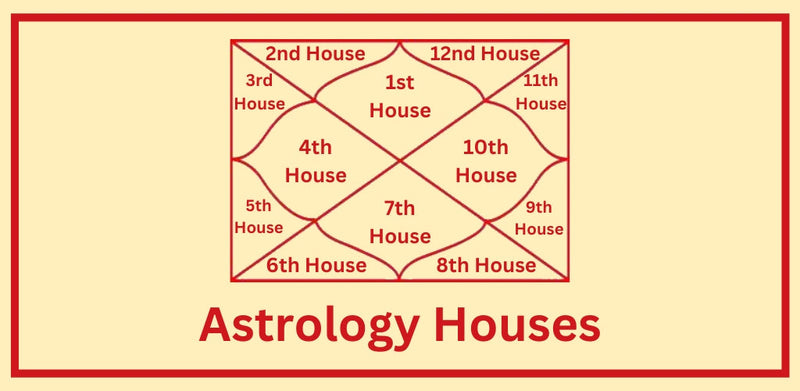
In Vedic astrology (Jyotish) the same house is called the sukha bhava, the house of comfort, happiness, home, land, vehicles, and the mother. Whether you read a Western or a Vedic chart, the theme is the same: your foundation, roots, and the emotional home you carry inside. Our complete guide to the 12 astrological houses sets each house in context.
What does the fourth house govern?
The fourth house governs four connected areas: home and property, family and ancestry, the mother or primary nurturer, and your private emotional life. Together these describe your foundation, the ground you stand on and the feelings you keep close. It is the most inward, personal house in the whole chart, sitting furthest from public view.
Each theme has its own flavour, and a chart reader looks at all four together.
- Home and property. Your physical residence, the family house, land, and real estate. This house is read for how settled or restless your living situation feels, and for your relationship with the idea of home itself.
- Family and roots. Your ancestry, heritage, and the family line you come from. It covers the traditions passed down to you and the sense of belonging that shapes your early years.
- The mother or nurturer. Traditionally the fourth house is tied to the mother or the primary caregiver who gave you emotional security. In some Vedic schools it is read for the mother specifically.
- Private emotional life. The inner self you rarely show, your need for safety, and where you go to recharge. This is your emotional base, the quiet centre beneath the public personality.
Because the fourth house is linked to Cancer and the Moon, all of this is felt rather than reasoned. If you want to explore the sign that colours this house, our Cancer colours guide covers its traditional associations.
The fourth house and the IC (Imum Coeli)
The fourth-house cusp sits on the Imum Coeli, Latin for 'the bottom of the sky,' the lowest point in a birth chart. It is one of the four chart angles, directly opposite the Midheaven at the top, and it marks your most private, foundational self. Where the Midheaven shows your public role, the IC shows your roots, your home, and the person you are when nobody is watching.
The IC is not just a symbolic low point; it is astronomically the point beneath your feet at the moment of birth. Because it depends on the exact time and place you were born, it is highly personal. Two people born on the same day but hours apart can have very different IC signs, and therefore very different fourth-house foundations.
Astrologers read the IC as the deep taproot of the chart. Everything you build in the visible world, career, reputation, the Midheaven, is understood to grow from the private security the IC describes. A strong, well-tended fourth house is often read as the quiet base that makes outward achievement possible. For the full map of chart angles, see our astrology houses pillar guide.
The fourth house in Vedic astrology (sukha bhava)
In Vedic astrology the fourth house is the sukha bhava, the house of comfort, happiness, and emotional contentment. It is read for home, land, property, vehicles, education, and above all the mother, giving the house a warm, sheltering tone. Both traditions agree it is the house of your foundation and your capacity to feel at peace.
Vedic charts treat the fourth house as a kendra, or angular house (1, 4, 7, 10), one of the four pillars considered structurally important to the whole chart. A strong fourth house is said to support a settled, contented life, with a comfortable home and steady emotional roots. It is also linked to the heart, both literally and as the seat of inner peace.
The differences between the two systems are mostly in calculation, the sidereal versus tropical zodiac and the house method, rather than in the life themes. For a fuller comparison of how the traditions line up, the pillar astrology houses guide walks through both. Read either way, the sukha bhava is where happiness takes root.
Planets in the fourth house and what they mean
A planet in the fourth house colours your home life, your family bonds, and your inner emotional world. The Moon, closely tied to this house through Cancer, is considered especially expressive here, deepening feeling and attachment to home. Other planets shift the tone: Saturn brings duty and sometimes distance, Venus brings warmth and beauty, Mars brings tension or energy in the home.
Here is how each of the classical planets is traditionally read in the fourth house.
| Planet in the 4th | Traditional reading of home and inner life |
|---|---|
| Sun | Identity tied to family and home; a proud, central role in the household |
| Moon | Deep emotional attachment to home and mother; strong need for security |
| Mercury | A busy, talkative household; home as a place of learning and ideas |
| Venus | A warm, beautiful, harmonious home; close, affectionate family ties |
| Mars | Energy or tension in the home; a drive to protect or defend the family |
| Jupiter | A generous, expansive home; good fortune through family and property |
| Saturn | Duty, responsibility, and structure; sometimes a heavy or reserved home life |
Remember that no single placement decides a whole life. A chart reader weighs the planet, the sign it sits in, any aspects it makes, and the rest of the wheel together. A planet in the fourth house is one voice in a larger conversation. If the Moon's nurturing quality resonates with you, our crystals for Cancer guide speaks to that same tender, home-loving energy.
Signs on the fourth-house cusp
The sign sitting on the fourth-house cusp, on the IC, sets the underlying tone of your home life and emotional foundation, even before you look at any planets inside. A cusp is the dividing line where the house begins, and the sign on that line acts like the house's default setting, colouring how you nest, what home means to you, and where you feel safe.
Each sign brings its own flavour to the fourth house.
- Cancer (Moon-ruled). The house at its most natural. Home is deeply emotional, a sanctuary, and family bonds run to the core.
- Aries or Scorpio (Mars-ruled). A charged, intense home life. Either a fiercely protected household or one with strong undercurrents.
- Taurus or Libra (Venus-ruled). A comfortable, beautiful, harmonious home. Security through warmth, ease, and pleasant surroundings.
- Gemini or Virgo (Mercury-ruled). A busy, communicative, or well-ordered household. Home as a place of activity, ideas, and routine.
- Leo (Sun-ruled). A warm, generous, proud home. The household is a source of identity and often the heart of gatherings.
- Sagittarius or Pisces (Jupiter/Neptune-ruled). An open, idealistic, or spiritual home. Roots that feel expansive, welcoming, or dreamlike.
- Capricorn or Aquarius (Saturn/Uranus-ruled). A structured, traditional home, or an unconventional, independent one. Security through order or through freedom.
Because the cusp sign shapes so much, it is worth finding yours accurately. That means knowing your exact birth time, since the houses and the IC shift with the Ascendant. Our first house guide explains why the birth minute matters for every cusp in the chart.
How to work with your fourth house
Working with the fourth house means tending the foundation it governs: your home, your family bonds, and your inner sense of safety. You do not need a perfect chart to strengthen these. Small, caring habits, the sukha bhava rewards comfort, tend to do more than any grand renovation. Think of it as nourishing your emotional roots.
A few practical ways to engage the fourth-house themes:
1. Make your home feel like a sanctuary. A tidy corner, a lamp you love, a few calming objects. The fourth house thrives when your space genuinely restores you rather than drains you. 2. Tend your family and ancestral bonds. A regular call to your mother or elders, keeping a family recipe alive, marking a housewarming with intention. These are the ties this house is read for. 3. Honour your roots. Learn a little of your family history, keep a small heirloom close, notice the traditions that shaped you. Belonging deepens when you know where you come from. 4. Protect your private time. Guard a quiet hour that is only yours. The fourth house is the inner base you retreat to, and it needs genuine rest, not just sleep. 5. Create emotional safety. Notice what makes you feel secure and give yourself more of it. This house is built on the simple, unglamorous work of feeling held.
None of this is a guarantee of any outcome. It is simply a way of living in tune with what the fourth house represents, the private, nurturing, foundational part of your life.
Crystals traditionally linked to the fourth house
Crystals associated with the fourth house are the ones traditionally chosen for home, comfort, and emotional security, usually soft, grounding, and nurturing stones tied to the heart and the Moon. In crystal tradition, stones are not medicine and make no measurable change, but many people keep them at home as a gentle, intentional prompt, a reminder to feel settled and safe.
The stones below are the ones most often paired with fourth-house themes.
| Crystal | Traditional intention | Why it suits the 4th house |
|---|---|---|
| Moonstone | Emotional balance, intuition | A Moon-linked stone tied to nurturing and inner calm |
| Rose Quartz | Love and gentleness | Associated with family harmony and tender bonds |
| Smoky Quartz | Grounding and protection | Long kept to steady and shelter the home space |
| Black Tourmaline | Protection | Traditionally placed at the threshold to guard the household |
| Amethyst | Calm and rest | Linked to peace, sleep, and a settled emotional base |
A simple tumbled stone is the affordable entry point, with larger pieces and fine-quality specimens costing considerably more. Choose by the quality you feel drawn to rather than price alone. If home and family are your focus, our Cancer birthstone guide covers stones tied to this Moon-ruled sign, and our second house guide explores the related themes of property and material security.
Fourth house vs tenth house: private roots vs public role
The fourth and tenth houses form a natural pair, the vertical axis of the chart, and telling them apart clarifies a lot. The fourth house, at the bottom on the IC, rules your private roots, your home, your family, and your emotional foundation. The tenth house, its opposite at the very top on the Midheaven, rules your public role, career, reputation, and standing in the world.
Think of the fourth house as the roots of a tree and the tenth house as its visible crown. One is inward, private, and felt; the other is outward, public, and seen. Astrologers read the two together because a person's outer achievement is understood to grow from the private security of their base. Neglect the roots and the crown struggles.
Understanding the axis helps you read a chart as a whole rather than house by house. The lower-half houses, including the fourth, are the personal, inward hemisphere; the upper-half houses, including the tenth, reach outward. For the full map of how the houses relate, see our astrology houses pillar guide, and our third house guide for the house of communication that precedes the fourth.
Sources
- Encyclopaedia Britannica, astrology: history, the horoscope, and the house system. britannica.com
- Encyclopaedia Britannica, horoscope, the chart of the heavens and its twelve houses. britannica.com
- Encyclopaedia Britannica, the Moon and its mythological associations. britannica.com
Frequently asked questions
About the author


Written by Chetna Sharma, crystal healing practitioner and co-founder of Solacely. Chetna has worked with healing crystals for over a decade and curates Solacely's protective stone collection.