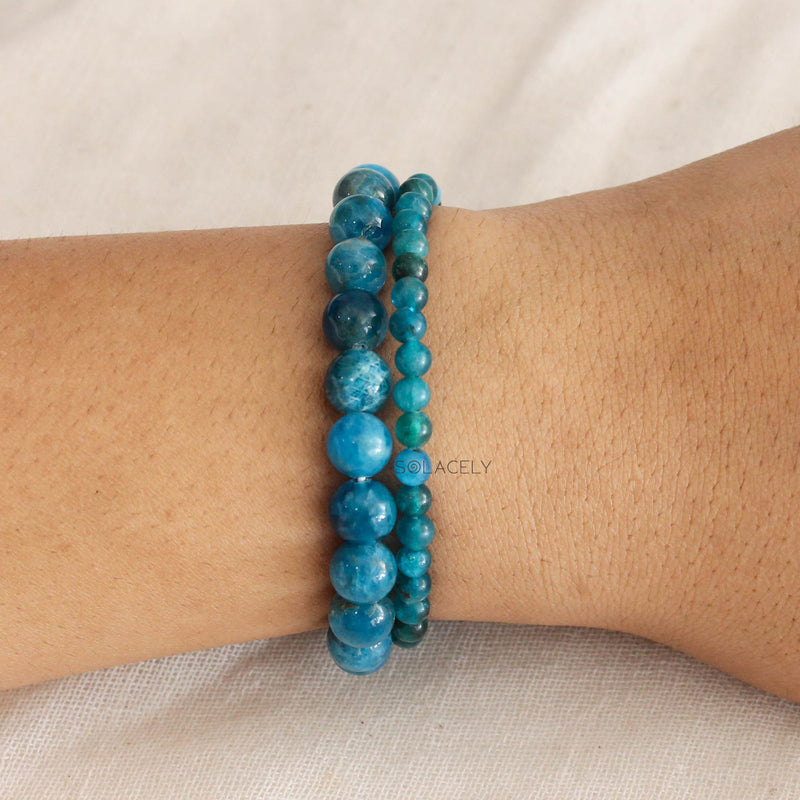
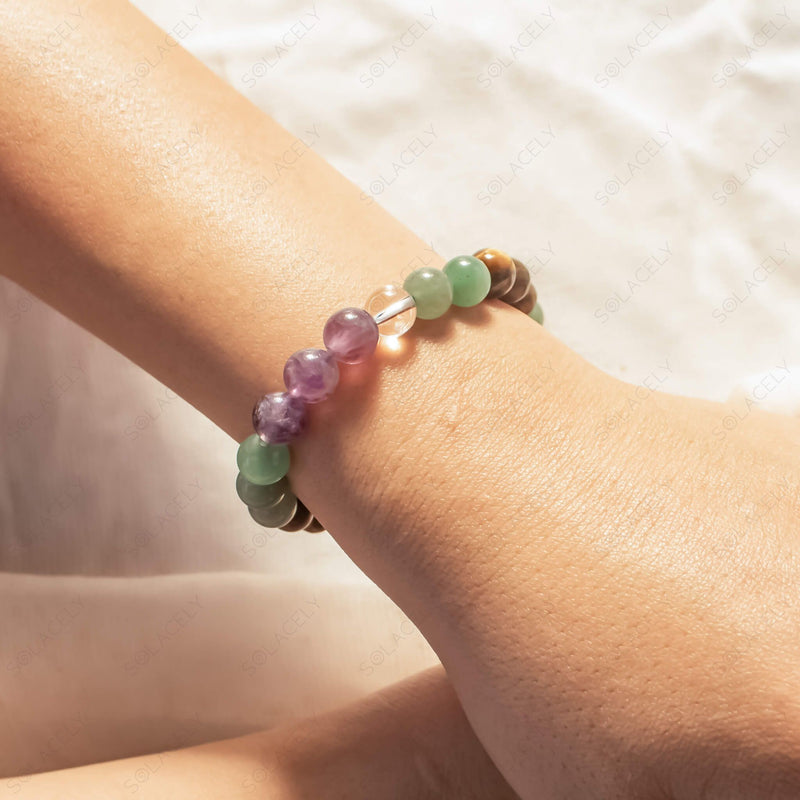
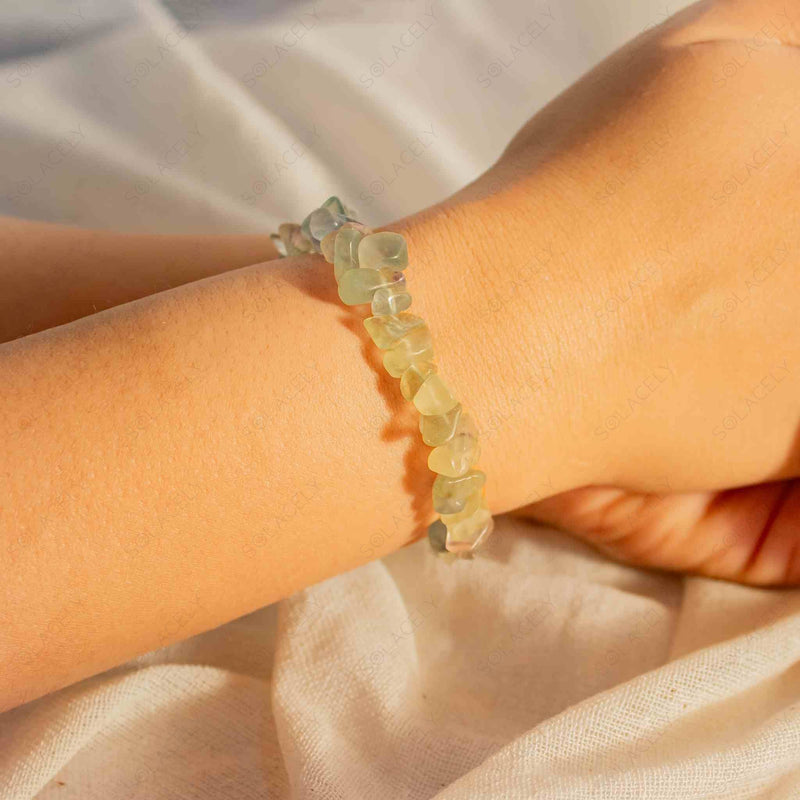
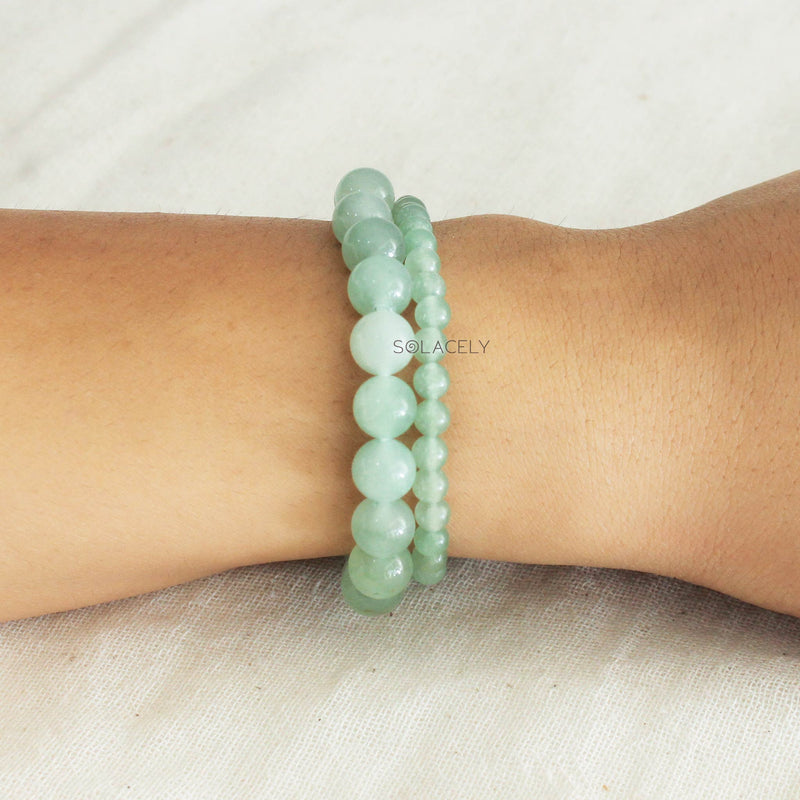
Blue apatite and green aventurine are paired for drive plus opportunity. Apatite is a soft calcium phosphate used for motivation and mental clarity, while aventurine is a shimmering green quartzite worn for luck and calm confidence. The pairing works because one stone pushes and the other steadies, but their hardness gap means they need separate care.
Key takeaways
- Blue apatite is a calcium phosphate rated 5 on the Mohs scale, and it is the mineral that defines that point on the scale itself.
- Green aventurine is a quartzite coloured by green fuchsite mica, and its glitter is called aventurescence. It sits at 6.5 to 7 Mohs.
- Aventurine is hard enough to scratch apatite, so the two should never be stored loose together or stacked carelessly.
- Traditional use pairs apatite for ambition and focus with aventurine for luck, opportunity, and steady nerve.
- Keep apatite away from steam, ultrasonic cleaners, and long soaks. Aventurine handles warm soapy water and a soft brush comfortably.
What is blue apatite?
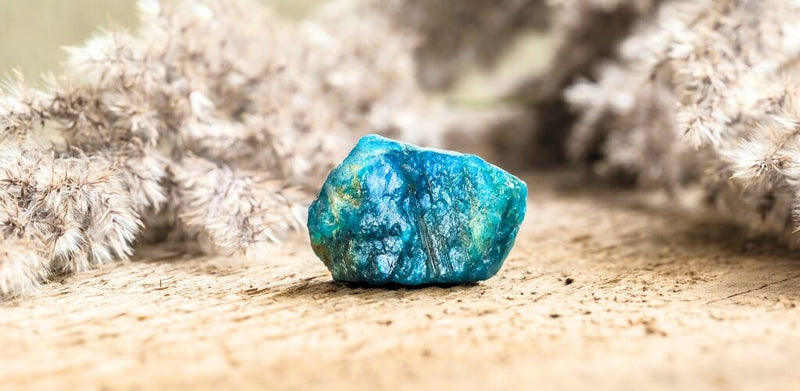
Blue apatite is a calcium phosphate mineral, not a quartz, and it is rated 5 on the Mohs hardness scale. Mineral references use apatite itself to define that point on the scale. For a jewellery stone, that is soft, and it is brittle as well.
Apatite is really a small family rather than one mineral. It is a group of closely related calcium phosphates that differ mainly in whether fluorine, chlorine, or hydroxyl sits in one position in the structure. The blue material sold on bead strands is usually fluorapatite, coloured by trace elements.
Why is blue apatite such a vivid blue?
Trace elements in the crystal structure do most of the work. Gentle warming to bring a blue forward is a long established and entirely stable practice across the coloured stone trade, so choose the shade you actually want to look at. Apatite stays heat sensitive either way, which is the one thing to remember at the sink: keep it well away from steam and ultrasonic cleaners.
Why is apatite more interesting than its jewellery reputation suggests?
Because you are already carrying some. Apatite is the main mineral in tooth enamel and bone, and it is also the world's primary source of phosphate for fertiliser. Very few stones on a bead strand lead that kind of double life, industrial on one side, biological on the other.
If you want the full profile before pairing it with anything, our blue apatite meaning and properties guide covers colours, chakra associations, and buying notes in more depth.
What is green aventurine?
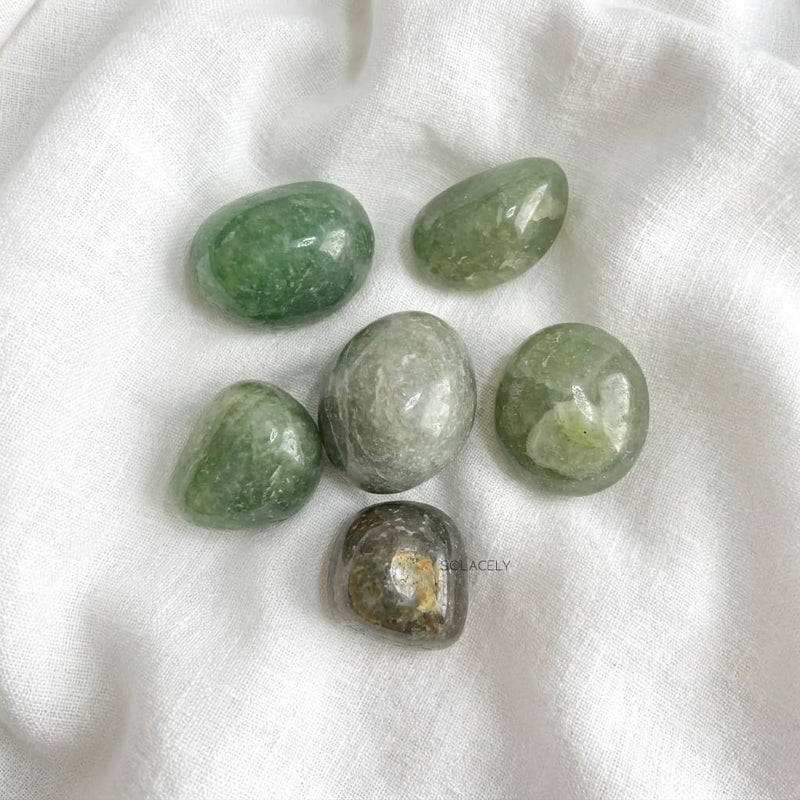
Green aventurine is a rock rather than a single crystal. It is a quartzite built from interlocking quartz grains and coloured by inclusions of fuchsite, a chromium-rich green mica. Those flat inclusions catch the light and produce the soft glitter gemmologists call aventurescence. Hardness sits around 6.5 to 7.
That aggregate structure matters more than the number suggests. A single crystal can break along a plane of weakness. A quartzite is a mass of grains locked together, so it takes knocks well and is tough enough for rings, tumbles, and carved pieces. It is one of the more forgiving green stones to own.
Where does the word aventurescence come from?
From glass, oddly enough. Aventurine glass, made in Venice with copper flecks suspended inside it, came first, and the natural effect was named after the imitation rather than the other way round. Gemmologists now use aventurescence for any stone showing that metallic sparkle, including sunstone.
Shade varies a lot across aventurine, from pale sage through to a deep forest green, and the amount of visible glitter varies with it. Neither end is better, they simply suit different people. If you are deciding which tone you want on your wrist, the green aventurine guide covers colour range, chakra links, and what a well cut strand looks like.
Why do people pair blue apatite with green aventurine?
The pairing splits the work between two very different reputations. Blue apatite carries a long association with ambition, mental clarity, and cutting through indecision. Green aventurine is traditionally called a stone of opportunity and luck. One is about wanting the thing, the other about the door opening.
Crystal tradition reads apatite as appetite for the work, the hunger to start something you have been circling for months. Aventurine is read as the stone that meets you halfway, the quiet turn of luck that lets an effort land somewhere useful. Together they cover both halves of a plan, the wanting and the arriving.
In practice, we find people reach for this combination when motivation is not the problem and follow-through is. Apatite on its own can feel busy: lots of ideas, not much settling. Aventurine's reputation is calmer and more patient, which takes the edge off that scatter. If focus is your main goal, the wider crystals for focus selection is worth reading alongside this.
How do blue apatite and green aventurine compare?
They differ on nearly every measure that matters: composition, structure, hardness, and how much handling they tolerate. Apatite is a phosphate mineral at Mohs 5. Aventurine is a silicate rock at 6.5 to 7. Their traditional uses sit apart too, which is precisely why the pairing gets made.
| Blue apatite | Green aventurine | |
|---|---|---|
| Type | Calcium phosphate mineral | Quartzite rock |
| Structure | Single crystal | Interlocking quartz grains |
| Hardness | 5 Mohs, brittle | 6.5 to 7 Mohs, tough |
| Colour from | Trace elements | Fuchsite mica inclusions |
| Optical effect | None, glassy lustre | Aventurescence |
| Traditional use | Ambition, clarity, decisions | Luck, opportunity, calm |
| Water | Quick rinse, dry at once | Warm soapy water is fine |
| Heat and sun | Avoid both | Brief sun only |
| Storage | Alone, in a soft pouch | Away from softer stones |
Read the hardness row twice. That single gap is the fact that changes how you own the pair.
How should you wear the pairing?
Bracelets are the easiest format, and most people wear one strand of each rather than a mixed strand. Apatite is the stone to protect, so keep it on the wrist you use less, or on a piece that will not take knocks. Aventurine can go almost anywhere.
- Two strands, one wrist. Simple, and it lets you slip the apatite off before anything physical.
- Pendant plus bracelet. Apatite near the throat, aventurine on the wrist, which keeps the softer stone away from hard surfaces.
- Desk pairing. An apatite piece by the screen for planning, an aventurine tumble in a pocket for the meeting.
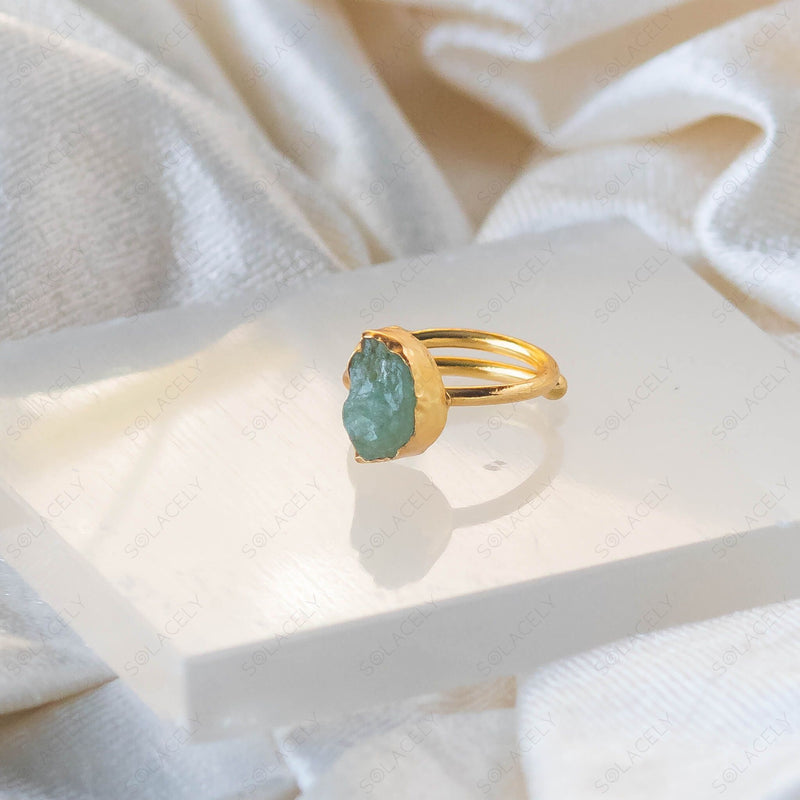
- Best avoided. Apatite rings for daily wear. At Mohs 5 they scuff quickly against everything, including ordinary household dust, which contains quartz.
If what draws you to aventurine is a run of stalled plans rather than luck in the abstract, the crystals for new opportunities guide covers stones chosen for openings and change specifically.
How do you care for a soft stone next to a harder one?
Store them apart, always. Aventurine at 6.5 to 7 is hard enough to scratch apatite at 5, so a shared pouch or a jewellery bowl will slowly dull the softer stone. The Mohs scale is a ranking rather than a measure of equal steps, so the real durability gap is wider than the two numbers imply.
Everyday handling follows from that. Take apatite off before washing up, exercise, and gardening. Skip ultrasonic and steam cleaners entirely, since apatite is heat sensitive. Aventurine tolerates warm soapy water and a soft brush without complaint.
Chemicals are the quieter threat. Perfume, hairspray, and hand sanitiser leave a film on both stones and can dull a soft phosphate over time. Put jewellery on last, once everything else has dried. For energetic cleansing, moonlight, sound, or a short rest on selenite suit both. Skip salt water and long sun sessions.
Aventurine also sits happily beside harder stones if you want a second combination that is less fussy to store, which is much of the practical appeal of green aventurine and black tourmaline.
Who does this combination suit?
It suits people with goals and a follow-through problem: students, career changers, anyone building something slowly on the side. The apatite side speaks to planning and appetite for the work. The aventurine side speaks to luck, patience, and not panicking when progress stalls. This is a working pairing, not a decorative one.
It is a gentler fit for goals than for grounding. If protection or a settled, weighted feeling is what you are after, black tourmaline, hematite, or smoky quartz are the conventional choices. And if you want one piece you genuinely never take off, make that the aventurine. Apatite is happiest when it gets set down now and then.
One practical note from handling a lot of bead strands. Apatite wears best on a well made piece, so look for neat, evenly drilled beads and a strand with a little give at the knot or elastic. Slip it off before anything physical, keep it in its own pouch, and a strand will stay bright for years. Aventurine asks for far less and will forgive the odd knock.
The properties described here reflect traditional and cultural belief around crystals. They are not medical claims and are not a substitute for professional healthcare. If you are managing a health concern, speak to a qualified practitioner.
Sources
Written by Chetena Sharma. Reviewed by the Solacely editorial team.
Frequently asked questions
About the author


Written by Chetna Sharma, crystal healing practitioner and co-founder of Solacely. Chetna has worked with healing crystals for over a decade and curates Solacely's protective stone collection.