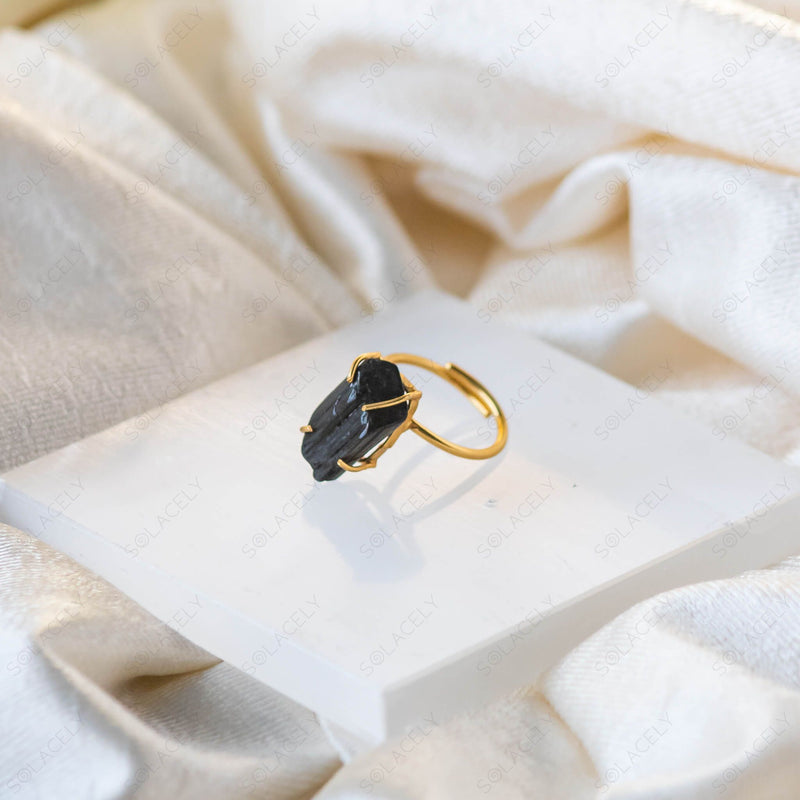
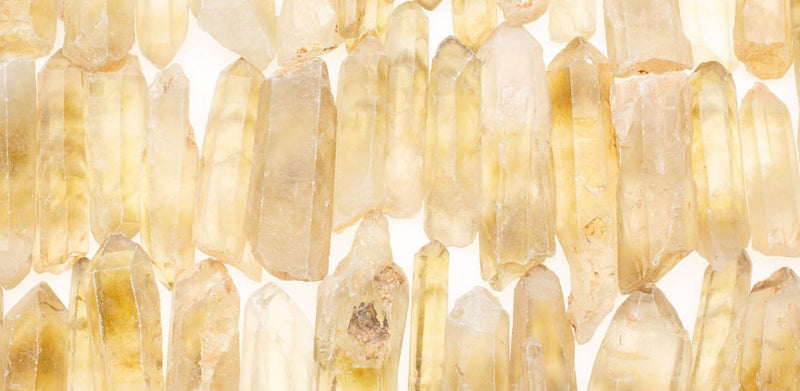
Citrine and hematite are paired because confidence on its own tends to arrive in bursts. Citrine is traditionally kept for lift and self-belief; hematite for weight and staying put. The set suits people who feel capable one day and completely undone the next.
Key takeaways
- Citrine lifts, hematite anchors. The pairing is about steadiness rather than more energy.
- Citrine is quartz at 7 on the Mohs scale; hematite is softer at 5 to 6 and brittle.
- Hematite is an iron oxide, which is where its weight and metallic shine both come from.
- Polished hematite looks silver grey but leaves a red streak, which is how it is identified.
- Wipe hematite dry rather than soaking it, since standing water can encourage surface rust.
Why the pairing works
Confidence is not usually the thing people are short of in the moment. Most can find some when it is needed. What tends to be missing is the ground underneath it, so the confidence arrives, does its work, and then collapses the moment something goes wrong.
Citrine handles the first half. It is traditionally kept for warmth, self-belief and the willingness to state what you are worth, and it belongs to the solar plexus, the centre associated with personal authority.
Hematite handles the second. Its whole character is weight, and it is kept for being difficult to knock over rather than for feeling good. That is a less appealing brief and it is the one that makes the pairing hold together.
What hematite actually is
Hematite is an iron oxide, and almost everything about how it behaves follows from that. It is the world's most important iron ore as well as a stone people keep, which is unusual and worth knowing.
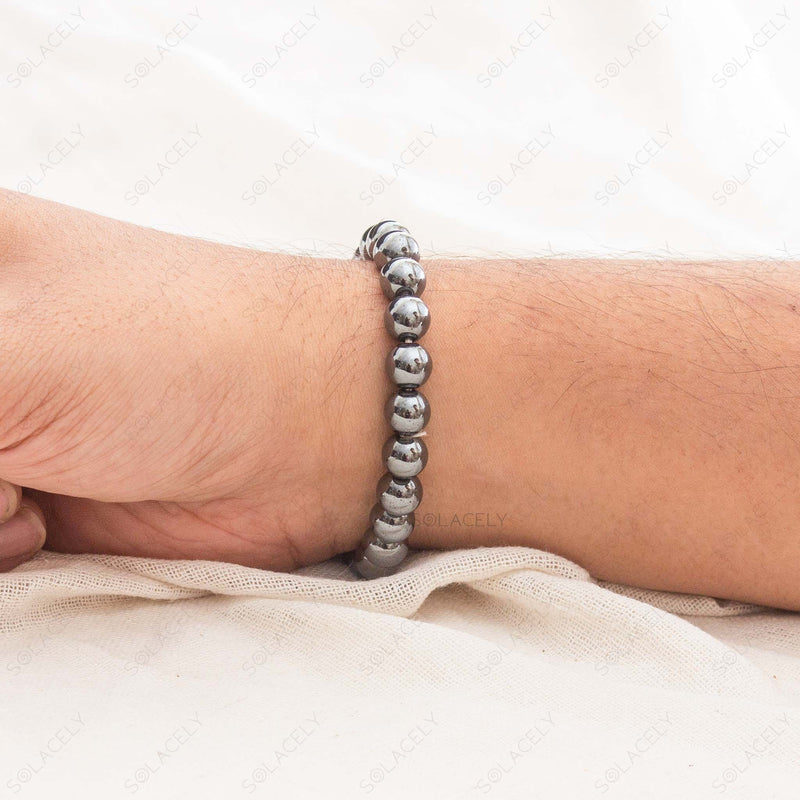
The heft is the first thing anyone notices. A tumbled hematite feels roughly twice as heavy as a quartz of the same size, and that physical fact is a large part of why the stone reads as grounding before any tradition is attached to it.
Its name comes from the Greek for blood, which puzzles people looking at a silver grey stone. Geology.com notes that hematite's streak is a distinctive red brown, meaning its powder is red even when the polished surface is metallic. Rubbed on unglazed porcelain it leaves a rust coloured mark, and that is still how it is identified in the field.
What citrine brings
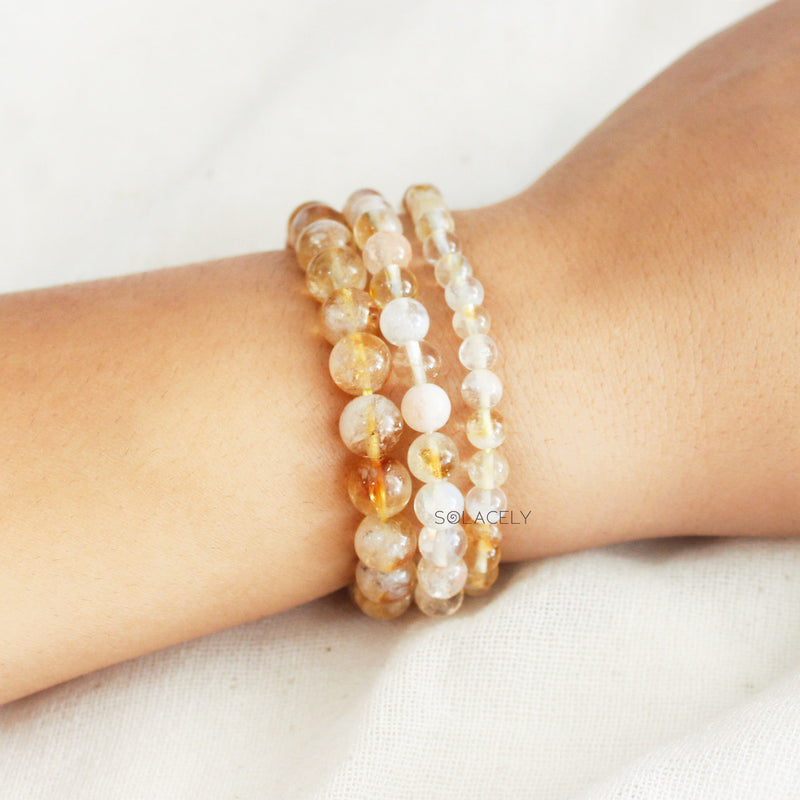
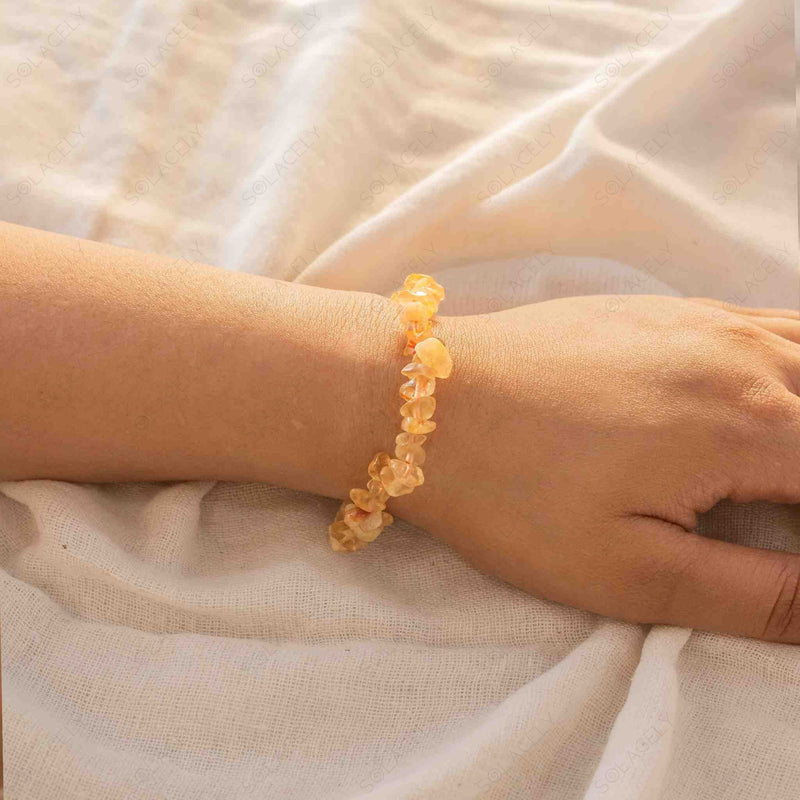
Citrine is the golden variety of quartz, coloured by iron held within the crystal structure. At 7 on the Mohs scale with no cleavage it is one of the most forgiving stones to own, and it takes daily wear in any format including rings.
Its traditional brief is specific enough to be useful. Citrine is not kept for luck arriving; it is kept for the human side of putting yourself forward, which is why the old trade name for it was the merchant's stone.
Warming amethyst to bring out the golden tone is one of the oldest and most stable practices in the gem trade, and both natural and warmed material are properly citrine. The citrine guide covers the shades and what drives price.
Comparing the two
| Citrine | Hematite | |
|---|---|---|
| Mineral | Quartz, coloured by iron | Iron oxide |
| Hardness | 7 Mohs, no cleavage | 5 to 6 Mohs, brittle |
| In the hand | Light, warm to look at | Noticeably heavy, cool |
| Traditionally kept for | Confidence, stating your worth | Grounding, staying put |
| Chakra placement | Solar plexus | Root |
| Main care note | Keep out of prolonged sun | Wipe dry, avoid standing water |
The weight difference is the practical thing to notice. Handing somebody both stones and asking which feels more settling almost always produces the same answer, and it has nothing to do with what either is supposed to do.
How the pair is used
The two placements are genuinely different, and keeping them separate is what makes the set work.
- Citrine where the asking happens. A desk, a bag, or worn to the meeting itself.
- Hematite carried in a pocket. The weight is the point, so it wants to be somewhere you feel it.
- Both on a difficult day. Citrine for the ten minutes before, hematite for the hour after.
- Hematite alone when rushing. It suits the scattered, hurried state on its own.
The last habit is the one people keep longest. Hematite is unusual among stones in that its effect is partly physical, and reaching for something heavy when you feel unmoored is a sensible instinct rather than a symbolic one. For the wider group, crystals for grounding covers what else belongs there.
Choosing the two
With citrine, the range runs from pale lemon through clear gold to deep honey and all of it is properly citrine. Price tracks the depth and evenness of the colour rather than size, so choose the tone you would actually enjoy wearing.
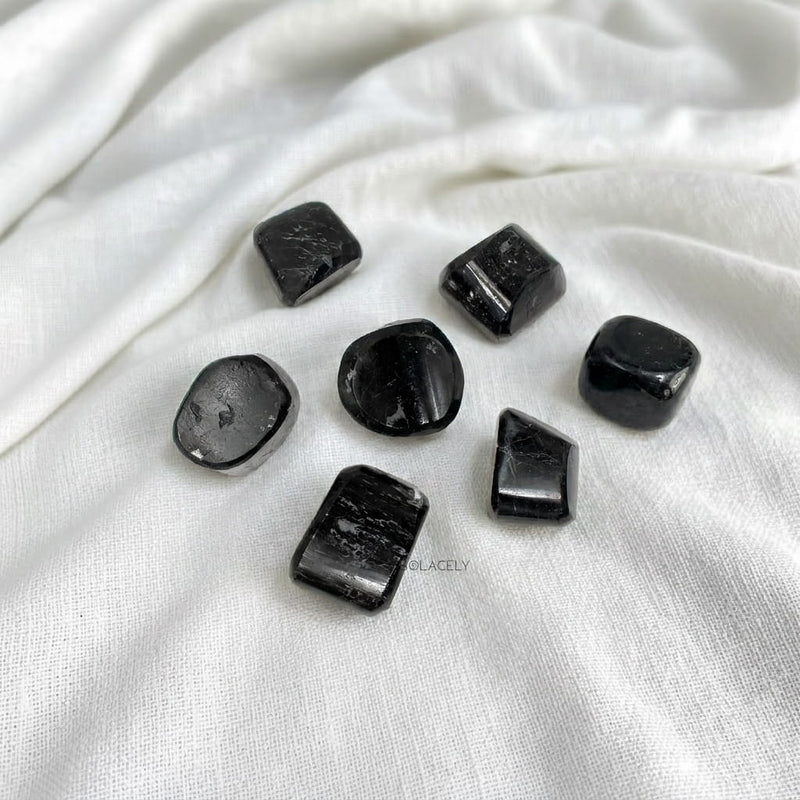
With hematite, look at the polish and the edges. A well finished piece has a genuine mirror shine, and because the stone is brittle the edges are where cheap material shows first. Run a thumb around a tumbled piece before buying it.
One thing worth asking about is magnetic hematite, which is common in bracelets. Natural hematite is only weakly magnetic, so strongly magnetic beads are usually a manufactured material sold under the hematite name. It is perfectly good looking and inexpensive, and it should simply be described for what it is.
Care and cleansing
Citrine is straightforward. Warm water, mild soap, a soft brush and a full dry, and the only real caution is prolonged strong sunlight, which softens the golden colour over months.
Hematite wants slightly more thought. Wipe it and dry it rather than leaving it to soak, since standing water can encourage rust spots on the surface of some pieces. Avoid ultrasonic cleaners, and store it where it will not knock against harder stones.
For energetic cleansing, moonlight or sound suit both and neither needs salt water, which is particularly unhelpful for an iron mineral. If the root centre is the focus rather than the pairing, crystals for the root chakra covers the fuller set.
Who this pairing suits
It suits people whose confidence is genuinely present but unstable. Anyone who recognises the pattern of feeling entirely capable in the morning and hollow by the afternoon is the person this set was assembled for.
It suits less well anyone who is anxious rather than unsteady. Neither stone is soothing, and hematite in particular is a weight rather than a comfort. A gentler stone belongs in that case.
What the pair can honestly offer is two reminders attached to two different moments, which is more useful than one object meant to cover everything. For the confidence half considered on its own, crystals for confidence covers the wider group of stones kept for it.
The properties described here reflect traditional and cultural belief around crystals. They are offered for reflection and wellbeing and are not medical advice, a diagnosis, or a treatment for any condition. If low confidence or persistent low mood is affecting your daily life, please speak with a GP or a qualified practitioner. Keep small stones away from young children, and never place crystals in drinking water.
Sources
Written by Chetena Sharma. Reviewed by the Solacely editorial team.
Frequently asked questions
About the author


Written by Chetna Sharma, crystal healing practitioner and co-founder of Solacely. Chetna has worked with healing crystals for over a decade and curates Solacely's protective stone collection.