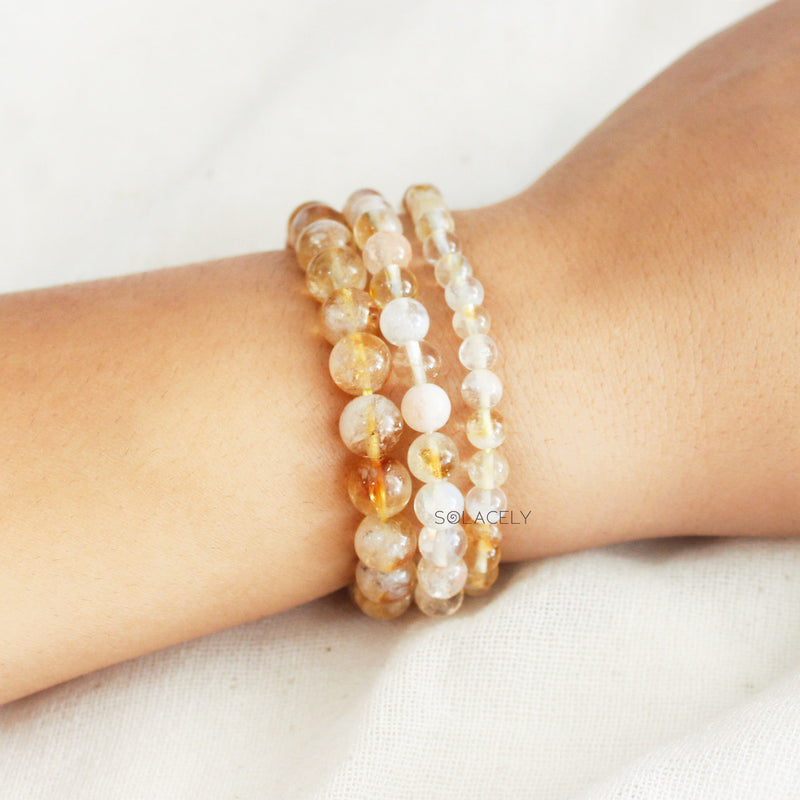
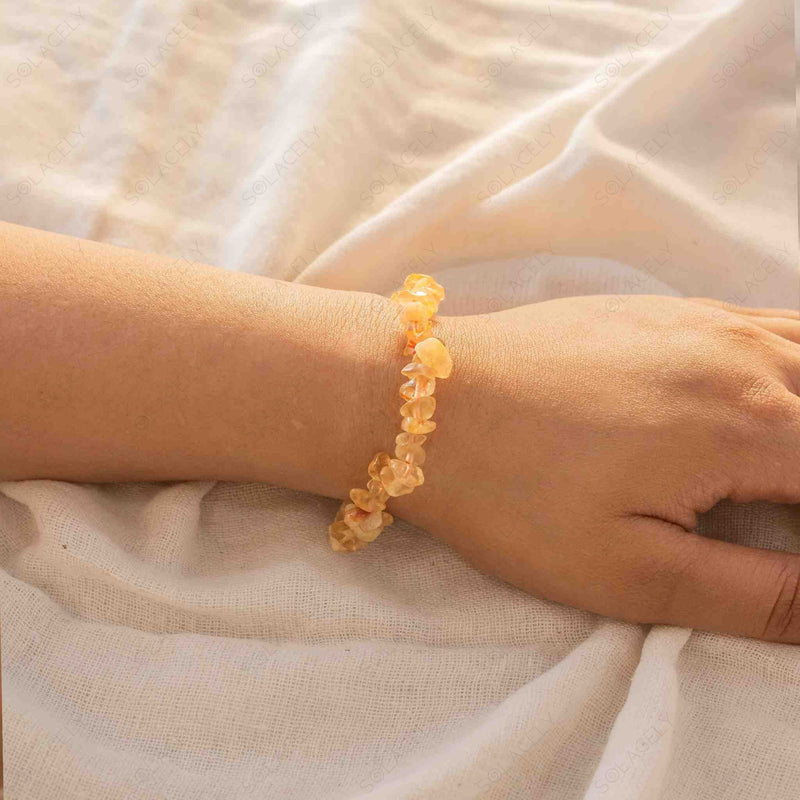
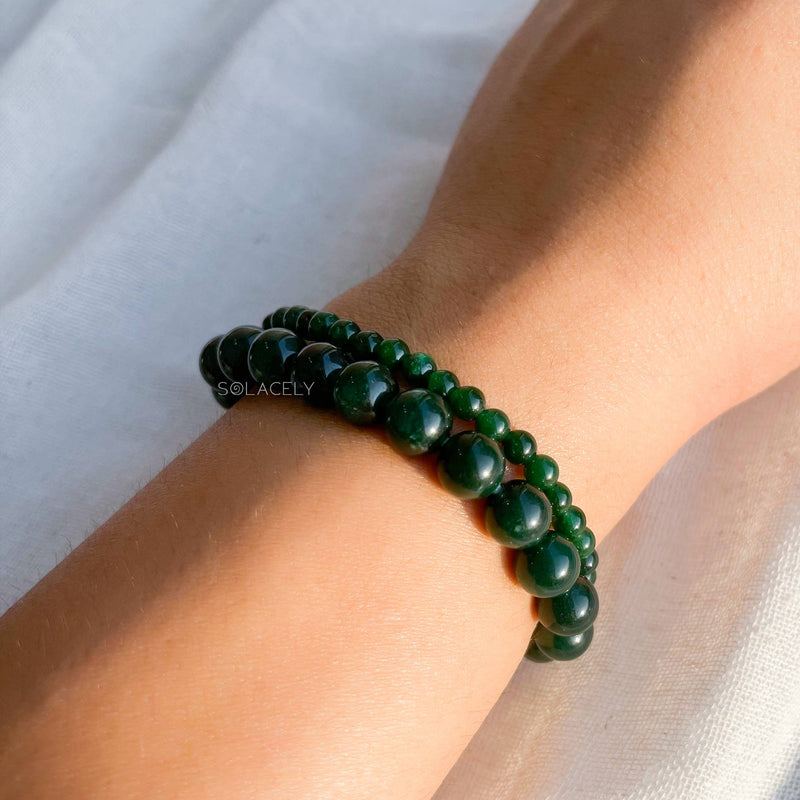
Citrine and jade cover the two halves of prosperity. Citrine is traditionally kept for the confidence to earn and to ask what your work is worth; jade for patient accumulation and holding onto what arrives. Most money-focused sets manage only one of those.
Key takeaways
- Citrine earns, jade keeps. That division is the whole logic of the pairing.
- Citrine is golden quartz at 7 on the Mohs scale, long called the merchant's stone.
- Jade covers two minerals, jadeite and nephrite, and both are properly jade.
- Jade's strength is toughness rather than hardness, which is why it survives knocks.
- Ask about treatment on jade, since Type B and C material is bleached or dyed.
Why the pairing works
Prosperity is two separate problems and most crystal sets treat it as one. Earning requires the nerve to put yourself forward and price your work honestly. Keeping requires patience, and a temperament that does not spend everything the moment it arrives.
Citrine sits squarely on the first. Its old name, the merchant's stone, comes from the practice of keeping a piece where money changed hands, and what it is traditionally kept for is the human side of trade rather than luck.
Jade sits on the second. Its associations across Chinese practice are with steadiness, longevity and slow accumulation, which is a different quality entirely and the one people tend to be short of. For the wider group, crystals for prosperity covers what else belongs alongside.
What citrine brings
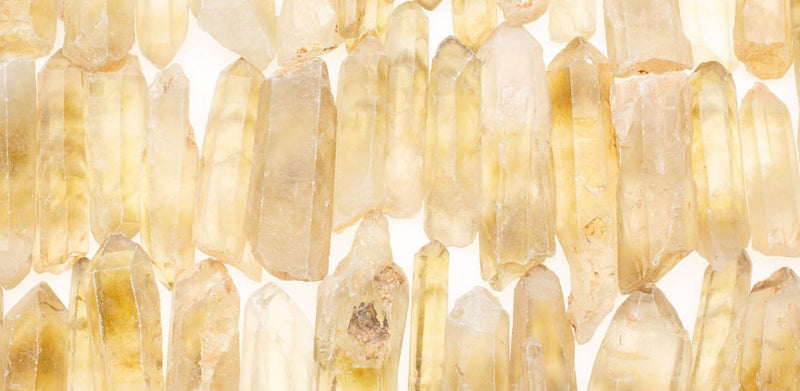
Citrine is the golden variety of quartz, coloured by iron held within the crystal structure. At 7 on the Mohs scale with no cleavage it takes daily wear in any format, which makes it the more practical half of this pairing for anything worn on the hands.
It is tied to the solar plexus, the centre associated with will and personal authority, and that placement explains the specific kind of confidence it is kept for. Not boldness in a social sense, but the willingness to state what something is worth.
Warming amethyst to bring out that golden tone is one of the oldest and most stable practices in the gem trade, and both natural and warmed material are properly citrine. The citrine guide covers the shades in full.
What jade brings
Jade is a trade name covering two chemically distinct minerals. Jadeite is a pyroxene and generally the rarer and more valuable; nephrite is an amphibole and is the material behind most historical Chinese carving. Both are properly jade.
What matters for wear is toughness rather than hardness. Geology.com describes nephrite's interlocking fibrous structure as making it exceptionally resistant to breaking, which is why jade was used for axe heads long before it was used for jewellery.
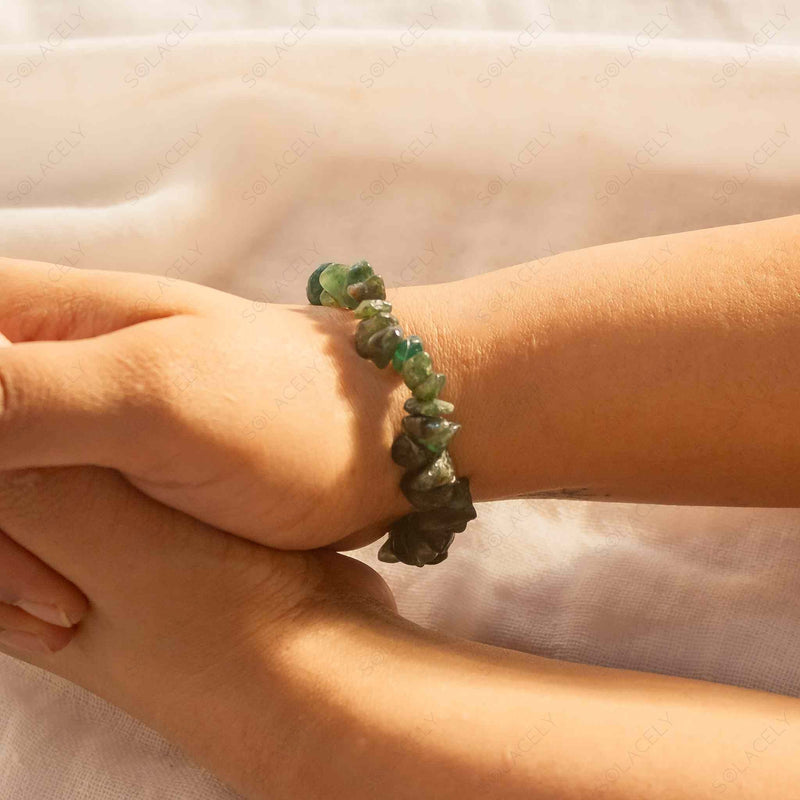
That durability suits its traditional role. A jade bangle worn continuously for decades is a normal thing, and the stone's association with patient holding is reinforced by the fact that it genuinely survives being held onto.
Comparing the two
| Citrine | Jade | |
|---|---|---|
| Mineral | Quartz, coloured by iron | Jadeite or nephrite |
| Hardness | 7 Mohs | 6 to 7 depending on type |
| Toughness | Good, but chips at edges | Exceptional |
| Traditionally kept for | Earning, asking, confidence | Keeping, patience, longevity |
| Usual placement | Where money changes hands | Worn continuously |
| Main care note | Keep out of prolonged sun | Avoid ultrasonics on treated material |
Neither will damage the other in storage, which makes this an easy set to keep together in one pouch.
Buying jade well
Jade has the most specific vocabulary of any stone in a crystal shop, and knowing three terms covers most of it.
- Type A. Untreated jadeite. Colour and texture are natural, and it holds up indefinitely.
- Type B. Bleached and polymer impregnated. Looks excellent initially and can yellow over years as the polymer degrades.
- Type C. Dyed. Colour is added, and it should be priced as such.
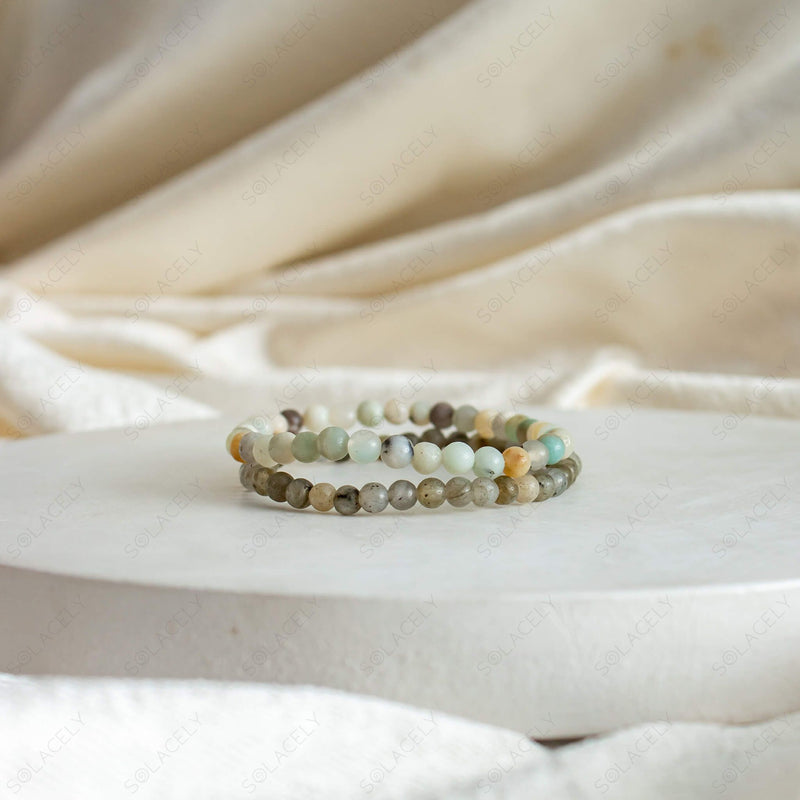
None of these is illegitimate provided it is disclosed. What matters is that the description matches the price, so simply ask which type a piece is and get the answer in writing on anything expensive. Serpentine and aventurine quartz are also handsome green stones sold under broader trade names, so asking which mineral you are buying is a reasonable question anywhere.
How the pair is used
The placements follow from what each stone is for, and they are genuinely different.
Citrine belongs where the earning happens. A piece on the desk where invoices get written, in a till, or worn to the meeting where a rate is being discussed. It is an occasion stone as much as a daily one.
Jade belongs on the body, worn continuously. A bangle or a pendant that simply stays on is the traditional format, and the continuity is part of the point. If the goal is money itself rather than the pairing, crystals for money covers the four stones most often kept for it.
Care and cleansing
Both are easy. Warm water, mild soap, a soft brush and a full dry suits either stone, and neither needs anything more elaborate.
Two cautions are worth knowing. Keep citrine out of prolonged strong sun, which softens the golden colour over months. And avoid ultrasonic cleaners and steam on any jade described as Type B or C, since the treatment can be damaged.
For energetic cleansing, moonlight or sound suit both, and neither needs salt. Many people find the act of cleansing after a demanding month is itself the useful part, which is a fair reason to keep the habit.
Who this pairing suits
It suits people building something rather than people waiting for something. Both stones are associated with active prosperity, which means the set makes most sense to somebody who is already earning and wants to be better at both halves of it.
It suits less well anyone in genuine financial difficulty. That is worth saying plainly, because prosperity crystals are marketed hardest to exactly those people, and a stone is not what changes a shortfall. Practical advice does considerably more.
Used as a daily reminder alongside the actual work of pricing fairly and saving deliberately, the pairing earns its place. It is one of the more coherent money-focused sets available precisely because it splits the job in two.
A note on jade's history
Jade's associations are unusually well documented, which is rare in crystal writing. Nephrite was worked in China for thousands of years and jadeite was carved across Mesoamerica entirely independently, with two unconnected cultures arriving at the same conclusion about the same material.
That is a large part of why the stone carries the weight it does. Its reputation for steadiness and longevity was not invented by a modern crystal market; it was earned over millennia in traditions that had no contact with each other.
The properties described here reflect traditional and cultural belief around crystals. They are offered for reflection and wellbeing and are not financial advice. For decisions about money, saving or business, please speak with a qualified adviser. Keep small stones away from young children, and never place crystals in drinking water.
Sources
- Gemological Institute of America, Jade Description
- Gemological Institute of America, Citrine Description
Written by Chetena Sharma. Reviewed by the Solacely editorial team.
Frequently asked questions
About the author


Written by Chetna Sharma, crystal healing practitioner and co-founder of Solacely. Chetna has worked with healing crystals for over a decade and curates Solacely's protective stone collection.