The crystals most kept for spiritual connection are amethyst, clear quartz, selenite, angelite, lapis lazuli and labradorite. Each carries one simple ritual, and the practice works best when you begin with a single stone and five minutes rather than a full set.
Key takeaways
- Amethyst, clear quartz, selenite, angelite, lapis lazuli and labradorite are the six stones most often kept for this.
- Start with one. A single stone with one attached ritual becomes a habit; six bought at once becomes a shelf.
- Five minutes is enough. Consistency does far more here than duration.
- Selenite dissolves in water. Never rinse it and never keep it anywhere humid.
- No particular belief is required. People come to this practice through many different doors.
Where to begin
The desire to feel connected to something larger than yourself is close to universal, and people name it differently: God, the universe, spirit, or simply a few quiet minutes that belong to nobody else. The stones below are kept as markers for that time rather than as a route to it.
That framing matters, because it removes the pressure. You are not required to arrive at a particular belief for a five minute practice to be worth having. Sitting somewhere consistent, holding an object that means something, and breathing slowly is a good use of five minutes on its own terms.
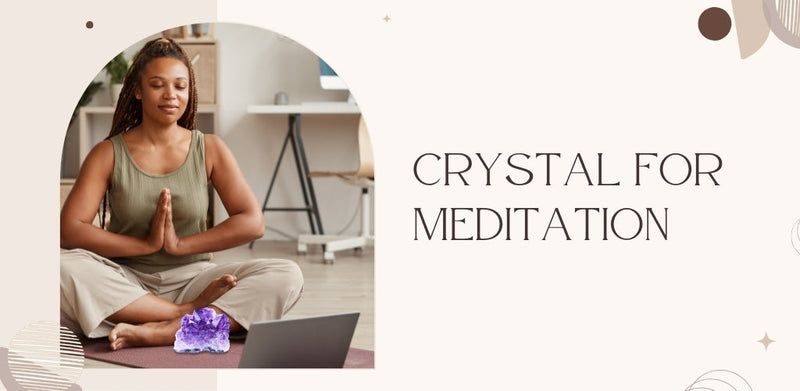
The practical advice that helps most is also the least glamorous: pick one stone, attach one small ritual to it, and keep it somewhere you pass daily. For the meditative side of the same practice, see crystals for meditation.
Amethyst and clear quartz
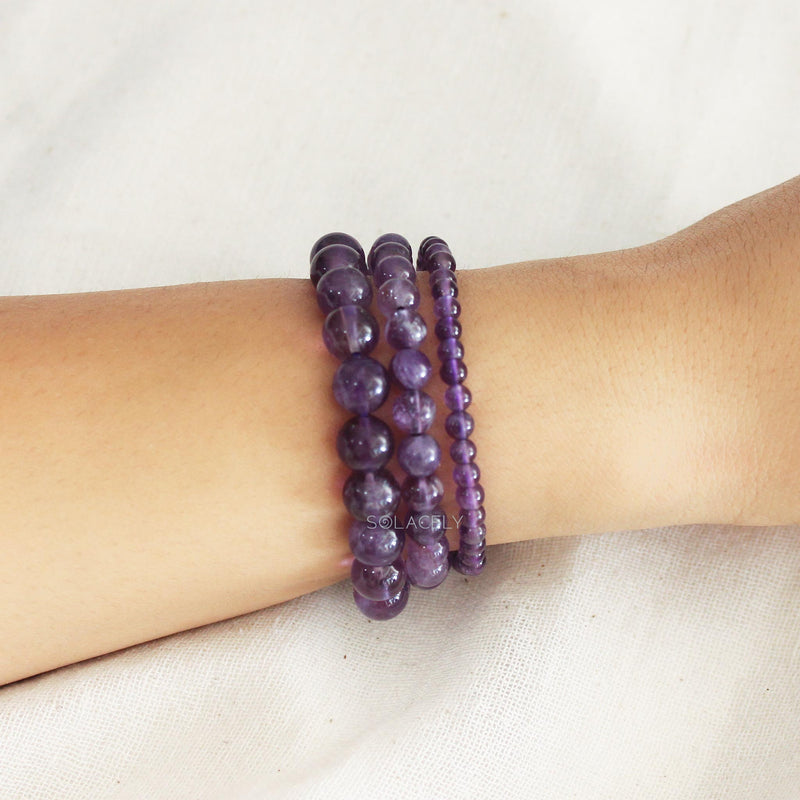
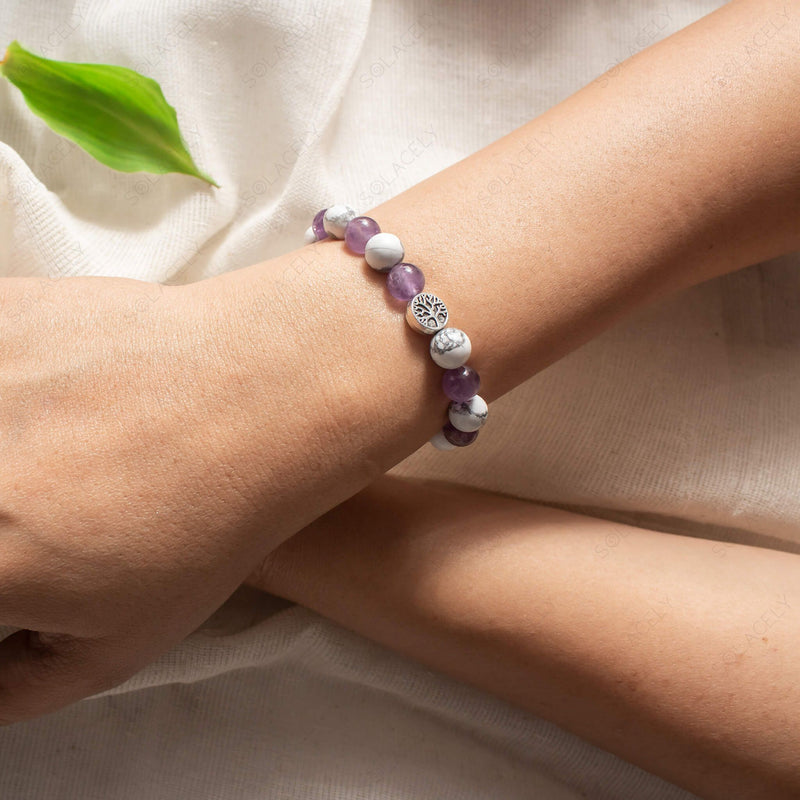
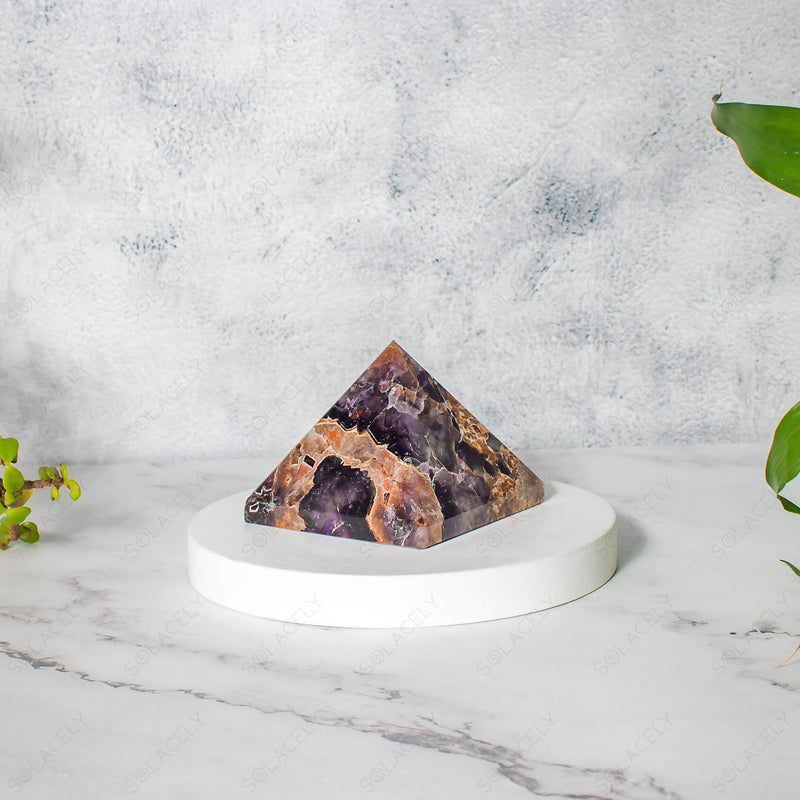
Amethyst is where most people begin, and there are good practical reasons beyond the tradition. It is affordable, widely available, durable at 7 on the Mohs scale, and traditionally tied to the crown, the centre associated with perspective and connection.
The ritual attached to it is the simplest of the six. Hold it, take five slow breaths, and let the stone mark the beginning and the end of the sitting. That is the entire practice, and its smallness is exactly why it survives busy weeks.
Clear quartz is the neutral partner. It carries no narrow association beyond clarity, which is what makes it useful as the stone a practice is built around: it never competes with whatever intention you bring. Geology.com describes quartz as one of the most abundant minerals on Earth, which is why it is also the cheapest way in. The clear quartz guide covers it further.
Selenite and angelite
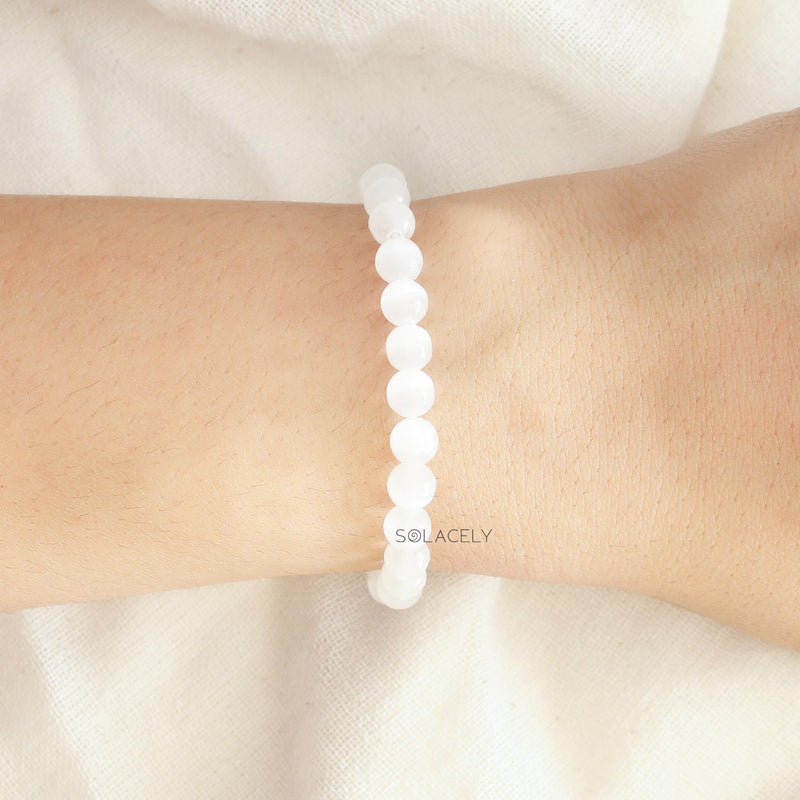
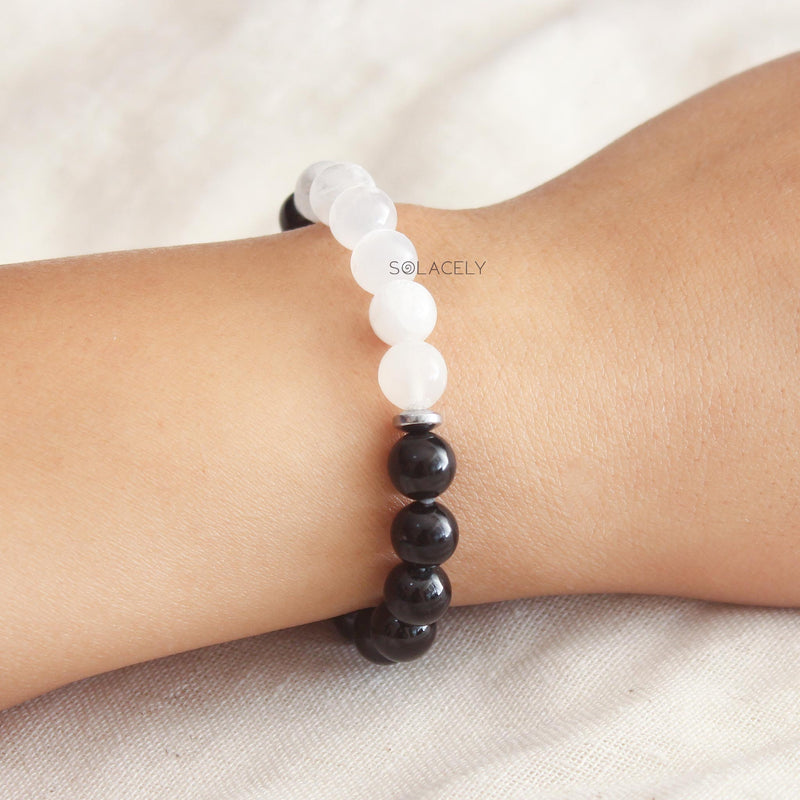
Selenite is the clearing stone, kept for resetting a space before you sit in it. Its pale translucence and long association with light have made it the traditional choice, and the usual ritual is simply passing it around the edges of the room or the shelf where you practise.
It comes with one firm rule. Selenite is a variety of gypsum, which is water soluble, so it must never be rinsed, soaked, or kept anywhere humid. A rinse dulls the satin finish and repeated wetting will pit it. Dust it dry with a soft brush and it will last indefinitely. The selenite guide covers this in detail.
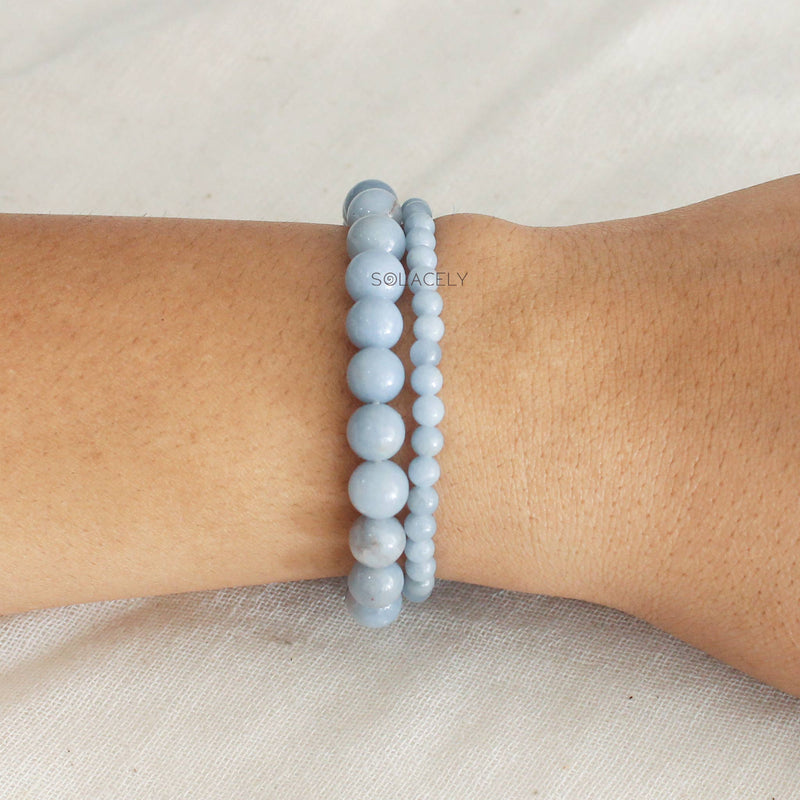
Angelite is the gentlest of the six, a soft pale blue stone traditionally kept for reassurance and for the sense of being accompanied. It suits people who find amethyst a little formal, and the ritual attached to it is usually holding it while saying whatever is on your mind, out loud or otherwise.
Lapis lazuli and labradorite
Lapis lazuli is the oldest stone in this group by a wide margin, mined in Afghanistan for thousands of years and ground into the ultramarine pigment used in medieval manuscripts. Its deep blue flecked with golden pyrite is unmistakable, and it is traditionally kept for truth and inner vision.
It is soft, around 5 to 5.5 on the Mohs scale, and porous, so keep it away from chemicals and never soak it. A pendant suits it far better than a ring. The lapis lazuli guide covers the dyeing question worth asking about.
Labradorite closes the group. Its flashing sheen, an effect called labradorescence, appears only at certain angles, which is why the stone looks plain until it moves. It is kept for perception, and the ritual is simply turning it slowly in the light while you settle.
One ritual for each stone
| Stone | Traditionally kept for | The five minute ritual |
|---|---|---|
| Amethyst | Perspective, the crown | Hold it, five slow breaths, begin and end with it |
| Clear quartz | Clarity, a neutral anchor | Placed in front of you as the focal point |
| Selenite | Clearing a space | Passed around the edges of the room before sitting |
| Angelite | Reassurance, company | Held while you say what is on your mind |
| Lapis lazuli | Truth, inner vision | Kept where you write things down |
| Labradorite | Perception | Turned slowly in the light as you settle |
Pick the row that sounds most like what you are actually looking for. That is a better basis for choosing than working through the list in order.
Building a practice that lasts
The practices that survive are the small ones, and the ones that fail are almost always too ambitious at the start. Five minutes daily beats forty minutes attempted once a fortnight, and a stone kept somewhere you already pass beats one stored carefully in a drawer.
- Same place each time. Consistency of setting does a surprising amount of the work.
- Attach it to something existing. Before the first coffee, or after the laptop closes.
- Keep the stone visible. An object you cannot see cannot function as a prompt.
- Do not add stones during a difficult stretch. Buying more is a very effective way of avoiding the practice.
If a whole chakra centre rather than a single stone is what interests you, crystals for the crown chakra covers that system in more depth.
Caring for the six
Amethyst, clear quartz, labradorite and angelite all take warm water, mild soap, a soft cloth and a full dry. Amethyst wants keeping out of long strong sun, which softens the purple over months.
Selenite and lapis lazuli are the two to be careful with. Selenite must stay entirely dry. Lapis is porous, so keep it away from perfume, cosmetics and household cleaners, and wipe rather than soak it. Neither belongs in an ultrasonic cleaner, and nor does labradorite.
For energetic cleansing, moonlight or sound suit all six and are the gentlest options physically as well. Skip salt water for the group, which is unkind to the softer stones. Storage matters more than usual here, since selenite at 2 on the Mohs scale will be marked by essentially everything else you own.
The properties described here reflect traditional and cultural belief around crystals. They are offered for reflection and wellbeing and are not medical advice, a diagnosis, or a treatment for any condition, nor are they a substitute for spiritual or pastoral guidance from your own tradition. If you are managing a health or mental health concern, please speak with a qualified practitioner. Keep small stones away from young children, and never place crystals in drinking water.
Sources
Written by Chetena Sharma. Reviewed by the Solacely editorial team.
Frequently asked questions
About the author


Written by Chetna Sharma, crystal healing practitioner and co-founder of Solacely. Chetna has worked with healing crystals for over a decade and curates Solacely's protective stone collection.