Amethyst, moonstone and lapis lazuli are the stones most often kept beside the bed for dream work. The tradition is simple: a stone on the nightstand, a few quiet minutes before lights out, and a notebook within reach for whatever you remember in the morning. This guide covers which stones people reach for and where to put them.
Key takeaways
- Amethyst is the classic bedside stone for dream work, traditionally kept under a pillow or on a nightstand.
- Moonstone is long associated with intuition and the lunar cycle, which is why it turns up so often in evening rituals.
- Lapis lazuli is reached for by people who want to reflect on a dream afterwards, not only enjoy it while it lasts.
- A short wind down and a dream journal do the heavy lifting for recall, and the stone is the cue that starts the routine.
- Amethyst fades in prolonged sunlight, so a shaded bedside spot suits it far better than a sunny windowsill.
- Keep small tumbles, chips and beaded bracelets well away from babies and young children.
Which crystals are traditionally kept for dreams?
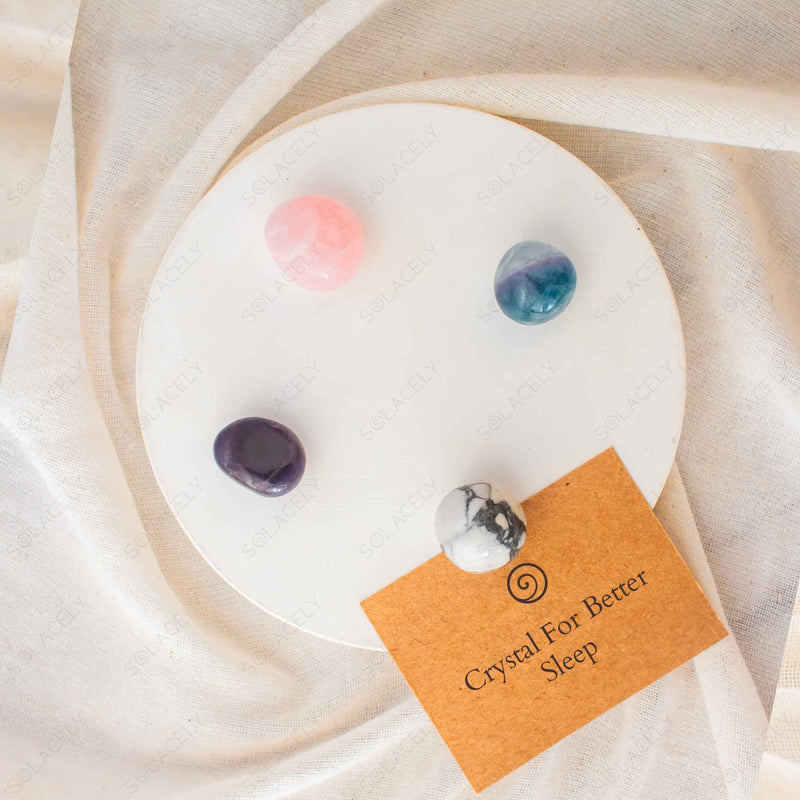
The stones most often kept for dream work are amethyst, moonstone, lapis lazuli, clear quartz and black tourmaline. Each carries a slightly different reputation: calm, intuition, reflection, clarity and a settled feeling at the end of the day. Most people start with one, then add a second once the evening routine has stuck.
There is no correct number. A single tumble on the nightstand is a complete practice. If you like the ritual and want to build on it, the table below is the usual order people work through, and the placements are the ones passed around in crystal circles for years.
| Stone | Traditionally kept for | Usual placement |
|---|---|---|
| Amethyst | Calm at the end of the day, clearer dream recall | Under the pillow or on the nightstand |
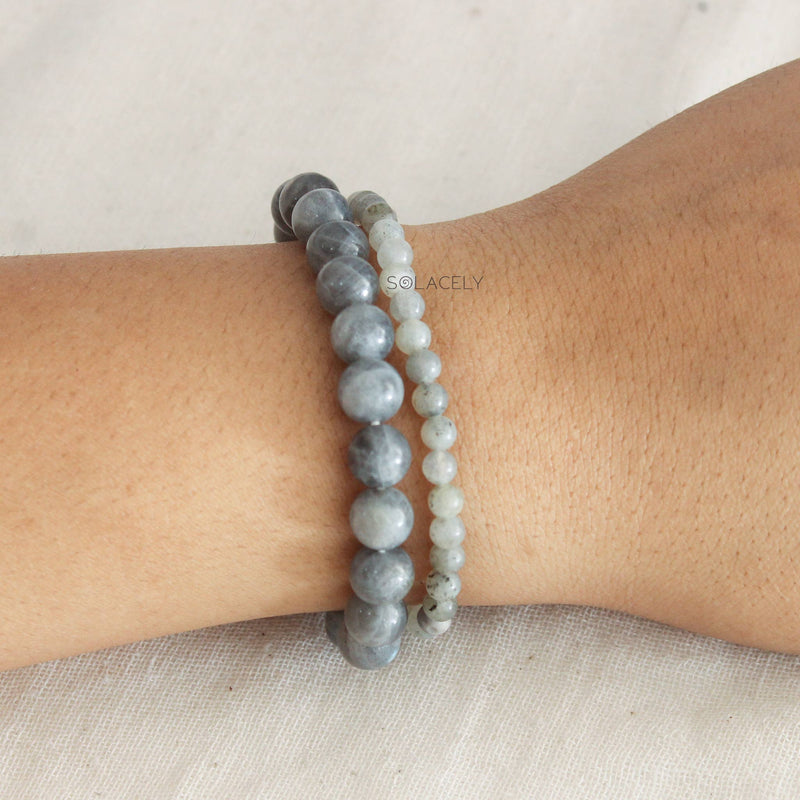
| Moonstone | Intuition, working with the lunar cycle | Nightstand, or worn as a bracelet in the evening |
| Lapis lazuli | Reflection, making sense of what you remember | Beside the dream journal |
| Clear quartz | Focus, holding an intention through the night | Paired with another stone on the nightstand |
| Black tourmaline | A grounded, settled feeling at bedtime | On the floor near the bed or on a low shelf |
Amethyst, the classic bedside stone
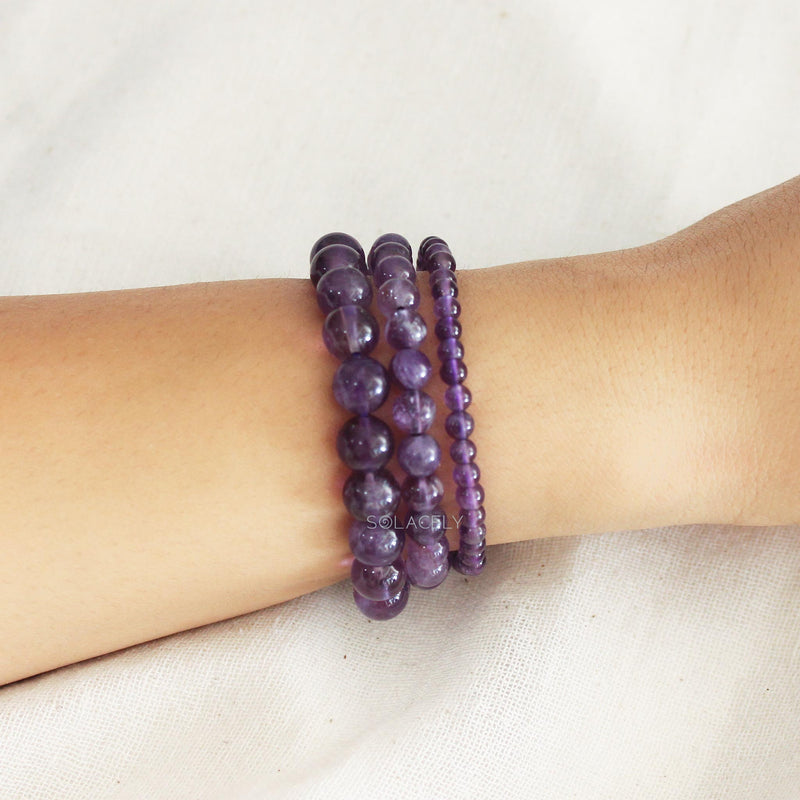
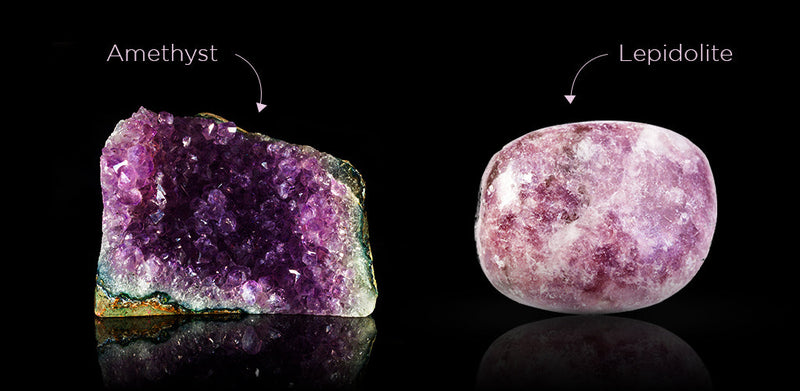
Amethyst is the purple variety of quartz, and gemmological grading places it at 7 on the Mohs scale, hard enough to sit on a nightstand for years without picking up scratches. It has been kept beside the bed for centuries, and it is still the first stone most people are pointed towards when they ask about dreams.
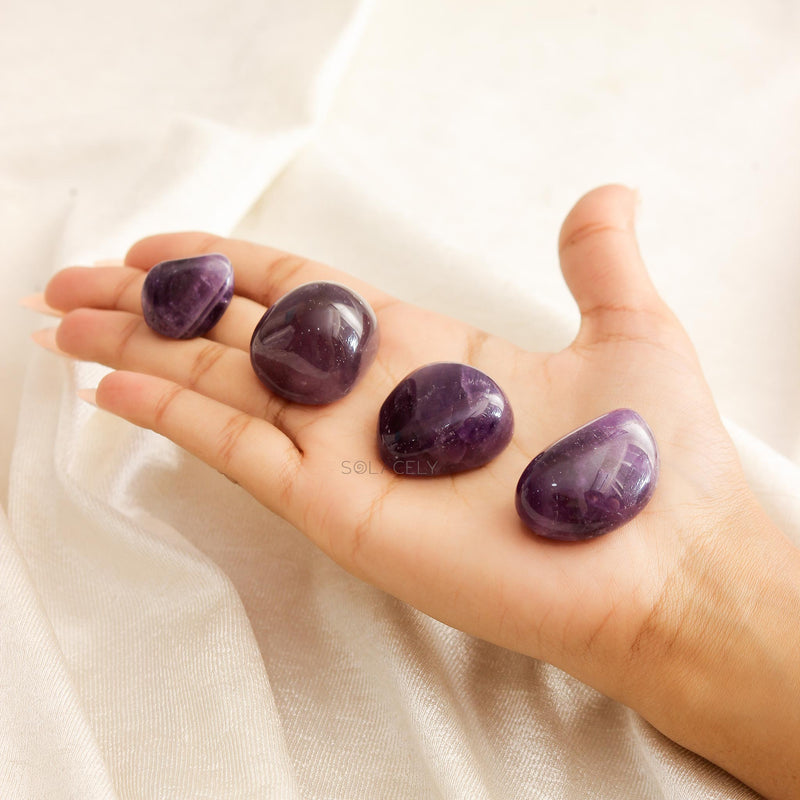
The colour range runs from a pale lilac to a deep grape purple, sometimes with paler zoning through the crystal. Choose the shade you actually want to look at last thing at night, because that is the whole point of a bedside stone: it should catch your eye and remind you to slow down. A tumble, a small sphere or a beaded bracelet all work equally well.
Traditionally, amethyst is held for a moment before sleep, then placed under the pillow or on the nightstand. If you would rather not have a stone under the pillowcase, the nightstand is the more practical choice and the one most people settle on. Our fuller guide to amethyst meaning and properties covers its wider uses, and the crystals people keep for sleep overlap heavily with the dream list.
Moonstone and lapis lazuli for the intuitive side
Moonstone is a feldspar with a soft internal glow that gemmologists call adularescence, the milky light that appears to drift across the surface as you turn the stone. That moving light is why moonstone became tied to the moon, to intuition, and to the part of dreaming people describe as knowing something rather than watching it.
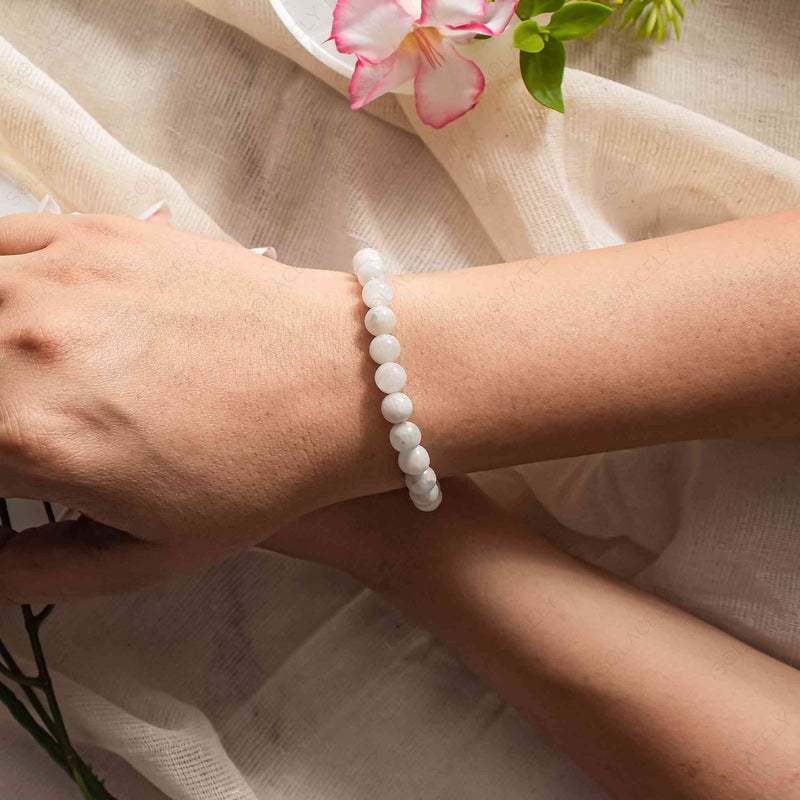
Rainbow moonstone shows flashes of blue over a translucent white body and is the variety most people picture. It sits around 6 to 6.5 on the Mohs scale, softer than amethyst, so it is happier on a nightstand than rattling loose in a pocket. Many people wear it through the evening and set it down beside the bed at the end of the night. Our moonstone guide goes further into the varieties.
Lapis lazuli plays a different role. It is a deep blue rock rather than a single mineral, flecked with golden pyrite and pale calcite, and it is long associated with reflection, study and honest self-examination. People keep it beside the dream journal rather than under the pillow, because its traditional job starts in the morning when you sit down to work out what a dream was about. If that side appeals, the lapis lazuli guide is the natural next read.
An evening ritual that takes five minutes
An evening crystal ritual works best when it is short enough to repeat every single night. Five minutes is plenty. Put the phone down, hold your stone, set one clear intention for what you would like to notice in your dreams, then place the stone where it lives and turn the light off. Consistency matters more than length.
- Set the scene. Dim the lights and put the screens away. The stone marks the boundary between the day and the night.
- Hold the stone. A minute in your hands is enough. Some people notice a warmth or a settling; others simply enjoy the weight of it.
- Say the intention. One sentence, spoken or silent. "I would like to remember my dreams tonight" is a perfectly good one.
- Place it. Nightstand, under the pillow or on a low shelf. Keep it in the same place each night so the habit builds.
- Leave the journal open. A notebook and pen already open on the nightstand removes the last excuse not to write in the morning.
If you already sit for a few minutes in the evening, the stone slots straight into that. Our notes on crystals for meditation cover holding positions and breathing patterns that carry over well to a bedtime practice.
Dream recall and lucid dreaming as a practice
Dream recall is a skill, and it responds to attention. The people who remember the most keep a notebook or a phone note within arm's reach and write down the first fragment before they move or check the time. Lucid dreaming, where you become aware inside the dream that you are dreaming, is approached with the same patience.
The traditional method is unglamorous and it works for a lot of people. Write something every morning, even if it is one image or a single word. Recall tends to build over a couple of weeks because you are training yourself to treat the first moments after waking as worth paying attention to.
For lucidity, practitioners add awareness checks through the day: pausing to ask whether you are dreaming, looking at your hands, reading a line of text twice. The habit eventually carries into a dream. A stone on the nightstand fits this neatly, because it is a physical marker for the intention you set the night before, and something to notice again the moment you open your eyes.
Keep the journal plain. Date, a few lines, any strong feeling attached to it. Patterns emerge over months, which is where lapis lazuli earns its place beside the notebook for people who like to go back and reread.
How to care for crystals kept by the bed
Bedside crystals need very little, but a few habits keep them looking their best. Amethyst fades in prolonged sunlight, so keep it away from a sunny windowsill and give it moonlight instead. Moonstone and lapis lazuli are softer than quartz, so store them where they will not knock against harder beads.
For cleansing, moonlight on a windowsill overnight is the gentlest option and suits every stone on this list. Sound from a singing bowl and a pass through incense smoke are the other two most people use. A quick rinse under cool water is fine for amethyst and clear quartz, but keep lapis lazuli out of long soaks, since it is a rock with several minerals in it and prolonged water does the surface no favours.
A few practical points worth keeping in mind:
- Never put stones in drinking water or a water bottle.
- Keep amethyst and other purple quartz out of prolonged direct sun so the colour stays strong.
- Store softer stones separately, or in a soft pouch, rather than loose in a bowl with quartz.
- Small tumbles, chips and beaded bracelets are a choking and strangulation risk, so keep them out of reach of babies and young children.
- If a bracelet is what you want on the nightstand, take it off before sleeping rather than wearing it in bed.
Crystals are kept as part of a personal ritual and are not a treatment for any medical condition. If your sleep is a persistent concern, please speak to your doctor or another qualified health professional, and carry on with any care that has already been arranged for you. Keep stones out of drinking water, and keep small tumbles, chips and beaded jewellery away from babies and young children, for whom they are a choking and strangulation risk.
Sources
Written by Chetena Sharma. Reviewed by the Solacely editorial team.
Frequently asked questions
About the author


Written by Chetna Sharma, crystal healing practitioner and co-founder of Solacely. Chetna has worked with healing crystals for over a decade and curates Solacely's protective stone collection.