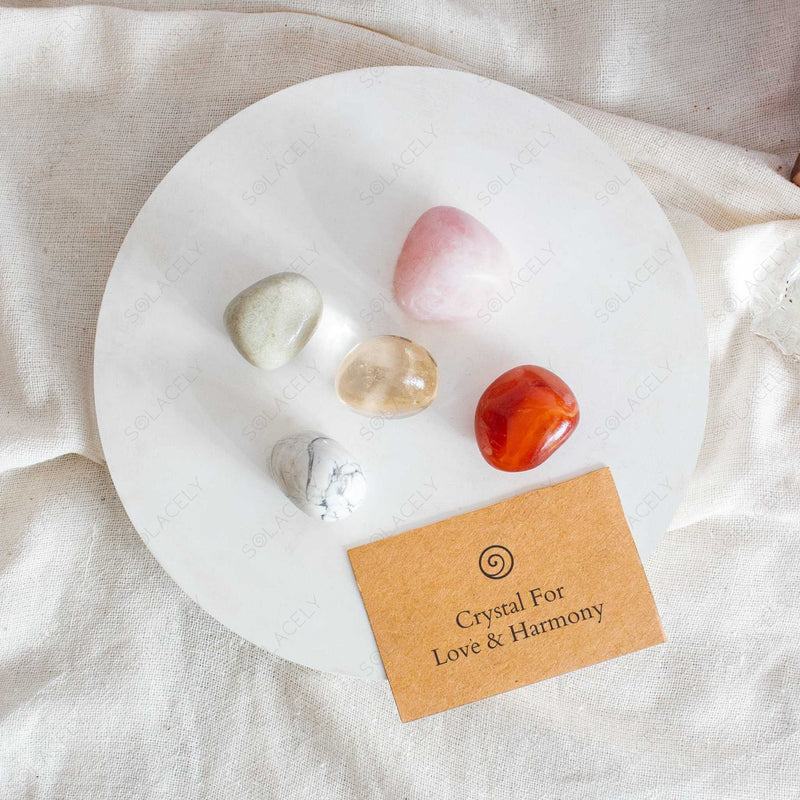
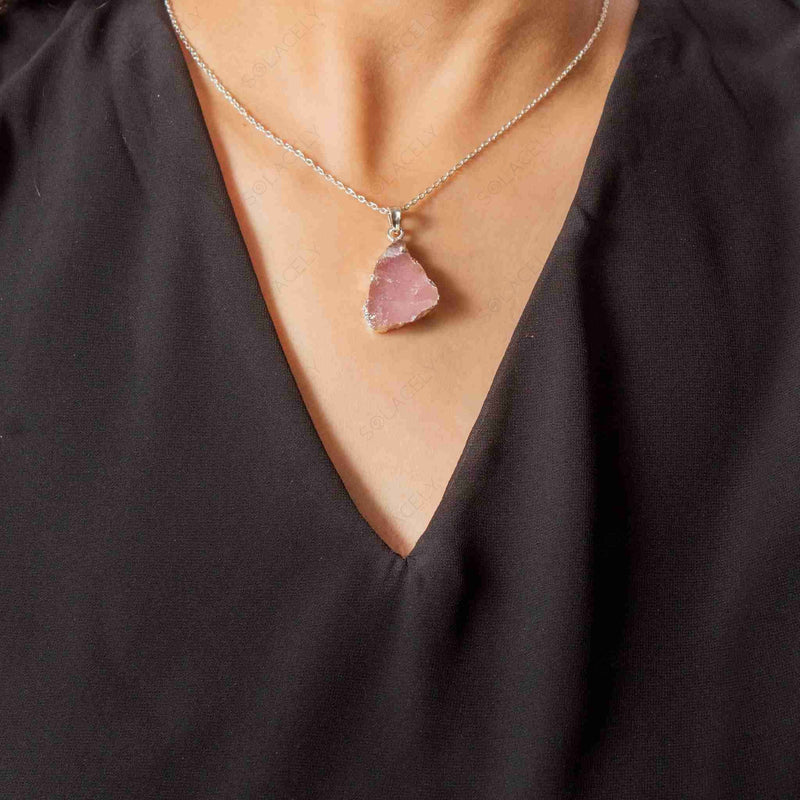
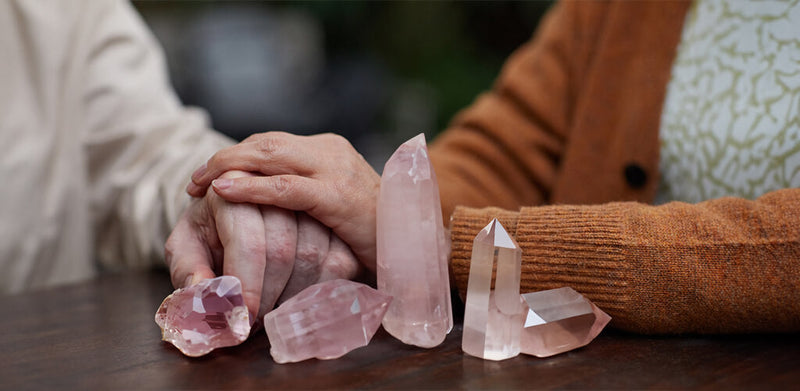
Rose quartz, garnet, rhodonite, and rhodochrosite are the stones kept for romance. In crystal tradition each carries a different shade of the same theme: rose quartz for tenderness, garnet for warmth and passion, rhodonite for repair after a hard conversation, rhodochrosite for affection given freely. This guide is for the relationship you are already in, and for choosing the one stone that fits where you actually are.
Key Takeaways
- Rose quartz, garnet, rhodonite, and rhodochrosite are the four stones this tradition centres on.
- This guide is for an existing or developing relationship. See our love hub for attracting a partner, and our self-love guide for turning it inward.
- Word your intention around how you want to show up, which is the part you can act on daily.
- Rose quartz and garnet are hard enough to wear. Rhodonite and rhodochrosite are softer and belong on a shelf.
- Keep rose quartz out of direct sunlight, which softens its pink over time.
The four stones of romance
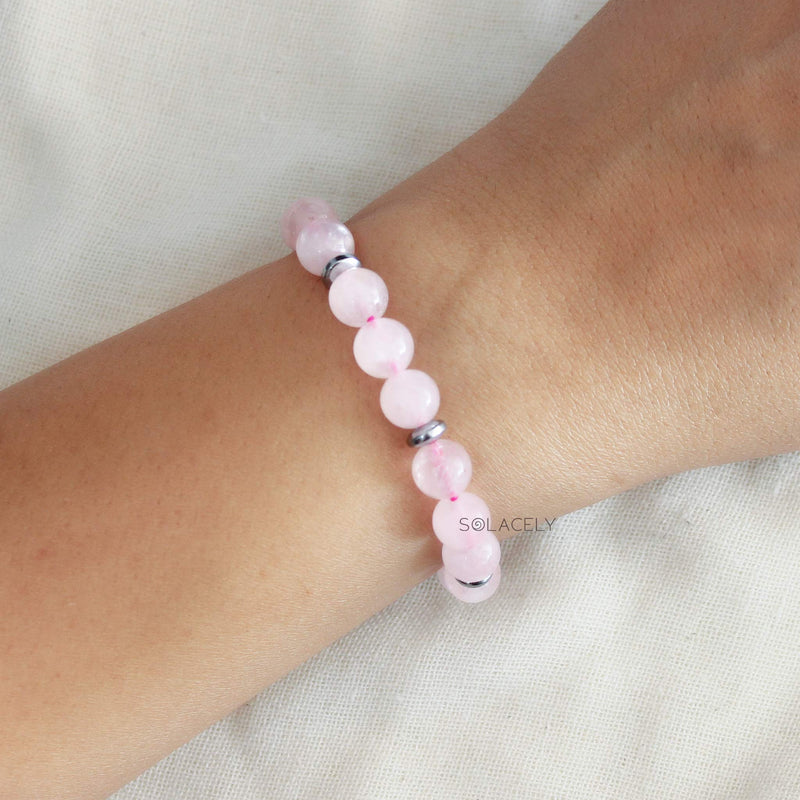
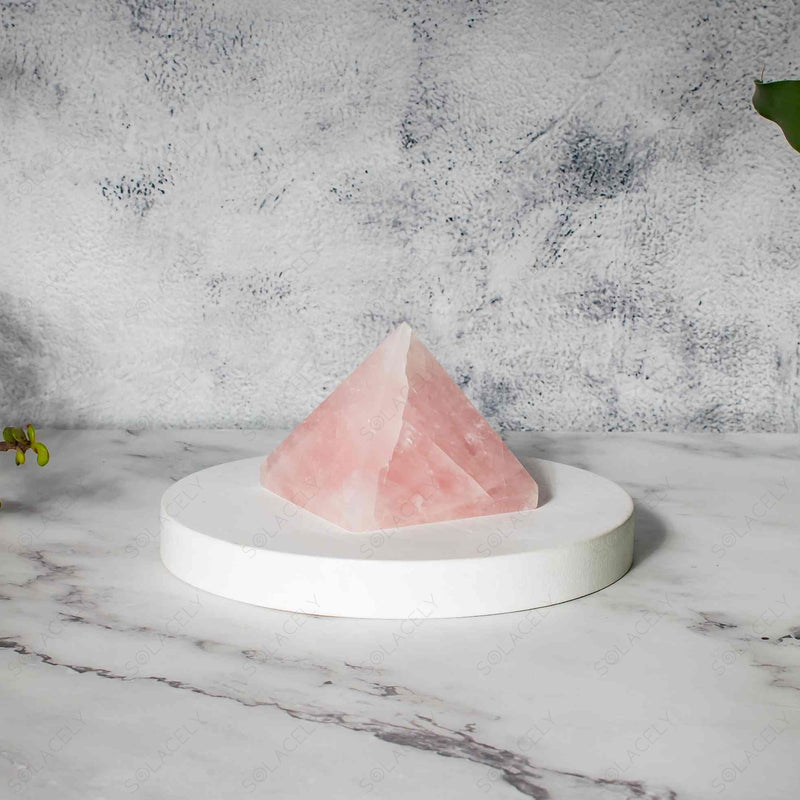
Four stones do most of the work in this tradition, and they are not interchangeable, which is the useful part. Rose quartz, the pink variety of quartz, is the one nearly everyone starts with, long associated with gentleness and an open heart. Garnet is the deep red stone of warmth, vitality, and passion, which is why it has turned up in anniversary jewellery for generations.
Rhodonite, pink and veined with black manganese oxide, is traditionally the stone of repair, kept for when something needs mending rather than kindling. Rhodochrosite, banded in pink and white, belongs to affection given without keeping score.
Choosing between them is the real value of the tradition, because it makes you name what the relationship actually needs right now. Tenderness, warmth, repair, or generosity. That is a genuinely useful question to sit with, whichever stone you end up holding.
Which guide you actually want
We have a few posts in this area, and they answer different questions, so it is worth pointing you at the right one. This post is about an existing or developing romantic relationship: the partner you have, or the person you are seeing.
If you are hoping to meet someone, our hub on crystals to attract love covers that intention properly. If the pull is toward passion and physical connection, crystals that attract love and passion is the closer fit.
And if what you need first is to feel better about yourself, crystals for anxiety and self-love is the place to start. Rose quartz appears in all of these, which tells you something worth knowing: the intention you set shapes the practice more than the mineral does.
Matching the stone to the moment
The table below is the practical version: what people reach for, and when.
| Stone | Traditionally kept for | Hardness |
|---|---|---|
| Rose quartz | Tenderness, patience, an open heart | 7 |
| Garnet | Warmth, vitality, passion | 6.5 to 7.5 |
| Rhodonite | Repair, forgiveness after a hard week | 5.5 to 6.5 |
| Rhodochrosite | Affection given generously | 3.5 to 4 |
| Green aventurine | Ease in a new connection | 7 |
Pick one rather than all five. A single stone tied to a single clear intention is easier to remember and far more likely to be used. For the full profile of the most popular choice, see rose quartz meaning and properties.
Setting the intention
This is where a love stone earns its place, and the wording makes all the difference. Point the intention at how you want to show up rather than at what you want to happen.
So: be more patient this week. Listen properly before answering. Apologise sooner. Ask a better question at dinner than how was your day. Those are things you can carry out tomorrow, and a stone on the bedside table is a reminder of them at exactly the moment it is relevant.
Pairing that with a pause and a slow breath is worth having in its own right. The U.S. National Center for Complementary and Integrative Health notes that mindfulness practices can help many people manage stress and respond less reactively. In a relationship, responding less reactively is most of the game.
Where to keep it
Somewhere tied to the relationship rather than somewhere symbolic. A bedside table works because you see it at the two moments most likely to matter, the end of one day and the start of the next. A shared living space works if you want it to belong to both of you.
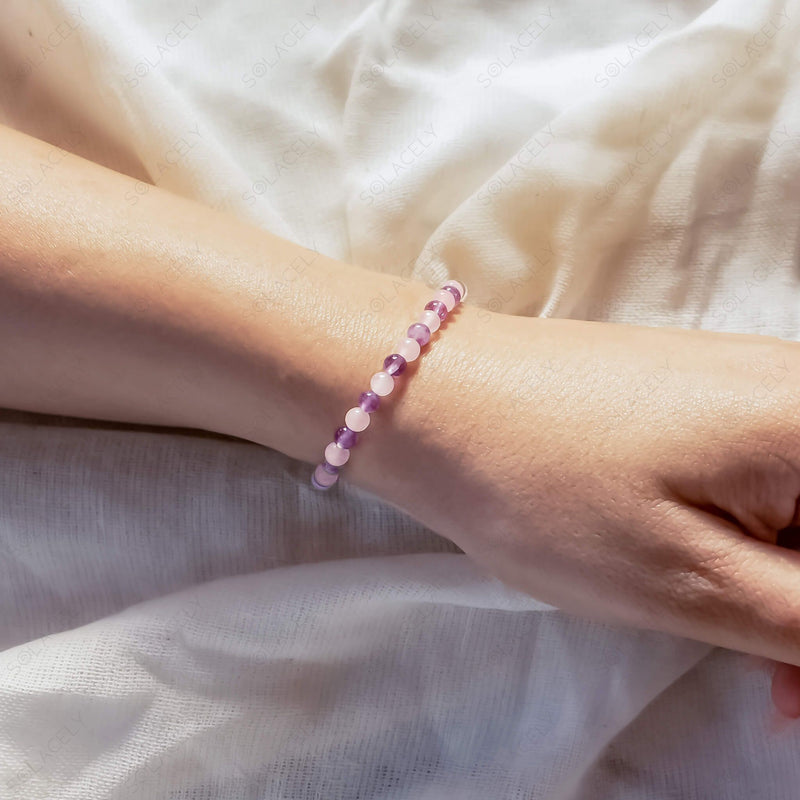
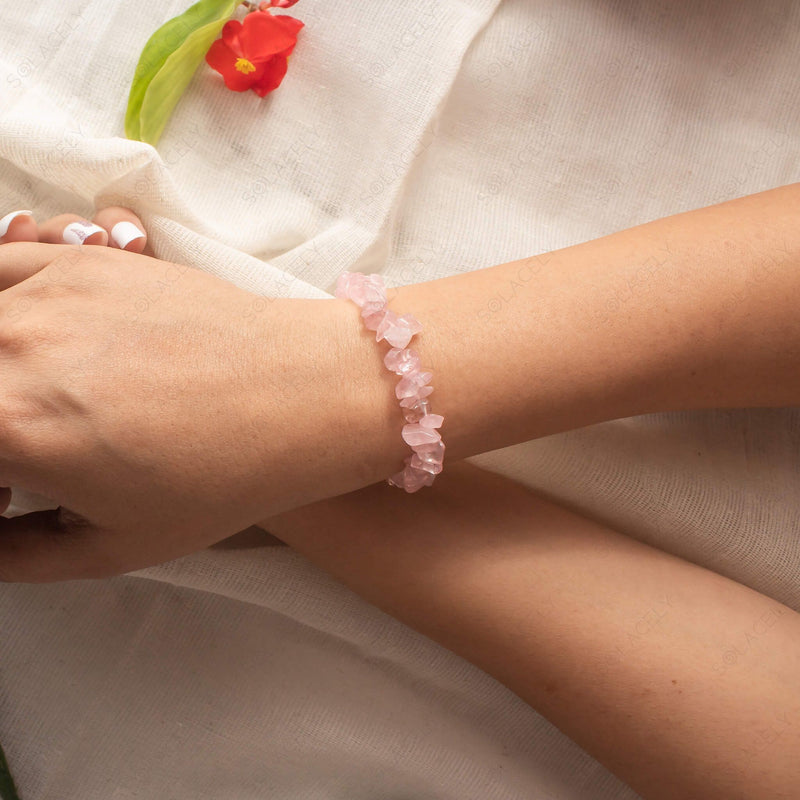
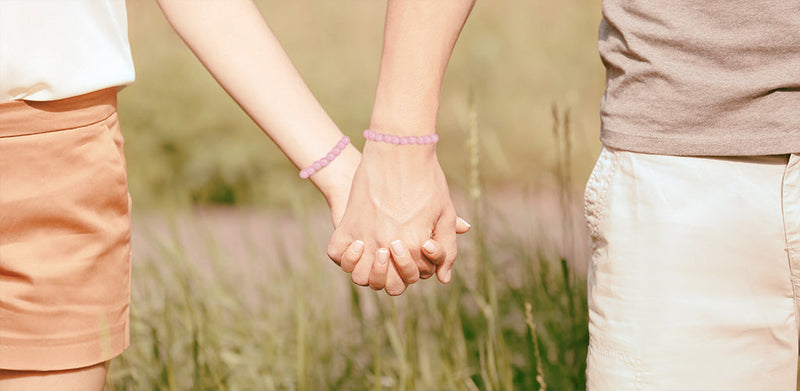
Some couples keep a matching stone each, which is less about the mineral than about having a shared object through whatever you are navigating. Others wear a bracelet, so the reminder travels through the day.
One practical note: keep rose quartz out of a sunny window. Prolonged strong light softens its pink over time, so bright indirect light is the better spot. Quartz sits at 7 on the Mohs hardness scale, as Encyclopaedia Britannica notes, so it handles everything else a day involves.
Caring for romance crystals
Hardness decides most of it. Rose quartz and garnet at around 7 handle daily wear and a wash in warm soapy water with a soft brush. Garnet, described by Encyclopaedia Britannica as a group of silicate minerals, is durable enough for a ring.
Rhodonite is softer and will scuff over time, so give it a pouch of its own rather than letting it knock about with harder stones. Rhodochrosite at 3.5 to 4 is genuinely delicate, scratches easily, and should not be soaked, so it makes a beautiful display or bedside piece rather than a carry stone.
If you also cleanse stones in the spiritual sense, gentle methods suit all four. Our step-by-step on how to cleanse and charge crystals covers which methods suit which material, and which to skip for the softer pieces.
Sources
- Encyclopaedia Britannica - Quartz, mineral properties and Mohs hardness
- Encyclopaedia Britannica - Garnet, mineral group and properties
- National Center for Complementary and Integrative Health - Meditation and Mindfulness
Frequently asked questions
About the author


Written by Chetna Sharma, crystal healing practitioner and co-founder of Solacely. Chetna has worked with healing crystals for over a decade and curates Solacely's protective stone collection.