The best crystals for overthinking are calming stones: amethyst for a busy mind, howlite for stilling racing thoughts, lepidolite for anxiety, sodalite for mental clarity, and blue lace agate for soothing worry. They do not switch off overthinking on their own. What they realistically do is act as a calming cue, a small ritual that helps you pause, breathe, and step out of the loop, understood as gentle self-care, not a treatment for anxiety.
Key Takeaways
- The top crystals for overthinking are amethyst (calm), howlite (stills racing thoughts), lepidolite (eases anxiety), sodalite (clarity), and blue lace agate (soothes worry).
- The honest benefit is a calming cue: holding a stone while you breathe slowly helps you pause and step out of a thought loop, not a switch-off for overthinking.
- Use them by holding one during slow breathing, keeping one by your bed, or carrying one for anxious moments.
- They work best alongside real habits: slow breathing, a break from screens, and getting out of your head into your body.
- These are traditional, belief-based associations, not treatments; for persistent anxiety or rumination, see a professional.
Which crystals help with overthinking?
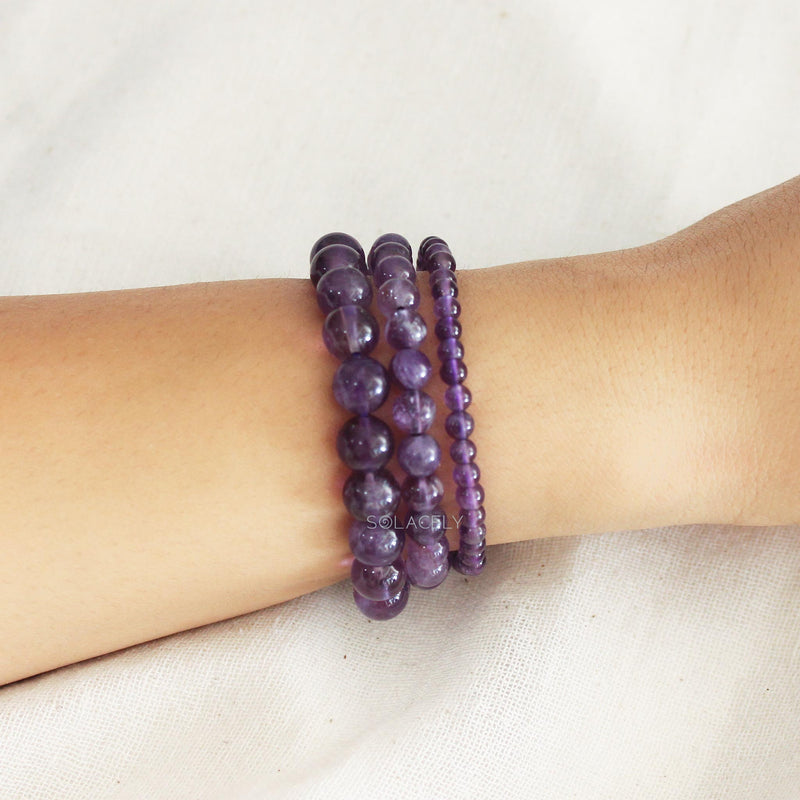
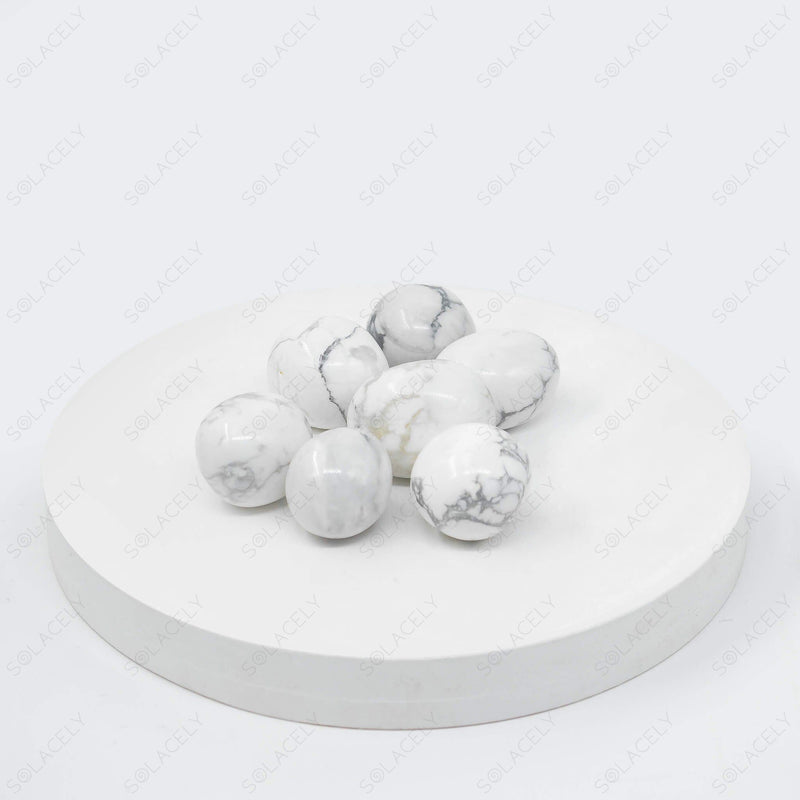
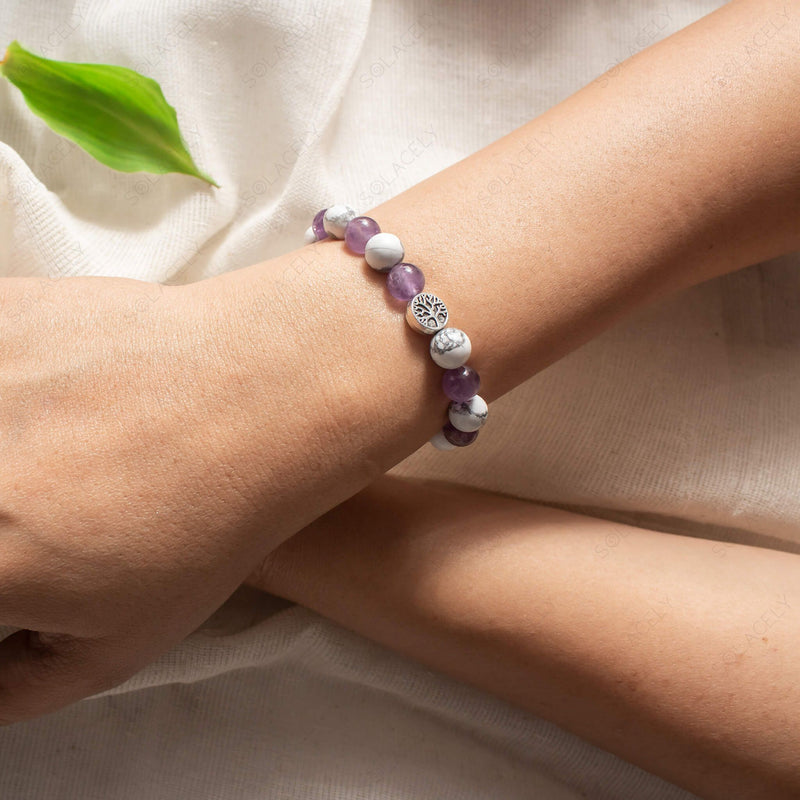
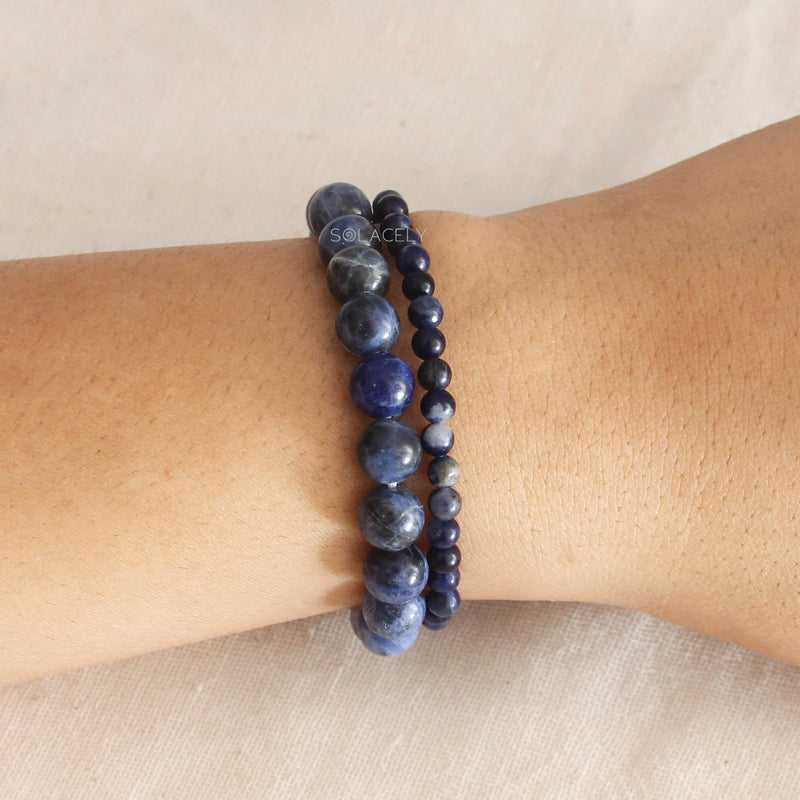
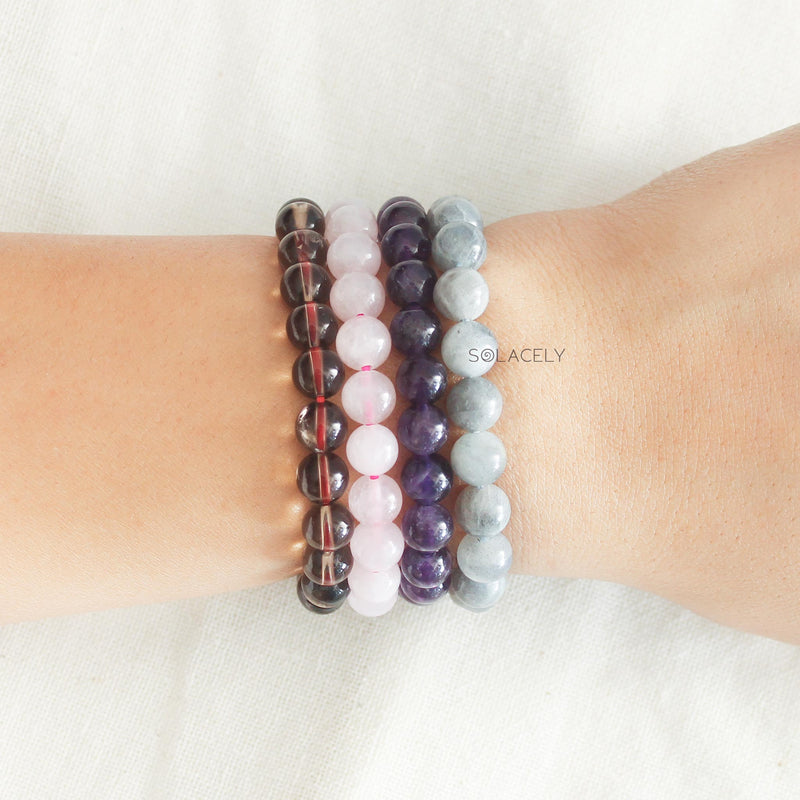
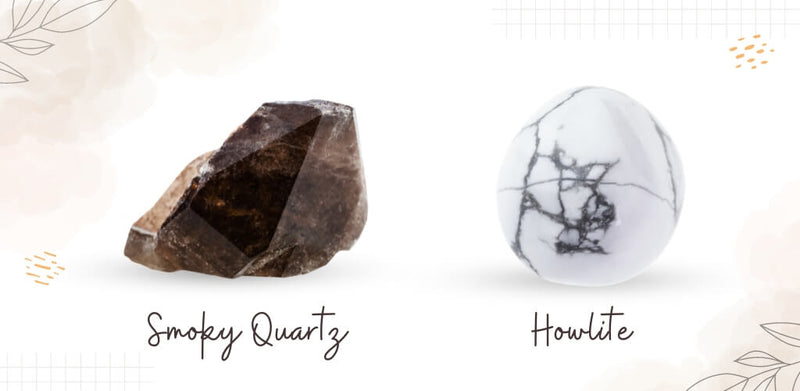
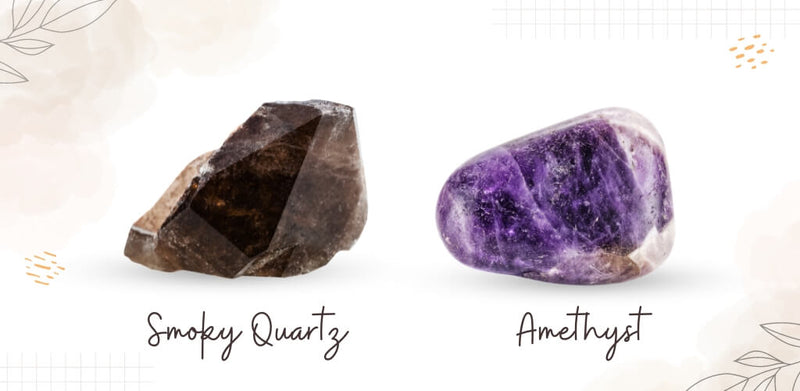
The crystals people use for overthinking are the calming, mind-quieting ones. Amethyst is the classic choice for a busy, anxious mind, howlite is prized for stilling racing thoughts, and lepidolite, which naturally contains traces of lithium, is a favourite for anxiety. Sodalite adds mental clarity when your thoughts feel tangled, and blue lace agate gently soothes worry.
Which one suits you depends on how your overthinking shows up. If your mind simply will not slow down, amethyst or howlite help; if you feel genuinely anxious, lepidolite is a gentle companion; if your thoughts are foggy and circular, sodalite brings clarity; and if you are worried and need soothing, blue lace agate calms. You can start with one and see what helps.
These calming stones overlap with the quiet-mind theme in our guide to smoky quartz and howlite, where howlite's mind-stilling quality is explored further, and the clarity in our note on green aventurine and sodalite. For the wider map of stones by intention, our guide to crystals for different purposes sorts them by goal.
The best crystals for overthinking, at a glance
Each stone soothes a slightly different flavour of overthinking, so match the stone to how your mind gets stuck. The table below sums up the top choices and what tradition assigns to each.
| Crystal | Traditional theme | Good when your mind |
|---|---|---|
| Amethyst | Calm, easing a busy mind | Simply will not slow down |
| Howlite | Stilling racing thoughts | Loops the same worries |
| Lepidolite | Emotional balance, easing anxiety | Feels genuinely anxious |
| Sodalite | Logic, mental clarity | Feels foggy and tangled |
| Blue lace agate | Soothing, gentle calm | Is worried and needs soothing |
You do not need all of them; one calming stone you actually reach for beats a drawer full you forget. Many people settle on amethyst or howlite as a bedside stone and keep a smaller one to carry for anxious moments away from home, so the calm is always within reach, whether the spiral starts at your desk, on your commute, or in the middle of the night.
How crystals help you stop overthinking
The honest mechanism is a pause and a cue, not a switch that turns off your thoughts. There is no scientific evidence that a crystal quiets the mind through its own energy. What a calming stone genuinely does is give you a physical anchor: when you notice you are spiralling, holding a smooth, cool stone and turning your attention to it interrupts the loop and pulls you back to the present.
That pause is where the real help lives. Holding a stone and breathing slowly is a small mindfulness practice, and the U.S. National Center for Complementary and Integrative Health notes that mindfulness can help many people manage stress and step back from repetitive, anxious thinking. Overthinking feeds on momentum, and a calm, deliberate pause is often what breaks it.
So a crystal for overthinking works like a circuit-breaker you can hold. It gives your racing mind something steady to land on, marks a moment to breathe instead of spiral, and reminds you that you can step out of the thought loop. The stone does not stop the thoughts; it helps you stop feeding them, which is genuinely useful.
How to use crystals for overthinking
Using calming crystals is simple, and the aim is to have a steady anchor ready when your mind starts to spiral. Keep a stone within reach, and pair it with slow breathing. Here are the common ways people use them.
- Hold it and breathe. When you notice overthinking, hold the stone, feel its weight and coolness, and take five slow breaths.
- Keep one by your bed. For a mind that races at night, an amethyst or howlite on the nightstand is a calming wind-down cue.
- Carry one for anxious moments. A tumbled lepidolite or blue lace agate in your pocket gives you something to reach for anywhere.
- Use it as a worry pause. Instead of reaching for your phone when anxious, hold the stone and return to your breath.
- Set a calm intention. Hold the stone and name a soothing line, such as 'I can let this thought pass.'
Whichever you choose, let the breath do the calming and the stone be the cue. The stone will not think for you; it helps you stop over-thinking by giving you a steady, present-moment anchor. For a cooling approach when overthinking runs hot with frustration, our guide to smoky quartz and larimar is a gentle companion.
A simple calming practice for a racing mind
A good practice for overthinking is short and easy to reach for, since the whole point is to interrupt a spiral quickly. Do it the moment you notice your mind looping. Here is a simple sequence to build around.
- Notice. Catch yourself overthinking, and pick up your calming stone.
- Feel it. Hold the stone, feel its cool weight, and let your attention rest on it.
- Breathe. Take five slow breaths, letting each exhale be a little longer than the inhale.
- Name it. Gently label the loop, such as 'this is just worry,' which names the loop and loosens its grip.
- Redirect. Do one small physical thing, a walk, a stretch, a task, to get out of your head and into your body.
Repeat it whenever the loop returns, and be patient, since quieting an overactive mind is a skill that grows with practice. If your overthinking comes with tension in the body, pairing a calming stone with a grounding one helps, an approach we cover in our guide to smoky quartz and amethyst.
Choosing and caring for your calming crystals
Calming crystals are affordable and easy to find, so choose a piece whose colour and feel you like, since you will want to reach for it. A smooth tumbled or palm stone is ideal, because holding it is part of the calming, and it is easy to carry. Amethyst is a durable quartz stone, while lepidolite and blue lace agate are softer and need gentler care.
Caring for them varies by stone. According to the Gemological Institute of America, quartz rates 7 on the Mohs hardness scale, so amethyst handles daily handling and a wipe with a soft cloth. Howlite is soft and porous at about 3.5, lepidolite is soft and flaky at about 2.5 to 3, and blue lace agate is a hard chalcedony, so keep the softer stones from knocks and water and wipe them dry. Keep amethyst out of strong sunlight, which can fade it.
If you like to cleanse the stones, amethyst and blue lace agate tolerate gentle water, moonlight, or sound, while howlite and lepidolite are best cleansed with dry methods only, since they dislike water. Our step-by-step on how to cleanse and charge crystals covers which method suits which stone.
Common mistakes with calming crystals
A few slip-ups keep a calming stone from helping. Keep these in mind and it stays a genuinely useful anchor for an overactive mind.
- Expecting it to switch off thoughts. No stone can. It cues a pause; the calm comes from the breath and the deliberate redirect.
- Skipping the breathing. Holding the stone without slowing your breath does little. Let the breath do the work.
- Reaching for the phone instead. Scrolling feeds overthinking. Use the stone as your go-to anchor rather than a screen.
- Soaking soft stones. Howlite and lepidolite dislike water and are fragile, so keep them dry and handle them gently.
- Ignoring real anxiety. A calming ritual can ease everyday overthinking, but persistent anxiety or rumination deserves a professional, not a stone.
Sources
- Gemological Institute of America - Quartz description and varieties (amethyst): https://www.gia.edu/quartz
- Encyclopaedia Britannica - Quartz, mineral properties and Mohs hardness: https://www.britannica.com/science/quartz
- National Center for Complementary and Integrative Health (NIH) - Meditation and Mindfulness: What You Need To Know: https://www.nccih.nih.gov/health/meditation-and-mindfulness-what-you-need-to-know
Frequently asked questions
About the author


Written by Chetna Sharma, crystal healing practitioner and co-founder of Solacely. Chetna has worked with healing crystals for over a decade and curates Solacely's protective stone collection.