The crystals most kept for positivity are citrine for warmth, sunstone for optimism, green aventurine for hopefulness and rose quartz for kindness toward yourself. They are kept as daily reminders of a mood you are moving toward rather than as anything that changes the day for you.
Key takeaways
- Citrine, sunstone, green aventurine and rose quartz are the four stones most kept for a brighter mood.
- Citrine and sunstone are the warm, forward half; aventurine and rose quartz the gentler half.
- Sunstone's flash needs movement to show, so a worn piece does more than one in a drawer.
- Keep citrine and rose quartz out of long strong sun, which softens their colour over months.
- Persistent low mood is a medical matter, and a stone is company alongside proper care.
Warm stones and gentle stones
Positivity is not one thing, and the stones traditionally kept for it split into two groups that suit quite different moods. Knowing which half you need saves buying the wrong one.
The warm half is citrine and sunstone. Both are kept for brightness, optimism and coming back into things, which suits a flat stretch where the difficulty is finding any lift at all. They are forward stones and they are not soothing.
The gentle half is green aventurine and rose quartz. Aventurine is kept for hopefulness and the willingness to try, rose quartz for kindness toward yourself. Both suit a person who is not flat so much as being hard on themselves, where a bright stone would feel like pressure.
Citrine and sunstone for warmth
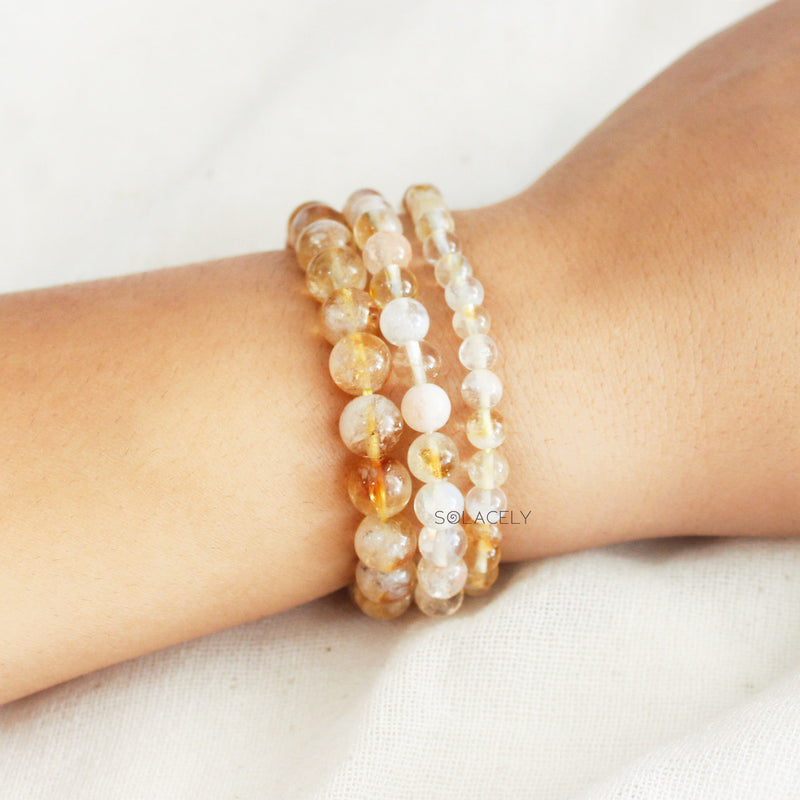
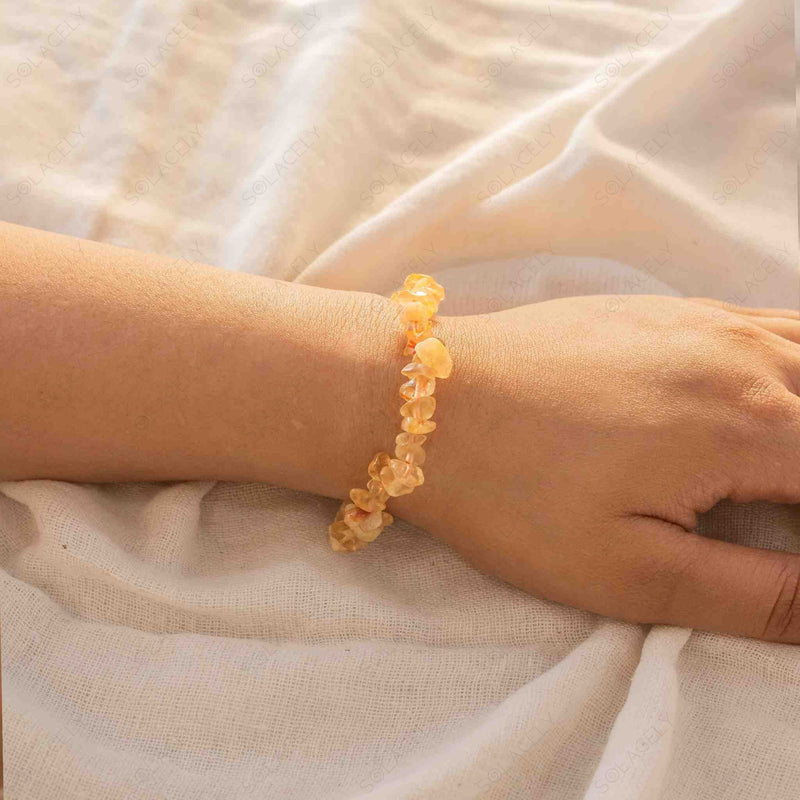
Citrine is the golden quartz, long kept for optimism, confidence and warmth. Its reputation is old and consistent, and in practice it is the stone people reach for when they want to feel more like themselves in a room rather than smaller than usual.
It is also one of the easiest stones to keep. At 7 on the Mohs scale it takes daily wear in a bracelet or pendant, and its only real care note is to stay out of long direct sunlight. The citrine guide covers it in full.
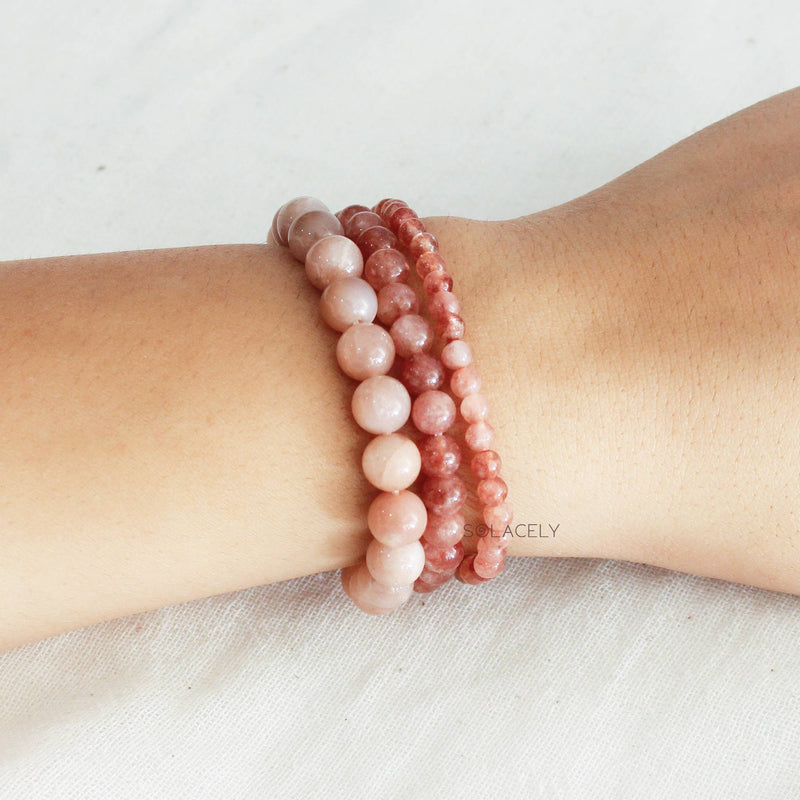
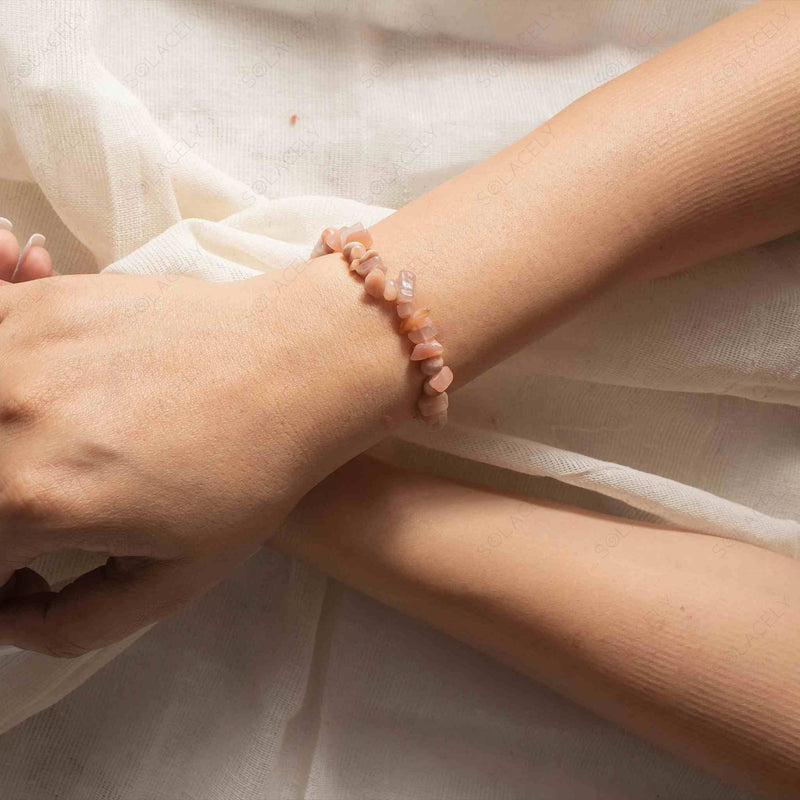
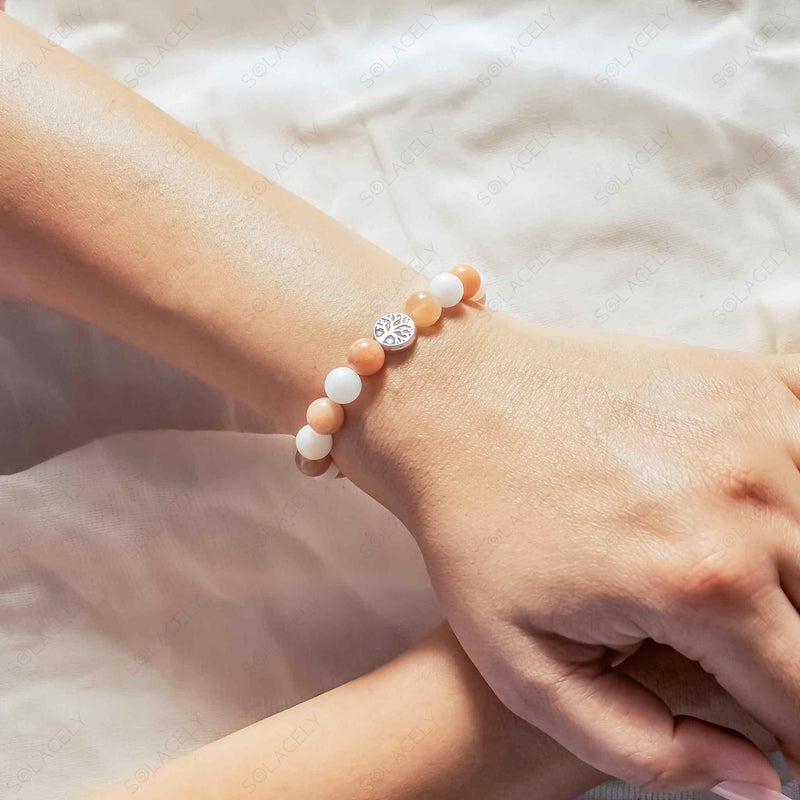
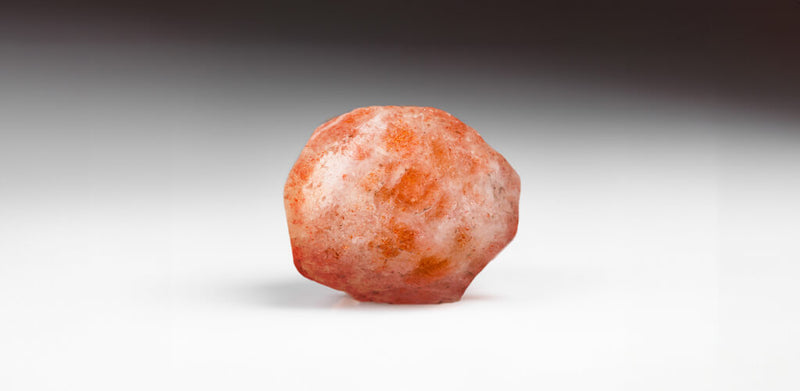
Sunstone is the other warm choice, and the more visually alive of the two. Its glittering orange flash, caused by tiny reflective platelets inside the feldspar, is the reason it has been linked to sunlight across many traditions. Because that flash depends on movement, a sunstone bracelet does far more than a piece sitting still.
Green aventurine and rose quartz for the gentler version
Green aventurine is traditionally the stone of chance and hopefulness, kept for the point where somebody is ready to attempt something without being sure of it. It is a quartz with fine mica inclusions that give it a soft glitter, durable and inexpensive, and it suits being carried.
Rose quartz is the softest of the four and the one that suits self-criticism rather than flatness. Its association is with compassion turned inward, which is often the actual missing ingredient when somebody says they want to feel more positive.
Both are gentler in tone than the warm pair, and both are easy to live with. If the difficulty is specifically being unkind to yourself rather than lacking energy, this half of the set is the better place to start.
Choosing between the four
| How you actually feel | Stone | How it is kept |
|---|---|---|
| Flat, grey, low energy | Sunstone | Worn, where the flash catches your eye |
| Small in a room, unconfident | Citrine | Bracelet, or kept where you work |
| Hesitant about trying something | Green aventurine | Pocket stone, carried on the day |
| Hard on yourself | Rose quartz | Palm stone where you get ready |
| Unable to switch off | Amethyst | Bedside, marking the end of the day |
One or two is genuinely enough. A bowl of bright stones tends to become scenery, and the whole value of the practice is that a single chosen object still means something when you pick it up.
What a daily practice can offer
The useful part is repetition. A stone kept somewhere you pass every morning becomes a small, reliable prompt toward the mood you are aiming at, and prompts you actually encounter beat intentions held only in your head.
Attaching it to something you already do is what makes it stick. Putting a bracelet on before anything else, holding a stone for three slow breaths before opening the laptop, or simply keeping a piece by the kettle are all small enough to survive a bad week.
What genuinely lifts a mood alongside that is unglamorous and well established: daylight, movement, sleep, and time with people who are easy to be around. A stone by a window is a decent nudge toward the first of those. For the wider set, crystals for good vibes covers what else people keep.
Where care comes in
This is worth stating plainly and warmly. If low mood has lasted more than a couple of weeks, if it is affecting your sleep, appetite, work or relationships, or if it feels heavier than a flat patch, that is worth taking to a GP.
Depression and anxiety are common, they are treatable, and talking therapies and support from a doctor are what treat them. Asking is not an overreaction, and most people who do it wish they had done it sooner.
A stone belongs alongside that as a small daily marker of an intention to feel better. Plenty of people keep a citrine on the windowsill while they are also going to appointments, and there is nothing contradictory about it. For the stone kept most often through that particular season, see sunstone for low mood.
Caring for the set
All four are straightforward. Warm water, mild soap, a soft cloth and a full dry suits citrine, green aventurine and rose quartz without any trouble.
Sunstone is a feldspar, so keep it away from ultrasonic and steam cleaners and store it apart from harder quartz beads. It is also the one that benefits most from a weekly wipe, since the flash depends on a clean surface.
The shared habit worth keeping is about light. Citrine and rose quartz both soften in colour after long hours of strong sun, so a bright windowsill is not the kindest long-term home for them despite being the obvious one. A shelf nearby does the same job for you without costing the stone. For a softer companion set, crystals for happiness and good luck covers more.
The properties described here reflect traditional and cultural belief around crystals. They are offered for reflection and wellbeing and are not medical advice, a diagnosis, or a treatment for any condition. Depression and anxiety are common and treatable: if low mood persists or affects your daily functioning, please speak with a GP or a qualified mental health professional. If you are in crisis, contact your local emergency services or a crisis helpline straight away.
Sources
Written by Chetena Sharma. Reviewed by the Solacely editorial team.
Frequently asked questions
About the author


Written by Chetna Sharma, crystal healing practitioner and co-founder of Solacely. Chetna has worked with healing crystals for over a decade and curates Solacely's protective stone collection.