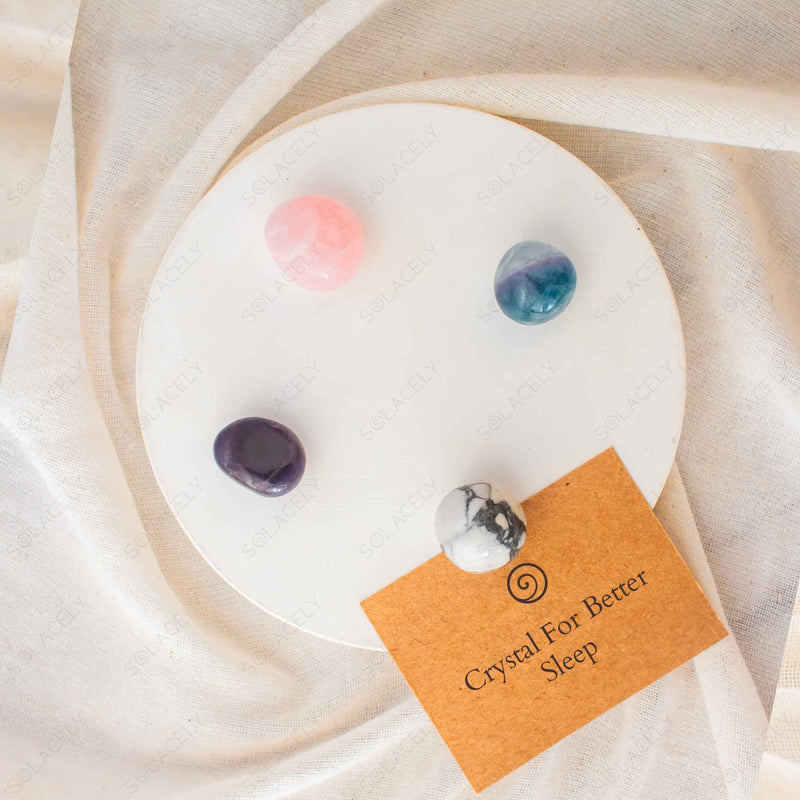
The five crystals most often kept for nerves are amethyst, lepidolite, howlite, blue lace agate and smoky quartz. Each is matched to a particular flavour of unease, and each works best as something to hold while you slow your breathing. A routine you can repeat is worth more than one you admire and never start.
Key takeaways
- Standard picks: amethyst and lepidolite for a racing mind, howlite and blue lace agate for pre performance tension, smoky quartz for feeling ungrounded.
- Match the stone to the kind of nerves you get, not to a general idea of calm.
- The routine: in for four, out for six, ten breaths, thumb moving on each exhale.
- Carry one stone in one fixed place you can reach without thinking.
- A longer exhale is the part that settles you. The stone is what reminds you to start.
- Persistent anxiety and physical nerve symptoms are treated by a clinician. The stone is company alongside.
What people mean by crystals for nerves
Two different things get called nerves. One is the everyday sense: the tight chest before a presentation, the churn before a difficult conversation, the mind that will not switch off at eleven at night. The other is neurological, meaning nerve pain, numbness or tingling. This article is about the first. The second belongs with a doctor.
For the everyday sense, crystal practice has a long tradition of pairing a particular stone with a particular flavour of unease, and the pairings are consistent enough across sources to be worth following.
The five stones and what each is kept for
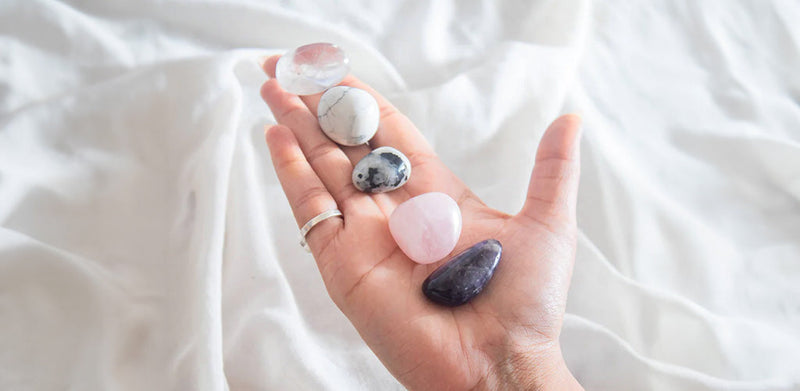
These are the picks that come up repeatedly, and the situations they are traditionally matched with. Choose one rather than collecting all five. A single stone you carry every day will do more for you than a drawer of them.
| Stone | Traditionally kept for | Best format |
|---|---|---|
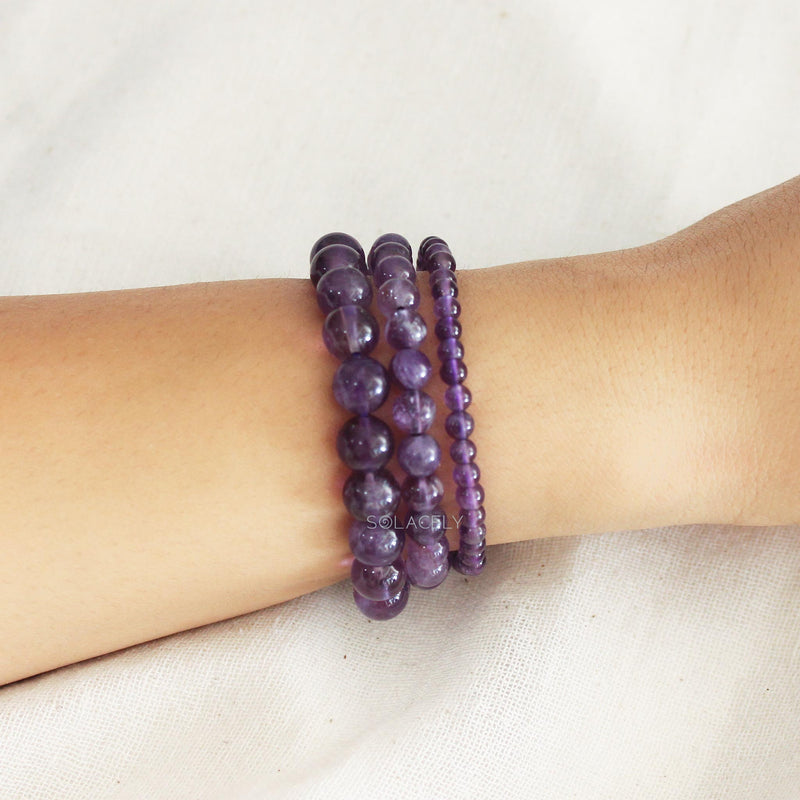
| Amethyst | A mind that will not stop at night | Bedside tumble or bracelet |
| Lepidolite | Emotional churn, mood swings | Pocket tumble |
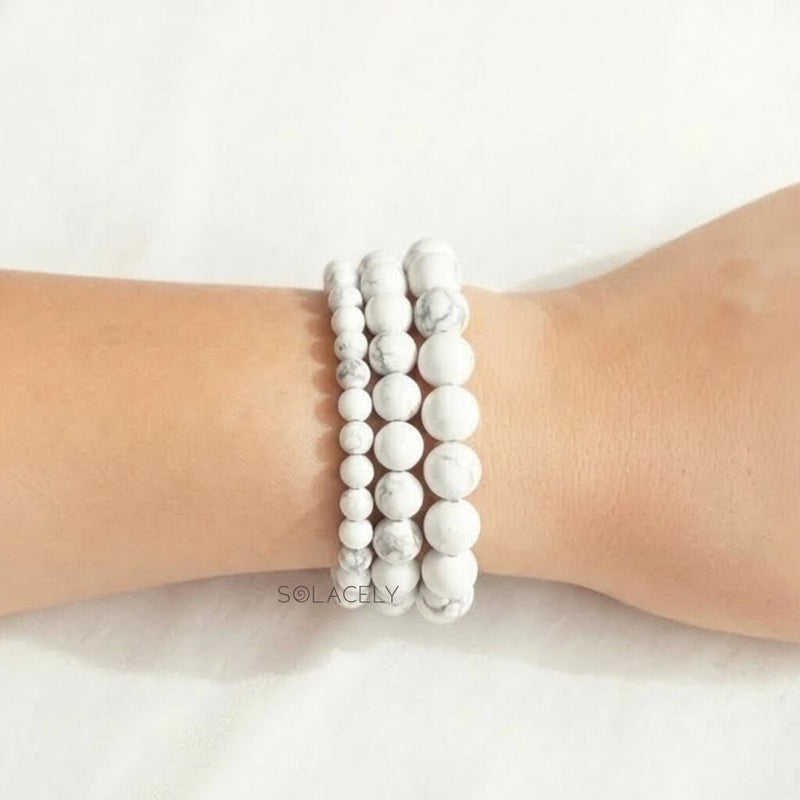
| Howlite | Tension before speaking or performing | Pocket tumble, bracelet |
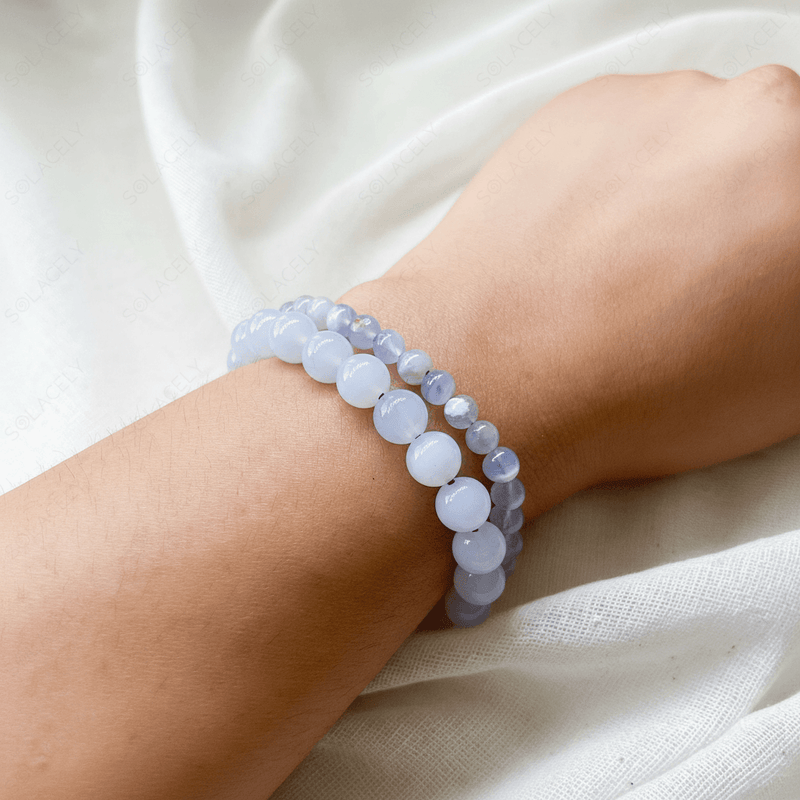
| Blue lace agate | Throat tightness, difficulty speaking up | Bracelet or pendant |
| Smoky quartz | Feeling jittery and ungrounded after a long stretch | Pocket tumble |
Amethyst is the most common starting point because it is affordable, durable at Mohs 7, and its tradition is unambiguously settling rather than stimulating. Our full amethyst guide covers that tradition in detail.
The breathing the stone is built around
Relaxation techniques such as slow breathing and progressive muscle relaxation are well supported for stress, anxiety and sleep, and consistent practice is where the benefit sits. The difficulty most people run into is remembering to begin, and that is where a stone in your pocket earns its place: a physical prompt with a texture attached.
Many people find the holding matters as much as the breathing. Having something in your hand gives restless attention somewhere concrete to settle, which makes the routine much easier to repeat than breathing alone.
A routine that takes ninety seconds
Vague advice to hold a crystal and relax is why most people abandon this. Here is a specific version:
- Hold the stone in one hand, thumb resting on the flattest face.
- Breathe in through the nose for a count of four.
- Breathe out through the mouth for a count of six. The longer exhale is the part that matters.
- On each exhale, move your thumb once across the surface of the stone.
- Ten breaths. That is the whole routine.
The thumb movement is not decorative. It gives your attention an anchor, which makes the count much easier to hold. Do it in a stairwell, in the car before you go in, or sitting on the edge of the bed.
Where to keep the stone
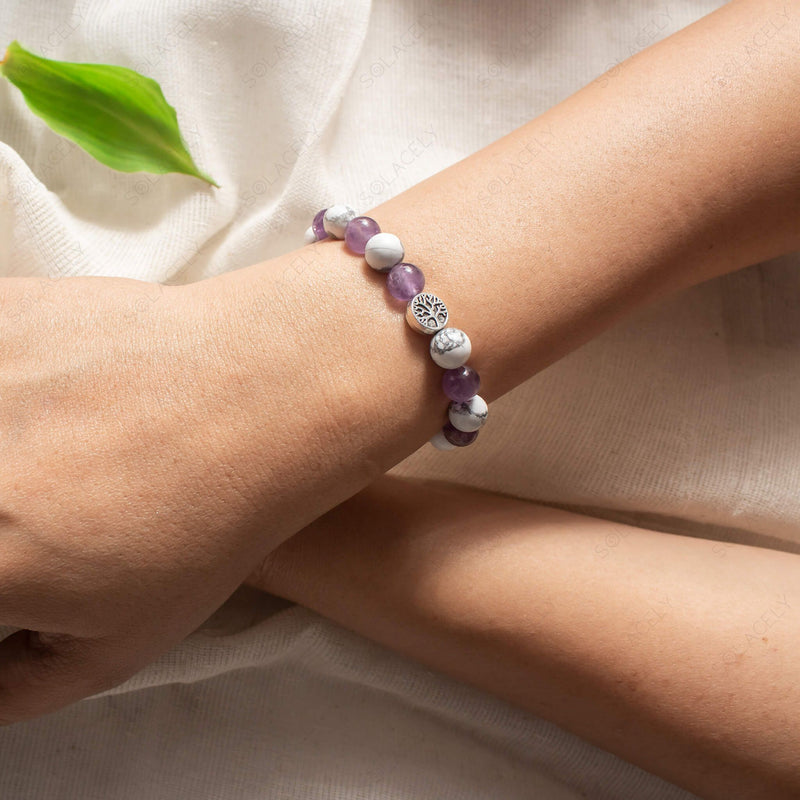
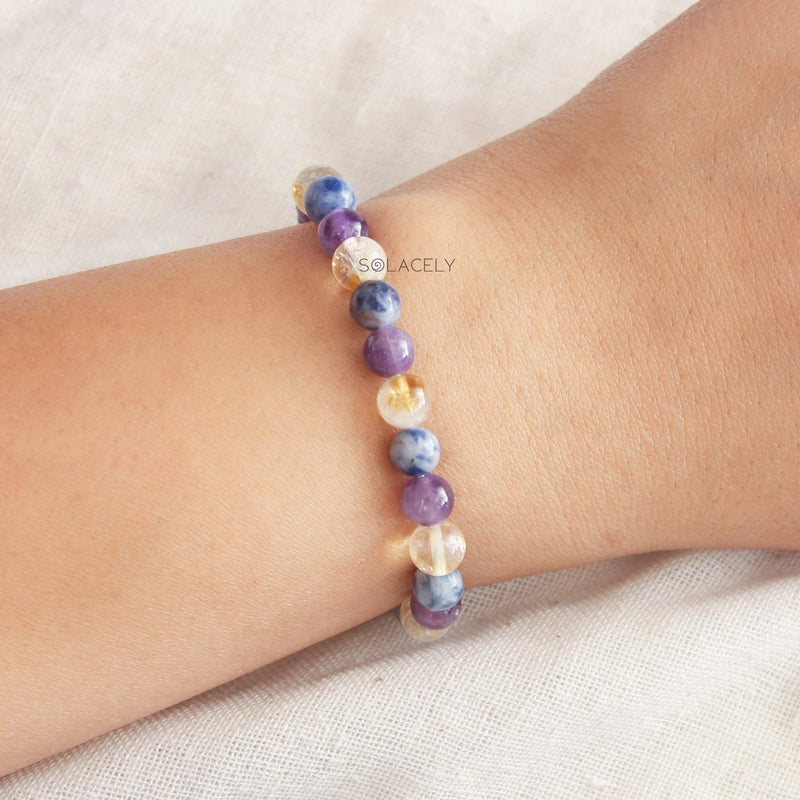
Three placements cover most situations. A pocket tumble for daytime, because it is reachable without anyone noticing. A bracelet if you would rather not have to remember to pick something up. And a tumble on the bedside table if the trouble is specifically at night, in which case pair it with putting the phone somewhere else in the room.
If sleep is the main issue, our guide to crystals for insomnia is more specific. If the problem is a loop of thoughts rather than physical tension, crystals for overthinking covers that pattern, and our broader crystals for anxiety and stress guide sets out the full range.
When to speak to someone
Some things are treated by a clinician, and that is the route that addresses them: panic attacks, anxiety that has been constant for weeks rather than tied to a situation, and physical nerve symptoms such as numbness, tingling, burning or weakness. Book the appointment.
A calming routine sits comfortably alongside that care, and many people find it good company through a long stretch. It belongs beside proper treatment rather than in place of it.
The uses described here reflect traditional and cultural crystal practice. They are not medical claims and are not a substitute for professional healthcare or advice. If you have persistent anxiety, panic attacks or any physical nerve symptoms, speak to a qualified healthcare professional.
Sources
- NCCIH, Relaxation Techniques: What You Need To Know
- NCCIH, Meditation and Mindfulness: What You Need To Know
Written by Chetena Sharma. Reviewed by the Solacely editorial team.
Frequently asked questions
About the author


Written by Chetna Sharma, crystal healing practitioner and co-founder of Solacely. Chetna has worked with healing crystals for over a decade and curates Solacely's protective stone collection.