You can tell a natural crystal by the things that make each piece individual: small inclusions, uneven colour, a cool weight in the hand, and surfaces that are never quite identical twice. Learning to read those signs is less about suspicion and more about buying with confidence.
Key takeaways
- Natural stone shows variation. Inclusions, colour banding and small imperfections are marks of authenticity, not flaws.
- Natural crystal feels cool to the touch and heavier than its size suggests, and warms slowly in the hand.
- Hardness is a useful guide. A stone's place on the Mohs scale tells you how it should behave in wear.
- Enhancement is long established craft. Heating and stabilising have been used across the gem trade for centuries and are permanent.
- The best assurance is a seller who names the material plainly and answers questions directly.
What people mean by a real crystal
Usually one of two things. The first is natural stone formed in the earth, as opposed to a manufactured material. The second is simply the stone it was sold as, meaning the label matches the mineral.
Both are fair questions to ask, and there is a third category worth knowing about, because it is not a lesser one. Some beloved materials in crystal practice are made rather than mined, and they are lovely on their own terms when described honestly. Opalite is a good example: a soft opalescent glass with a gentle glow, kept by many people precisely for its calm look. Goldstone is another, a shimmering glass with copper flecks that has been made since at least the seventeenth century.
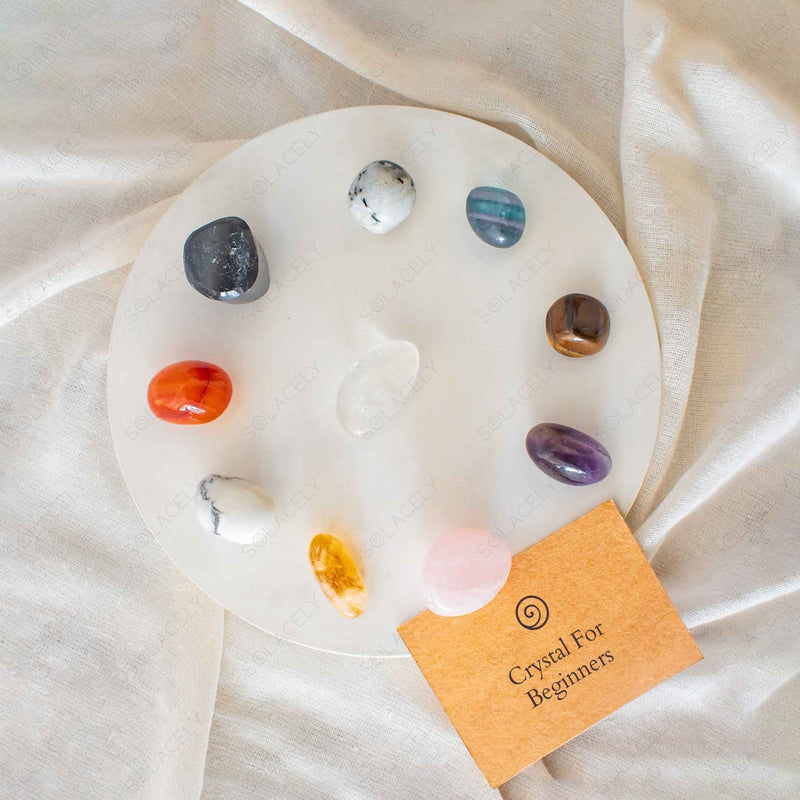
None of that makes them lesser objects. It makes them a different thing, priced accordingly, and a good seller will say so without being asked. If you are just beginning a collection, the crystals for beginners guide is a gentler place to start than any checklist.
Variation is the clearest sign
The single most useful habit is to look for individuality. Natural stone forms slowly and unevenly, so it carries the record of that: faint internal veils, colour that pools in one area and thins in another, tiny fractures catching light at an angle, banding that never repeats exactly.
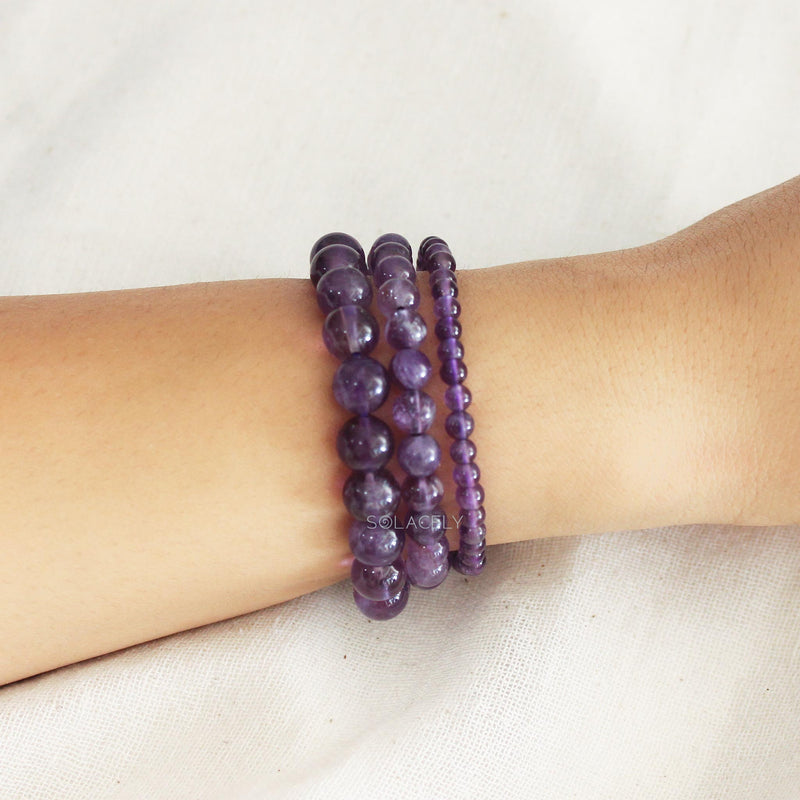
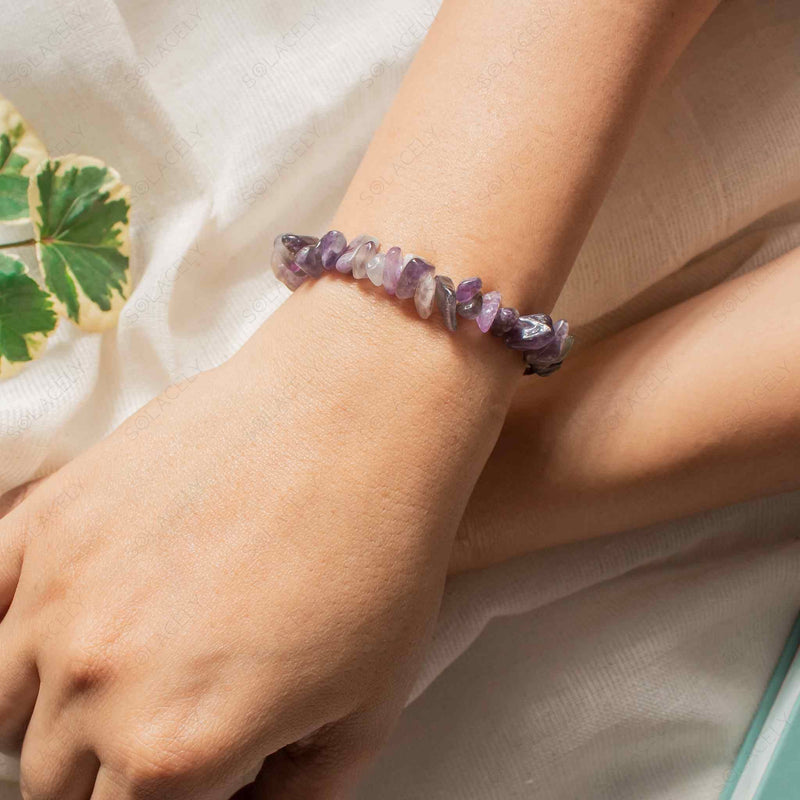
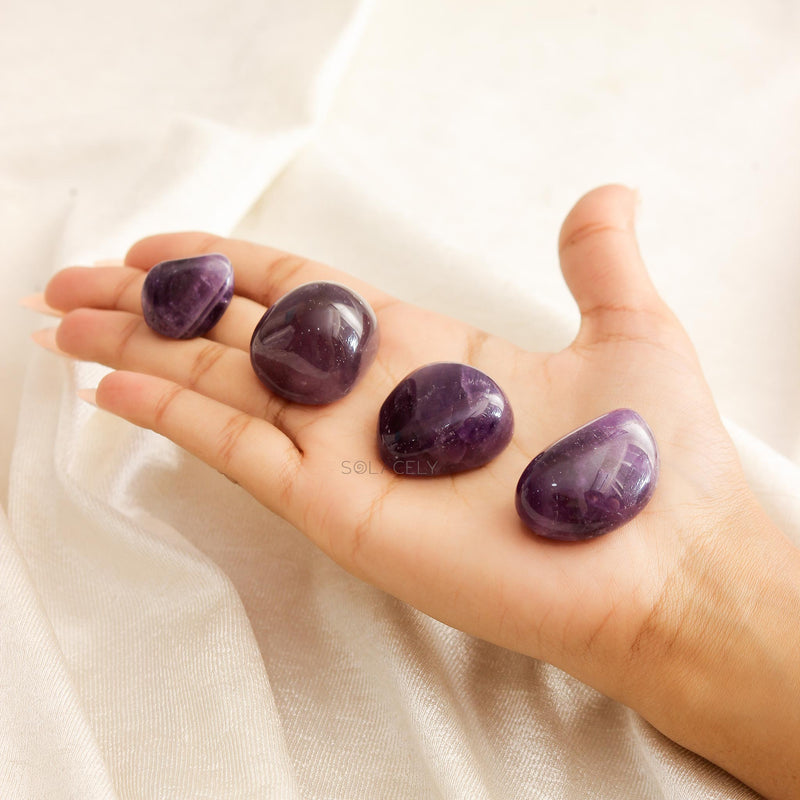
Amethyst is a good teacher here. Natural amethyst is very rarely one flat purple throughout. It usually deepens toward a point or a zone and pales elsewhere, and that gradient is part of its character. The same is true of rose quartz, where a milky cloudiness is normal and gives the stone its soft glow rather than detracting from it.
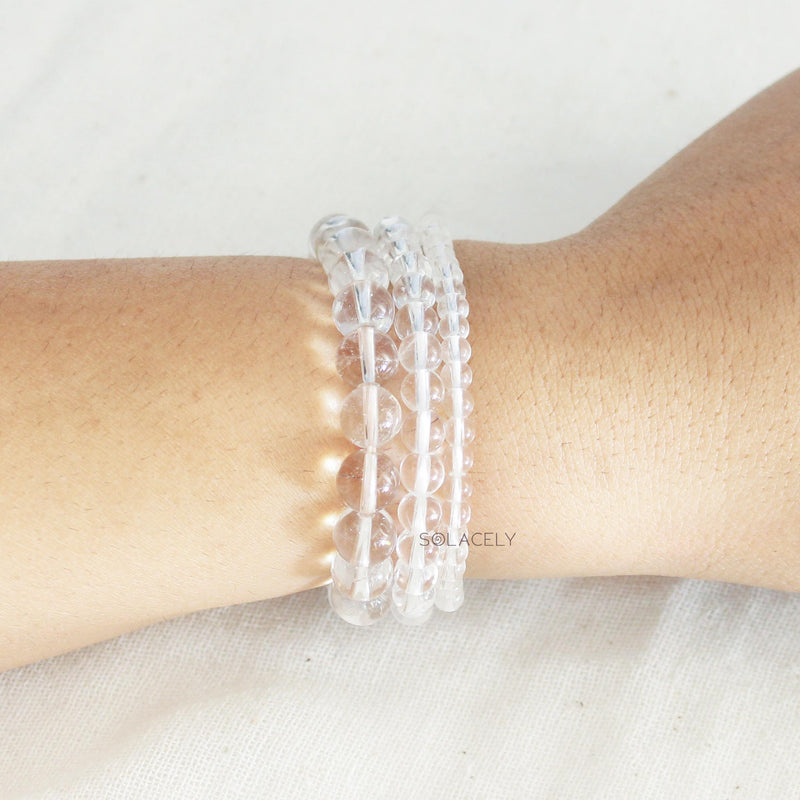
Beads on a strand tell the story especially well. On a natural strand the beads differ slightly from one another in tone and pattern, because they were cut from real material. That gentle inconsistency is the thing to look for and enjoy. The amethyst guide covers what good colour looks like in that stone.
What your hands can tell you
Pick the piece up before you decide anything. Stone has a density that is difficult to imitate, so a genuine tumbled crystal feels heavier than an object of the same size made from lighter material, and it sits in the palm with a certain solidity.
Temperature is the other quick read. Natural stone is cool when you first touch it and warms slowly, because it draws heat from your hand. Materials of lower density come to skin temperature much faster. Hold a piece for a slow count of ten and notice how long the coolness lasts.
Surface tells you something too. Run a thumb across a polished stone and feel for the subtle irregularity of a natural surface, the very slight variation in how light moves as you tilt it. It is a feel you learn quickly once you have handled a few pieces side by side.
Hardness, and what it means for wear
The Mohs scale ranks minerals by scratch resistance from 1 to 10, and it is genuinely useful when you are choosing a format rather than just identifying a stone. It tells you what a piece will tolerate.
| Stone | Mohs | What that means in wear |
|---|---|---|
| Selenite | 2 | A display piece. Keep it dry and handle gently |
| Calcite, howlite | 3 to 3.5 | Shelf and pocket stones rather than daily jewellery |
| Fluorite, malachite | 3.5 to 4 | Pendants and dishes, kept away from harder beads |
| Moonstone, labradorite | 6 to 6.5 | Lovely as pendants, gentler than a ring demands |
| Quartz family, jasper, agate | 7 | Everyday wear. The workhorses of a collection |
| Sapphire, ruby | 9 | Rings worn for decades |
Knowing where a stone sits also tells you how to store it. Keep the softer pieces separate from the quartz family, since harder stones will mark them over time in a shared box.
Enhancement is craft, not compromise
Warming stone to bring out colour is one of the oldest practices in the gem trade, used for centuries across many materials, and the results are stable and permanent. Carnelian has been warmed to deepen its glow since antiquity. Agate has been colour-treated by traditional methods for almost as long.
Treated pieces are properly part of the tradition rather than an exception to it, and they hold their colour through ordinary wear and washing. What matters is that a piece is described accurately and priced accordingly, which any established seller will do as a matter of course.
So the practical question is rarely whether a stone has been enhanced. It is whether you like the shade in front of you, whether the format suits how you plan to wear it, and whether the seller is straightforward. Choose the piece you actually want to look at every day.
Buying with confidence
A few habits make the whole thing simple, and none of them require equipment.
- Ask what the material is. A clear answer naming the mineral is the best assurance there is.
- Buy where the photographs show the actual piece. Natural variation means the one you receive should look like an individual.
- Handle it if you can. Weight, coolness and surface tell you a great deal in a few seconds.
- Match the stone to the format. A softer mineral in a pendant will outlast the same mineral in a ring.
- Trust the seller relationship. Somewhere that answers questions plainly is worth returning to.
Once a piece is home, care keeps it looking the way it did on the day you chose it. Warm water and mild soap suit the quartz family, softer stones prefer a dry cloth, and a few stones such as selenite are happiest never meeting water. For a stone-by-stone starting point, clear quartz and rose quartz are the two most forgiving stones to learn on.
The properties described here reflect traditional and cultural belief around crystals. They are offered for reflection and wellbeing and are not medical advice, a diagnosis, or a treatment for any condition. If you are managing a health concern, please speak with a qualified healthcare professional. Keep small stones away from young children, and never place crystals in drinking water.
Sources
Written by Chetena Sharma. Reviewed by the Solacely editorial team.
Frequently asked questions
About the author


Written by Chetna Sharma, crystal healing practitioner and co-founder of Solacely. Chetna has worked with healing crystals for over a decade and curates Solacely's protective stone collection.