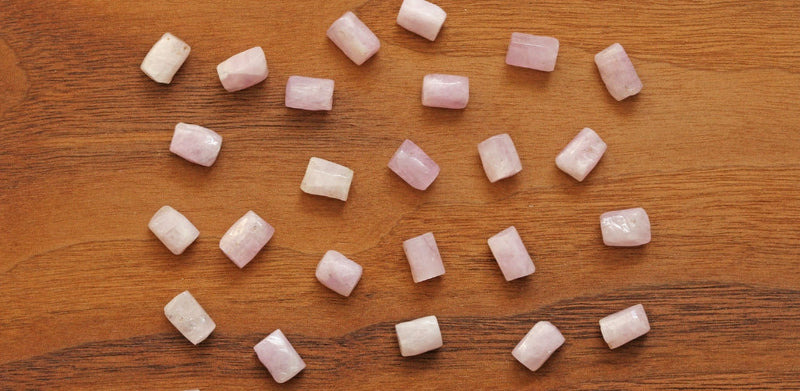
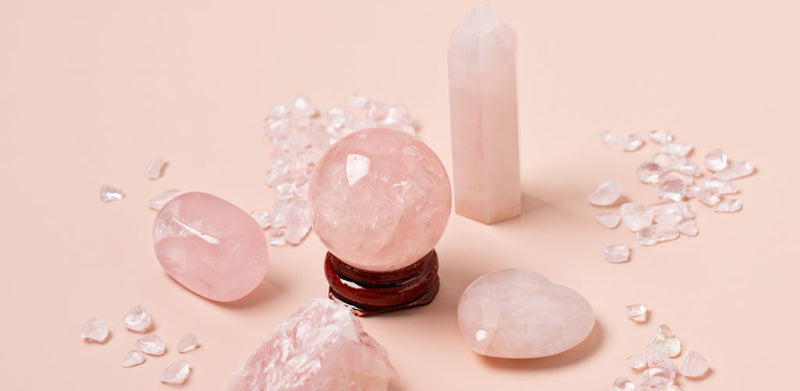
Kunzite and rose quartz are both pink heart stones, but they behave nothing alike. Kunzite is a scarce, fragile spodumene that fades in strong light. Rose quartz is common, tough and inexpensive. Pairing them works because one is for occasions and the other is for every day.
Key takeaways
- Kunzite is the pink to lilac variety of spodumene, a lithium aluminium silicate, coloured by traces of manganese.
- Rose quartz is ordinary quartz at 7 on the Mohs scale, translucent rather than transparent, and one of the most affordable crystals sold.
- Both stones fade in prolonged sunlight, so neither should ever be charged on a windowsill.
- Kunzite has perfect cleavage in two directions, which makes it difficult to cut and easy to split with a knock.
- Traditional use pairs kunzite for emotional release and self expression with rose quartz for steady, everyday self compassion.
- All metaphysical properties described here are traditional belief, not medical fact.
Why do people pair kunzite with rose quartz?
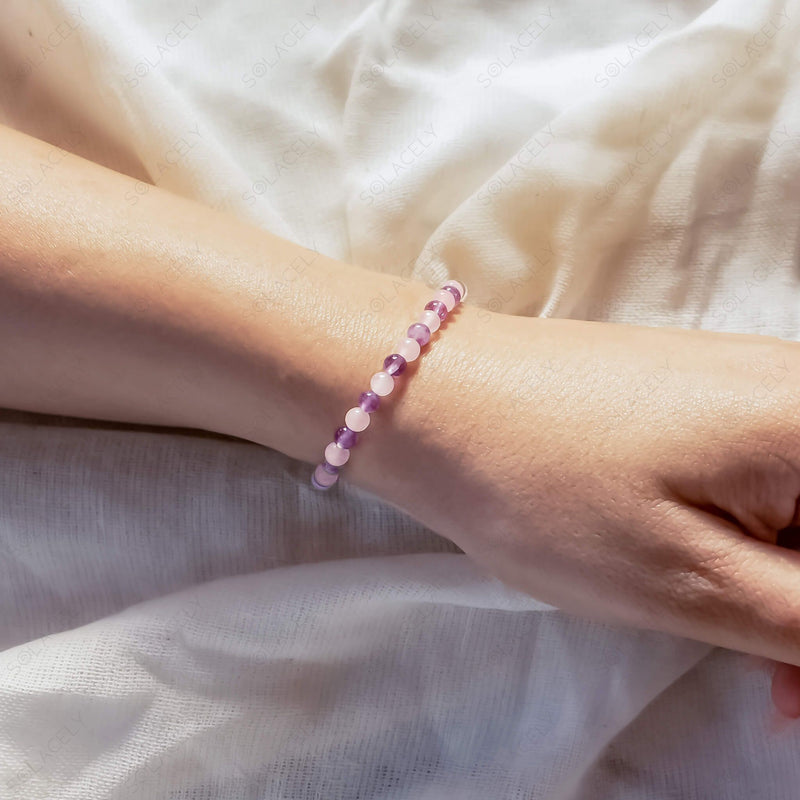
Both are worn for the heart, which sounds like duplication until you use them. Rose quartz is the background stone, the one that lives on a wrist or a bedside table for years. Kunzite is the occasional stone, brought out for grief, a difficult conversation or a specific piece of emotional work.
The traditional split is worth stating plainly. Rose quartz is associated with gentle, unconditional warmth and with self compassion that does not ask for anything. Kunzite is associated with release, with saying the thing out loud, and with connecting feeling to language. One holds, the other opens.
There is a practical reason too, and it is the one people mention most. Kunzite is expensive and delicate, so almost nobody wears it daily. Rose quartz fills that gap at a fraction of the price. If you like the idea of a pink heart practice but cannot justify a kunzite bracelet, this pairing is how people bridge the two. Our rose quartz for emotional healing guide covers the everyday half in more detail.
What is kunzite?
Kunzite is the pink to lilac gem variety of spodumene. Spodumene is a lithium aluminium silicate and a principal ore of lithium, occurring in granite pegmatites. Kunzite's colour comes from traces of manganese, and the same species produces green hiddenite.
Where the name comes from
The stone was identified in California in the early twentieth century and named after George Frederick Kunz, the American gemmologist and long serving Tiffany buyer who first described it. That makes kunzite young by gemstone standards. It carries no medieval lore and no Roman references, so its metaphysical reputation has been shaped within the last hundred years or so.
Why kunzite is hard to own well
Two properties make it difficult. First, spodumene has perfect cleavage in two directions, so it splits cleanly along internal planes and a single sharp knock can ruin a stone. Cutters treat it with real caution. Second, kunzite is strongly pleochroic, showing its best colour down the length of the crystal, which forces cutters to orient the stone for colour rather than for weight.
Add its light sensitivity and you have a gem that rewards careful ownership and punishes casual treatment. It is sometimes called an evening stone for exactly this reason. For an alternative that is easier to live with, our kunzite crystal guide and the kunzite and pink tourmaline comparison both cover the sturdier options.
What is rose quartz?
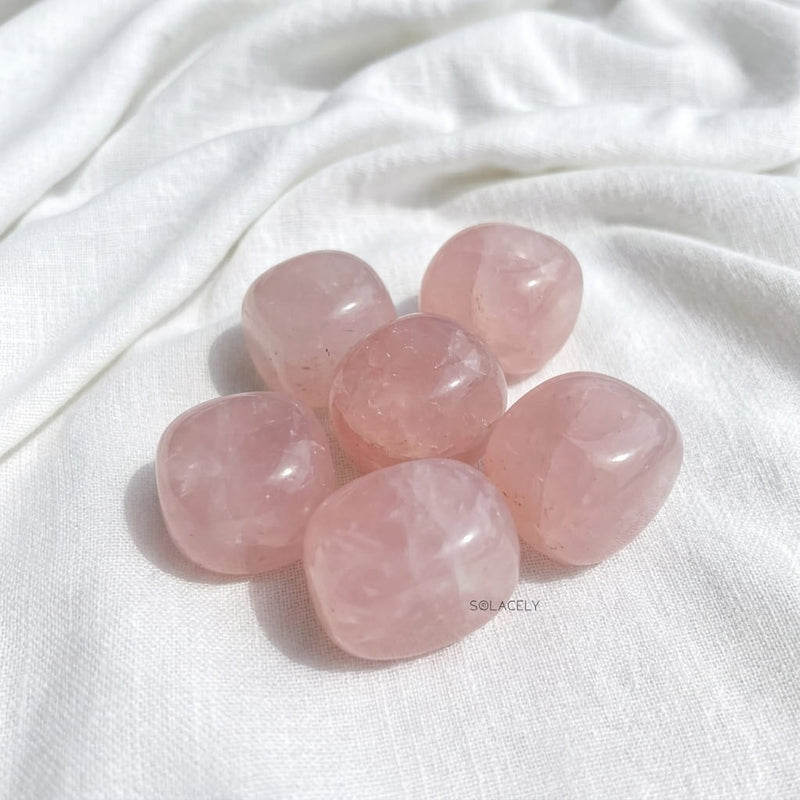
Rose quartz is the translucent pink member of the quartz family. The Gemological Institute of America places rose quartz at 7 on the Mohs scale, hard enough for daily jewellery, and quartz is among the most abundant minerals in the earth's crust. That abundance is why rose quartz stays cheap.
Its pink is generally attributed to microscopic fibrous inclusions rather than to a simple trace element in the crystal structure. That explains something buyers often ask about. Rose quartz is almost always cloudy rather than clear, and that softness is the signature of the material rather than a flaw. Hold a piece up to a lamp and the light spreads through it instead of passing straight out the other side.
Historically, rose quartz beads appear in the archaeological record across the ancient Mediterranean and Near East, and the stone has carried love and reconciliation associations for a very long time. It is the opposite of kunzite in that respect: deep history, low price, high durability. Our rose quartz meaning and benefits guide traces that history properly.
Kunzite and rose quartz compared
Seen side by side, these stones agree on colour family and almost nothing else. The differences in price, durability and availability decide how each one fits into a practice, so read this table before you buy either.
| Kunzite | Rose quartz | |
|---|---|---|
| Mineral | Spodumene, a lithium aluminium silicate | Quartz, silicon dioxide |
| Colour cause | Traces of manganese | Microscopic inclusions |
| Clarity | Often transparent | Translucent, usually cloudy |
| Hardness | About 6.5 to 7 Mohs, with perfect cleavage | 7 Mohs, no cleavage |
| Toughness | Poor, splits on impact | Good, takes daily wear |
| Light sensitivity | High, colour fades | Moderate, colour fades slowly |
| Price and availability | Scarce, collector priced | Abundant, inexpensive |
| Traditional role | Emotional release, expression | Self compassion, gentle warmth |
Why neither stone should sit in the sun
This is the single most useful thing to know about the pair, and it contradicts advice repeated all over the internet. Kunzite's colour is well known to fade with prolonged exposure to strong light and heat. Rose quartz fades too, more slowly, which is why old window display pieces look washed out and grey.
So the standard suggestion to charge crystals on a sunny windowsill is actively bad advice for both of these. If cleansing or charging is part of your practice, use moonlight, sound, a short rest on selenite or simply a quiet intention. All of those are harmless. Sunlight is not.
Heat deserves the same caution. Keep kunzite away from steam cleaners, hot cars and ultrasonic machines, since sudden temperature change is a genuine risk for a stone with cleavage this perfect. Warm soapy water and a soft cloth are enough for both stones.
How do you wear and use the pair?
Give each stone the job it can actually do. Rose quartz goes into daily wear and everyday placement. Kunzite goes into protected settings and deliberate, occasional use. Trying to reverse that ends with a chipped kunzite and a disappointed owner.
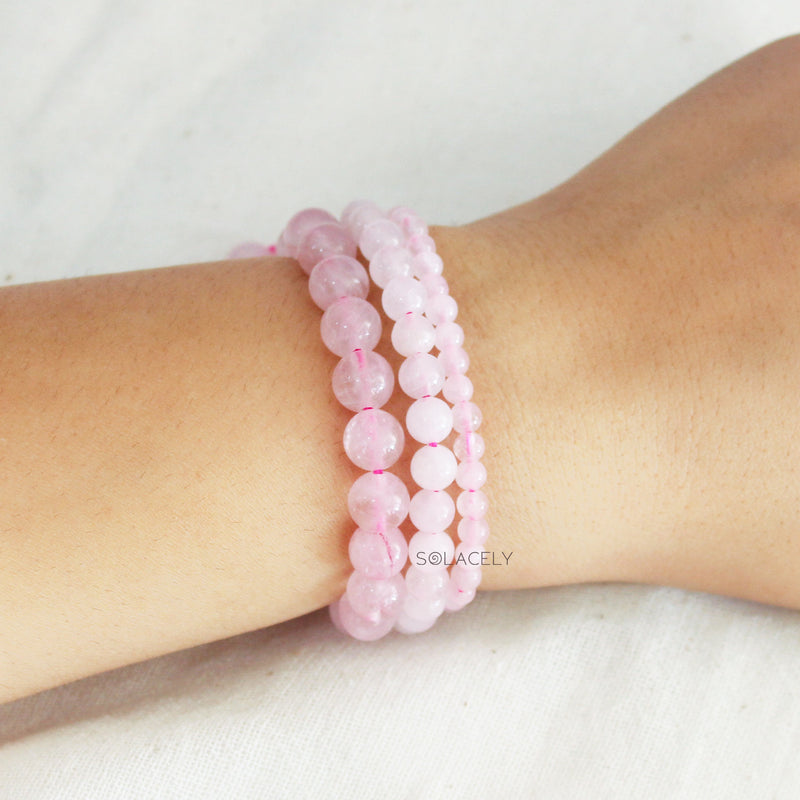
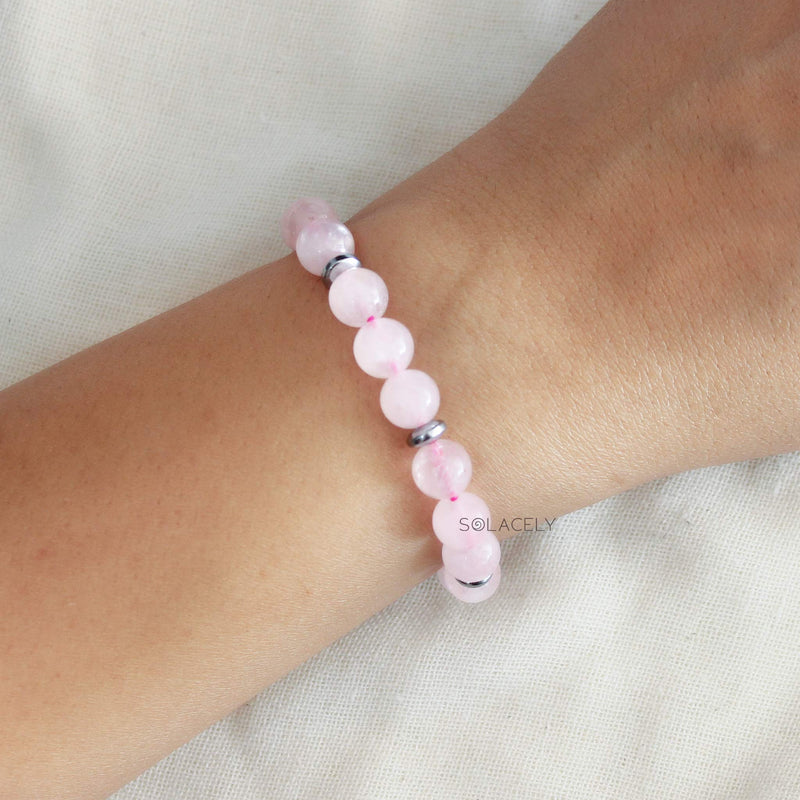
- Rose quartz bracelet or tumble. The everyday anchor. Wear it, carry it, keep one by the bed.
- Kunzite pendant or earrings. Protected positions that take fewer knocks than rings or bracelets.
- Meditation. Kunzite in the palm for a specific session, rose quartz resting nearby. Keep both out of direct light.
- Grief or heartbreak work. The traditional use for the pair, with kunzite as the occasional stone and rose quartz as the daily one.
- Never in rings. Kunzite in a ring will eventually meet a doorframe, and cleavage does the rest.
A word on the lithium connection, since it comes up in almost every conversation about kunzite. The stone is a variety of spodumene, one of the world's principal lithium ores, and that piece of geology is a large part of why it gathered its calming reputation in modern crystal practice. Wear it as a comfort piece for quiet evenings, and keep anything prescribed with your doctor. If you want a similar gentle pairing with a different character, kunzite and moonstone is the closest relative.
Which one should you buy first?
Rose quartz, in nearly every case. It costs very little, survives daily life and does the same broad emotional job that most people are actually after. Buy a plain strand or a couple of tumbles, live with them for a few months, and see whether the practice sticks before spending more.
Kunzite makes sense as a second purchase, once you know you use crystals rather than collect them. When you do buy, ask about the colour and the cut, since kunzite is oriented for colour rather than for weight and that choice is where the character of a piece sits. Buy from someone who describes the stone plainly, then keep it out of strong light once it is yours.
The properties described here reflect traditional and cultural belief around crystals. They are not medical claims and are not a substitute for professional healthcare or mental health support. Crystals are not a treatment for depression, anxiety or grief, and they should never take the place of prescribed care. If you are struggling, speak to a qualified professional.
Sources
Written by Chetena Sharma. Reviewed by the Solacely editorial team.
Frequently asked questions
About the author


Written by Chetna Sharma, crystal healing practitioner and co-founder of Solacely. Chetna has worked with healing crystals for over a decade and curates Solacely's protective stone collection.