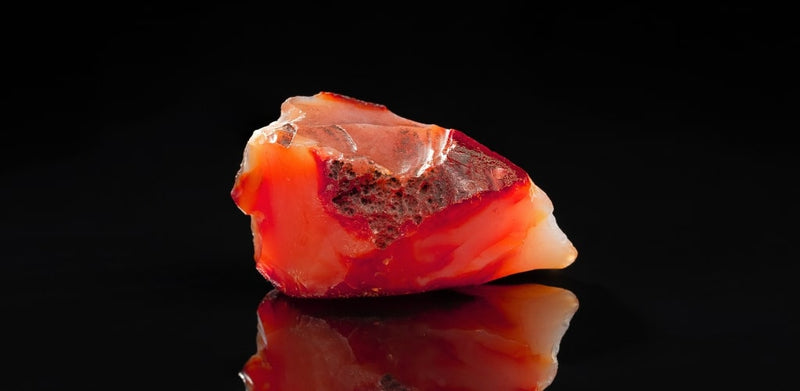
Peridot and carnelian pair two warm stones with different jobs. Peridot is a green magnesium iron silicate worn for renewal and lightness; carnelian is an orange chalcedony worn for courage and momentum. Together they are used when you want a fresh start and the nerve to actually begin it.
Key takeaways
- Peridot is gem quality olivine, one of very few gemstones that occurs in only one colour.
- Carnelian is a variety of chalcedony, a microcrystalline quartz, coloured orange to red by iron oxide.
- Peridot is the August birthstone and is softer than carnelian, at 6.5 to 7 against carnelian's 7.
- The pairing is used for renewal plus courage: peridot for the clean slate, carnelian for the push.
- Metaphysical uses described here are traditional belief, not medical fact.
What peridot actually is
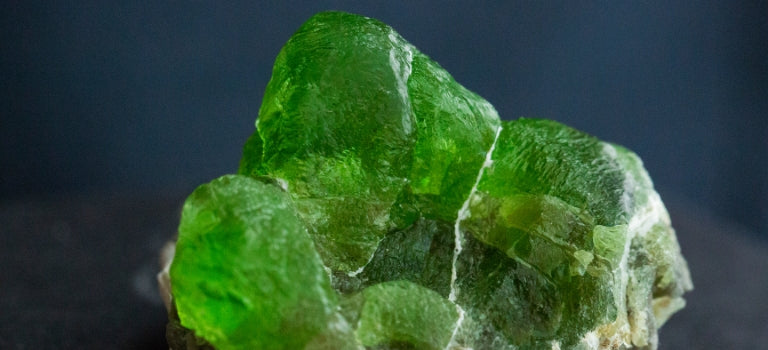
Peridot is the gem variety of olivine, a magnesium iron silicate, and it is unusual among gemstones in coming in exactly one colour. Every peridot is green. The shade shifts from yellowish to olive to a deeper bottle green depending on how much iron is present, but there is no blue peridot or pink peridot to hunt for.
According to the Gemological Institute of America, peridot forms deep in the mantle and is carried up by volcanic activity, and some peridot has even arrived on Earth inside meteorites. That origin story is genuinely unusual and it is a large part of why the stone carries associations with renewal and things brought to the surface.
Geology.com describes olivine as a rock forming mineral abundant in basalt and peridotite, which is a useful corrective: peridot is not rare as a substance, only as clean gem quality material. The peridot meaning and properties guide covers the tradition.
What carnelian actually is
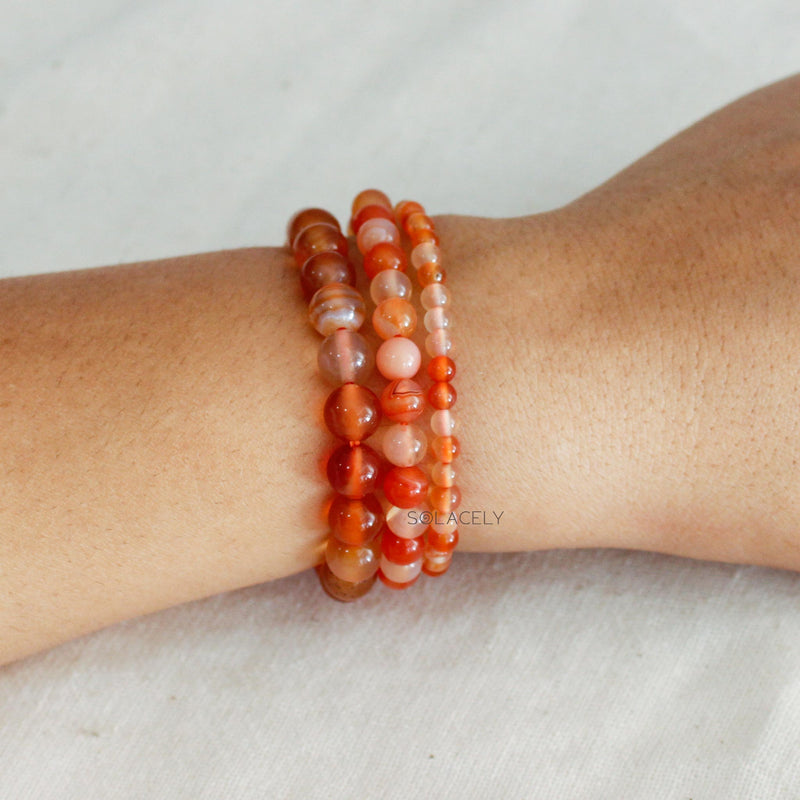
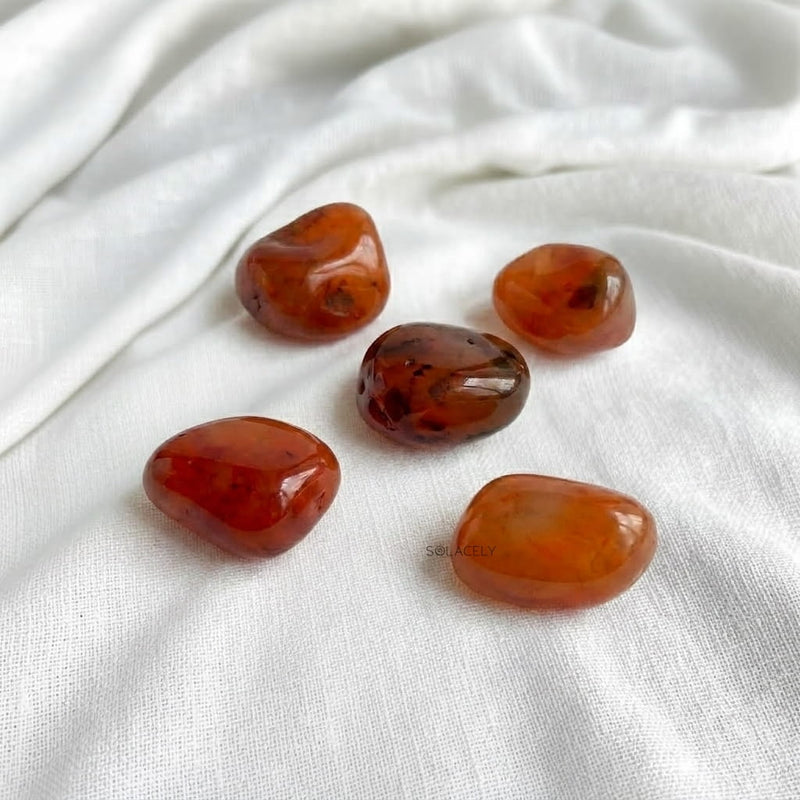
Carnelian is a chalcedony, which is quartz made of crystals too small to see individually. Its orange to brownish red colour comes from iron oxide dispersed through the stone. That microcrystalline structure is what gives carnelian its slightly waxy lustre rather than the glassy sparkle of a single quartz crystal.
Geology.com notes that carnelian has been used ornamentally for thousands of years and that much material on the market is heat treated to deepen the colour, a practice that is both ancient and standard. Roman signet rings were frequently carnelian, because hot wax does not stick to it.
In crystal tradition it is the courage and vitality stone, associated with taking action rather than contemplating it. That practical, physical character is why it pairs well with a stone as light as peridot. The carnelian meaning and properties guide goes further.
Why the pairing works
Peridot and carnelian sit next to each other on the colour wheel and opposite each other in temperament. Peridot is associated with clearing, letting go, and starting again without dragging the last chapter along. Carnelian is associated with heat, nerve, and doing the thing.
The pairing is therefore chosen most often at transitions where the problem is not knowing what to do but starting. A new job, a return to work, a move to a new city. Peridot alone can feel a little passive and carnelian alone can feel like pressure. Together the set reads as permission plus momentum.
Visually it also simply works. Warm green against burnt orange is a strong autumnal combination that reads as considered rather than random, which matters if you are going to wear it every day.
Comparing peridot and carnelian
| Peridot | Carnelian | |
|---|---|---|
| Mineral | Olivine, magnesium iron silicate | Chalcedony, microcrystalline quartz |
| Colour source | Iron in the crystal structure | Iron oxide inclusions |
| Hardness | 6.5 to 7 Mohs | 7 Mohs |
| Birthstone | August | Not a modern birthstone |
| Traditional use | Renewal, lightness, letting go | Courage, drive, physical vitality |
| Care warning | Sensitive to acids and sudden temperature change | Colour can fade in prolonged sun |
The hardness difference is small but real. Peridot is also more brittle than its Mohs number suggests, which is why it chips in rings more often than carnelian does. Check any new stone against the Mohs hardness scale before storing pieces together.
How to wear the pair
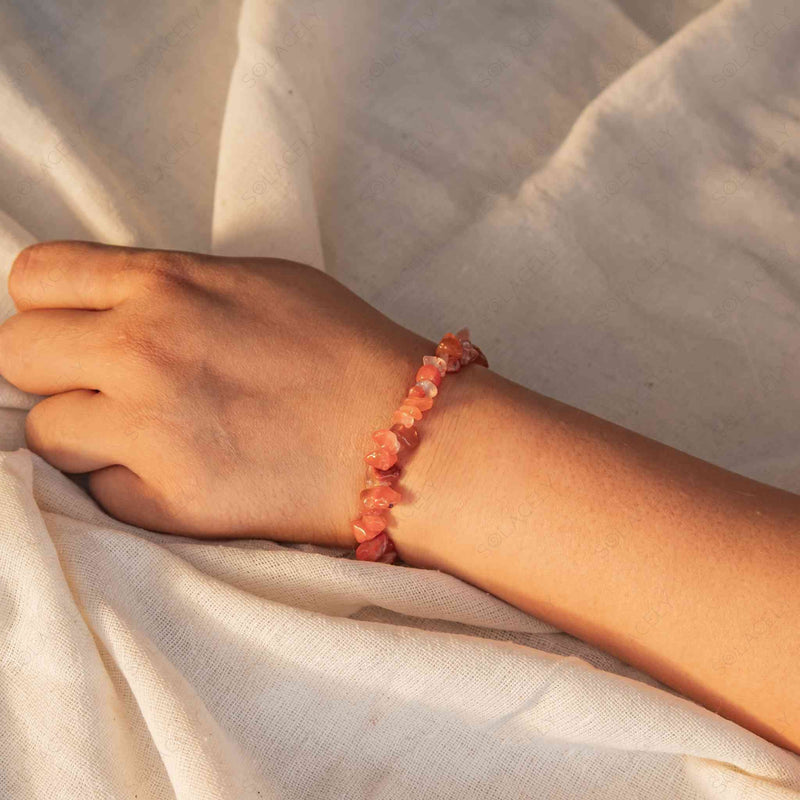
Bracelets are the easiest format, and a single alternating strand looks more deliberate than two separate stacks. If you want a hierarchy, most wearers put the stone matching their current need closer to the skin, which usually means carnelian during a demanding stretch and peridot during a recovering one.
- Bracelets. Alternating beads, or one strand of each worn together.
- Pendants. A carnelian drop with peridot accents. Peridot's brittleness makes it better as an accent than a solitaire on a long chain.
- Rings. Carnelian handles this well. Peridot needs a protective setting.
- At a desk. Carnelian in reach for the starting cue, peridot in view as the reminder of why.
If August is your birth month, the pairing doubles as a birthstone set, and the August birthstone guide covers the alternatives recognised alongside peridot.
Care and cleansing
Peridot is the fussier of the two. It is sensitive to acids, which means perfume, hairspray, and even sweat left on it overnight will dull the polish over time. It also dislikes sudden temperature change, so avoid steam cleaners and never take it from hot water to cold. Warm soapy water and a soft cloth is the whole method.
Carnelian is easier. Warm water, mild soap, soft brush, dried fully. The one real caution is prolonged direct sunlight, which can lighten the orange over months. That applies to any iron coloured chalcedony and is worth knowing before leaving a bracelet on a sunny sill.
For energetic cleansing both suit moonlight, sound, or a short rest on selenite. Skip salt water for the pair, since it is unkind to peridot's polish. For a warmer green alternative to this pairing, see peridot and citrine.
Who this combination suits
It suits people at the start of something rather than in the middle of it. The most common profile is somebody who has decided on a change and stalled, where peridot addresses the reluctance to leave the old thing behind and carnelian addresses the reluctance to begin the new one.
It suits less well if what you actually want is calm. Neither stone is soothing in the way amethyst or blue lace agate is, and a person running on adrenaline will not be helped by a set built around momentum. If confidence rather than change is the aim, crystals for confidence is the more targeted list.
Buying the pair without overpaying
Peridot is where the money goes, and the price gap between grades is wide. Colour drives it: a clean, slightly yellowish grass green commands far more than a muddy olive, and eye-clean material costs more again, since peridot commonly carries visible inclusions. On beads and small cabochons those inclusions are entirely normal and not a defect.
One pleasure of peridot is that it announces itself. Look through a faceted stone under magnification and you will see its distinctive doubled back edges, an optical signature that is entirely its own. Price tracks colour and size, so ask what you are buying and a good seller will be glad to explain.
Carnelian is the opposite situation. It is abundant and inexpensive, so the risk is not fakery but dyed agate sold at a carnelian premium. Genuine carnelian shows a soft, slightly cloudy colour gradient when held to a light. Dyed material tends to show colour concentrated in bands or blotches, following the original agate layering rather than sitting evenly through the stone.
The properties described here reflect traditional and cultural belief around crystals. They are not medical claims and are not a substitute for professional healthcare. If you are managing a health concern, speak to a qualified practitioner rather than relying on a crystal practice.
Sources
Written by Chetena Sharma. Reviewed by the Solacely editorial team.
Frequently asked questions
About the author


Written by Chetna Sharma, crystal healing practitioner and co-founder of Solacely. Chetna has worked with healing crystals for over a decade and curates Solacely's protective stone collection.