Sunstone and sodalite are paired because speaking up fails at two separate points. Sunstone is traditionally kept for the nerve to start; sodalite for the order to say it clearly once you have. Having only one of those is why so many difficult conversations still go nowhere.
Key takeaways
- Sunstone supplies the nerve, sodalite the order. Two failure points, two stones.
- Sunstone is a feldspar whose flash comes from copper or hematite inclusions.
- Sodalite is a deep blue silicate, veined with white and tied to the throat centre.
- Sodalite is not lapis: lapis has golden pyrite flecks and sodalite never does.
- Both are softer than quartz, so keep them off daily-wear rings and store them separately.
Why the pairing works
Most people assume the hard part of a difficult conversation is starting it. For a great many it is, but there is a second failure point that gets far less attention and is just as common.
That second point is having started and then not saying the actual thing. The sentence comes out softened, hedged, or wrapped in so much preamble that nothing has really been communicated and the whole exchange has to happen again later.
Sunstone is kept for the first. Sodalite is kept for the second, and its traditional brief is specifically about ordering thought and speaking plainly. Together they cover both halves rather than doubling up on one.
What sunstone actually is
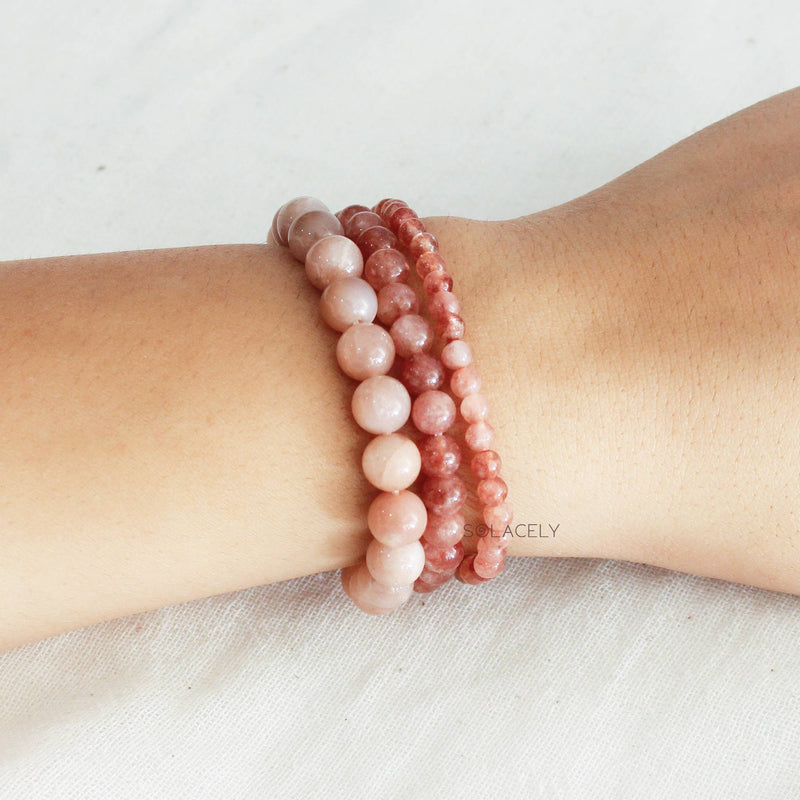
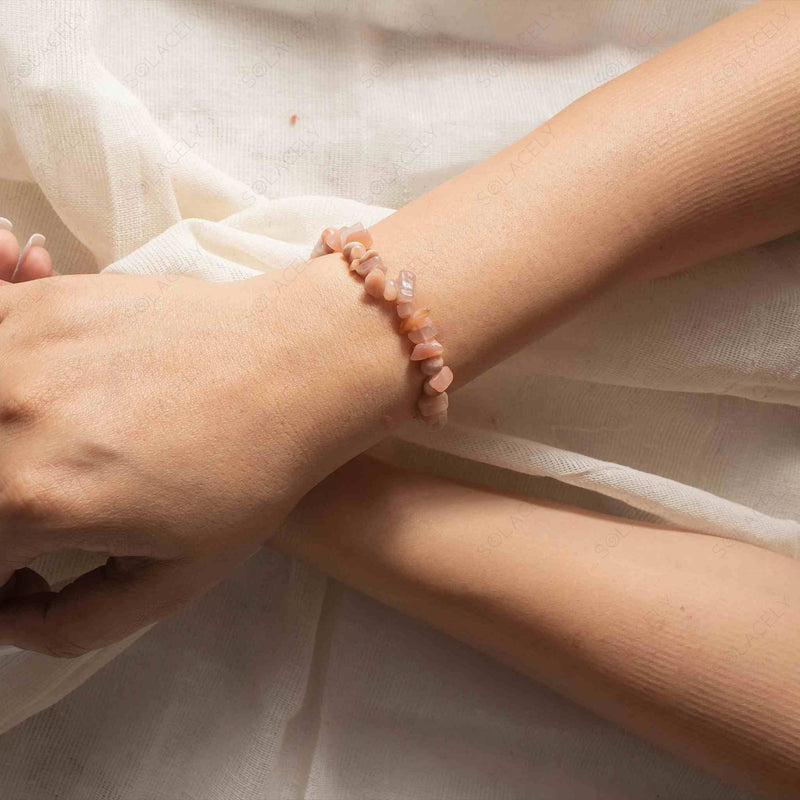
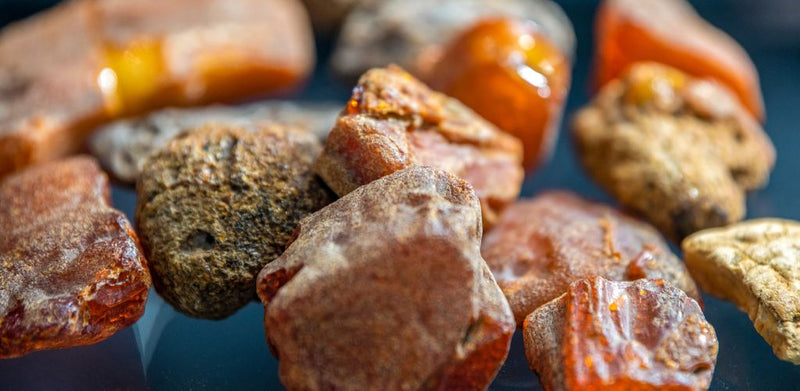
Sunstone is a feldspar, part of the most abundant mineral group in the Earth's crust. Its defining feature is not the peach to orange body colour but the flash that moves across the surface as the piece is turned.
That effect is called aventurescence and it comes from tiny plate-like inclusions of copper or hematite suspended within the feldspar, catching light as the stone moves. Geology.com describes it as the phenomenon that gives the stone its name.
It sits around 6 to 6.5 on the Mohs scale and has cleavage, so it is softer than quartz and better suited to a pendant or a bracelet than to a ring worn daily. The sunstone guide covers the varieties and what drives price.
What sodalite actually is
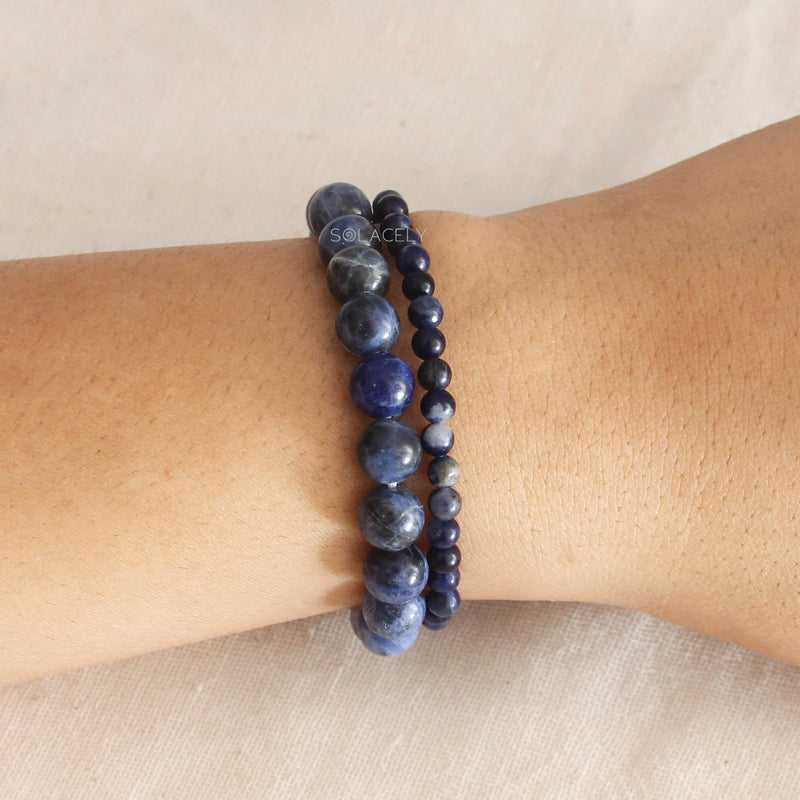
Sodalite is a deep blue silicate, usually veined and flecked with white calcite, and it is one of the more affordable blue stones in any shop. Geology.com notes that its rich blue colour is what makes it a popular ornamental material.
It is traditionally tied to the throat and third eye, which is a more specific placement than most blue stones get. That combination of centres is why it is kept for thinking clearly and then saying the result out loud, rather than for calm in general.
It sits around 5.5 to 6 on the Mohs scale and is slightly porous, which puts it below quartz for durability. Keep it away from perfume and cosmetics, and choose a pendant over a ring.
Telling sodalite from lapis lazuli
These two get confused constantly, and the distinction is easy once you know it.
Lapis lazuli carries golden pyrite flecks scattered through the blue. Sodalite never does. If you can see gold glinting in the stone, it is lapis; if the only inclusions are white veining, it is sodalite. That single check settles almost every case.
Lapis is also the more expensive of the two, so an unusually cheap piece described as lapis is worth a question. Both are handsome stones with long histories, and sodalite being the more affordable option is a straightforward advantage rather than a compromise.
Comparing the two
| Sunstone | Sodalite | |
|---|---|---|
| Mineral | Feldspar | Blue silicate |
| Hardness | 6 to 6.5 Mohs | 5.5 to 6 Mohs, slightly porous |
| Traditionally kept for | The nerve to speak | Ordering what you say |
| Chakra placement | Sacral and solar plexus | Throat and third eye |
| When it is reached for | Just before | While preparing |
| Best format | Pendant or bracelet | Pendant, or beside a notebook |
The timing row is what makes the pair usable. Sodalite belongs to the preparation and sunstone to the moment itself, which is a genuinely different division of labour.
How the pair is used
Because the two stones attach to different stages, the placements more or less follow on their own.
- Sodalite beside a notebook. Where you work out what you actually want to say.
- Sunstone worn on the day. A pendant or a bracelet that goes with you into the room.
- Rehearse the first sentence. Holding sodalite while saying it out loud once.
- Sodalite at the throat. The traditional placement, if you would rather wear both.
The rehearsal habit is the one worth adopting. The opening sentence is the part that vanishes under pressure, and pairing it with a physical object gives the practice somewhere concrete to live. For the wider set at that centre, crystals for the throat chakra covers what else belongs.
Care and cleansing
Neither stone is difficult, but neither is as robust as quartz and both benefit from a little care.
Warm water, mild soap, a soft cloth and a full dry suits both. Because sodalite is slightly porous, wipe it rather than leaving it to soak, and keep perfume, hairspray and cosmetics away from it. Keep sunstone out of prolonged strong sunlight.
Store them in separate pouches and well away from quartz, garnet and anything harder, all of which will scratch either stone. For energetic cleansing, moonlight or sound suit both and neither needs salt water.
Choosing the two
With sunstone, tilt the piece under a light and watch the flash. A strong even shimmer across the whole surface matters more in daily wear than how deep the orange is.
With sodalite, look at the balance of blue to white. Some pieces are almost solid deep blue with a hairline of veining; others are heavily marbled. Neither is better and the marbled material is usually cheaper, so buy on how it actually looks to you.
Both are affordable enough that quality rather than authenticity is the real question, which means you can afford to be particular about polish and edges. If the difficulty is holding a thought together rather than voicing it, crystals for focus covers a set built for that instead.
Who this pairing suits
It suits people who leave meetings knowing exactly what they should have said. That is a narrower and more honest brief than general confidence, and it is the situation where these two genuinely fit.
It suits less well anyone looking for calm. Neither stone is soothing, and somebody who is anxious rather than unheard will find the set beside the point.
What it can honestly offer is a structure for preparing properly and then a marker for the moment itself. Neither stone will have the conversation for you, but the preparation habit they support is the part that actually changes how it goes.
The properties described here reflect traditional and cultural belief around crystals. They are offered for reflection and wellbeing and are not medical advice or a substitute for professional support. If difficulty speaking up is affecting your work or relationships in a sustained way, a qualified practitioner will do more than any stone. Keep small stones away from young children, and never place crystals in drinking water.
Sources
Written by Chetena Sharma. Reviewed by the Solacely editorial team.
Frequently asked questions
About the author


Written by Chetna Sharma, crystal healing practitioner and co-founder of Solacely. Chetna has worked with healing crystals for over a decade and curates Solacely's protective stone collection.