Sunstone and turquoise is the speak with confidence pairing. Sunstone sits at the solar plexus for nerve and turquoise at the throat for clear speech, which makes it a natural choice for anyone whose work mixes doing with talking. Both stones also carry unusually deep histories.
Key takeaways
- Sunstone is a plagioclase feldspar at 6 to 6.5 on the Mohs scale, with the glittering flash gemmologists call aventurescence.
- Turquoise is a hydrous copper aluminium phosphate at 5 to 6, coloured sky blue by copper and shifted greener by iron.
- The practical issue is porosity rather than hardness. Turquoise takes in skin oils, perfume and lotion, so it wants a little care.
- Turquoise carries roughly seven thousand years of documented use across Persian, Egyptian and Native American Southwestern traditions.
- Stabilising turquoise with a clear resin is a long established trade practice that hardens the stone and holds its colour.
- Everything described here is traditional belief and cultural practice.
Why are sunstone and turquoise paired?
Because they cover two centres that work together in any public facing role. Sunstone is kept for confidence and forward action, turquoise for saying the thing clearly once you are standing there. Sales, teaching, coaching and performing all need both at once, and that is who reaches for this pair.
The colour case is strong too. Warm gold and copper against a cool sky blue is one of the sharpest contrasts in the whole range, and it reads as deliberate rather than accidental. If you want the version that reinforces rather than contrasts, sunstone and carnelian doubles down on the warm end instead.
There is also the depth of tradition behind both stones. Turquoise has been a courage and protection stone in nearly every culture that mined it, and sunstone carries its own parallel history in Native American trade and Norse navigation lore. That is a lot of accumulated meaning for one bracelet.
What is sunstone?
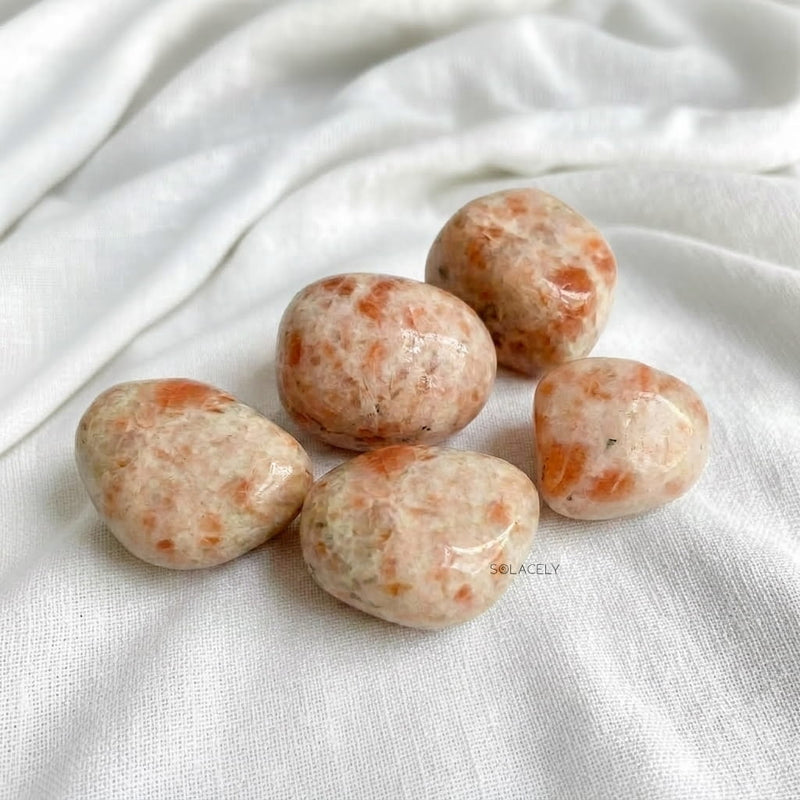
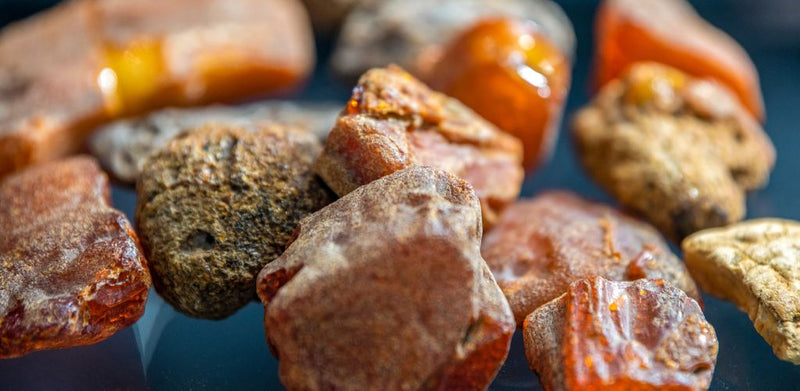
Sunstone is a plagioclase feldspar, usually an oligoclase, or in the Oregon material a labradorite. The shimmer comes from countless microscopic platelets suspended inside the stone, catching light as it turns. The Gemological Institute of America calls that effect aventurescence.
In most sunstone those platelets are iron oxides, which gives the familiar orange to red brown body colour. Oregon material carries metallic copper instead and can show reds and greens no other deposit produces. Oregon made it the state gemstone in 1987, and the deposits near Plush remain the best known American source, with India, Tanzania, Norway, Madagascar and Russia supplying the rest.
At 6 to 6.5 it suits pendants and bracelets well. Its two cleavage directions mean rings ask more of it than it comfortably gives. Our sunstone guide covers the grading.
What is turquoise, and how do you choose one?
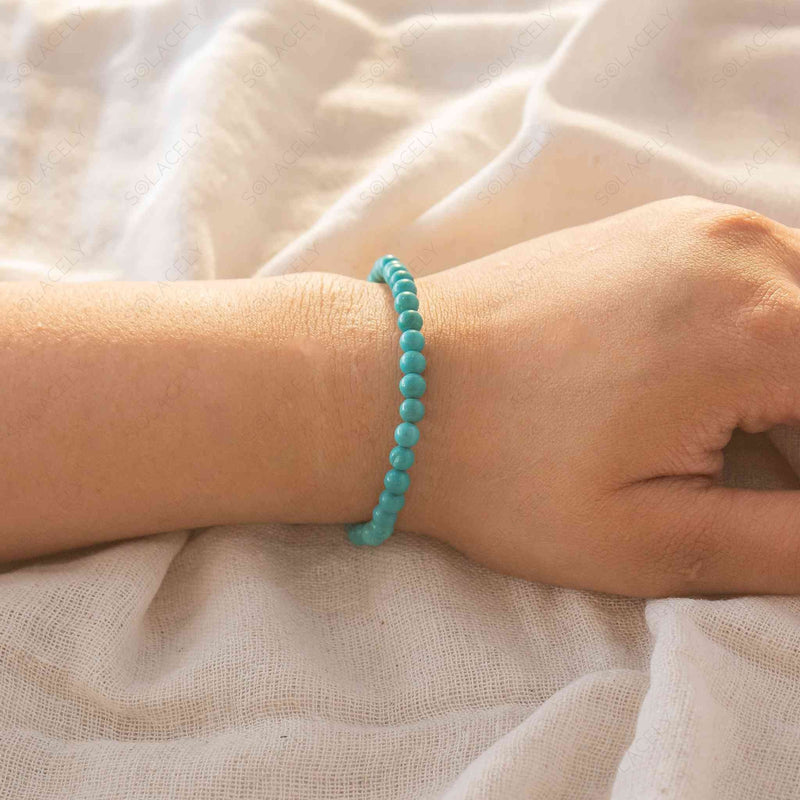
Turquoise is a hydrous copper aluminium phosphate. Copper gives the sky blue, and iron substituting into the structure pushes it towards green. It sits at 5 to 6 on the Mohs scale, though that single figure hides a lot: dense material from named mines like Sleeping Beauty, Kingman or Number 8 sits at the top of the range, and more porous material sits well below it.
The Persian mines at Neyshabur have been worked since at least 5000 BCE, and the deep robin's egg blue they produce became the international benchmark for turquoise colour. Other major sources are the American Southwest, China, Mexico and the Egyptian Sinai.
Stabilising is the thing worth understanding before you buy. Turquoise is naturally porous, so the trade has for over a century impregnated it with a clear resin under pressure, which hardens the stone and holds its colour against the oils and lotions of daily wear. It is genuine turquoise, treated by a settled and well documented craft, and it is what makes a wearable turquoise bracelet practical at all. Untreated material behaves differently, developing a patina over years as it takes in body oils and drifts slowly from blue towards green. Some people specifically want that living quality and pay a premium for it. Ask your seller which you are looking at, then choose the blue and the behaviour you actually want. Our turquoise guide goes deeper.
Seven thousand years across three unrelated cultures
Turquoise has the widest spread of independent ancient use of any stone in the range, and the specifics are genuinely striking.
- Persia, from around 5000 BCE. Evidence from the Deh Luran Plain in western Iran dates use to roughly seven thousand years ago. The Persian word for it meant victory, and the English name arrived via French as the Turkish stone, because Persian material reached Europe through Turkish traders.
- Egypt, from around 3000 BCE. Mining at Wadi Maghara and Serabit el-Khadim in the Sinai began in the First Dynasty, and the inscriptions the miners left are among the oldest preserved Egyptian writing. Turquoise sits in royal jewellery alongside lapis and carnelian.
- The American Southwest, from around AD 900. The Cerrillos Hills in New Mexico have been mined for more than a thousand years, making them the oldest continuously worked site on the continent. Pre-Hispanic miners used stone hammers, antler picks and fire to crack the bedrock.
Three unrelated civilisations arriving independently at the same blue phosphate is the kind of convergence that makes the stone interesting quite apart from any modern framing.
How do you wear the pairing?
Five formats cover it, and the travel one has the oldest pedigree.
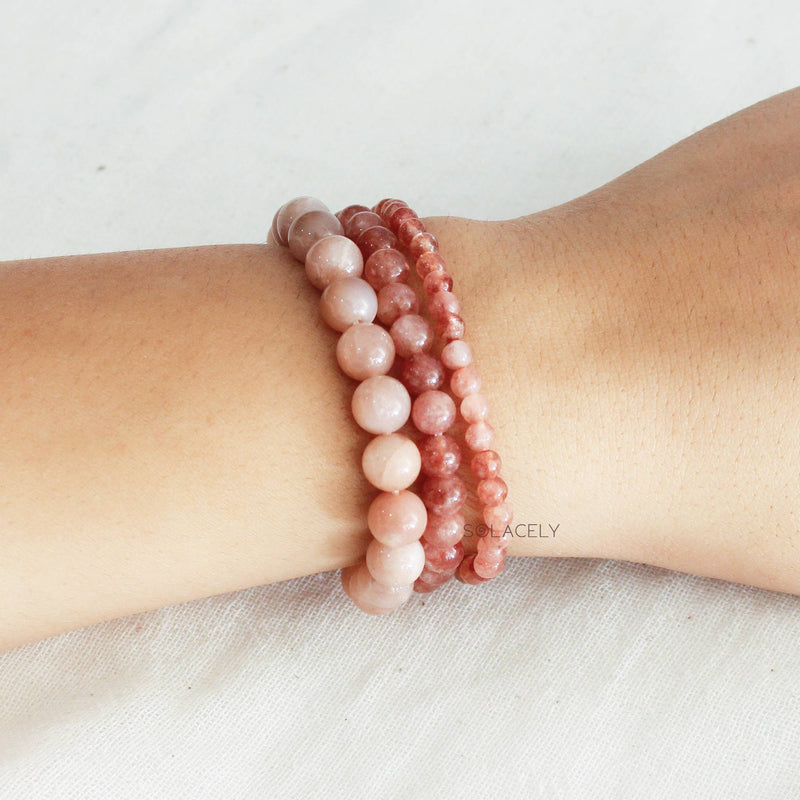
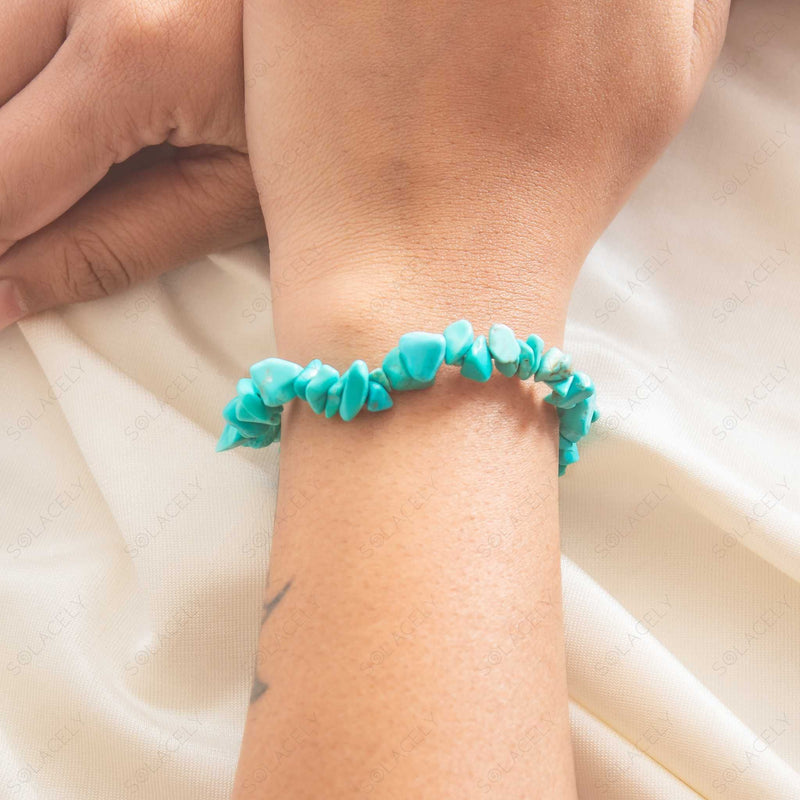
- Beaded stack. Alternating warm gold and sky blue. The contrast is the point, and stabilised turquoise wears like any other bead.
- Pendant pair. Kindest to the turquoise, since a pendant meets far less skin oil and abrasion than a wrist does.
- Statement piece. Turquoise has a long tradition in Southwestern silverwork, Persian inlay and Egyptian collars. One turquoise statement piece with a smaller sunstone leans into that without going themed.
- Desk placement. Sunstone near where you do the work, turquoise near the phone or the camera where you do the talking.
- Travel set. Turquoise is the traveller's stone in Persian, Tibetan and Native American tradition alike. A small tumble in a travel pouch with a sunstone for energy is the classic pairing.
How do you care for them?
Care for the pair at turquoise's standard, which is the more demanding of the two, and porosity rather than hardness is what you are managing.
Wipe both with a slightly damp soft cloth and dry immediately. Avoid soaking the turquoise, since water works into the pores and lifts the surface over time. Stabilised material tolerates more than untreated, and if you are not sure which you have, default to the gentler routine. Skip ultrasonic and steam cleaners on both.
Three habits keep turquoise looking new. Keep perfume, lotion, hairspray and sunscreen away from it, since those seep in and stain. Keep it off hot surfaces and out of long sun, because heat drives moisture out and dulls the colour over years. And store it in its own pouch, because sunstone is the harder of the two and will mark it in shared storage.
For cleansing, moonlight suits both and is the safer default for turquoise. Smoke and sound work for both as well. Skip salt water on the turquoise entirely, since saline reacts with the copper rich matrix.
The properties described here reflect traditional and cultural belief around crystals. They are offered for reflection and wellbeing and are not medical advice, a diagnosis, or a treatment for any condition. If you are managing a health concern, please speak with a GP or a qualified practitioner. Keep small stones away from young children, and never place crystals in drinking water.
Sources
- Gemological Institute of America, Sunstone Description
- Gemological Institute of America, Turquoise Description
Written by Chetena Sharma. Reviewed by the Solacely editorial team.
Frequently asked questions
About the author


Written by Chetna Sharma, crystal healing practitioner and co-founder of Solacely. Chetna has worked with healing crystals for over a decade and curates Solacely's protective stone collection.