Sunstone is used for abundance in the sense of confidence and initiative rather than money arriving on its own. It is a feldspar whose glittering internal flash comes from tiny reflective platelets, and the tradition pairs it with citrine and pyrite in prosperity work. The stone is kept as a daily cue for exactly those qualities.
Key takeaways
- Sunstone is a feldspar, and its spangled flash, called aventurescence, comes from minute copper or hematite platelets inside the crystal.
- In crystal practice it is used for confidence, initiative and visibility, which is the heart of what the abundance tradition means here.
- It sits around 6 to 6.5 on the Mohs scale and has cleavage planes, so bracelets and pendants outlast rings.
- Goldstone, a manufactured glass with copper flecks, is sold as sunstone constantly. The flash pattern gives it away.
- Prosperity associations are cultural tradition, not financial advice or a demonstrated effect.
What sunstone is, and why it looks like that
Sunstone belongs to the feldspar group, which Geology.com describes as the most abundant mineral group in the Earth's crust. On its own the base material is unremarkable. What makes sunstone sunstone is entirely optical.
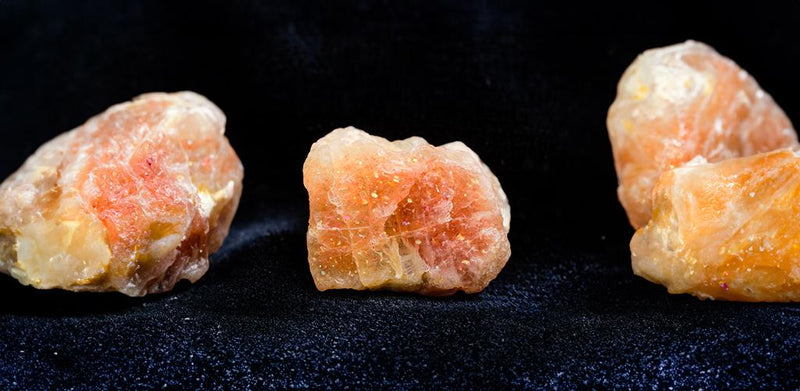
Suspended inside the crystal are minute reflective platelets, usually copper or hematite, oriented in parallel planes. As the stone moves, they catch light and throw off a spangled orange flash. Geology.com calls this effect aventurescence, and it is the whole basis of the stone's value and its reputation.
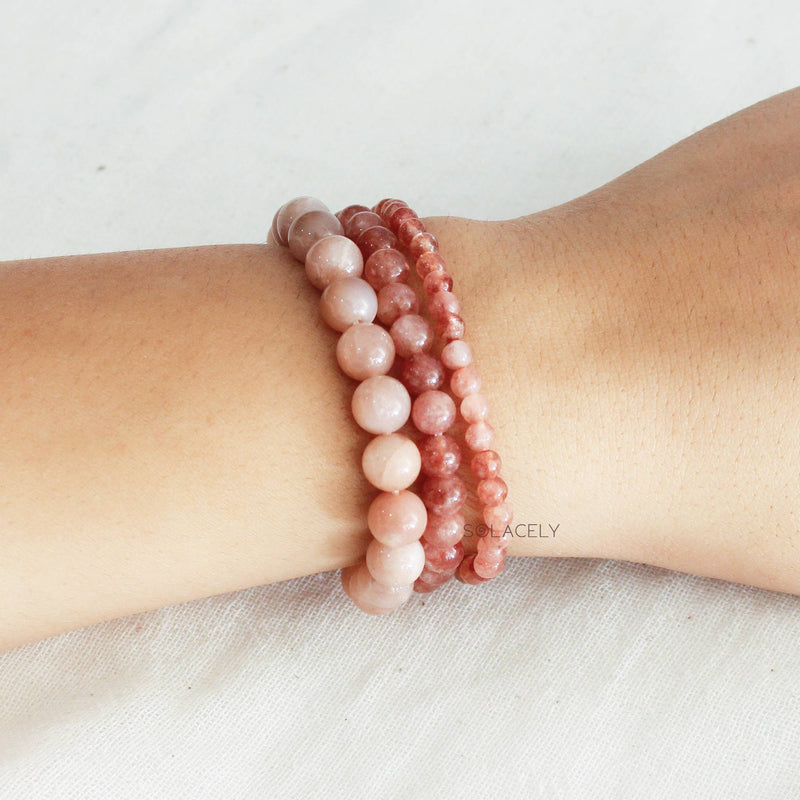
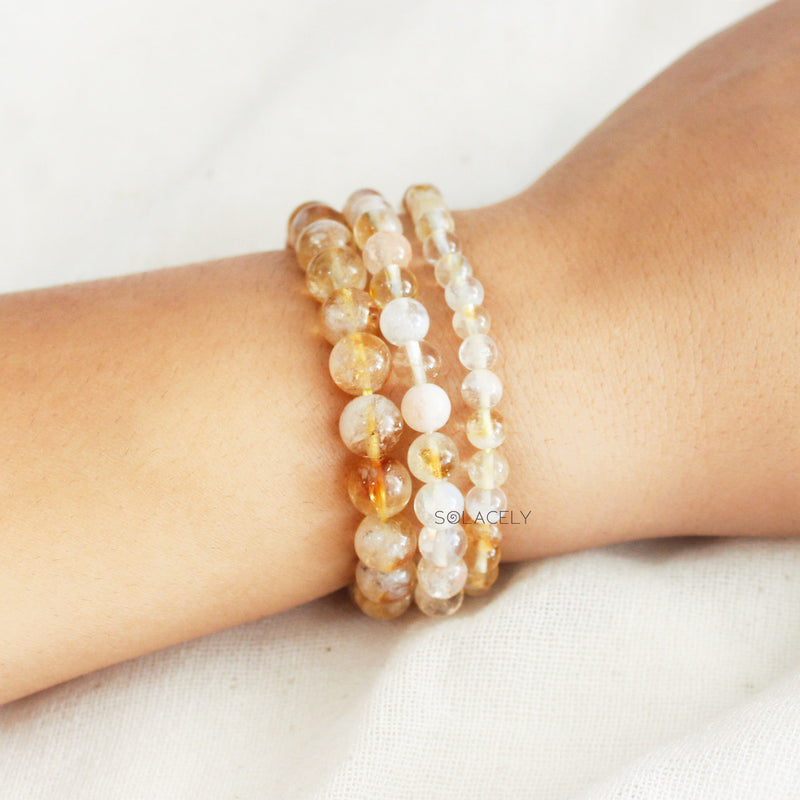
That matters for how you use it. Sunstone kept still in a drawer shows almost nothing. A sunstone bracelet on a moving wrist shows the flash constantly, which is why bracelets outsell every other format. The sunstone meaning and properties guide covers the mineralogy in more depth.
What abundance actually means here
It is worth being precise about what sunstone is kept for. Where citrine and pyrite are the traditional money stones, sunstone sits a step earlier. Its association is with the qualities that precede money in a working life: confidence, visibility, willingness to ask, and enough energy to follow through.
That is a smaller claim and a far more defensible one. People who reach for sunstone are usually not short of ideas. They are short of nerve, or coming out of a stretch where everything felt like effort. The stone is chosen as a daily reminder to act rather than as a charm that acts for them.
Framed that way it earns its place. Framed as a device that generates income, it will disappoint and it deserves to. For the stones more conventionally associated with money itself, see crystals for money.
How sunstone is traditionally used
The practice is simple and it works best when it is tied to something you already do.
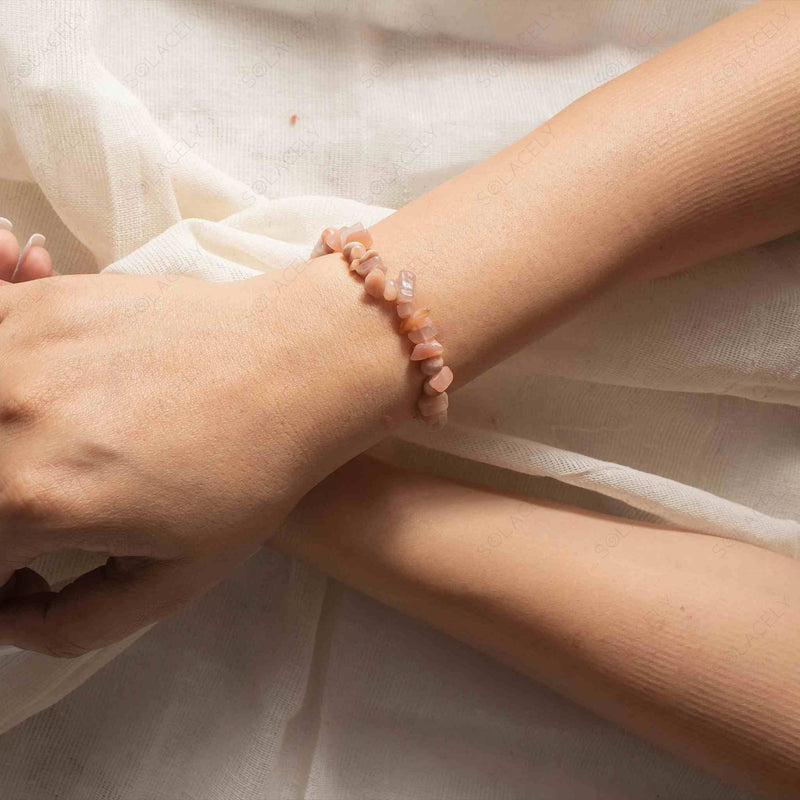
- Worn daily. A bracelet on the wrist you gesture with. The flash catches your eye during the day, which is the entire mechanism.
- Before a difficult conversation. Held for the length of a few slow breaths. A physical pause before asking for something.
- On a desk. Placed where light hits it, as a visible marker for work that requires initiative rather than maintenance.
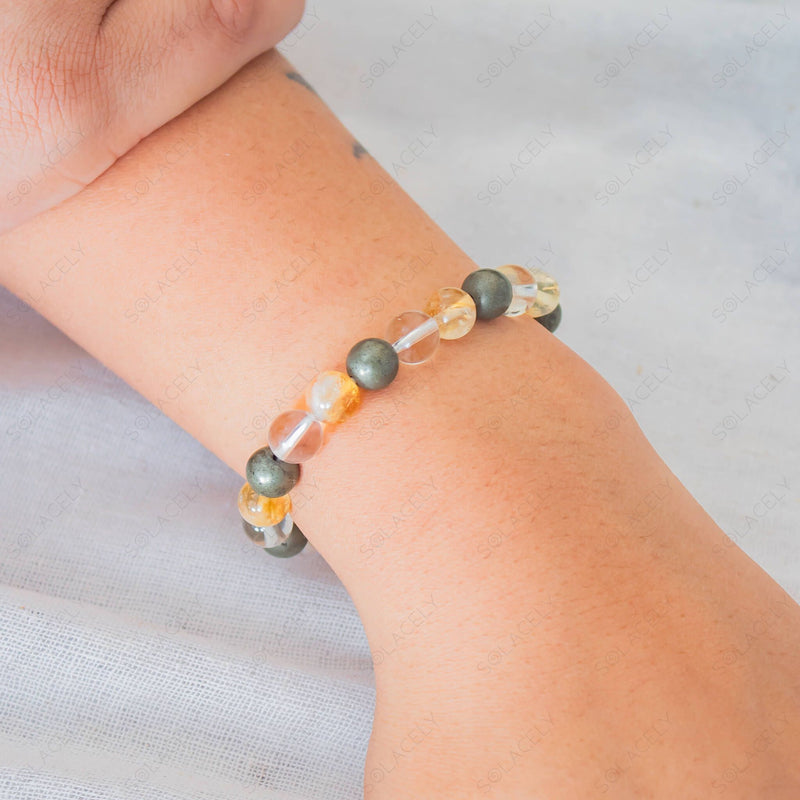
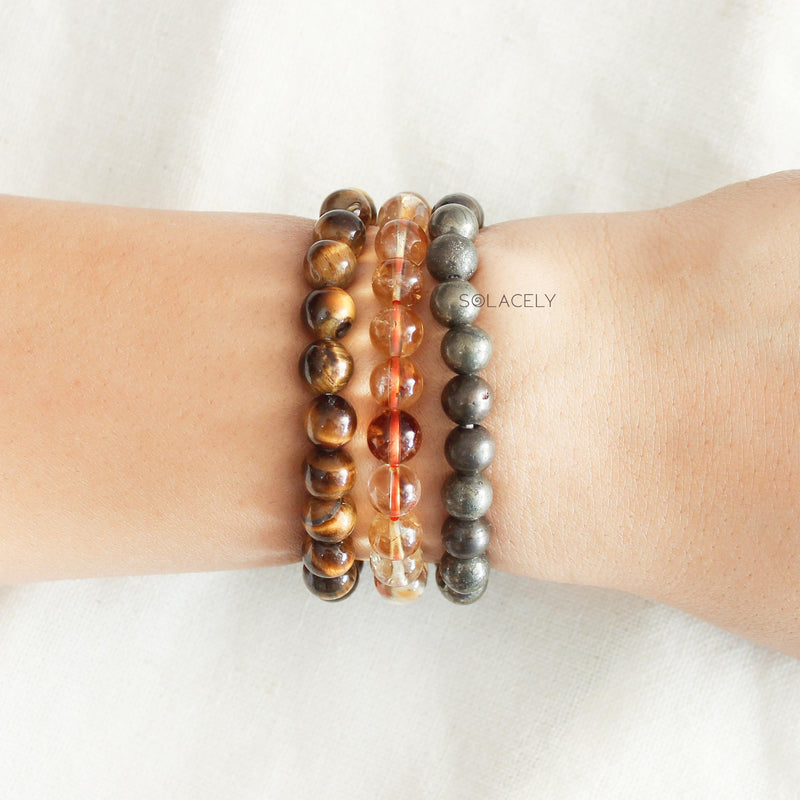
- Paired. With citrine for warmth and optimism, or with pyrite when the problem is starting rather than believing.
Three stones is the sensible ceiling for any intention set. Beyond that the arrangement becomes decoration and the cue stops carrying meaning. If manifestation practice specifically is what you are after, sunstone for manifestation covers that framing directly.
Buying sunstone without buying glass
Sunstone is imitated more than most stones because the effect is easy to fake. Goldstone is manufactured glass with copper flecks suspended in it. It is a pleasant material with a genuine history as an ornamental glass, but it is not a mineral and it should cost a fraction of real sunstone.
| Test | Real sunstone | Goldstone |
|---|---|---|
| Flash distribution | Uneven, concentrated in some areas | Perfectly uniform across the piece |
| Fleck shape | Irregular platelets of varying size | Identical size and shape throughout |
| Body colour | Peach to orange, often semi transparent | Dense, saturated, usually opaque brown-orange |
| Under magnification | Platelets sit in parallel planes | Flecks scattered randomly in glass |
| Price | Modest, but not pennies | Very cheap |
Also watch for dyed or heat treated quartz sold as sunstone. If a seller cannot tell you whether a piece is feldspar or glass, treat that as the answer and move on.
Care and durability
Sunstone is not a hard stone. At roughly 6 to 6.5 on the Mohs scale it will be scratched by quartz, which covers most of a typical collection, so store it separately or in a soft pouch. Check anything new against the Mohs hardness scale before putting it in the same box.
Its real weakness is not hardness but cleavage. Like all feldspars, sunstone splits along flat internal planes, so a single sharp knock can crack a piece that has survived years of gentle wear. That is why rings are a poor format unless the stone is bezel set with the edges protected.
Cleaning is straightforward: warm water, mild soap, a soft cloth, dried fully. Never use an ultrasonic or steam cleaner on a feldspar. For energetic cleansing, short sunlight sessions are the traditional match, and moonlight or sound work equally well.
Who this stone suits
It suits people whose difficulty is nerve rather than direction. Freelancers who undercharge, anyone returning to work after a break, and people who describe themselves as competent but invisible are the recurring profiles. The common thread is having the capability and not putting it forward.
It suits badly anyone who wants a stone to substitute for action. Sunstone's whole traditional character is about doing the thing, so a practice that consists of buying it and waiting works against the point. Used alongside the actual work, it is one of the more coherent choices on the shelf. For the broader set, see crystals for prosperity and sunstone for success.
Where sunstone comes from
Most sunstone on the affordable market is Indian or Tanzanian material, typically a warm peach with fine hematite platelets giving a subtle shimmer. It is pleasant, widely available, and what nearly every bracelet is made from.
Oregon sunstone is the notable exception and a genuinely different product. It is a labradorite feldspar containing metallic copper platelets, and it occurs in colours running from clear through peach to red and a rare green. Larger clean stones are faceted rather than tumbled and are priced accordingly, closer to fine coloured gemstones than to crystal shop beads.
If a seller quotes Oregon sunstone prices for material that looks like an ordinary peach bead, ask where it was mined. The copper content and the colour range are the distinguishing features, and any seller dealing in the real thing will know both without hesitating.
Pairing sunstone with other stones
Sunstone is rarely worn alone, and the partner stone changes the character of the set considerably. Three combinations come up repeatedly, and each addresses a different version of the same problem.
- With citrine. The warmest pairing. Both are lifting stones, so this suits flatness and low motivation rather than anxiety.
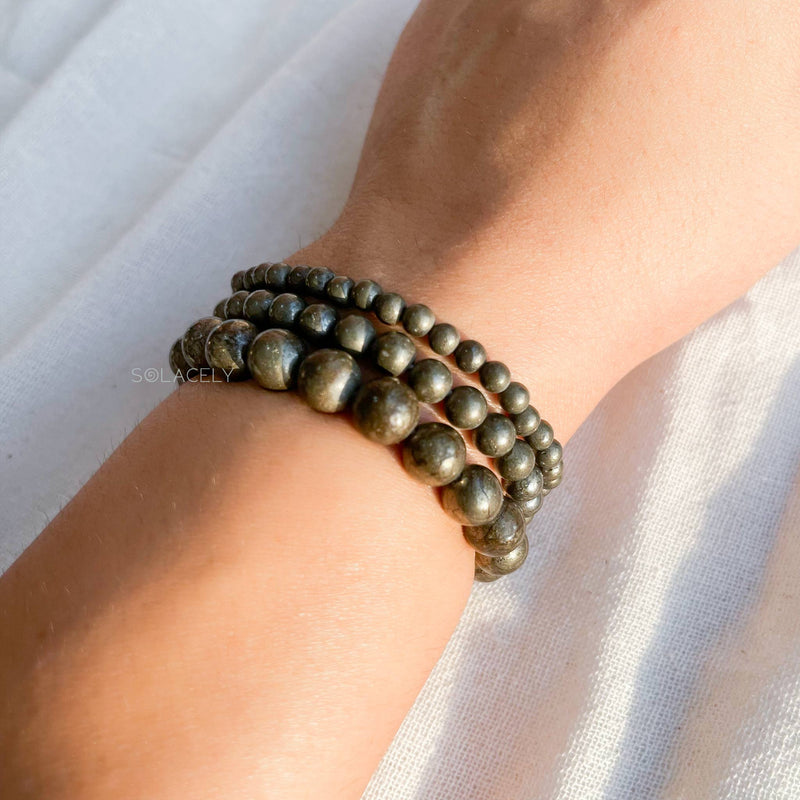
- With pyrite. The most practical. Pyrite is associated with starting, so this pairs visibility with momentum.
- With moonstone. The balanced version, sun and moon, chosen by people who want warmth without losing steadiness.
- With hematite. Add this if you are already running hot. It gives the set something to push against.
The properties described here reflect traditional and cultural belief around crystals. They are offered for reflection and wellbeing and are not financial or medical advice. For decisions about money, please speak with a qualified adviser, and for a health concern, with a qualified healthcare professional.
Sources
Written by Chetena Sharma. Reviewed by the Solacely editorial team.
Frequently asked questions
About the author


Written by Chetna Sharma, crystal healing practitioner and co-founder of Solacely. Chetna has worked with healing crystals for over a decade and curates Solacely's protective stone collection.