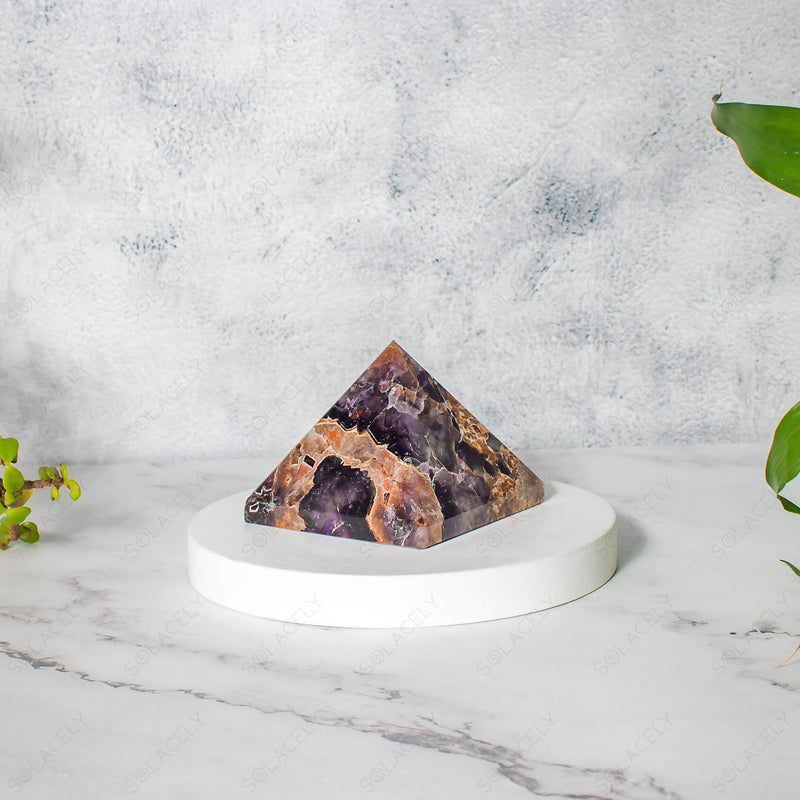
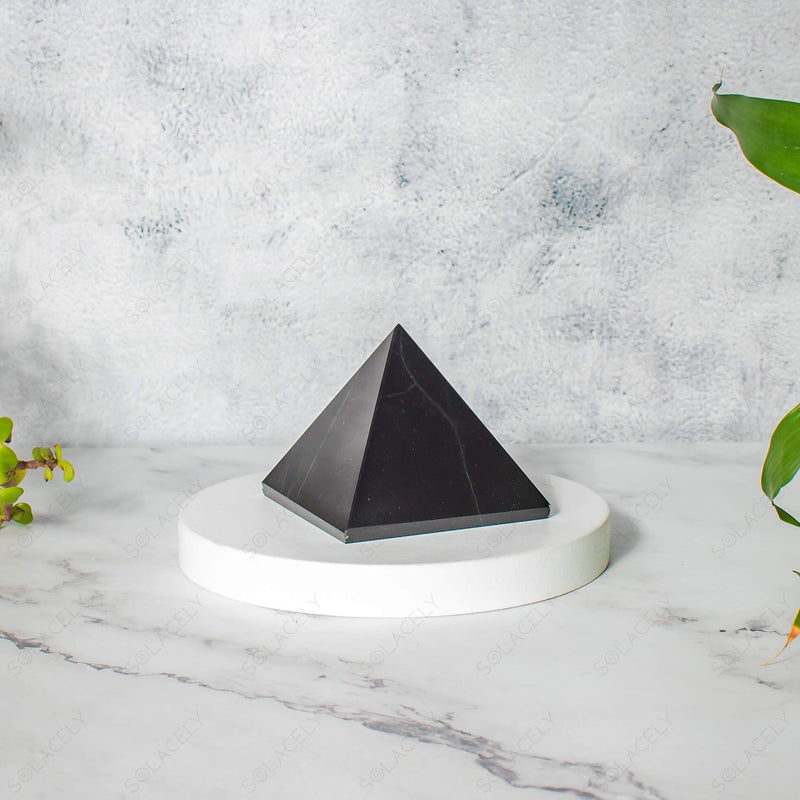
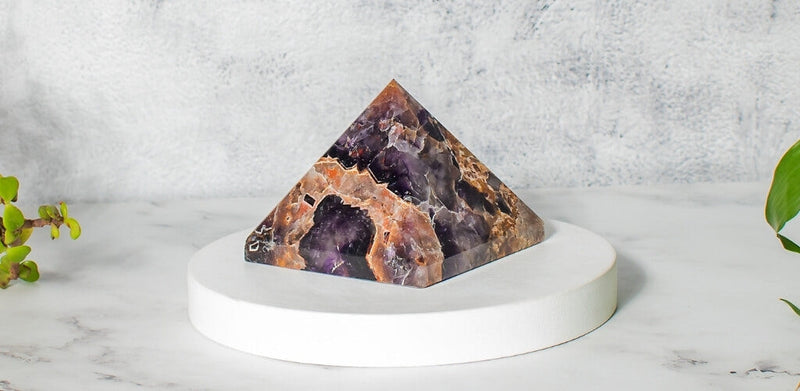
A vastu pyramid is a small four-sided pyramid, made of crystal, resin, copper or wood, placed in a home or office as a vastu shastra remedy. It is placed to mark a corrective intention for a room, and it belongs to a tradition that has been practised for a very long time.
Key takeaways
- A vastu pyramid is a remedial object in vastu shastra, the traditional Indian system of building placement and orientation.
- Common materials are clear quartz, amethyst, copper, resin and wood. Crystal versions are the most sold.
- They are placed for a stated purpose: a room that feels wrong, a corner used for work, or a direction flagged as a vastu dosh.
- The pyramid works as a marker of intention for a space, which is how vastu practice itself describes it.
- Treated as a cultural practice and an intention marker, it is a reasonable object. Treated as a device, it is not.
What a vastu pyramid is
Vastu shastra is a traditional Indian body of knowledge covering the orientation, layout and proportion of buildings. It assigns qualities to directions, prescribes where particular rooms and activities belong, and offers remedies where a building cannot be changed. The pyramid is one of those remedies.
Physically it is simple: a squat four-sided pyramid, usually between 3 and 10 cm at the base, sometimes hollow, sometimes solid, occasionally a lattice of smaller pyramids stacked into a larger one. The material varies by tradition and by seller, and the price varies far more than the object justifies.
What distinguishes it from ordinary decor is entirely the intention attached. It is placed deliberately, in a named direction, for a stated reason. That deliberateness is the practice. If you want the wider set of remedies, crystals for vastu remedies covers the others.
Which material, and why it is usually quartz
Clear quartz dominates the market, and the reason is availability rather than any special property. Geology.com describes quartz as one of the most abundant minerals on Earth, which is why a carved quartz pyramid costs what it does. It is also hard, at 7 on the Mohs scale, so it survives being dusted and moved.
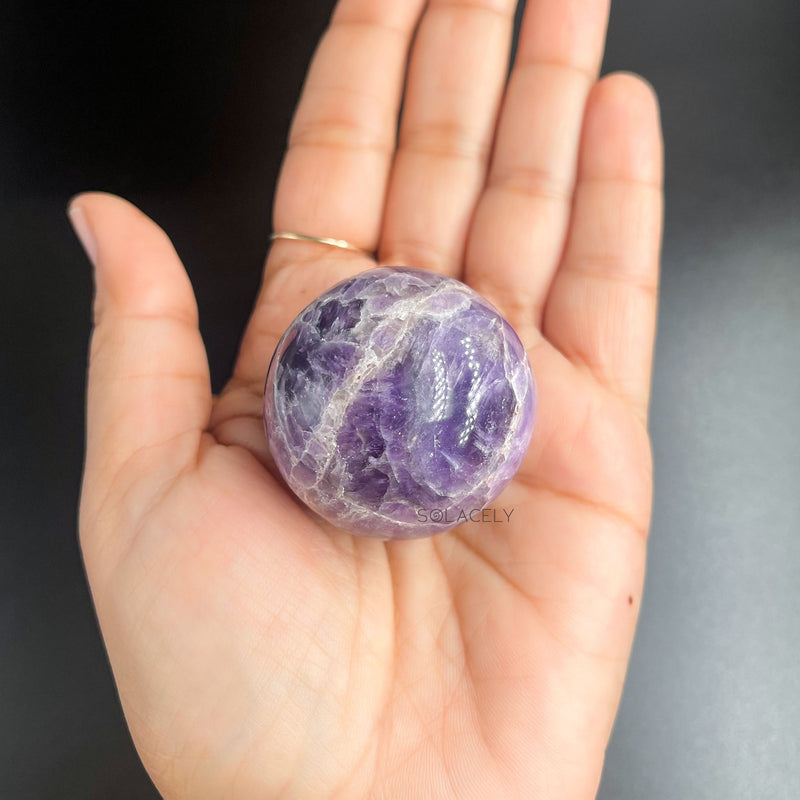
Amethyst is the second most common. The Gemological Institute of America describes it as the purple variety of quartz, coloured by iron and natural irradiation. It has the same hardness and one extra care requirement: prolonged direct sunlight fades the purple, so do not put an amethyst pyramid on a sunny sill.
Copper and resin pyramids also sell widely. Copper suits anyone who wants the object to look like an instrument rather than a crystal. Resin is inexpensive and fine, provided it is sold as resin and priced accordingly rather than described as stone.
The "science behind pyramids": what can and cannot be said
This deserves a direct answer. Within vastu shastra the pyramid is a corrective device: its form is understood to gather and settle the character of a space, and it is placed where a room is felt to be out of balance. The claims worth attending to are those traditional ones about intention and placement, rather than the assorted internet stories about preserving food or sharpening blades, which were never part of vastu practice in the first place.
What is true is duller and more interesting. A pyramid is a structurally efficient shape, which is why it appears in monumental architecture across unrelated cultures. Quartz does exhibit piezoelectricity, meaning it generates a small voltage under mechanical stress, and that property is genuinely used in watches and oscillators. Neither fact supports the claim that a pyramid on a shelf does anything to a room.
Being straight about this does not undermine the practice. A vastu pyramid works the way a household shrine or a framed motto works: it is a placed object that keeps an intention visible. That is a real effect on the person, not on the physics of the room, and it is worth stating honestly.
Where a vastu pyramid is traditionally placed
| Location | Traditional reasoning | Practical note |
|---|---|---|
| Northeast corner | The direction associated with clarity and water in vastu | The most commonly cited placement overall |
| A study or work desk | Focus and steady application | Keep it small so it does not crowd the working surface |
| Above a doorway | Marking a threshold flagged as a vastu dosh | Fix it properly. A falling stone pyramid is a hazard |
| Main entrance area | Setting the tone as people arrive | Off the floor, away from the door swing |
| Bedroom | Rest, if a calming stone is used | Amethyst rather than clear quartz is the usual choice |
| Bathroom or damp areas | Avoid | Humidity dulls polish and corrodes copper |
Practitioners differ on specifics, which tells you how much of this is convention. If a particular direction in your home has been flagged, crystals for vastu dosh covers the direction-by-direction remedies in more detail.
Choosing one without overpaying
Price varies enormously for objects that are functionally identical, so a few checks help.
- Ask what it is made of. Resin, glass and stone all look similar in photographs. Stone is cool to the touch and noticeably heavier.
- Check the faces. A well cut pyramid has four even triangular faces meeting at a clean point. Wonky faces are a sign of rushed carving.
- Check the base. It should sit flat without rocking. A rocking pyramid has an uneven base and will get knocked over.
- Buy on craft, not promises. Choose a piece for its material and finish, and treat any guaranteed health or financial result with caution whatever the seller.
Size is a matter of the surface, not of potency. A 5 cm pyramid on a desk does the same job as a 15 cm one on a sideboard, and the smaller one is less likely to be pushed off. For office specific placement, see pyramid for the office desk.
Care
Quartz and amethyst pyramids need very little. Dust with a dry soft cloth, and for a deeper clean use warm water with mild soap and dry fully. Skip salt water, which is unnecessary and hard on polish, and keep amethyst out of prolonged sun.
Copper pyramids will tarnish. That is normal oxidation rather than damage, and a little lemon juice with salt or a proprietary copper polish restores the shine if you want it. Some traditions prefer the patina left alone.
Whatever the material, the useful maintenance is not energetic. It is remembering why you put it there. An object that has become invisible through familiarity has stopped doing the one thing it can genuinely do. For placement across a whole home, crystals for the home covers the wider layout.
Types of vastu pyramid you will see
Sellers use a handful of names, and they refer to construction rather than to different powers. Knowing them keeps you from paying a premium for a shape.
- Solid pyramid. A single carved piece of stone, wood or resin. The most common and the most durable.
- Multi pyramid or 9 in 1. A grid of small pyramids forming a larger one. Usually resin or copper. Visually striking, functionally identical.
- Hollow copper pyramid. An open frame of copper rods. Light, cheap to ship, and prone to bending out of square.
- Chip filled pyramid. Gemstone chips set in clear resin. Fine as decor, but it is resin with chips in it, not a stone pyramid.
None of these has a documented advantage over the others. Choose on how it looks in the space and how well it is made, and be sceptical of any pricing structure that implies a stronger effect from a more elaborate arrangement.
Using one honestly
The version of this practice that holds up is modest and worth stating. Pick one place, put the object there for one stated reason, and let it be a thing you notice. That works the way a photograph on a desk works, and nobody finds a photograph controversial.
What is worth avoiding is escalation. Buying a pyramid for every room, replacing them when things go badly, or reading a difficult month as evidence that the placement was wrong turns a calm practice into an anxious one. If a home genuinely has a layout problem, an architect will do more than an ornament will.
Vastu shastra is a traditional cultural and architectural system, and the remedies described here reflect that tradition. They are offered for reflection and wellbeing and are not medical, financial, or structural advice. For a health concern, a financial decision, or any question about a building's structure, please consult a qualified professional.
Sources
Written by Chetena Sharma. Reviewed by the Solacely editorial team.
Frequently asked questions
About the author


Written by Chetna Sharma, crystal healing practitioner and co-founder of Solacely. Chetna has worked with healing crystals for over a decade and curates Solacely's protective stone collection.