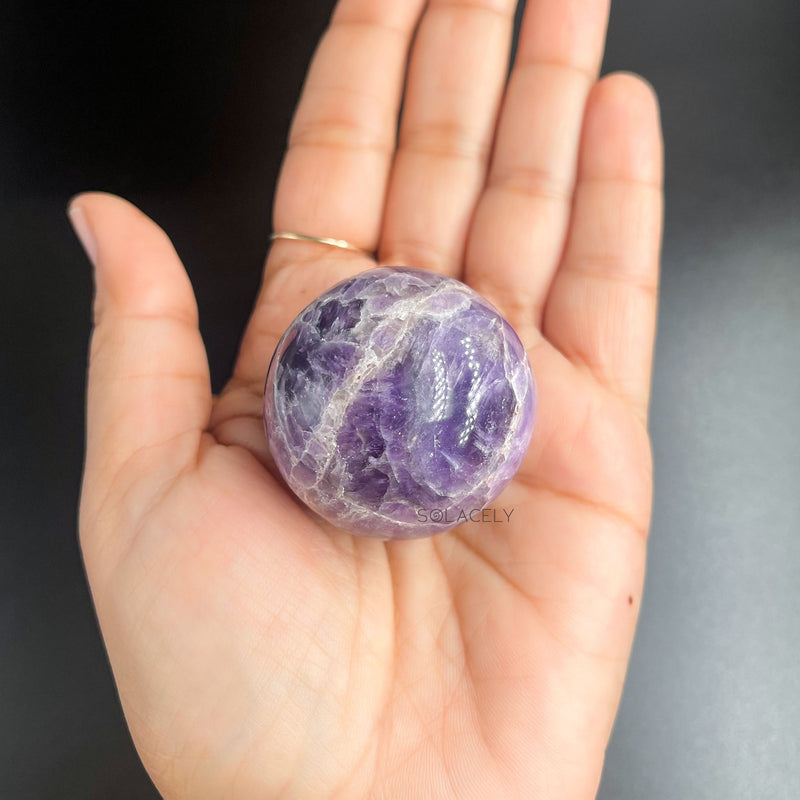
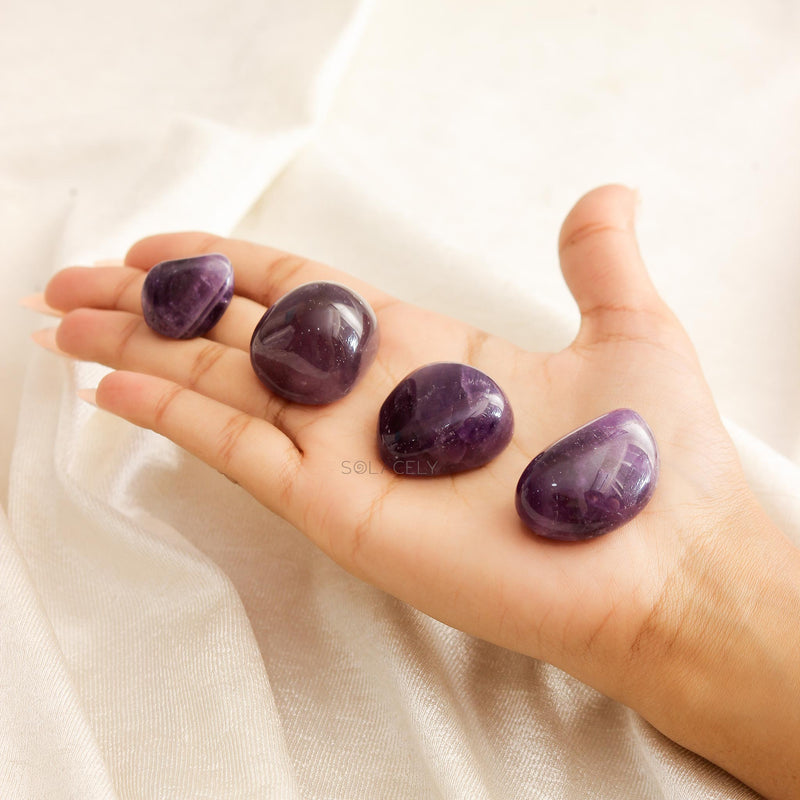
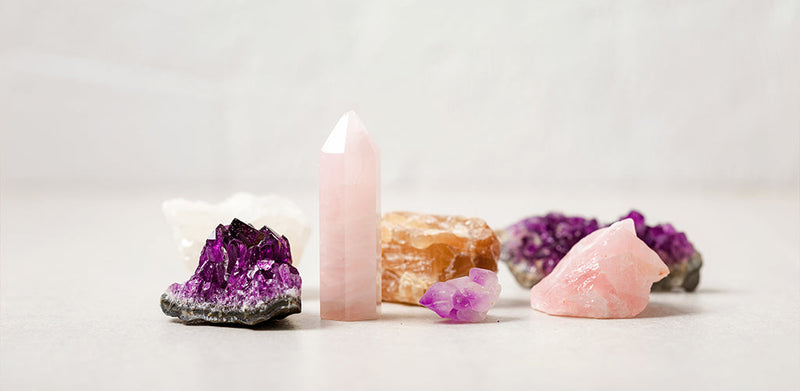
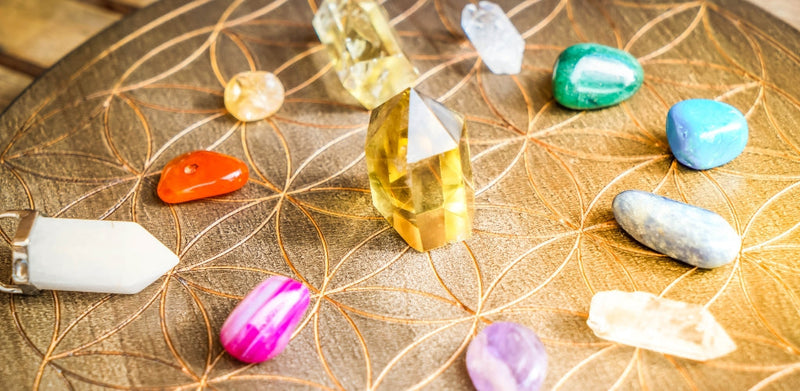
Amethyst and citrine are the same mineral. Both are quartz, both sit at 7 on the Mohs scale, and the difference between the violet and the golden is how iron sits inside the crystal. They are sisters, which is why they wear, clean and store identically. This guide covers the pairing, ametrine, and how to choose.
Key takeaways
- Amethyst and citrine are two colours of one mineral, quartz, at the same hardness of 7 on the Mohs scale.
- Iron is the colouring element in both, so the pairing is a family reunion rather than two unrelated stones set side by side.
- Ametrine carries both colours in a single crystal, and its one commercial source is the Anahí mine in eastern Bolivia.
- Warming quartz to its golden tones is long established across the coloured stone trade, and the colour is permanent and stable.
- There is no hardness gap to manage, so bracelets, stacked rings and layered pendants all work without a caveat.
- Both stones fade in prolonged direct sun, so keep them off a bright windowsill and cleanse them in moonlight instead.
Are amethyst and citrine the same stone?
Yes. Amethyst and citrine are both quartz, silicon dioxide with the same crystal structure and the same hardness. Iron is the colouring element in each of them, and the shade it produces depends on the state that iron is in and on the conditions the crystal grew under. Two colours, one mineral.
That single fact does more work than it looks like it should. Most stone pairings come with something to manage, usually a hardness gap or two different cleaning routines. This one has neither. Amethyst and citrine scratch the same things, are scratched by the same things, take the same cleaning and sit happily in the same pouch. Gemmological grading puts quartz at 7 on the Mohs scale, hard enough for daily jewellery and comfortable in a ring.
The visual case is where the pairing really earns its keep. Cool violet against warm gold is a proper contrast, the kind that reads clearly from across a room rather than looking like two beads that happen to be near each other. If you want the wider family picture, our guide to the types of quartz crystals lays out where rose quartz, smoky quartz, clear quartz and these two sit relative to one another.
Traditionally the two are kept for different halves of the same day. Amethyst is the evening stone, long associated with calm, quiet and the crown of the head. Citrine is the morning one, kept for confidence, warmth and the solar plexus. Worn together, people describe the combination as a settled kind of ambition: steady enough to think clearly, warm enough to actually start. Our fuller notes on amethyst meaning and properties go deeper into the purple half of the pair.
| Variety | Colour range | Mohs | Traditionally kept for |
|---|---|---|---|
| Amethyst | Pale lilac to deep grape violet | 7 | Calm, clarity, evening ritual |
| Citrine | Soft lemon through honey to deep madeira | 7 | Confidence, warmth, abundance |
| Ametrine | Violet and gold zones in one crystal | 7 | Balance, holding both intentions at once |
Ametrine, where both colours meet in one crystal
Ametrine is quartz that carries amethyst violet and citrine gold in a single crystal, with the two zones meeting along a boundary that can be strikingly sharp. Gemmological sources place its one commercial source in eastern Bolivia, close to the Brazilian border, at the deposit known as the Anahí mine.
The two colours arrive together because of a temperature difference across the growing crystal. As the quartz formed and cooled underground, one part of it experienced conditions that favoured the violet colour centres while another part settled into the golden ones. The result is a stone that is chemically uniform from end to end and visibly two things at once, which is exactly why cutters like it. Faceted ametrine is usually cut as a rectangular step cut so the boundary runs cleanly down the middle of the stone.
The mine carries the name Anahí, and the story passed down with it tells of a Bolivian princess of that name and a Spanish captain she married, the deposit given as part of her dowry. It is a romantic piece of provenance and sellers have told it for decades. Whether you buy ametrine for the story or for the colour break, the stone itself is the same quiet proof that amethyst and citrine were never two separate things.
For anyone building a collection, ametrine is a neat shortcut. One stone, both intentions, no decision about which bracelet to wear on a given morning. A cabochon pendant shows the gradient best. A faceted ring stone shows the sharp line best. Both are quartz at 7, so neither needs special handling.
Choosing the shade of citrine you want
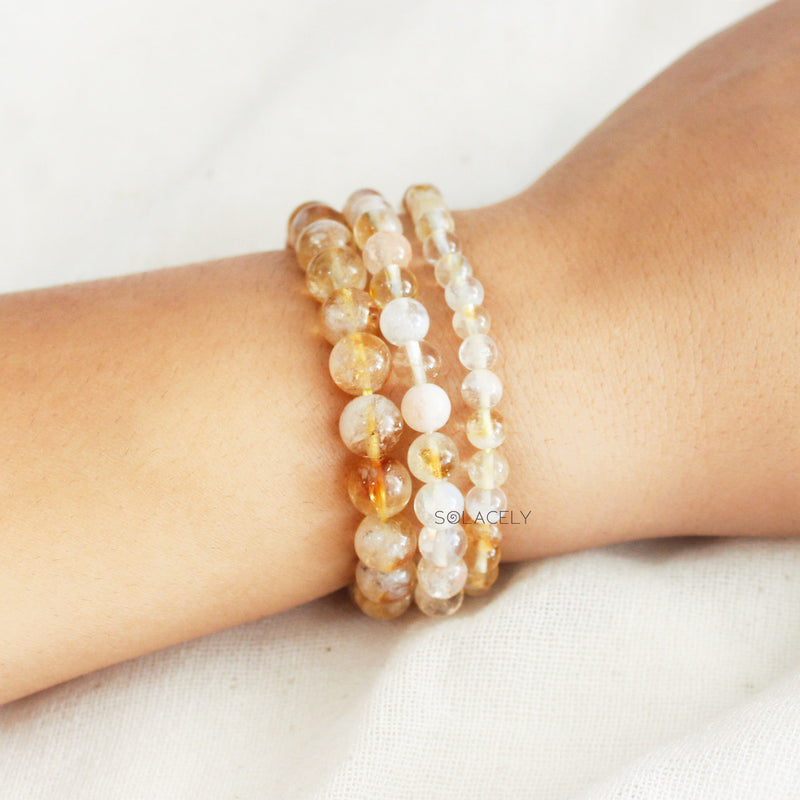
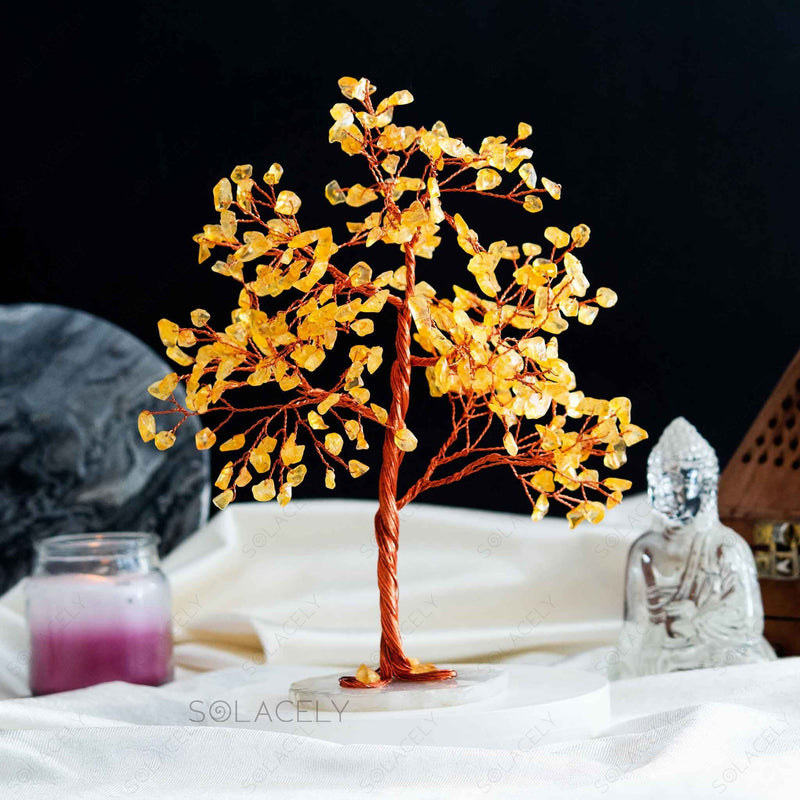
Citrine runs from a soft lemon through honey to a deep madeira orange, and every shade in that range is quartz doing what quartz does with iron. The choice is aesthetic rather than technical, because the whole range shares one hardness, one care routine and one long tradition of being kept for confidence and abundance.
Warming quartz to bring out its golden tones is a long established practice right across the coloured stone trade, and the colour it produces is permanent and stable, which leaves you with one genuinely pleasant decision: which shade of citrine you actually want to look at. Amethyst and citrine are sisters from the same mineral family, not an original and a stand in, and a warm honey citrine sitting next to a deep violet amethyst is one of the best colour pairings in the quartz family.
In practice, people tend to sort themselves into two camps. The pale lemon shades read light and modern, sit well against silver, and are easy to wear every day without the bracelet announcing itself. The deep madeira and amber shades read rich and vintage, pair beautifully with gold, and hold their own next to a dark amethyst. Our guide to citrine colour walks through the full range with more detail, and the broader citrine meaning and properties guide covers what the stone is traditionally kept for.
One practical tip when you are pairing the two. Hold the citrine against the amethyst you already own, in daylight, before you commit. A pale amethyst and a pale citrine can wash into each other, while a deep amethyst next to a pale citrine gives you the sharpest contrast. There is no wrong answer, only the one you will actually reach for.
How to wear amethyst and citrine together
This is the easiest pairing in any of our combination guides, because there is nothing to balance. Both stones are quartz at 7 on the Mohs scale with the same care needs, so you can stack them, set them side by side, or layer them on separate chains without a single compatibility caveat.
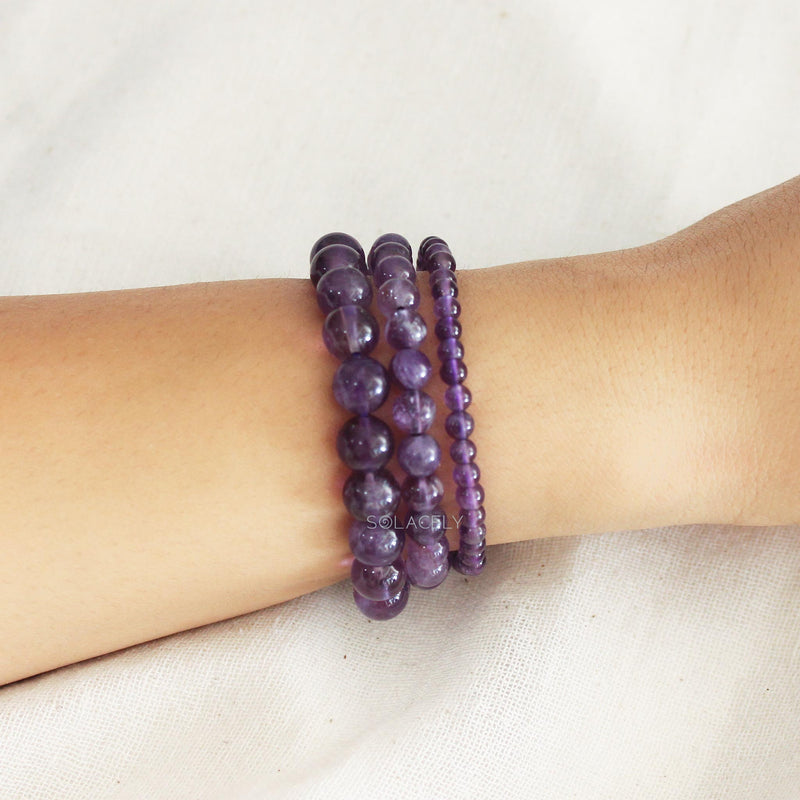
The beaded stack. Alternating amethyst and citrine beads in 6mm or 8mm is the most popular format and the easiest to wear daily. Two separate bracelets worn on the same wrist work equally well as one mixed strand, and they let you drop one on days you only want the other. Tradition puts the receiving stone on the left wrist and the projecting one on the right, which is covered further in our note on which hand to wear a citrine bracelet.
Paired pendants. An amethyst pendant on a shorter chain with a citrine on a longer one gives a layered look with the colour contrast held apart rather than jammed together. Both stones are stable in the same conditions, so nothing about this needs special thought.
An ametrine piece. If you would rather carry the pairing in one stone, this is the reason ametrine exists. A single ring or pendant does the job of two.
A desk or altar pair. An amethyst cluster and a citrine tumble on the same shelf is the quietest version of the practice. Many people keep the citrine where morning light hits the desk and the amethyst nearer the end of the day, though neither wants hours of direct sun.
A two handed sit. Hold one stone in each hand for five minutes. Amethyst in the hand you write with for a settled head, citrine in the other for warmth and intention. Five minutes daily beats an hour once a month.
How to care for the pair
Care is identical for both stones, which is one more argument for the pairing. Warm water, a drop of mild soap and a soft cloth handles both. Skip ultrasonic and steam cleaners, keep them away from harsh chemicals, and store them where harder stones cannot knock against them.
The one thing worth being careful about is light. Amethyst and citrine both fade in prolonged direct sun, so a bright south facing windowsill is the wrong home for either of them. This matters most for beaded bracelets that live on a car dashboard or a desk beside a window. A shaded shelf keeps the colour strong for years.
For cleansing, moonlight on an indoor windowsill overnight is the gentlest option and suits both stones perfectly. Sound from a singing bowl and a pass through incense smoke are the other two most people use. A quick rinse under cool water is fine for both, since quartz is not water sensitive, but dry them properly before putting them away.
A few practical points:
- Never put stones in drinking water or a water bottle.
- Keep both stones out of prolonged direct sunlight, and cleanse in moonlight rather than sun.
- Store softer stones such as moonstone or angelite separately, since quartz will scratch them.
- Take beaded bracelets off before the gym, the shower and the pool, so the elastic and the thread last.
- Small tumbles, chips and beaded bracelets are a choking and strangulation risk, so keep them out of reach of babies and young children.
Crystals are kept as part of a personal ritual and are not a treatment for any medical condition. If you have a health concern, please speak to your doctor or another qualified health professional, and carry on with any care that has already been arranged for you. Keep stones out of drinking water, and keep small tumbles, chips and beaded jewellery away from babies and young children, for whom they are a choking and strangulation risk.
Sources
Written by Chetena Sharma. Reviewed by the Solacely editorial team.
Frequently asked questions
About the author


Written by Chetna Sharma, crystal healing practitioner and co-founder of Solacely. Chetna has worked with healing crystals for over a decade and curates Solacely's protective stone collection.