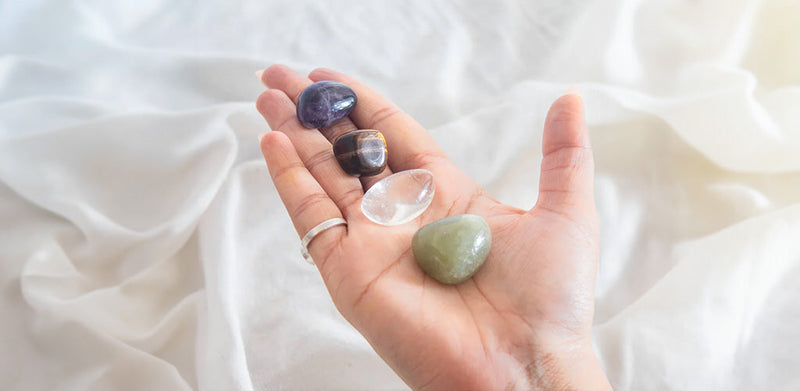
The five crystals most often kept on a student's desk are fluorite, clear quartz, sodalite, amethyst and tiger's eye. Each is traditionally matched to a different part of studying, from concentration to nerves on the day. Used well, a stone marks a desk as a working space and makes sitting down easier.
Key takeaways
- Standard picks: fluorite and clear quartz for focus, sodalite for logic, amethyst for nerves, tiger's eye for speaking up.
- Use one stone, kept in one fixed place on the desk, put out when you sit down.
- For exam nerves, a pocket tumble beats a bracelet because you can hold it in the last two minutes.
- Check exam rules first. Many boards allow nothing on the desk that is not stationery.
- The stone sits alongside the things that carry the studying: spaced practice, self testing, sleep.
- Fluorite is soft at Mohs 4 and chips easily. Keep it out of a bag with keys.
The five stones, and what each is traditionally for
| Stone | Traditionally kept for | Best format |
|---|---|---|
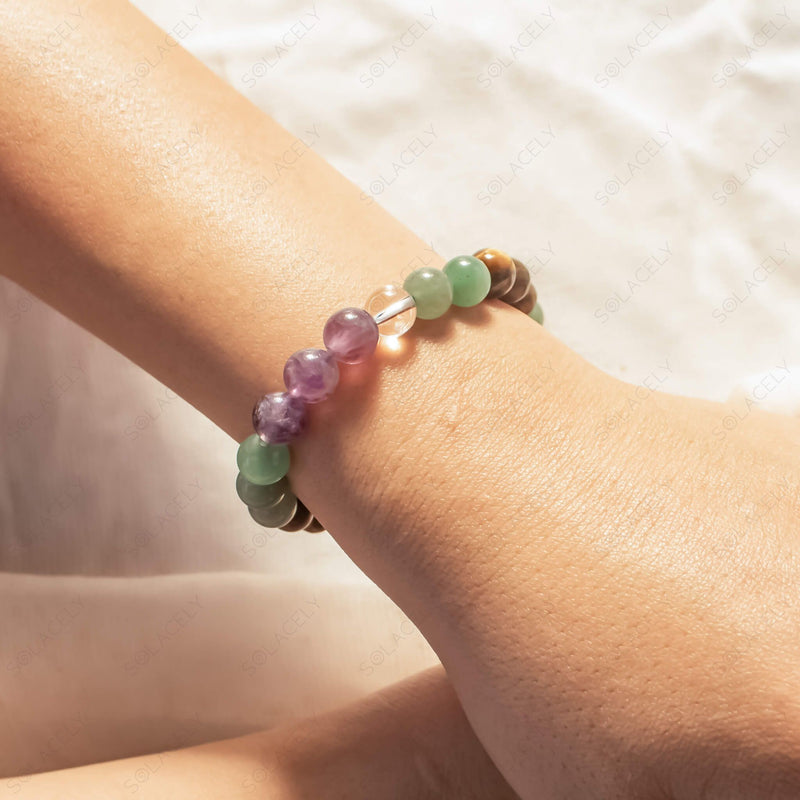
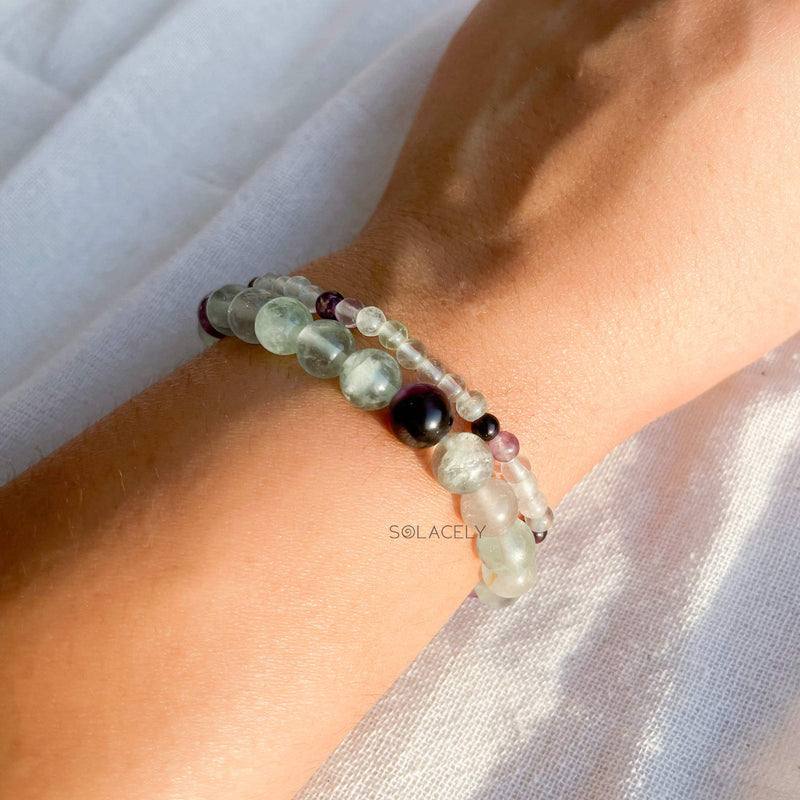
| Fluorite | Concentration, organising messy thinking | Desk tumble or bracelet |
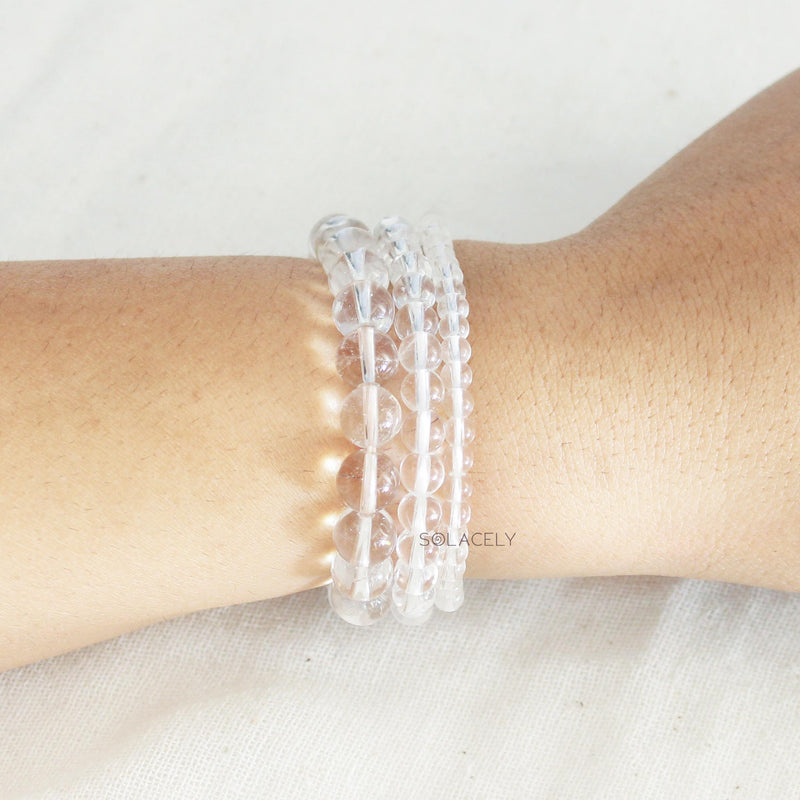
| Clear quartz | General clarity, the all rounder | Desk point or bracelet |
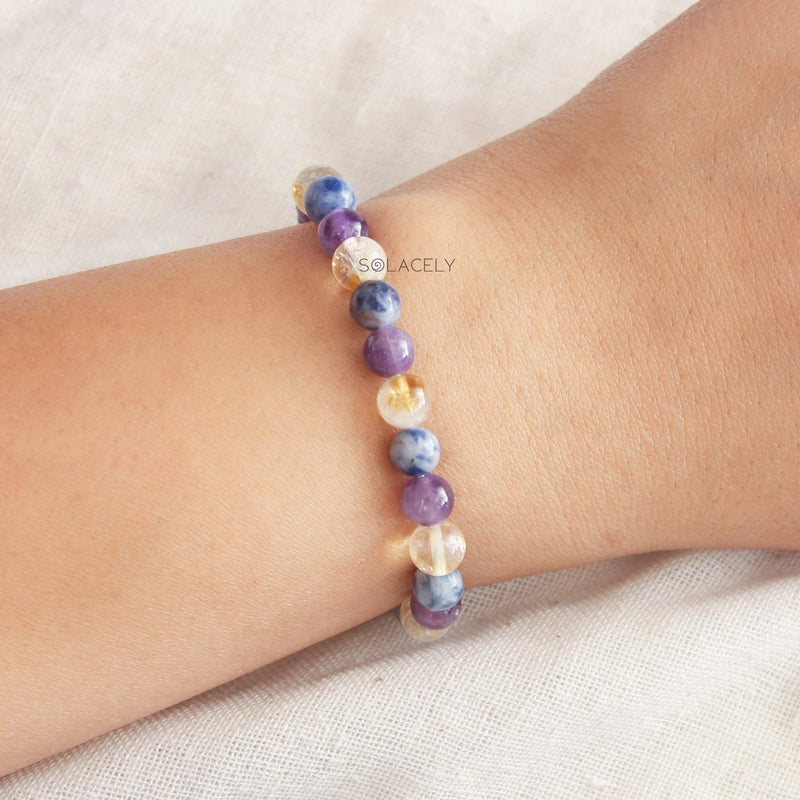
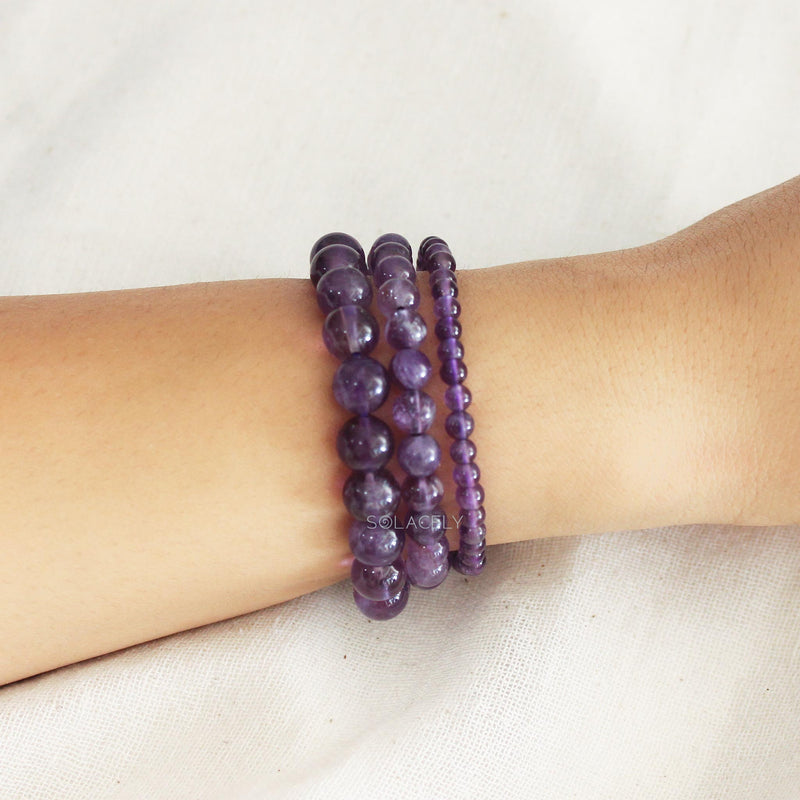
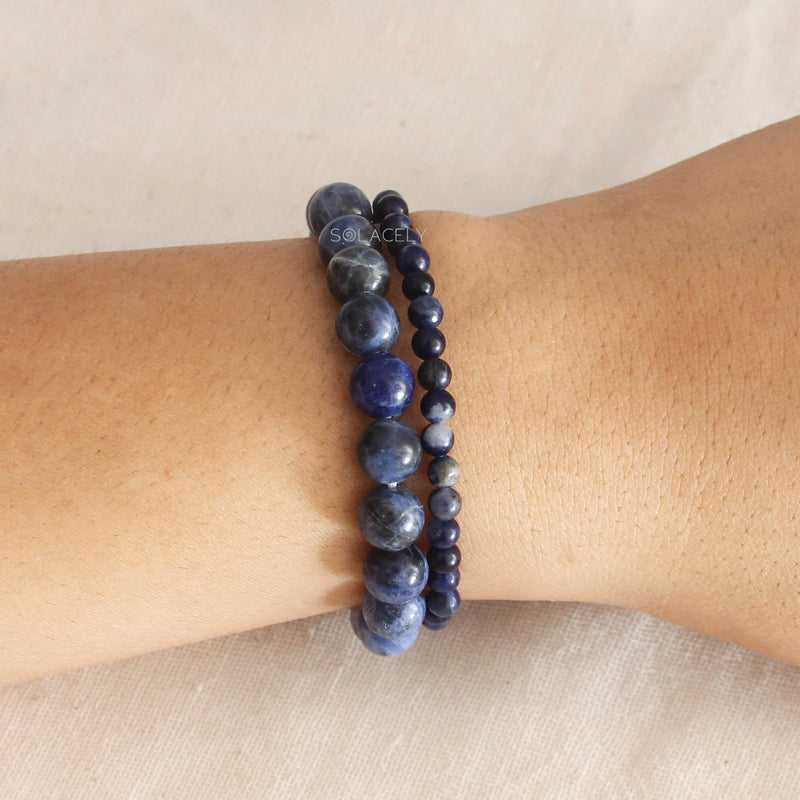
| Sodalite | Logical thought, structured writing | Bracelet |
| Amethyst | Pre exam nerves, restless nights | Pocket tumble, bedside |
| Tiger's eye | Confidence to ask and answer in class | Bracelet |
Fluorite is the usual first choice for study specifically, and it is beautiful enough that students actually keep it on the desk. One caution: fluorite is soft at 4 on the Mohs scale and has perfect cleavage, so it chips easily and should not share a bag with keys. Our broader guides to crystals for concentration and crystals for focus cover more options.
How a stone helps you start
The value is in the cue. Put a specific object on the desk only when you are studying, and over a few weeks that object starts to mean study time in the same way a uniform means school. Students who struggle to begin, rather than to understand, tend to get the most out of it.
That is why placement matters more than which stone you chose. One stone, one fixed spot, put out at the start of every session and away at the end.
Setting up a study desk
The stone is one part of a setup. These four together are what makes a session work:
- One fixed place for the stone. It goes there when you sit down. Same corner every time.
- Phone out of the room. Not face down. Out of the room. This is the biggest single change most students can make.
- Twenty five minutes, then a break. Set a timer. Put the stone in front of the timer so you see both together.
- End with a question, not a page. Close the session by writing one question you could not answer. That is your starting point tomorrow.
The techniques that carry the actual learning are well established: testing yourself rather than rereading, spacing sessions out instead of cramming, and getting enough sleep. Sleep in particular matters more than most students expect, since sleep deficiency affects learning, focus and reaction time. Faced with a choice between an extra hour of sleep and an extra hour of revision at midnight, the sleep usually wins.
Exam day
For the exam itself, the useful stone is a calming one rather than a focusing one. Amethyst or howlite, small enough to close a hand around, held for a slow count of ten breaths before you go in. Our guide to healing crystals for nerves sets out the breathing routine in detail.
One practical warning that is often skipped. Many examination boards allow nothing on the desk that is not permitted stationery, and invigilators enforce that inconsistently. Check the rules for your specific exam well in advance rather than discovering the answer at the door, and consider a worn bracelet rather than a loose stone if you want something with you.
Buying sensibly for a student
Keep this simple. A single tumbled stone costs very little, and a student who owns one stone they use is better placed than one who owns eight in a drawer. Tumbles are more practical than raw specimens because they survive being carried.
For a wider view of study focused stones, see crystals for education, crystals for learning and crystals for knowledge and wisdom.
Who this suits
It suits a student who struggles to start rather than one who struggles to understand. A ritual object helps with getting into the chair, and that is a real problem for a lot of people. Where a subject has genuinely not been taught well, the answer is asking a teacher, and no desk setup replaces that.
The uses described here reflect traditional and cultural crystal practice. They are not medical or educational claims, and they are not a substitute for professional teaching, tutoring or healthcare advice.
Sources
Written by Chetena Sharma. Reviewed by the Solacely editorial team.
Frequently asked questions
About the author


Written by Chetna Sharma, crystal healing practitioner and co-founder of Solacely. Chetna has worked with healing crystals for over a decade and curates Solacely's protective stone collection.