The crystals chosen most often for knowledge and wisdom are lapis lazuli, sodalite, fluorite, amethyst, clear quartz, citrine and selenite. Traditional practice gives each one a different mental job: study, logic, concentration, calm judgement. What a stone does well is mark the moment you sit down and decide to think properly.
Key takeaways
- Lapis lazuli is the oldest wisdom stone in this group. It was traded out of Afghanistan across the ancient world and ground into ultramarine, the pigment used on illuminated manuscripts.
- Fluorite is calcium fluoride and sits at only 4 on the Mohs scale, so it belongs on a desk rather than a keyring.
- Sodalite, fluorite and clear quartz are the traditional picks for taking information in. Lapis lazuli and amethyst are the picks for judgement.
- People describe these stones as marking the start of a session and holding attention there, which is where the reported benefit sits. Ritual and consistency matter far more than the size of the collection.
- Every metaphysical property described here is traditional belief, not medical or scientific fact.
Which crystals are used for knowledge and wisdom?
Seven stones carry most of the tradition. Lapis lazuli is the scholar's stone, sodalite the logician's and fluorite the organiser's. Amethyst is used for measured judgement, clear quartz for general clarity, citrine for decisiveness and selenite for a quiet head. Each reputation grew out of centuries of documented human use, refined by practitioners rather than invented by a marketing team.
| Stone | Traditionally used for | Best format |
|---|---|---|
| Lapis lazuli | Truth, study, honest self-assessment | Pendant or bracelet |
| Sodalite | Logic, structuring an argument | Pocket tumble |
| Fluorite | Concentration, tidying scattered thought | Desk cube or tower |
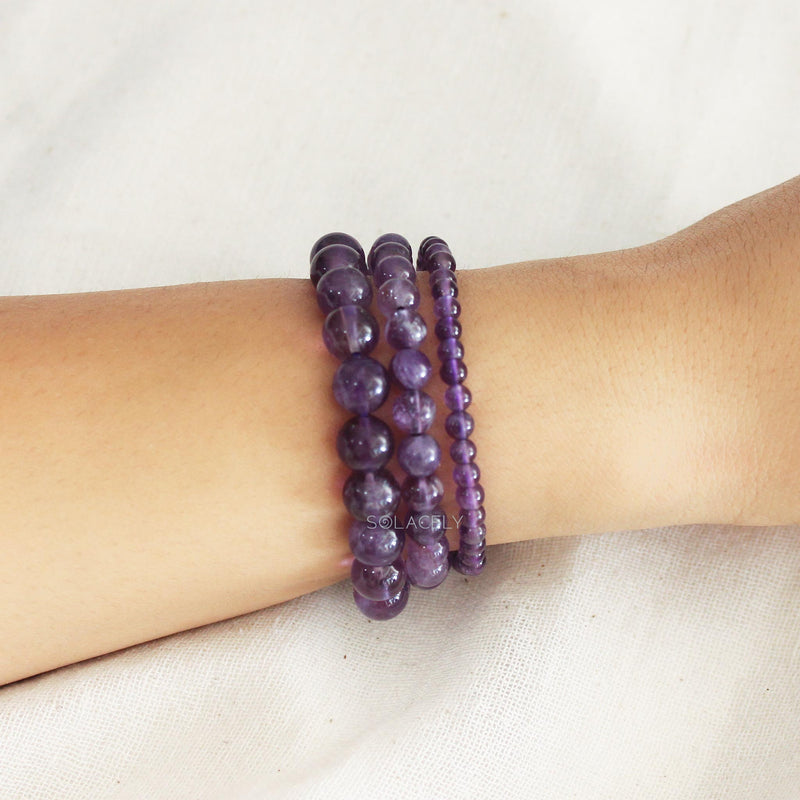
| Amethyst | Calm judgement, patience with a decision | Bracelet or bedside piece |
| Clear quartz | General clarity, amplifying intention | Small point on the desk |
| Citrine | Decisiveness, finishing what you start | Bracelet |
| Selenite | Mental quiet before deep work | Wand or plate, kept dry |
Knowledge and wisdom are not the same request, and the pairings reflect that. If you want to absorb material quickly, the blue stones dominate. If you want to sit with a difficult decision without rushing it, the purple ones do. Our wider guide to crystals for intelligence and focus covers the study end of this in more depth.
Why is lapis lazuli the classic wisdom stone?
Lapis lazuli earned its reputation through scholarship as much as through folklore. Gemmological references describe it as a semiprecious rock rather than a single mineral, coloured deep blue by lazurite and commonly speckled with golden pyrite. It reached Egypt and Mesopotamia through long-distance trade, and it stayed in the hands of scribes, priests and painters.
The pigment story is the part most crystal articles skip. Ground lapis produced ultramarine, the most expensive blue available to medieval and Renaissance painters, and it was used sparingly on the pages of illuminated manuscripts and on the robes of important figures. A stone that literally coloured books picked up an association with learning that no marketing team invented.
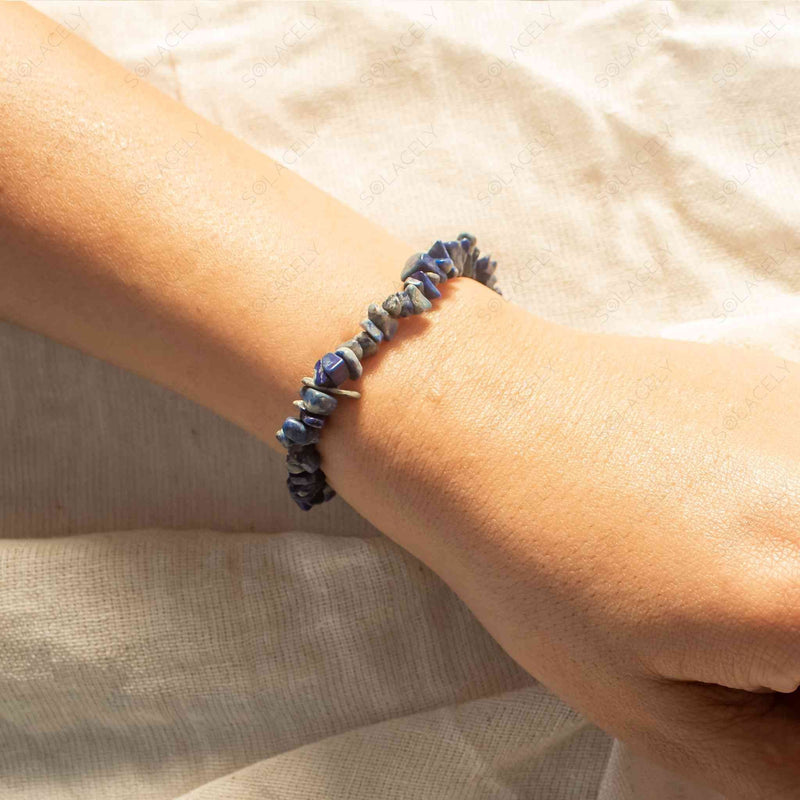
Today it is used for truthful speech and for study that asks you to be honest about what you do not yet understand. That second use is the more interesting one. Read the mineral background in our lapis lazuli meaning and properties guide.
What is fluorite, and why is it called the genius stone?
Fluorite is calcium fluoride. Geology.com describes it as a common mineral that forms cubic and octahedral crystals across an unusually wide colour range, from purple and green through blue, yellow and colourless. The nickname genius stone comes from modern crystal practice. The mineral's other claim to fame is fluorescence, the phenomenon named after it.
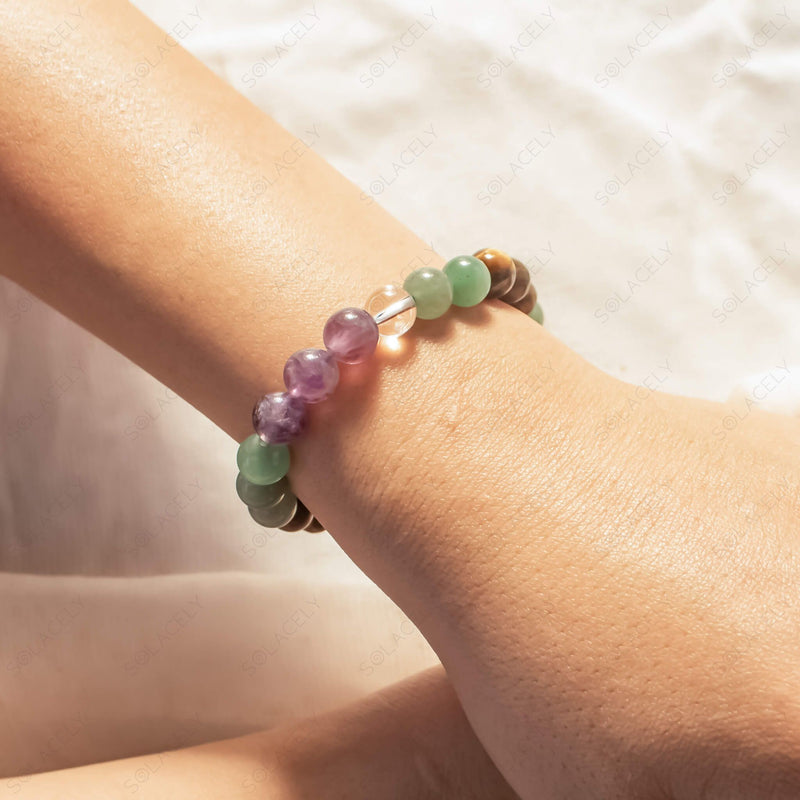
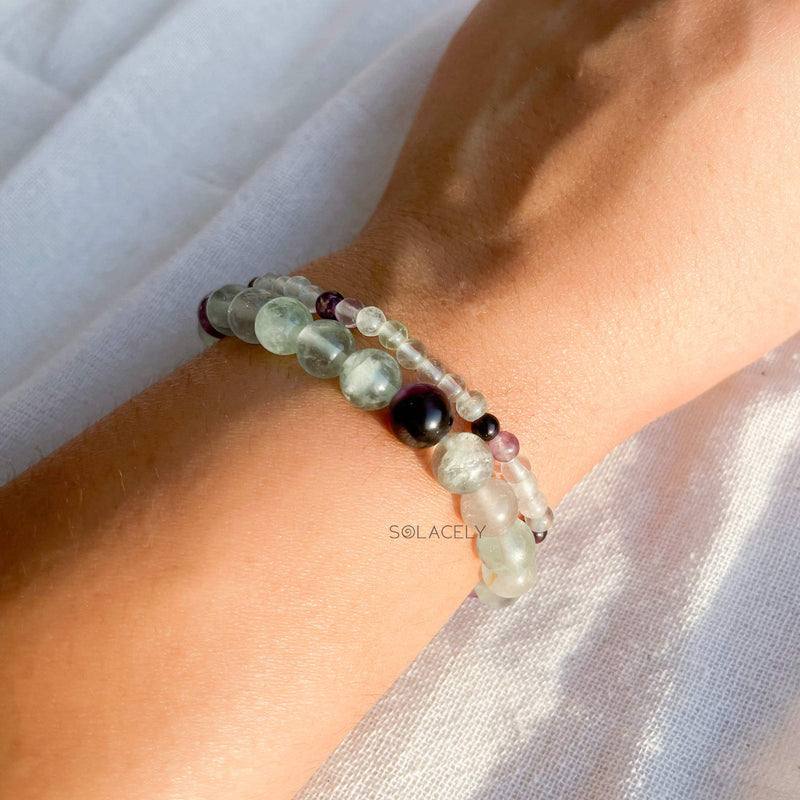
Rainbow fluorite, banded in purple and green, is the version sold for concentration. Users describe the effect as tidying. The stone's own visibly ordered banding is part of why it picked up that reputation, and it is a pleasant thing to look at while you work.
One practical warning matters here. Fluorite is soft, around 4 on the Mohs scale, so a steel key will scratch it and a drop onto a hard floor can cleave it. Keep it on a desk or in a lined pouch. If concentration is the whole point, our crystals for concentration guide compares harder alternatives that survive a bag.
How do crystals help you focus while you study?
By giving the session a clear beginning. Traditional practice pairs each stone with a mental job, and the moment you pick that stone up is the part practitioners describe as doing the most work. Lapis lazuli for material you have to stand behind, sodalite for structure, fluorite for the days when your thoughts are everywhere at once.
A stone on the desk is a physical cue sitting in the room with you. You pick it up, you put the phone face down, you start. Students who keep one describe it as interrupting the drift towards another browser tab, which is exactly the moment a cue is meant to catch.
The practice rewards consistency far more than it rewards scale. One stone, one job, the same place every session will carry you further than a shelf of tumbles arranged by colour. Our guide to crystals for students and academic growth takes the same practical line.
How do you use these stones while you study or work?
Keep it simple and repeatable. Choose one stone, give it one job and put it in the same place every session. Most people who stick with the practice end up using a single desk piece and a single wearable piece rather than a collection, because a cue only works when it is consistent.
On the desk
Put the stone where your eyes land when you look up from the screen. A fluorite cube, a sodalite tumble or a small clear quartz point all do the job. Keep it clear of mugs and water bottles, since fluorite and selenite both dislike moisture.
Worn on the body
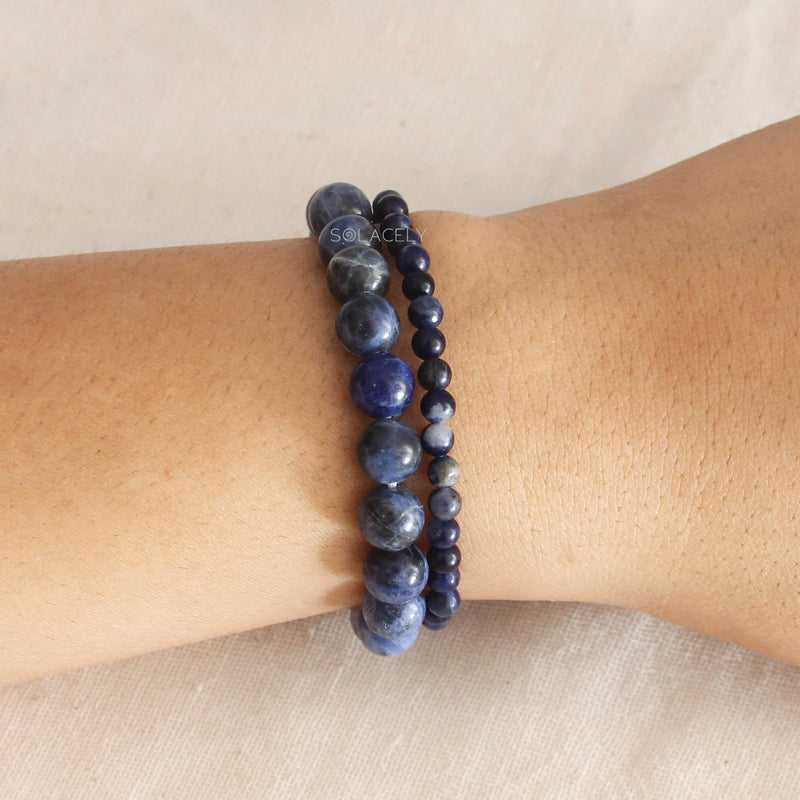
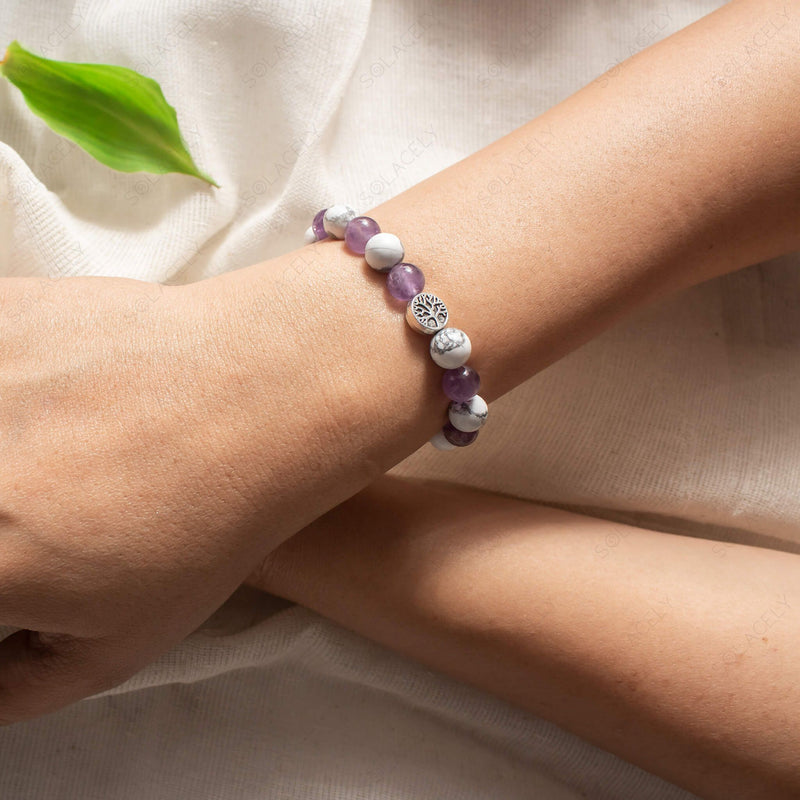
A bracelet is the least fussy format because it stays in your peripheral vision while you write. Lapis lazuli and sodalite are the usual choices. Solacely's peace and spirituality collection groups the calmer stones together if you prefer to browse by mood rather than by mineral.
In a two-minute opening ritual
Hold the stone, say out loud what you are working on, then set it down and begin. It sounds trivial. It is also the part that people who report results actually do, and it costs nothing at all.
Knowledge or wisdom: which stone should you choose?
Pick by the mental task, not by price. Knowledge work is intake: reading, revising, remembering, structuring. Wisdom work is judgement: weighing options, sitting with discomfort, deciding slowly. Sodalite, fluorite and clear quartz sit on the first side. Amethyst, lapis lazuli and selenite sit on the second, and citrine bridges the two.
| What you are doing | Traditional stone |
|---|---|
| Revising volume, cramming detail | Fluorite, clear quartz |
| Building a logical argument | Sodalite |
| Writing something you must stand behind | Lapis lazuli |
| Making a decision you cannot undo | Amethyst |
| Clearing your head before starting | Selenite |
If the logic and structure end is what you need most, our sodalite guide goes further into why that stone became the analytical pick.
How do you care for study crystals?
Hardness decides almost everything. The Mohs hardness scale ranks minerals from talc at 1 to diamond at 10, and anything below about 5 needs protecting from keys, coins and harder stones. Selenite is roughly 2, fluorite about 4, lapis lazuli around 5, while amethyst and citrine sit at 7.
Practical rules follow directly. Rinse quartz-family stones briefly and dry them. Wipe lapis with a soft dry cloth and never soak it, because it is porous and takes on water. Keep selenite entirely away from liquid, since it pits and goes chalky. Store the soft pieces separately rather than letting everything rattle in one bowl.
For energetic cleansing, moonlight, sound or a few hours in indirect daylight suit all seven. Skip long sun sessions, which fade amethyst and fluorite over time and cannot be reversed.
The properties described here reflect traditional and cultural belief around crystals. They are not medical claims, they are not a substitute for study support or professional advice, and no stone treats a learning difficulty or a health condition. If you are struggling with concentration, memory or mood, speak to a qualified practitioner.
Sources
Written by Chetena Sharma. Reviewed by the Solacely editorial team.
Frequently asked questions
About the author


Written by Chetna Sharma, crystal healing practitioner and co-founder of Solacely. Chetna has worked with healing crystals for over a decade and curates Solacely's protective stone collection.