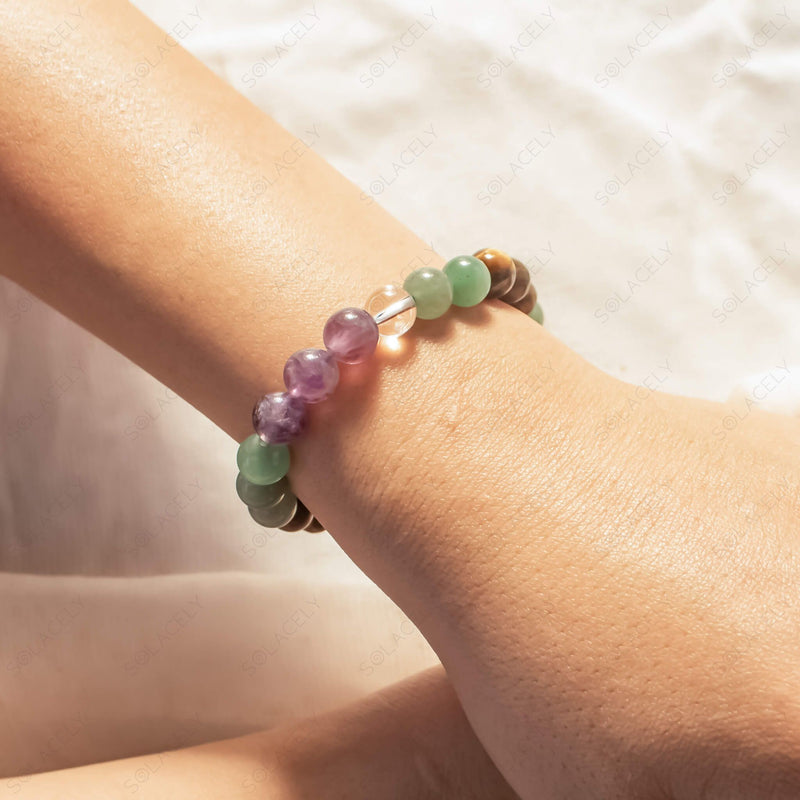
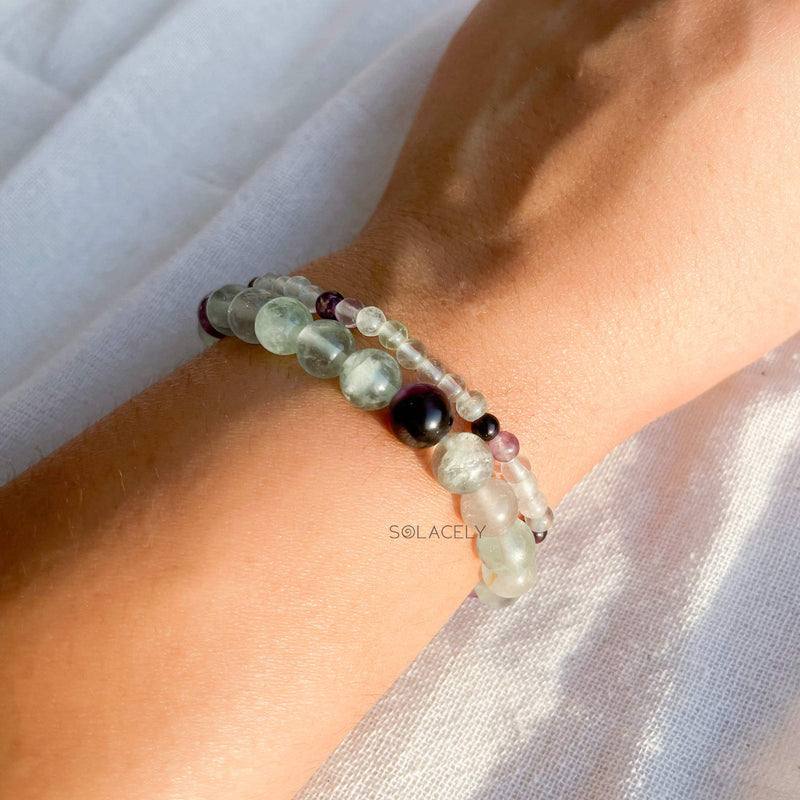
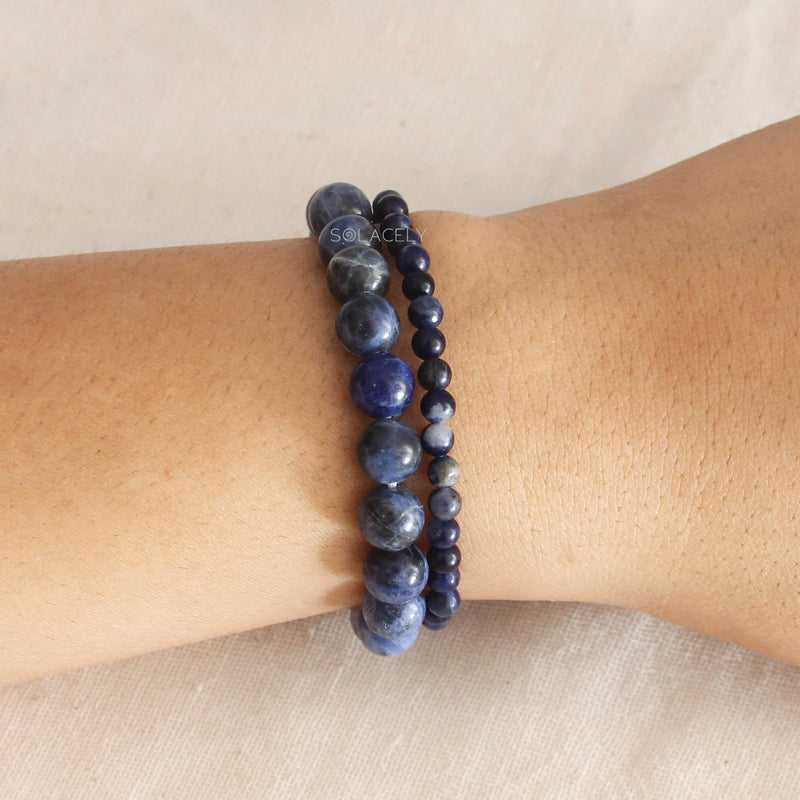
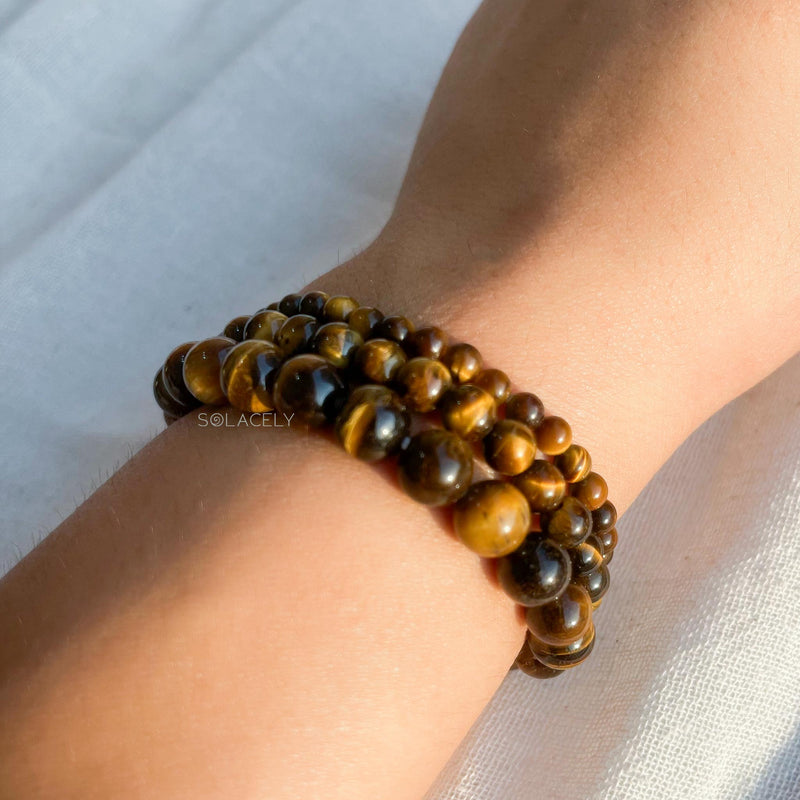
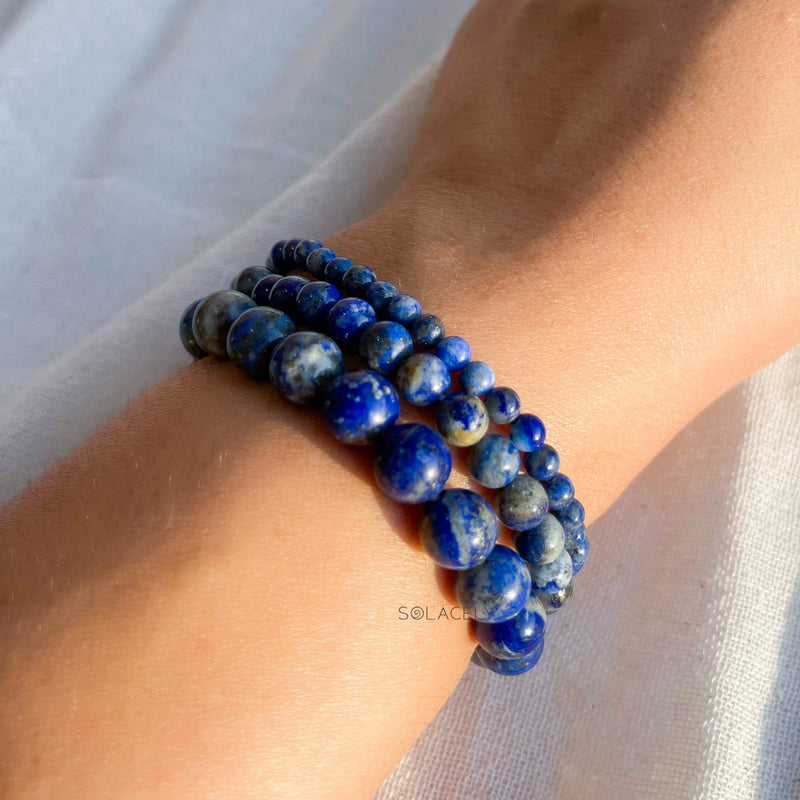
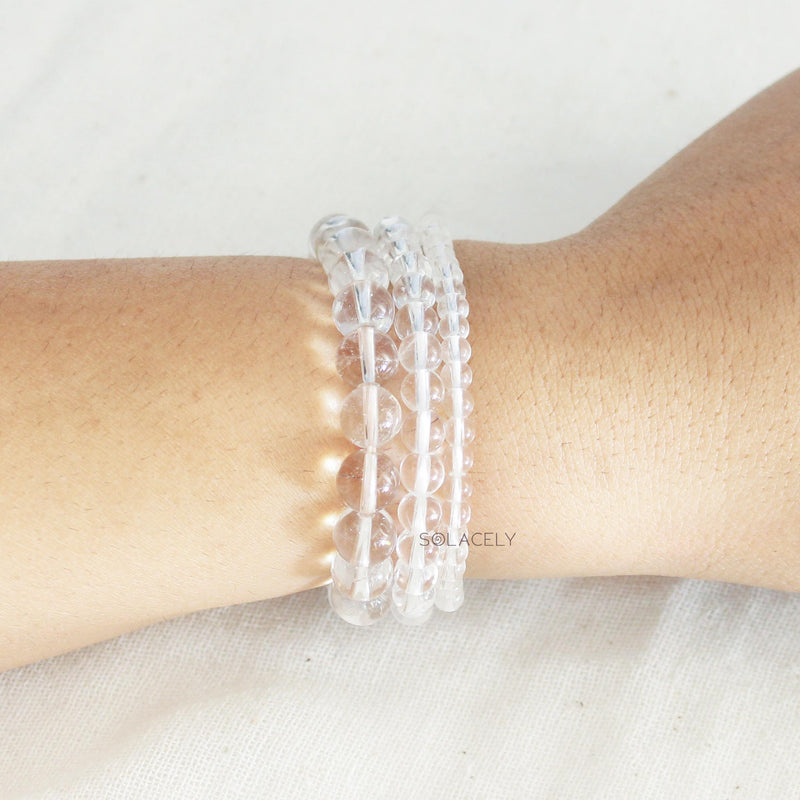
Fluorite is the traditional study stone, kept for mental order when a syllabus feels like too much. Sodalite is kept for logical work, clear quartz for clarity, lapis lazuli for recall, and tiger's eye for exam nerves rather than for studying itself. Choosing well means matching the stone to which part of studying is hard.
Key takeaways
- Fluorite for organising a large body of material; the classic study stone.
- Tiger's eye is the exam day stone, and it is a different one from your revision stone.
- Place it in your eye line, not in your hands, and move it away when the session ends.
- Fluorite is soft at 4 on the Mohs scale. Store it on its own.
- Attach the stone to a fixed sequence so it signals the start of work.
Matching the stone to the difficulty
| What is hard | Traditional choice |
|---|---|
| Facing a syllabus that feels enormous | Fluorite |
| Detailed, precise, logical work | Sodalite |
| Remembering what you have read | Lapis lazuli |
| Starting at all | Carnelian |
| Nerves on the day | Tiger's eye |
| Worry breaking your concentration | Amethyst |
| General companion, sits with anything | Clear quartz |
That last row on worry deserves attention. Concentration that keeps collapsing because you are anxious about the exam is a different problem from concentration that collapses because the material is dull, and the traditional answers differ. Reaching for a sharpening stone when what you need is a calming one is the most common mismatch students make.
Our crystals for focus guide covers attention specifically, and crystals for intelligence and focus covers the wider study set.
Why fluorite became the study stone
Fluorite's traditional association is mental order rather than mental energy: sorting, structuring, and taking the panic out of a large pile of material. That is a specific and fairly modest claim, which is probably why it stuck so firmly.
It is calcium fluoride, and it occurs in a wider range of colours than almost any other common mineral. Rainbow fluorite, banded in purple, green and clear, is the variety most often sold for study use, and it is also the source of the word fluorescence, since fluorite was the first material in which that effect was described.
The practical caution is its softness. At 4 on the Mohs scale it marks far more easily than quartz, so a fluorite piece belongs on a desk rather than loose in a bag with keys and coins.
Setting up a desk
- Phone in another room. This does more than anything else on the page.
- Place the stone deliberately. One movement, at the start, as the session opens.
- Eye line, not hands. Beside the screen or at the corner of the desk.
- Set a timer. Twenty five or fifty minutes, whichever suits you.
- Move the stone away at the end. The session is closed, and the object marks that too.
The placing and removing is the whole ritual, and it works because it is short enough to actually do every time. A stone that simply lives on the desk permanently stops being a signal within a week.
Exam day is a different stone
Revision and examination ask for different things. Revision is a long grind that wants order and patience. An exam is ninety minutes of nerve.
Tiger's eye is the traditional exam stone, kept for holding a line of attention under pressure. Many students keep fluorite on the desk through the term and swap to tiger's eye for the morning of the paper, which also gives the day a small ritual of its own.
A few practical notes: check what your exam hall allows before taking anything in, since some venues restrict what can be on the desk. A stone in a pocket is usually fine where one on the table is not. And introduce it during a practice paper rather than on the day itself, so it is already familiar. Our crystals for confidence selection covers the nerve side more fully.
What makes the biggest difference to studying
Worth saying plainly, because it will do more for a student's results than any arrangement of minerals.
Test yourself instead of re-reading. Closing the book and writing what you remember strengthens memory far more than reviewing pages does. Highlighting feels productive and is close to useless.
Spread the hours out. The same total time spread across weeks beats the same time the night before, by a wide margin.
Sleep. Memory consolidates overnight, so a late night before a paper usually costs more than the extra hours gain. Our crystals for sleep guide is arguably the more useful one during exam season.
Train attention. A short daily sitting practice pairs naturally with a crystal habit and builds the same muscle studying needs.
Caring for a study set
Fluorite is the fragile one: soft, easily scratched, and best stored alone. Keep it out of long soaks and never sand or grind a raw piece.
Sodalite and lapis lazuli sit around 5 to 5.5, also on the softer side, and lapis in particular should be kept away from acids and harsh cleaners since it is a rock rather than a single mineral. Wipe rather than wash both.
Clear quartz and tiger's eye are the durable ones at around 7 and take warm water and a cloth without concern. For energetic cleansing, sound or smoke suits the whole set and avoids the water question. Monthly is fine for desk pieces; weekly for anything carried.
Who this set suits
Students facing a long term of revision, anyone returning to study after time away, and people who work better with a visible routine than with willpower alone. It also suits parents looking for a gift that says the exam matters without adding pressure to it.
Crystals are offered here for reflection and wellbeing as part of a long standing tradition. They are not a treatment for any medical condition and are not a substitute for professional care. If concentration difficulties or exam anxiety are seriously affecting your studies, speak to your school, university support service or a qualified healthcare professional.
Sources
Written by Chetena Sharma. Reviewed by the Solacely editorial team.
Frequently asked questions
About the author


Written by Chetna Sharma, crystal healing practitioner and co-founder of Solacely. Chetna has worked with healing crystals for over a decade and curates Solacely's protective stone collection.