Crystals kept in a car are chosen for two things: grounding and calm. Black tourmaline and hematite are the usual pair, with amethyst for patience in traffic, clear quartz as a general companion, tiger's eye for alertness on long drives, and turquoise or moonstone as the traditional safe travel stones.
Key takeaways
- Black tourmaline (Mohs 7 to 7.5) and hematite (Mohs 5 to 6.5) are the two stones most often kept in a car, both long associated with grounding.
- Amethyst is the traffic stone, kept for patience. Clear quartz and tiger's eye suit long motorway drives.
- Turquoise (Mohs 5 to 6) and moonstone (Mohs 6 to 6.5) are the traditional travel stones, and both are soft enough to need a padded pouch.
- A zipped pouch in the glovebox or centre console is the sensible home. Nothing loose on the dashboard, and nothing swinging across the windscreen.
- Amethyst, citrine and rose quartz can pale under prolonged strong light, so keep them in a shaded compartment rather than on the dash.
- Cleanse monthly with dry methods, and wipe the dust off with a soft cloth while you are at it.
Which crystals do people keep in a car?
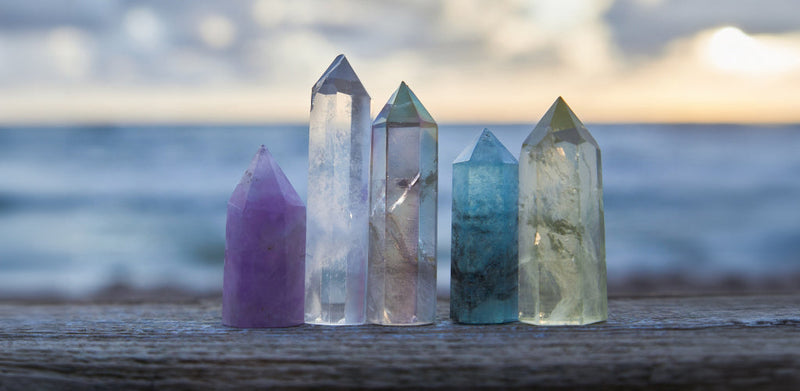
The regulars are black tourmaline and hematite for grounding, amethyst for calm in slow traffic, clear quartz as an all purpose companion, tiger's eye for alertness on long drives, and turquoise or moonstone, the two stones most often associated with safe travel. Most drivers carry two or three, not a whole collection.
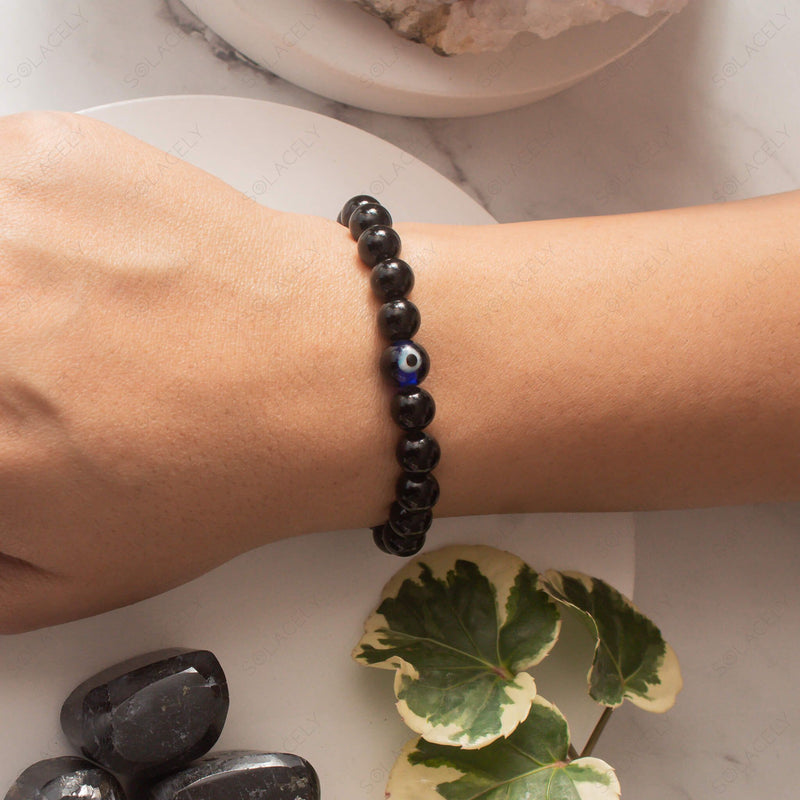
Black tourmaline does most of the work. It is a boron silicate that sits at 7 to 7.5 on the Mohs scale, hard enough that a tumble survives months of knocking about in a console without chipping. People reach for it when they want to feel settled rather than reactive, which is a fair description of a good drive. Our guide to black tourmaline's meaning and properties covers the stone in full.
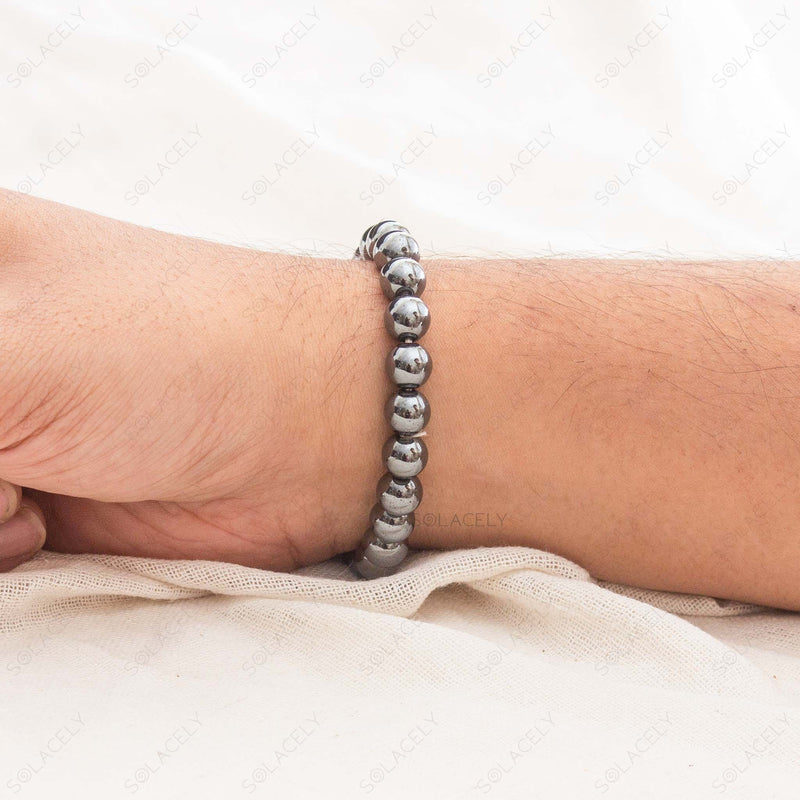
Hematite is the other grounding choice, an iron oxide that feels surprisingly heavy for its size. That weight is part of the appeal. A hematite tumble in the palm at a red light is a small physical anchor, and it is quiet company on a slow commute. It rates 5 to 6.5, softer than tourmaline, so it wants padding. Plenty of drivers who like hematite's steadying qualities keep one in the door bin.
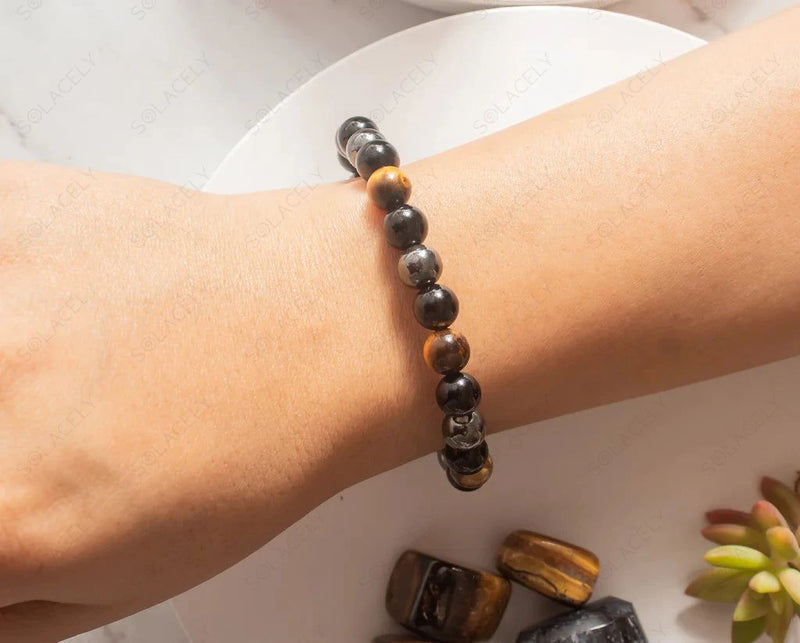
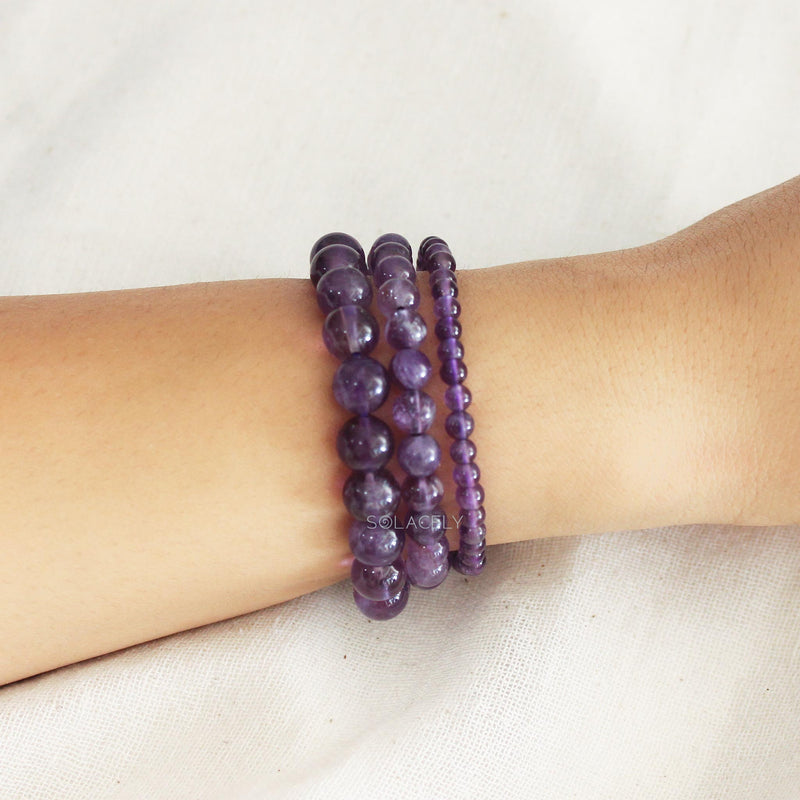
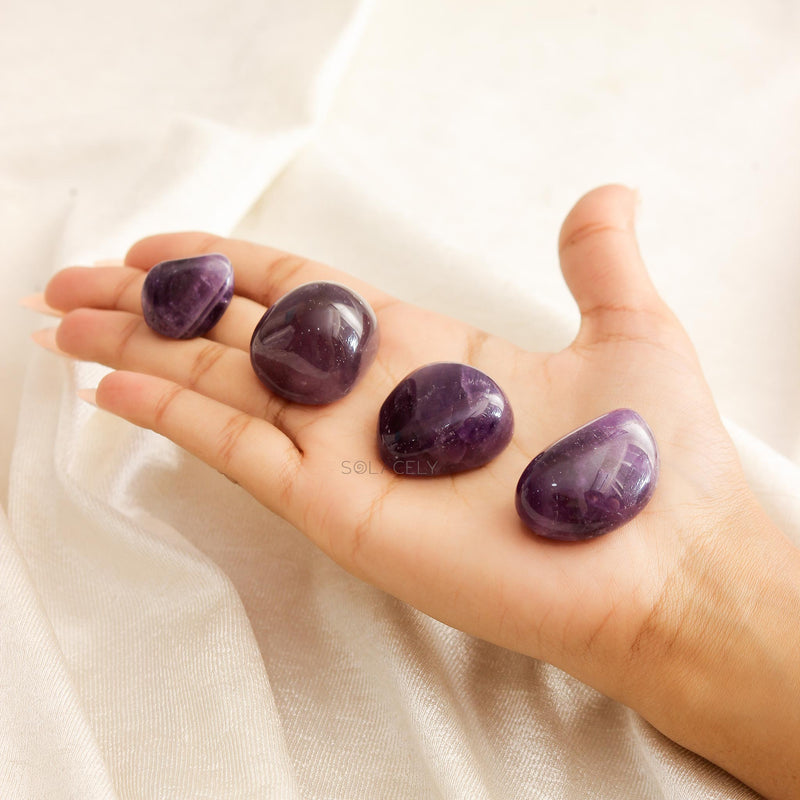
Amethyst is the traffic stone, long kept for patience and a cooler head when the lane you picked stops moving. Clear quartz is the flexible one, traditionally used to hold whatever intention you set for it. Tiger's eye is the stone for staying switched on across a long motorway stretch, and its banded shimmer makes it easy to find by touch. Turquoise and moonstone are the travel classics, carried by riders, traders and night travellers for centuries.
| Stone | Mohs hardness | Traditionally kept for | Light and heat note |
|---|---|---|---|
| Black tourmaline | 7 to 7.5 | Grounding, steadiness | Copes well with a warm car |
| Hematite | 5 to 6.5 | Feeling anchored | Stable, but keep it dry |
| Amethyst | 7 | Patience in traffic | Keep shaded, colour can pale |
| Clear quartz | 7 | Holding an intention | Untroubled by light |
| Tiger's eye | 7 | Alertness on long drives | Untroubled by light |
| Turquoise | 5 to 6 | Safe travel | Porous, keep from oils and heat |
| Moonstone | 6 to 6.5 | Night journeys | Cleaves easily, pad it well |
Where should you put crystals in a car?
A small zipped pouch in the glovebox or centre console is the sensible home. Nothing should sit loose on the dashboard, where hard braking can send a tumble forward, and nothing should hang where it swings across the windscreen or sits in your line of sight. Secured and out of view is the rule.
Beyond the glovebox and console, the useful spots are a door bin, a seat back pocket, or a drawstring pouch tucked under a front seat. All four keep the stones still. That matters more than it sounds: loose crystals rattle, roll under the pedals and scratch each other on every roundabout.
Tumbled stones beat points and clusters here. A rounded tumble has no fragile terminations to snap and nothing sharp if it does shift. Small is better too. Two or three pieces the size of a coin do the job that people often try to do with a fist sized specimen.
One more piece of housekeeping. Small stones are a choking risk for young passengers, so a closed compartment rather than an open cup holder is the right call in a family car. A soft pouch also keeps the pieces from picking up dust, crumbs and the general grit that lives in every centre console.
What about crystals that hang in a car?
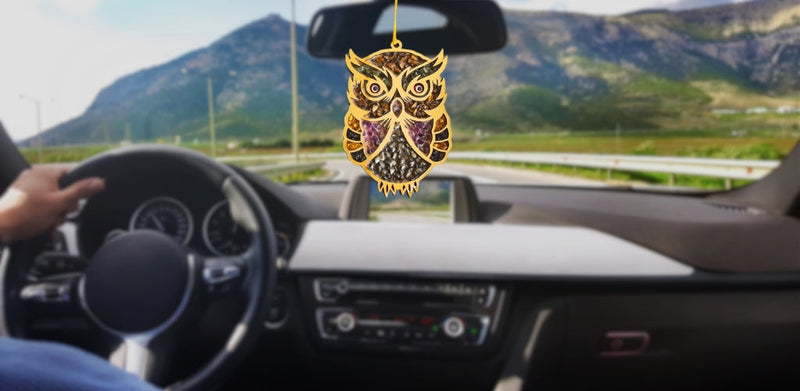
Hanging pieces are popular, and they work well once placement respects the view. The safe anchors are a seat headrest, a coat hook, or the passenger side visor. Some regions restrict anything suspended in the driver's field of vision, so a quick check of the local road rules is worth the minute.
Anything that swings is the thing to think about. A pendant on a long cord moves every time you brake, and movement in your peripheral vision is a distraction you do not need on a motorway slip road. A shorter cord, a heavier bead and an anchor point away from the windscreen solve most of it.
Hanging pieces also sit in direct sun for hours, which is the harshest position in the whole car. Choose a stone that does not mind it. Our guide to crystal car hangings goes through the styles and how people use them.
Which car crystals need to stay in the shade?
Amethyst, citrine and rose quartz are the three to keep in a shaded compartment. A parked car in summer becomes both very hot and very bright, and gemmological reference works note that prolonged strong light can pale amethyst's purple. The same applies to citrine's gold and rose quartz's pink. The glovebox solves it entirely.
Smoky quartz belongs in that group too. These are all quartz varieties whose colour comes from delicate colour centres, and hours of intense light on a dashboard, day after summer day, is exactly the exposure that softens them. A brief spell of morning sun is a different matter. It is the repeated, prolonged version that does it.
Turquoise has its own quirk. It is porous, so it takes up oils, hand cream and sunscreen, and heat can shift its colour over time. Keep it wrapped. Selenite is a poor car stone for a different reason: at Mohs 2 it scratches on almost anything and it dissolves in water, so a damp footwell in winter is not its place.
Black tourmaline, hematite, clear quartz and tiger's eye are the untroubled ones. They handle a hot car without complaint, which is part of why they end up being the stones that actually stay in the vehicle year after year.
How do you cleanse crystals that live in your car?
Dry methods suit car stones best. Smoke, sound, a few hours on a windowsill overnight, or a rest on a selenite plate at home will all do it. Once a month works for most drivers, with an extra reset after a long trip or a stressful stretch of commuting. Wipe the dust off at the same time.
Skip the long midday sunbath. It is the standard cleansing method plenty of people use, and it is fine for tourmaline, hematite and tiger's eye, but the colour sensitive quartzes have already had enough light exposure sitting in a car. Moonlight is the easier default for those, and it costs nothing but remembering to bring them inside.
Water is fine for clear quartz, amethyst and tiger's eye, given a quick rinse and a proper dry. Keep hematite, turquoise, selenite and moonstone out of it. And never soak stones in water you intend to drink. Physical cleaning matters more here than in a bedroom: a car pouch collects dust fast, so a soft dry cloth once a month keeps everything looking like a crystal rather than a pebble.
How do you choose stones for the driving you actually do?
Match the stone to the journey. Short urban commutes suit amethyst with black tourmaline, for patience plus grounding. Long motorway runs suit tiger's eye and clear quartz. New drivers often prefer hematite for its weight in the hand, and night shift drivers reach for moonstone, the stone most associated with travelling in the dark.
If you drive for work, the pouch tends to grow. A common set is black tourmaline for the stop start grind, clear quartz set with a single intention for the day, and turquoise as the travel stone that stays in the car permanently. Our wider guide to crystals for travel is the natural next read if you are also flying or taking trains.
Setting the intention is worth thirty seconds. Hold the stone before you pull away, name what you want the drive to be, then put it back in its pouch. That small habit is what keeps a crystal a companion rather than a decoration, and it is why so many people who start with one tumble end up with a small, deliberate set. If alertness is your priority, tiger's eye and its properties are a good place to start.
Crystals are kept as a personal practice and as company alongside safe driving, never as a substitute for attention on the road. Nothing here is medical advice, and no stone treats, cures or prevents any condition. Keep small stones out of reach of young children, never place them in drinking water, secure anything you carry in a vehicle, and follow the road rules where you drive.
Sources
Written by Chetena Sharma. Reviewed by the Solacely editorial team.
Frequently asked questions
About the author


Written by Chetna Sharma, crystal healing practitioner and co-founder of Solacely. Chetna has worked with healing crystals for over a decade and curates Solacely's protective stone collection.