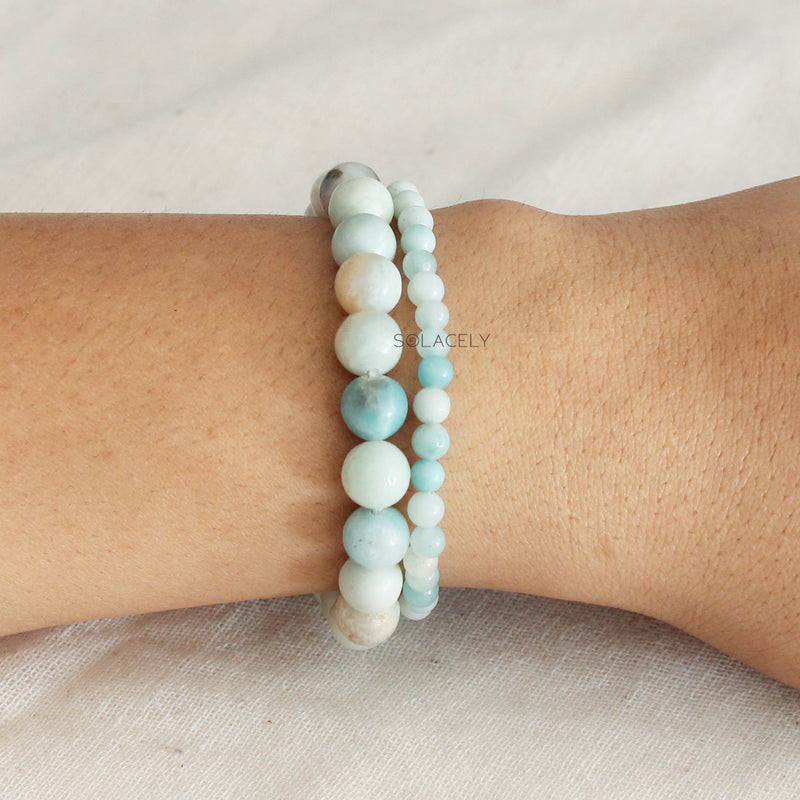
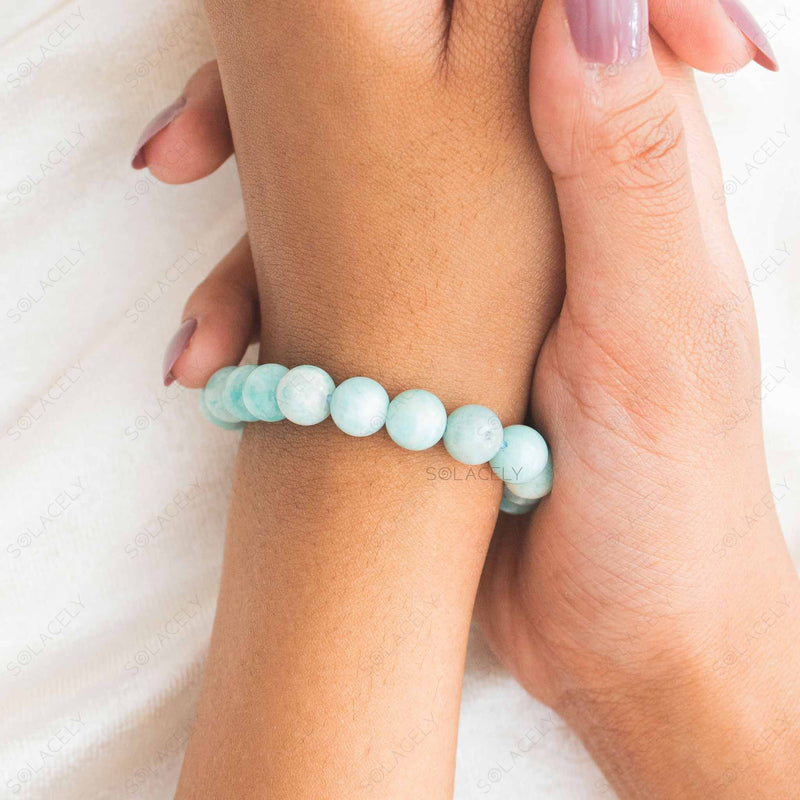
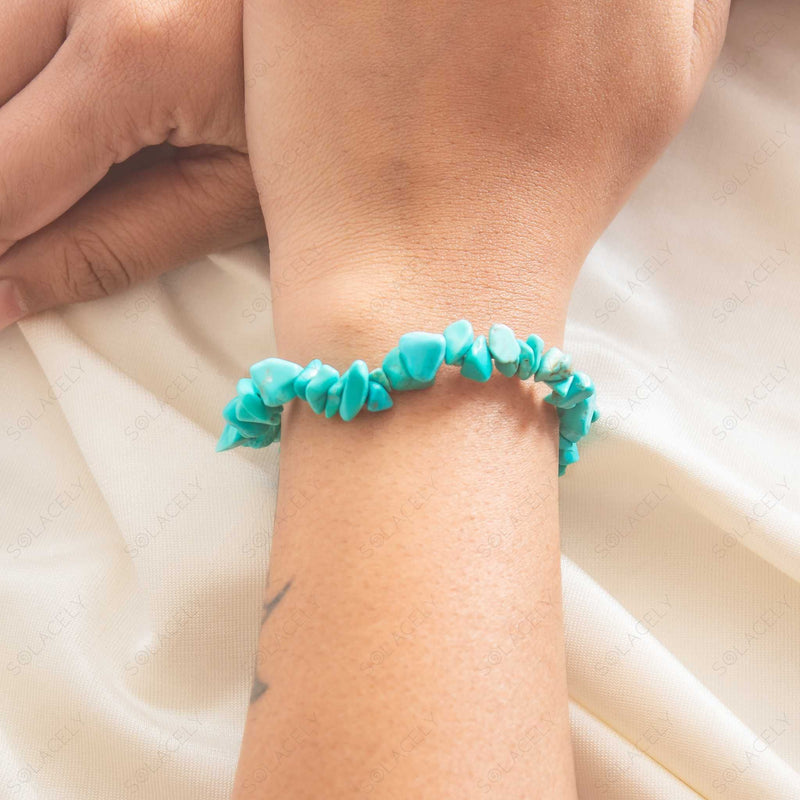
Teal crystals are the stones that sit between blue and green: amazonite, turquoise, chrysocolla, larimar, blue apatite, hemimorphite, aqua aura quartz and green fluorite. In crystal tradition that in-between colour is associated with calm speech and open-heartedness, since it bridges the throat and heart chakras.
Key takeaways
- Teal covers everything between blue and green, from soft sea-glass amazonite to deep turquoise.
- The colour bridges the throat and heart chakras, so teal stones are kept for speaking honestly and gently.
- Amazonite and aqua aura quartz are the hard-wearing ones. Chrysocolla, larimar and fluorite are soft and need care.
- Turquoise is porous and should go on after perfume, lotion and hairspray, never before.
- Traditionally kept for calm, truthful speech, emotional balance and soothing a churned-up week.
What are teal crystals?
Teal is not a mineral, it is a colour band, and the stones that fall into it come from quite different mineral families. What they share is that blue-green tone, somewhere between the sky and the sea, produced most often by copper in the stone's chemistry.
Copper is the common thread through turquoise, chrysocolla and larimar, and it is what gives all three that unmistakable oceanic quality. Amazonite gets its softer sea-glass green from lead and water within the feldspar structure. Blue apatite and hemimorphite arrive at similar tones by other routes entirely.
In crystal tradition the colour is what matters more than the mineralogy. Blue is the colour of the throat chakra, the centre of speech and truth, and green is the colour of the heart. Teal sits between the two, which is why these stones are so consistently kept for saying difficult things kindly.
The main teal crystals
Eight stones cover almost everything sold as teal. They differ a great deal in hardness, which matters if you want to wear one every day, so the table gives that alongside the traditional associations.
| Stone | Mohs hardness | Traditionally kept for |
|---|---|---|
| Amazonite | 6 to 6.5 | Calm, truthful speech, soothing worry |
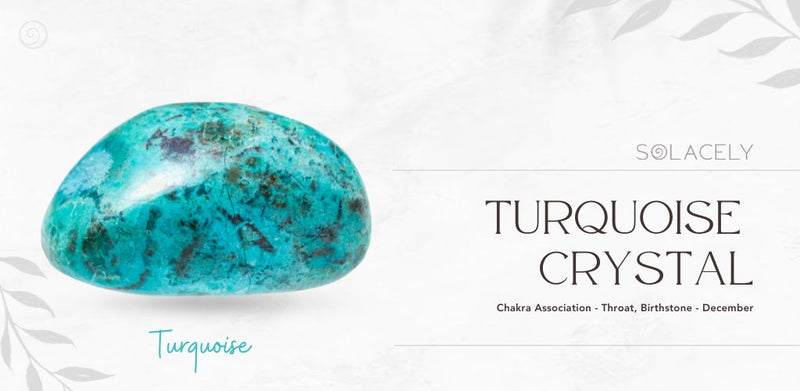
| Turquoise | 5 to 6 | Protection, friendship, safe travel |
| Chrysocolla | 2 to 4 | Gentle expression and emotional ease |
| Larimar | 4.5 to 5 | Serenity and letting go |
| Blue apatite | 5 | Clarity, motivation, focus |
| Hemimorphite | 4.5 to 5 | Empathy and emotional honesty |
| Aqua aura quartz | 7 | Uplift and clear communication |
| Green fluorite | 4 | Order and a tidy mind |
Amazonite is the most practical of the group, hard enough for a bracelet worn daily and reliably that soft sea-glass colour. Turquoise is the historic one, worn for protection across Persia, Egypt, Tibet and the American Southwest for thousands of years, and our guide to turquoise meaning and properties covers it in full.
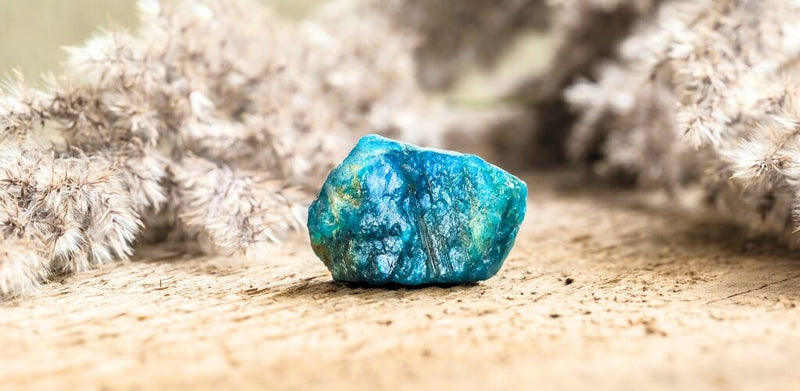
Larimar is the rarest, found only in the Dominican Republic, and it is prized for a pale blue that genuinely does look like shallow Caribbean water. Blue apatite is the focus stone of the group, and our note on blue apatite meaning and properties sets out how it is used.
What teal crystals are traditionally kept for
Speaking well is the first thread. Because the colour bridges throat and heart, teal stones are the ones kept for conversations that need to be both honest and kind: a difficult message to a colleague, a boundary with a family member, an apology you have been putting off.
Calm is the second. Amazonite in particular has a long reputation as the soothing stone, kept for a churned-up week or a mind that keeps rehearsing the same worry. Larimar carries that even further towards serenity, which is why it is the one people reach for when they want to put something down.
Balance is the third strand, and it is really what the colour itself suggests. Teal stones are traditionally kept by people who want to hold two things at once, feeling and expression, warmth and clarity, without letting either one take over. That is a quietly useful intention, and it is why teal stones so often end up being the ones people keep at work rather than at home.
Amazonite pairs naturally with black tourmaline for calm plus grounding, and our note on green aventurine and amazonite covers another common green-teal combination.
How to wear and use them
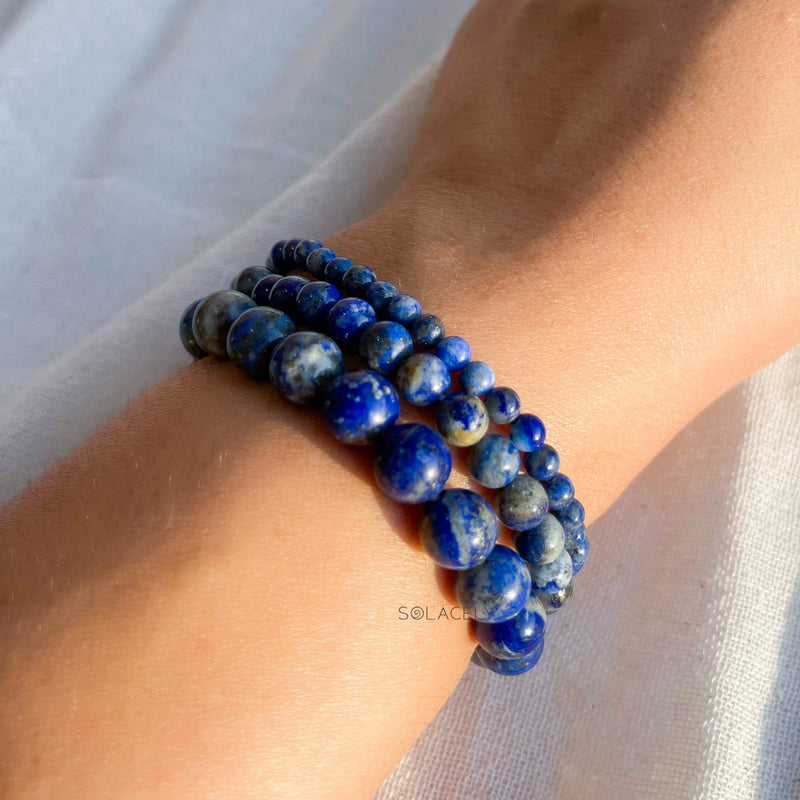
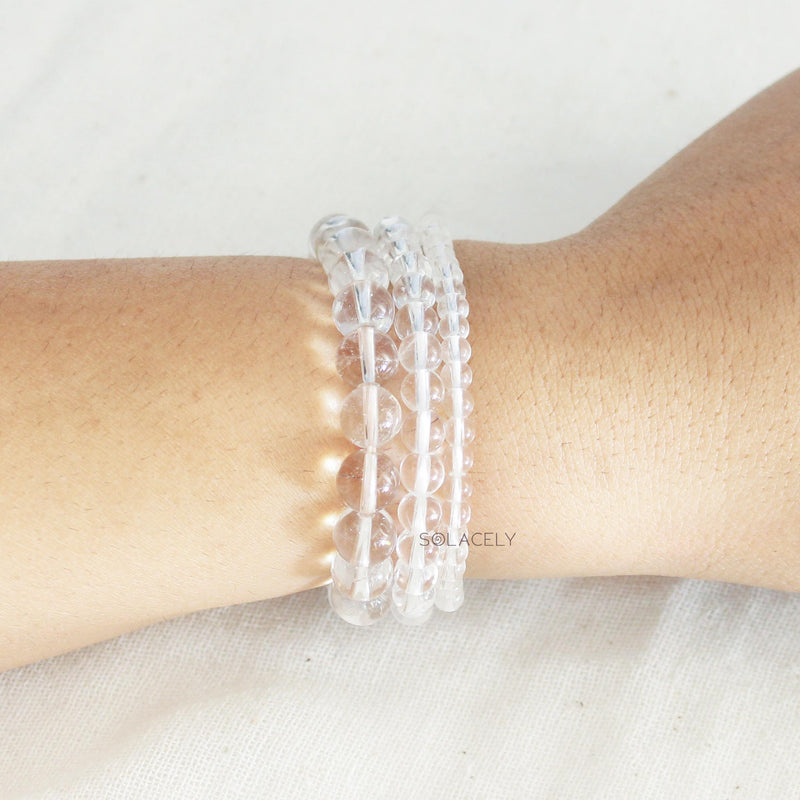
A bracelet on the left wrist is the simplest approach, since the left is the receiving side in tradition and calm is something you take in. Amazonite and aqua aura quartz are the two best suited to daily wear, being the hardest of the group.
A pendant is the traditional choice if speech is your intention, worn at the throat where the chakra association sits. Turquoise pendants have been worn exactly this way for a very long time. For something to hold rather than wear, a tumble in a pocket suits a day with a hard conversation in it.
At home, teal stones are placed where people talk: a kitchen table, a desk where you take calls, a hallway shelf. A small piece on a bedside table suits larimar, which is the serenity stone of the group and is often kept for winding down at the end of the day.
Choosing and caring for teal crystals
Choose by hardness as much as by colour if you intend to wear it. Amazonite at 6 to 6.5 and aqua aura quartz at 7 both stand up to daily life. Chrysocolla at 2 to 4 and green fluorite at 4 are genuinely soft and belong in a bowl, a pocket or a pendant rather than on a ring.
Turquoise deserves its own note, because it is porous. Put it on last, after perfume, lotion, sunscreen and hairspray, and take it off before washing up or swimming. Oils absorbed over time will change its colour. Stabilising turquoise so that it takes a durable polish is a long established practice in the trade, and a stabilised stone wears beautifully.
Larimar, chrysocolla and hemimorphite should all stay out of prolonged water and away from harsh chemicals, and larimar also fades with long hours of hard sun. Clean the harder stones with warm soapy water and a soft cloth, and simply wipe the softer ones dry.
For cleansing in the spiritual sense, sound, moonlight and incense smoke suit every stone here and risk none of them, which makes them the sensible default for a group this soft. Our step-by-step on how to cleanse and charge crystals covers each method.
Teal crystals are worn and kept as part of a long-standing spiritual and cultural tradition. They are not a medical device or treatment, and they do not diagnose, treat, cure or prevent any condition. Nothing here replaces advice from a doctor or other qualified professional, and you should never delay or stop medical care because of a crystal. Stones should never be placed in drinking water, and small tumbles and beads are a choking risk for babies and young children.
Sources
Written by Chetena Sharma. Reviewed by the Solacely editorial team.
Frequently asked questions
About the author


Written by Chetna Sharma, crystal healing practitioner and co-founder of Solacely. Chetna has worked with healing crystals for over a decade and curates Solacely's protective stone collection.